
You're one tile from a win with a yaku in hand, the throws your tile, and the button still never shows up. Two rules decide whether a discard can win for you: your hand needs a yaku, and it can't be . takes care of the first for any . The second you check yourself: in your own discards, and in the winning tiles you let go by.
Tenpai: one tile from a win
(聴牌) means your hand is one tile from a win. Add the right tile and the 14 make four sets and a pair, or one of the two special shapes from How to play riichi mahjong. The tiles that finish it are your wait.
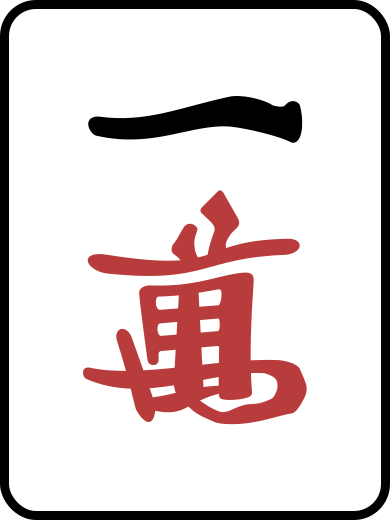
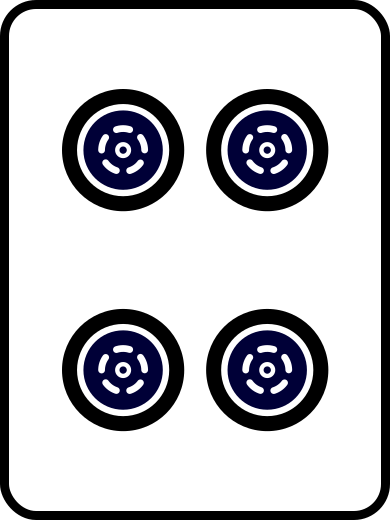
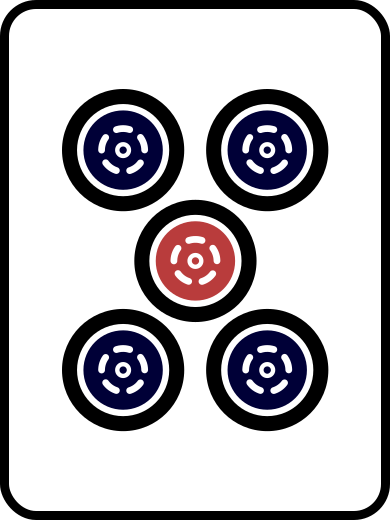
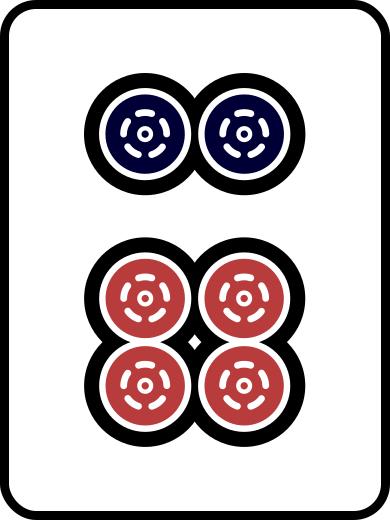
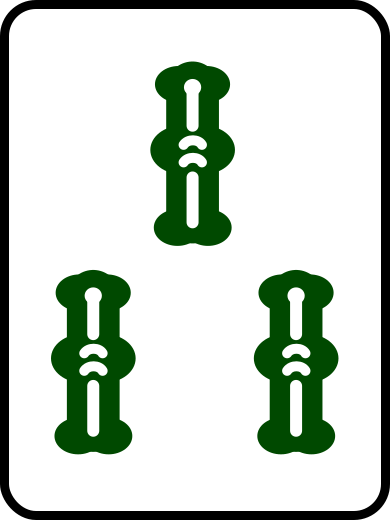
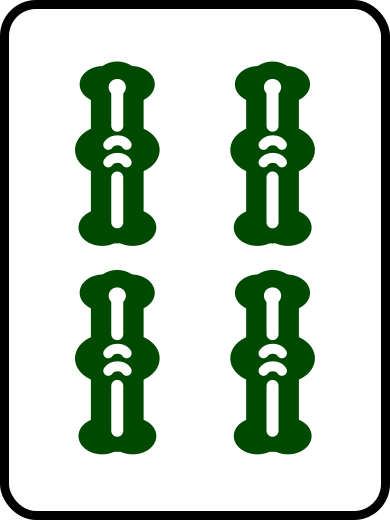
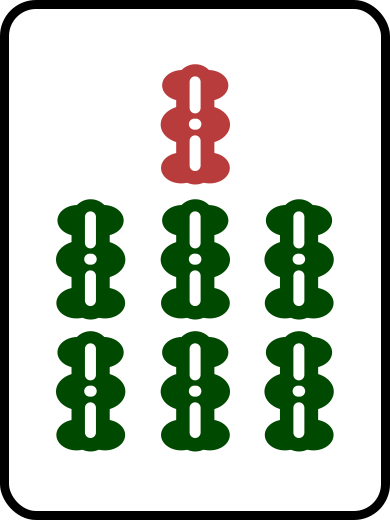
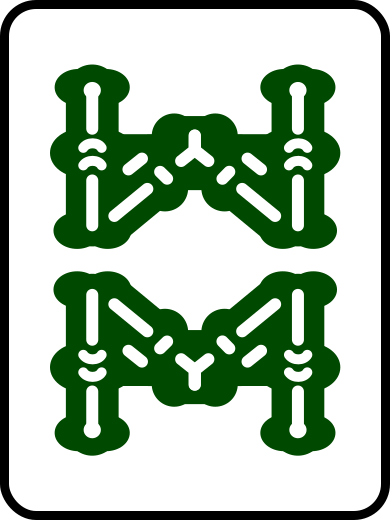
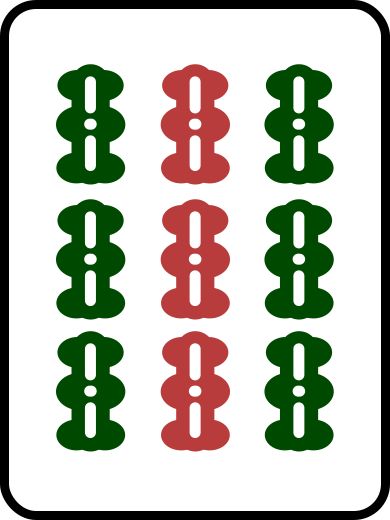

Three sets are done: 111m, 456p, and 789s. The two white dragons are the pair. That leaves , a (ryanmen): a 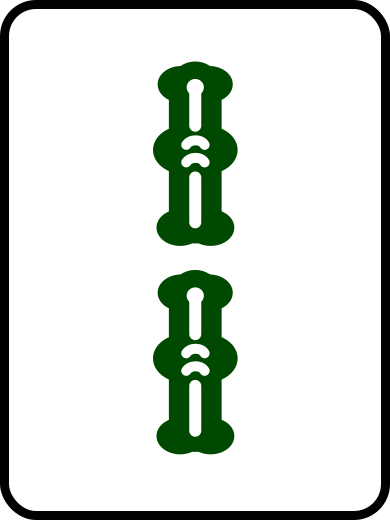 or a
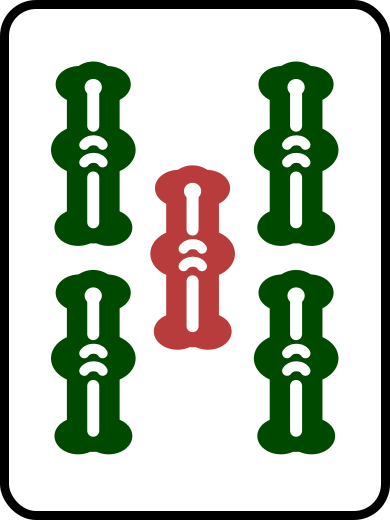 turns it into a run. Four copies of each exist and you hold none, so 8 tiles win this hand.
Tenpai is about shape. It says nothing about yaku, and What is a yaku? showed that a win needs one. This hand has none yet. The 1m, the 9s, and the dragons rule out (all simples), the triplet rules out , and a pair of white dragons is one tile short of . A tsumo still wins through , the yaku for a closed self-draw. A ron on an ordinary discard needs riichi.
A hand one useful tile short of tenpai is 1-shanten. Shanten, later in the course, counts every step. The tenpai guide has every wait shape with its tile count.
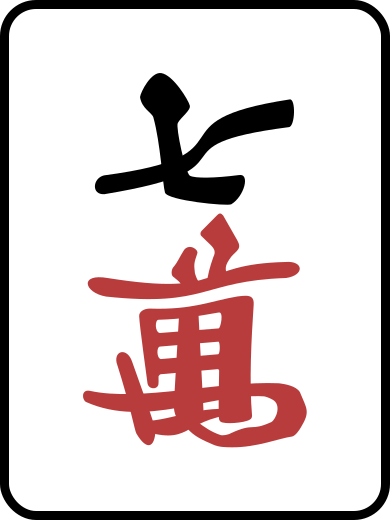
Which tiles win?
Show the answerHide the answer
Waits
Only the 5s. Three runs are done: 234m, 567m, and 456p, and 88s is the pair. That leaves 46s, and only a 5s fills the gap. That's a (middle wait), a one-sided wait, and you hold no 5s, so 4 tiles win, half as many as the hand above. An 8s is the tempting tap, but 888s leaves 46s with no pair. With one kind in the wait, one 5s in your discards would make the whole hand furiten, as the next sections show.
How to declare riichi
Riichi (立直) is a declaration: my closed hand is tenpai, and I won't change it. On Tenhou and Mahjong Soul you can declare when all four of these hold.
- Your hand is closed. No , no , no . A closed keeps it closed.
- Your hand is tenpai.
- You have at least 1,000 points, enough to pay the stick.
- At least four tiles are left in the wall, not counting the , so a draw still comes back to you.
You declare in three steps: say riichi, turn your discard sideways, and put a 1,000-point stick on the table. Online you press the riichi button and pick the discard, and the client does the rest. If another player rons that sideways tile, the declaration doesn't count and your 1,000 comes back. You still pay for the ron.
From then on your hand is locked. Each tile you draw either wins or goes straight to your discards. You can't chi or pon, and the client won't let you discard anything else. The one exception is a closed kan made with the tile you drew this turn, as long as your wait stays exactly the same. The riichi page has the fine print.
A closed tenpai you don't declare is dama (, a silent tenpai). It can still change its wait, and it can still fold: give up on the win and discard the safest tile every turn. It can only win on a discard if it already has a yaku.
What riichi adds to your hand
Riichi is a yaku worth 1 , so it gives any closed tenpai a way to win on a discard. Take the hand from the top of this page. Without riichi, a 2s or 5s from another player can't win for it. With riichi and no , a collects 1,300 on that same ron.
Two bonuses come only with riichi.
- Ura dora. When a riichi hand wins, the tiles under the dora indicators name extra dora, as What is a yaku? showed. Every match in your hand is 1 more han. The dora guide has the details.
- . Win within one go-around of your declaration, up to and including your next draw, and you add 1 han. Any chi, pon, or kan by any player in between ends the chance. The ippatsu page lists everything that closes the window.
Ippatsu or one ura dora turns that 1,300 into 2,600. Declare on your first discard, before anyone has called, and it's double riichi: 2 han in place of 1.
Riichi has a price. Once the declaration stands, the stick comes back only when you win. Another player's win takes it, and a draw leaves it on the table for whoever wins next. The locked hand can't improve its wait. And if another player declares riichi after you, you can't fold: every tile you draw goes out, even one that wins for them. Most of the time the trade is worth it, and When to riichi covers the few hands where it isn't.
Furiten: why you can't ron
Furiten (振聴) blocks ron. It never blocks tsumo. Three things cause it, and they share one idea: a hand that has already thrown away or passed up one of its winning tiles can't win on another player's discard.
Discard furiten
If any of your winning tiles sits in your own discards, you can't ron any of them, from any player. One tile blocks the whole wait.
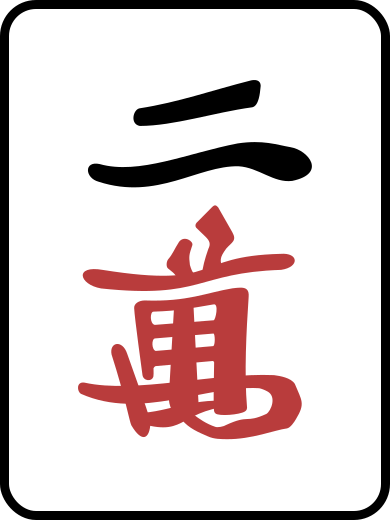
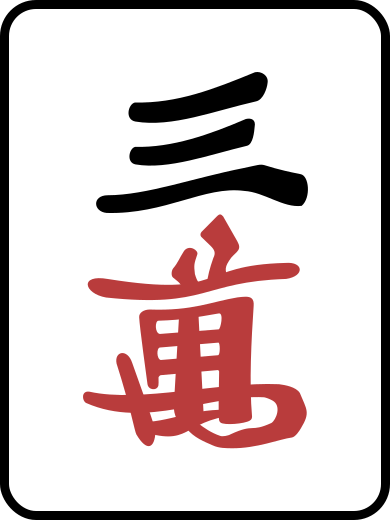
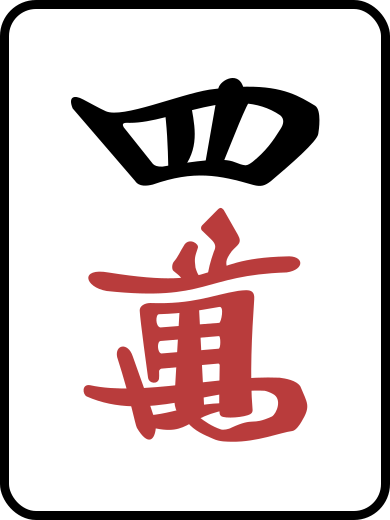
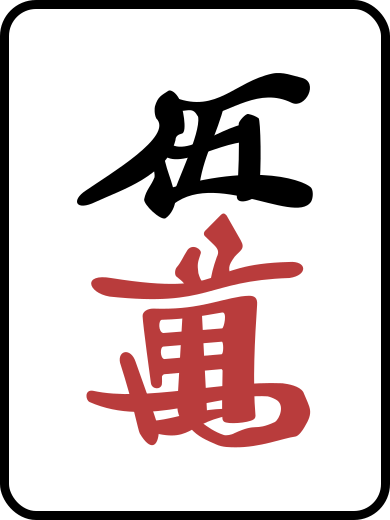
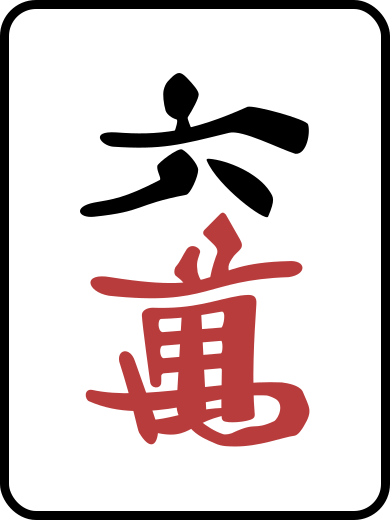
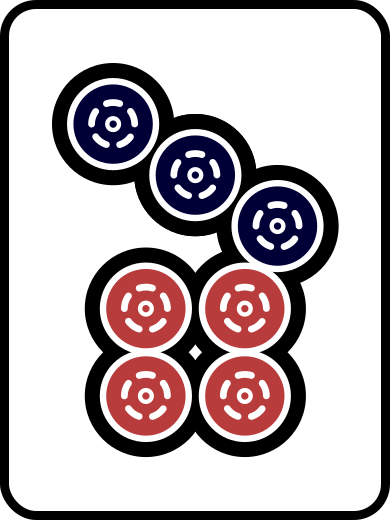
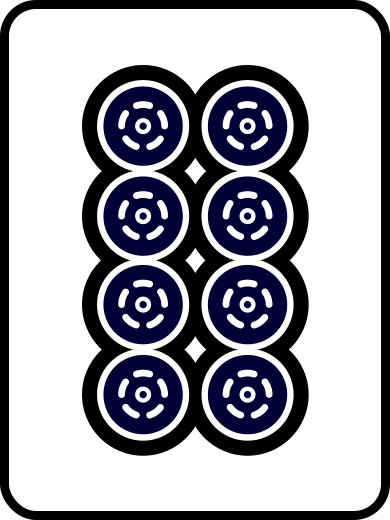
This hand waits on and 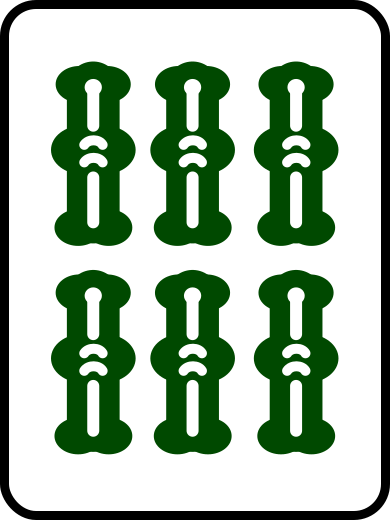 , with tanyao and pinfu for its yaku. Say you discarded a 6s early, before the hand had this shape. Now the player across throws a 3s, and you can't ron it. The 6s in your discards makes the whole wait furiten. Even a 6s that someone called off your discards counts against you.
Outside riichi you can rebuild: switch to a wait with none of your discards in it, and ron comes back. After riichi nothing can change, so the furiten lasts the whole hand.
You haven't declared riichi. Your discards include a 1p.
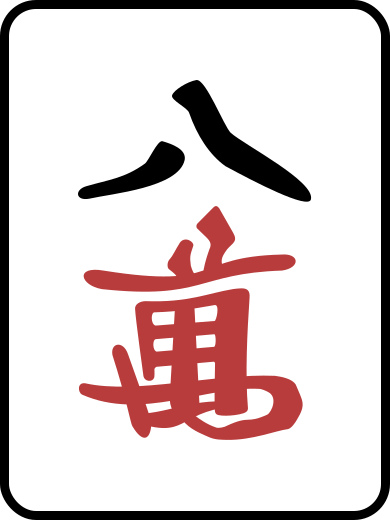
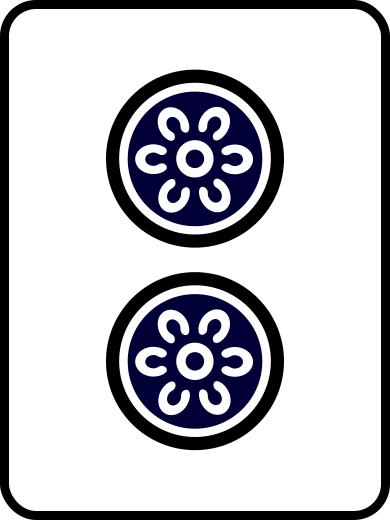
You draw the 4p. Can you win?
Show the answerHide the answer
Yes
Yes. Your 23p waits on the 1p and the 4p, and the 1p in your discards puts you in discard furiten. But furiten only blocks ron. A 4p you draw yourself wins, and a closed hand always has a yaku on tsumo: menzen tsumo, here with tanyao and pinfu too. From another player, the same 4p couldn't win.
Temporary furiten
Let a winning discard go by, and you can't ron anything until your next turn. Every winning tile is blocked, whoever throws it. The rule holds even when the tile you passed couldn't have won for lack of a yaku, which is how it catches the open hand below.
You called pon on the 6p, and your yaku is tanyao. The player across discards a 9s, and you can't ron it. Then the player on your left discards a 6s.
Can you ron the 6s?
Show the answerHide the answer
No
No. A 9s would make 789s, and the 9 breaks tanyao, so that tile gave you and no ron. It's still one of your winning tiles. Letting it pass put you in temporary furiten until your next turn, and the player on your left discards before you play again. Draw a 6s yourself and you win: an open tanyao hand can win by tsumo.
Riichi furiten
After riichi, let one winning discard pass and you're furiten for the rest of the hand. Online, that means you pressed skip when the ron button came up, by choice or by mistake. Your hand can't change, so nothing clears it. From then on only tsumo wins.
You may also declare riichi while you're already furiten. Go back to the hand at the top of this page. With a 5s in your discards it's furiten, and on Tenhou and Mahjong Soul a riichi is still legal. That riichi can only win by tsumo. The furiten guide covers the edge cases.
Check every reading of your wait
Discard furiten counts every winning tile, including the ones you didn't notice. Some shapes hide a winning tile.
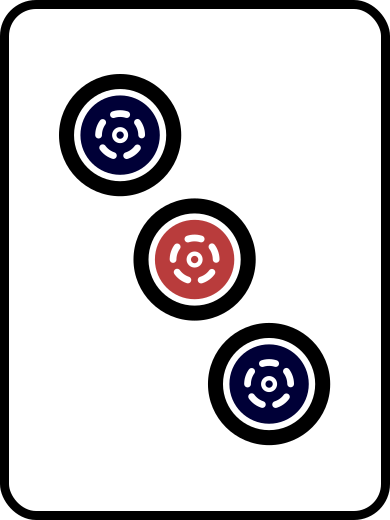
Read next to a pair of 7s, and the hand waits on and . Now read 777s as a set and leave the 6s alone: a second wins as the pair. So the wait is 5s, 6s, and 8s: 11 tiles, since you hold one 6s. If you threw a 6s earlier, a ron on the 5s or the 8s is gone too.
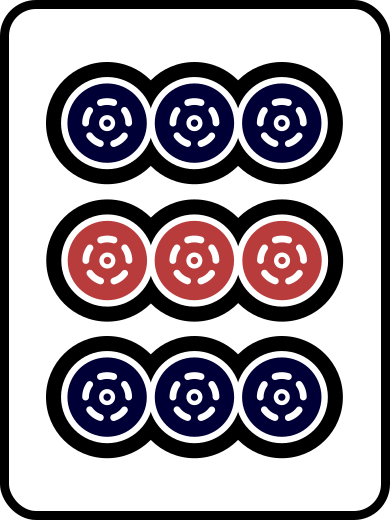
Which tiles win?
Show the answerHide the answer
Waits
The 2s and the 5s. Read 2345s as 234s plus a single 5s, and a second 5s makes the pair. Read it as a single 2s plus 345s, and a second 2s does. You hold one of each, so 6 tiles win: 3 of each kind. A 1s, 3s, 4s, or 6s does nothing: 23s and 45s look like two two-sided shapes, but no split of the five tiles leaves a set and a pair.
You declared riichi two turns ago. A 5p sits in your discards from before the riichi. The player on your right discards a 3p.
Can you ron the 3p?
Show the answerHide the answer
No
No. Read 44p as the pair and 45p as a two-sided shape, and the hand waits on the 3p and the 6p. Read 444p as a set, and a second 5p makes the pair. That 5p in your discards puts the whole wait in discard furiten, and the riichi was furiten the moment you declared it. A 3p, 5p, or 6p you draw yourself still wins.
The fix is a habit. The moment you reach tenpai, list every winning tile and check each one against your discards. The hand analyzer lists every wait of any tenpai hand, and the wait quiz trains you to find them on sight. Mahjong waits teaches the shapes later in the course.
Name every winning tile
The wait quiz deals tenpai hands and asks for every tile that wins, then shows the split behind each one. That full list is what you check against your discards for furiten.
Open the wait quiz