
A game usually runs eight hands or more. The deal moves around the table, a draw can still move points, and at the end the four players finish 1st to 4th. Ranked play online pays for that place far more than for your points, so you can't judge a hand until you know where it sits in the game.
From East 1 to All Last
A full game, the , has two rounds: East, then South. When the deal passes every hand, each round has four hands and each player deals once per round. South 4, the last hand, is (oorasu).
| Dealer | East round | South round |
|---|---|---|
| A | East 1 | South 1 |
| B | East 2 | South 2 |
| C | East 3 | South 3 |
| D | East 4 | South 4 (All Last) |
The deal passes to the right, to the player who takes the next turn (How a hand is played covers turn order). That player becomes East, every moves one step, and the old dealer becomes North.
The round sets the : East for the first half, South for the second. As What is a yaku? showed, a triplet of the round wind is for every player. Tenhou and Mahjong Soul also offer a shorter (tonpuusen).
The dealer plays for higher stakes
The dealer () collects 1.5 times as much for a win. A hand that pays a 8,000 pays the dealer 12,000. The dealer also pays a double share when another player wins by tsumo. What a hand pays has the numbers. The next rule decides who gets extra hands at those stakes.
Who deals next: the dealer stays or the deal moves
The dealer keeps the deal (, a dealer repeat) after a win. A hand can also end in an exhaustive draw (): the wall runs out with no winner. Then the dealer keeps the deal if their hand is , one tile from a win, as Tenpai, riichi and furiten explained. Two results pass the deal: a win by another player, or a dealer who is (not tenpai) at the draw. When the dealer stays, the hand keeps its name and gains a , a honba: East 2 becomes East 2, 1 honba.
| The hand ends with | Next dealer | Honba |
|---|---|---|
| A dealer win | The same dealer | One more |
| A draw, dealer tenpai | The same dealer | One more |
| A draw, dealer noten | The next player | One more |
| A non-dealer win | The next player | Back to zero |
Honba: 300 more for the next win
A honba goes on the table after every dealer repeat and every drawn hand. Each one adds 300 to the next win. On a , the discarder pays all of it. On a tsumo, each of the three payers adds 100.
Follow one dealer. East 2's dealer wins, so the next hand is East 2, 1 honba. It ends in a draw with the dealer tenpai: East 2, 2 honba. A non-dealer wins that one: East 3, no honba. Had the dealer been noten at the draw, the next hand would have been East 3, 2 honba, because a draw adds a counter whoever deals next.
Riichi sticks wait for the next winner
The 1,000-point stick you put out to declare riichi stays on the table until someone wins, and the winner takes every stick there, their own included. After a draw, the sticks carry over. Any left when the game ends go to 1st place. The scoring guide works an example with both kinds of stick.
East 3, 0 honba. You're the dealer, and the wall runs out.
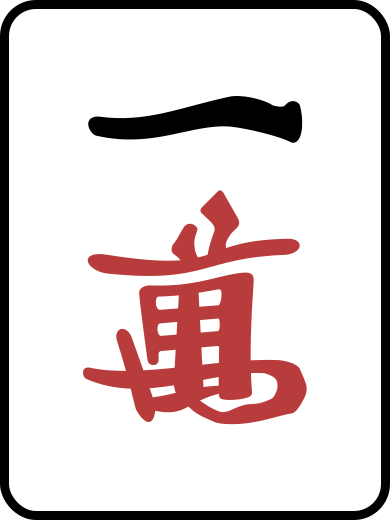
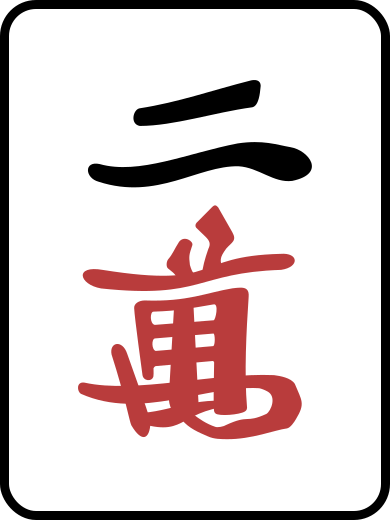
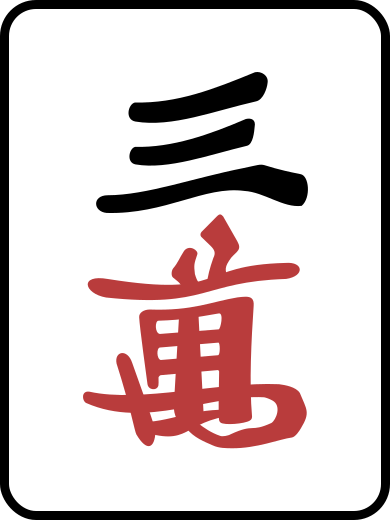
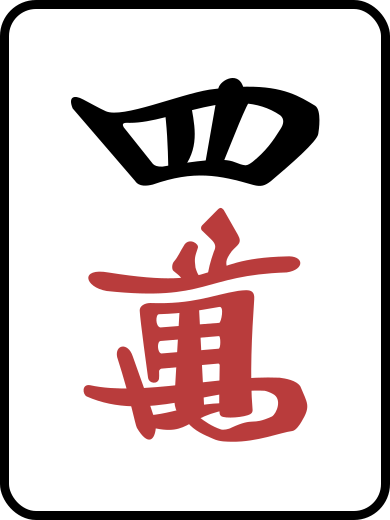
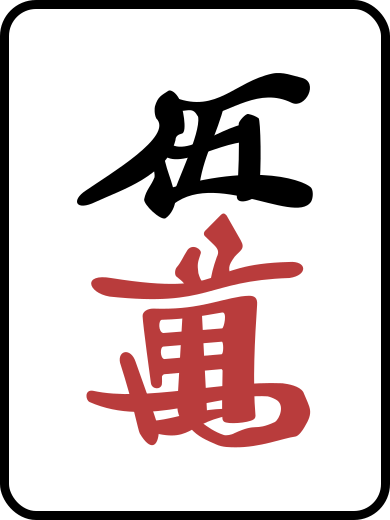
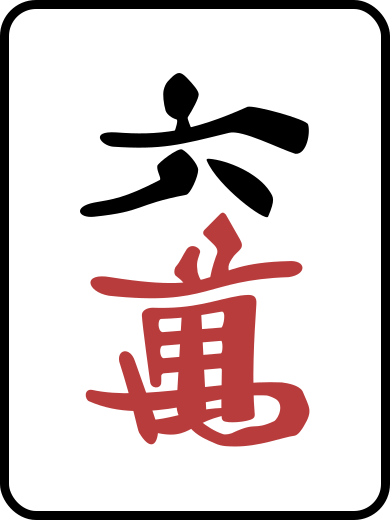
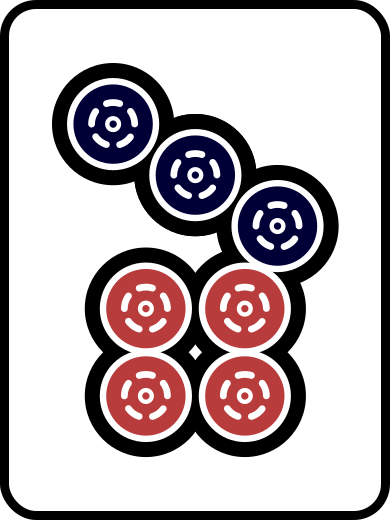
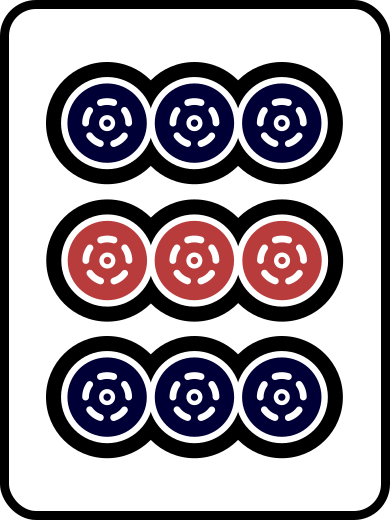
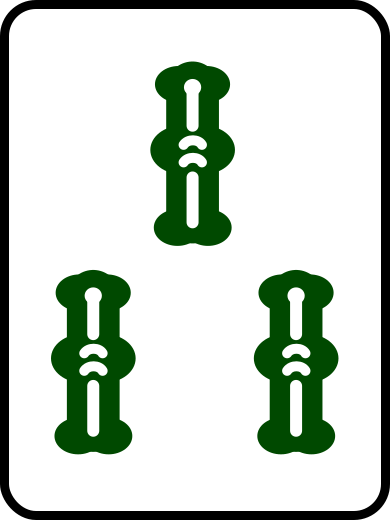
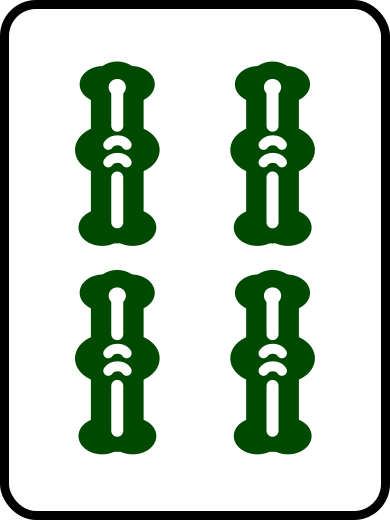
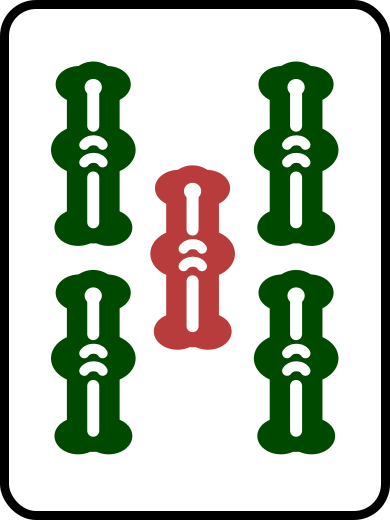
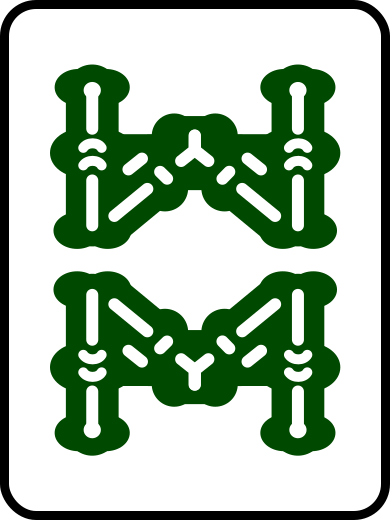
What's the next hand?
Show the answerHide the answer
East 3, 1 honba
East 3, 1 honba. Your 79p waits on the 8p, so you're tenpai, and a tenpai dealer keeps the deal at a draw. The hand number stays and the draw adds a honba. Had you been noten, the deal would pass to East 4, 1 honba, since a draw adds a counter either way. East 4 with no honba follows only a non-dealer win.
East 2, 2 honba. One riichi stick is on the table, left from a drawn hand. You aren't the dealer. The player across discards the 6p, and your ron is worth 2,000 with tanyao and pinfu.
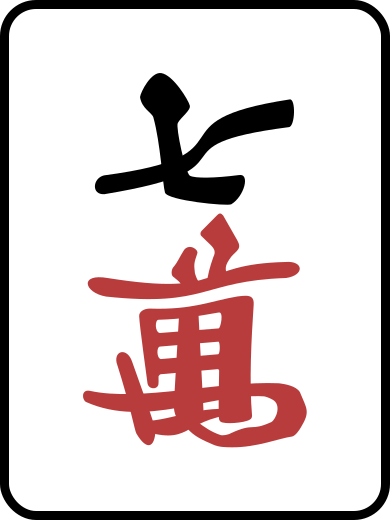
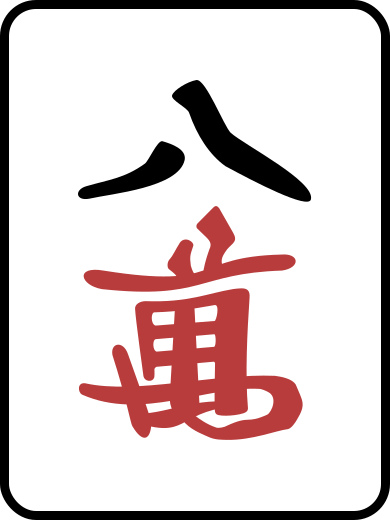
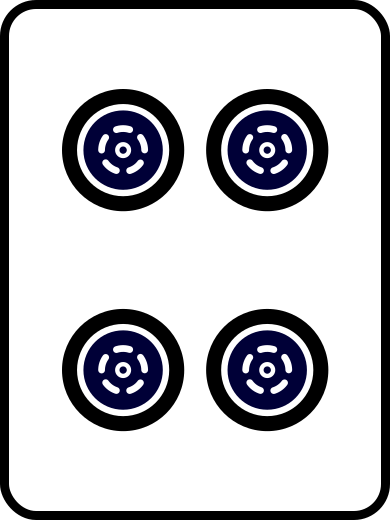
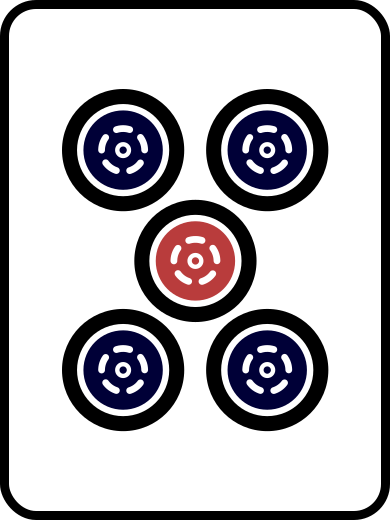
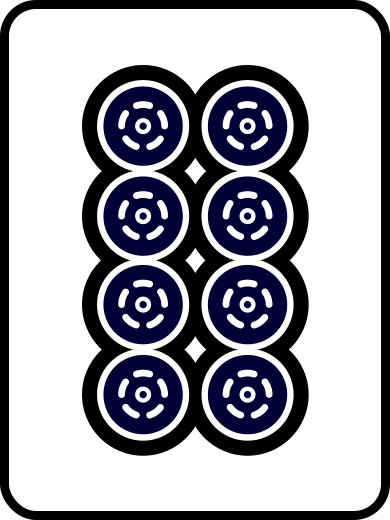
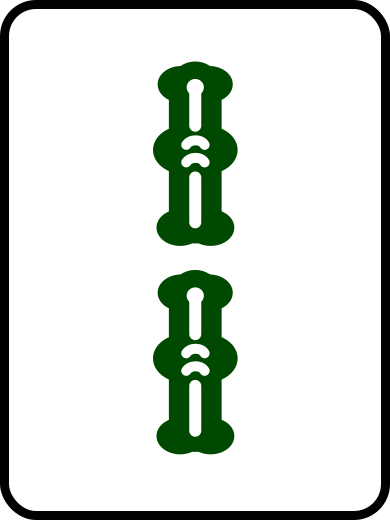
How much do you collect?
Show the answerHide the answer
3,600
3,600. The two honba add 600, all from the discarder, so they pay 2,600. The stick left from the drawn hand goes to the next winner, you, for another 1,000. Win by tsumo instead and each of the three payers adds 200 for the honba: the same 600 in all.
A draw pays the tenpai players
When a hand ends in a draw, the tenpai players reveal their hands, and the noten players pay them 3,000 points in all. A player in riichi is always tenpai.
| Players tenpai | Each tenpai player | Each noten player |
|---|---|---|
| 1 | +3,000 | −1,000 |
| 2 | +1,500 | −1,500 |
| 3 | +1,000 | −3,000 |
| 0 or 4 | 0 | 0 |
Tenpai here is a matter of shape. On Tenhou and Mahjong Soul a tenpai hand with still collects, and The last turns shows how players use that. With one other player tenpai, you collect 1,500 if you're tenpai and pay 1,000 if not: a 2,500-point swing, more than a 2,000-point win. In every case the swing is 2,500 or 3,000. The tenpai guide has the full tables.
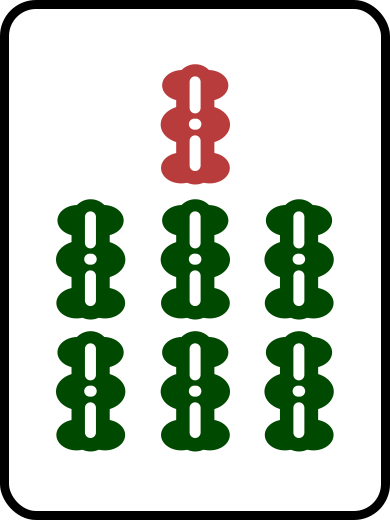
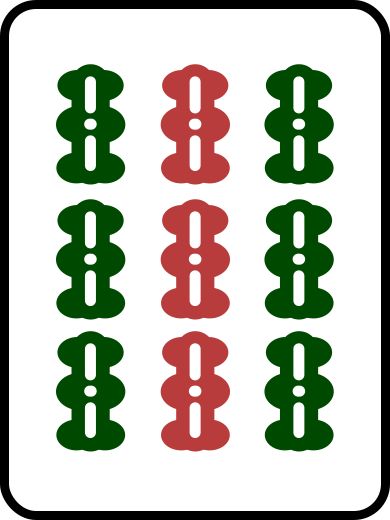
South 1, 0 honba. The wall runs out. You're tenpai, and the other three players aren't.
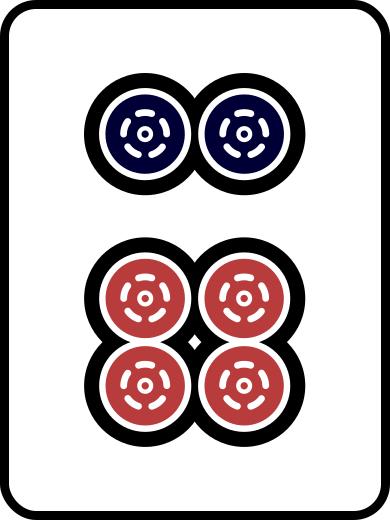
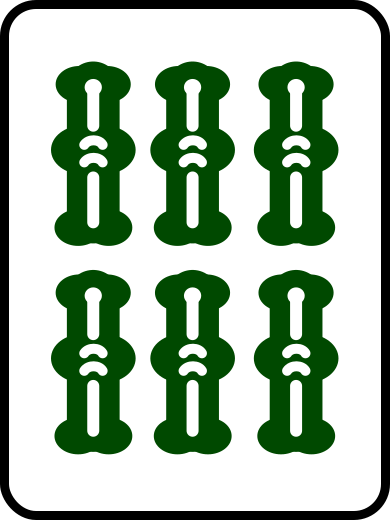
What do you collect?
Show the answerHide the answer
3,000
3,000. The noten players pay 3,000 in all, and you're the only tenpai player, so each of the three pays you 1,000. That 1,000 is what each of them pays, not what you collect. Your 67s waits on the 5s or the 8s, and a tenpai shape is all the payment asks for.
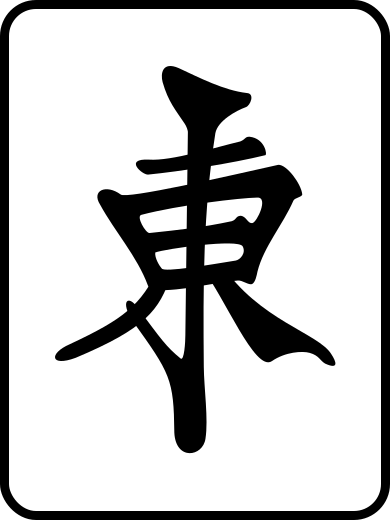
East 4, 0 honba. You aren't the dealer. The wall runs out, and two players show tenpai hands: the dealer and the player across.
What do you pay?
Show the answerHide the answer
1,500
1,500. Your hand isn't tenpai: it still needs two tiles, a 2m for the 13m and a 4s or a 7s for the 56s. Tenpai is one tile from a win. Two tenpai and two noten means each noten player pays 1,500 and each tenpai player collects 1,500, still 3,000 in all. The dealer was tenpai, so the next hand is East 4, 1 honba.
How the game ends
Most games end after All Last. On Tenhou and Mahjong Soul, three rules change that.
- Someone drops below zero. The game ends on the spot (, busting).
- The All Last dealer keeps the deal. Then the game goes on: South 4, 1 honba. The exception: a dealer who wins or is tenpai at the draw while in 1st with 30,000 or more ends the game there.
- Nobody has 30,000. If the game would end with 1st place under 30,000, play goes on into a West round. It stops after the first hand that leaves someone on 30,000 or more, or after West 4. Each West dealer follows the All Last rule above. On Tenhou, that holds even when someone else has 30,000. Mahjong Soul ends the game then, unless the dealer won in a .
The final scores give the standings. On both sites, a tie goes to the player who came first in turn order in East 1.
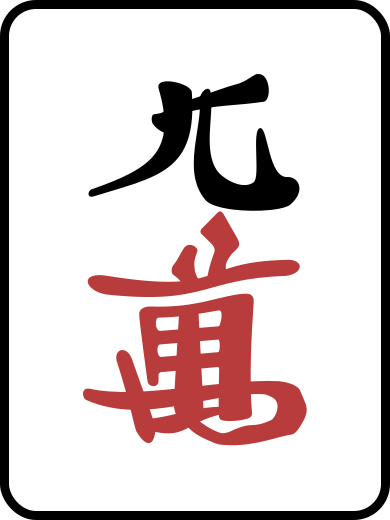
All Last, 0 honba. You're the dealer. The scores are 36,000, 29,000, 21,000 (you), and 14,000. The wall runs out.
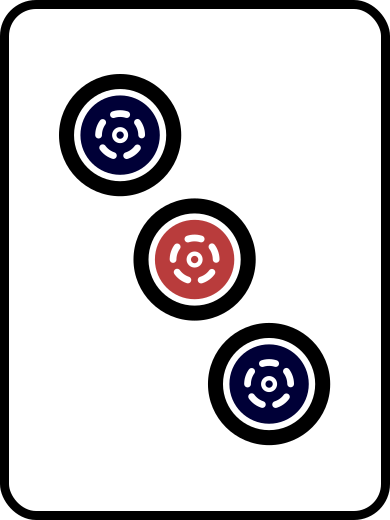
What happens next?
Show the answerHide the answer
You deal again
You deal again. Your 79m waits on the 8m, so you're tenpai, and a tenpai dealer keeps the deal, All Last included. The next hand is South 4, 1 honba. A tenpai dealer ends the game only from 1st with 30,000 or more, and you're 3rd. Noten, you'd pass the deal with 1st over 30,000, and the game would end with you 3rd.
Your place is the result, not your points
The ranked ladders on Tenhou and Mahjong Soul pay for your place. Here's one finished hanchan, scored on each at the ranks this course builds toward: 4 in Tenhou's room and Expert 1 in Mahjong Soul's Gold room.
| Place | Final score | Tenhou, 4 dan | Mahjong Soul, Expert 1 |
|---|---|---|---|
| 1st | 33,000 | +75 | +103 |
| 2nd | 31,000 | +30 | +51 |
| 3rd | 24,000 | 0 | −6 |
| 4th | 12,000 | −90 | −108 |
- Tenhou counts placement only. 1st and 2nd earn a set amount by room, 3rd earns nothing, and in a hanchan 4th costs 15 points more with every dan. A 1st by 100 points pays the same +75 as a 1st by 40,000. The Tenhou rank calculator has every rank.
- Mahjong Soul counts placement, then score. Your place brings a room bonus for 1st and 2nd, a (uma) of +15, +5, −5, or −15, and a 4th-place penalty that grows with your rank. Then every 1,000 points above or below 25,000 adds or takes 1 rank point. The Mahjong Soul rank-up guide goes rank by rank, and the rank calculator runs your own placement rates.
The top two sit 2,000 points apart on the scoreboard and 45 or 52 rank points apart on the ladders. In this game, 4th costs more than 1st earns on both. Staying out of 4th matters as much as taking 1st.
Many clubs and home games pay uma too, in points on top of the final scores, and the size varies. The score tracker defaults to +20,000, +10,000, −10,000, and −20,000 from 1st to 4th, plus an extra bonus for 1st, the . Each place you climb is worth at least 10,000 points, more than an 8,000-point hand.
So you play for your place. A cheap win that lifts you a place can beat a big hand that doesn't, and paying for a ron that drops you to 4th costs more than the points. Play for placement, not points turns that into decisions later in the course.
Score a game hand by hand
The score tracker moves the dealer, counts honba and riichi sticks, pays the draws, and ranks the table with uma at the end. Run your next home game through it and follow each hand's result.
Open the score tracker