
Turn 14, three or four draws from the end, and your hand is one tile short of with in sight. Those last draws still decide whether you pay or get paid when the wall runs out with no winner. You can collect with a hand that can't win, as long as chasing the payment doesn't cost you a .
Tenpai at the draw is worth up to 3,000 points
When the wall runs out with no winner, the (not tenpai) players pay the tenpai players 3,000 points in all, as How a game works showed.
| Others tenpai | You're noten | You're tenpai | Tenpai is worth |
|---|---|---|---|
| 0 | 0 | +3,000 | 3,000 |
| 1 | −1,000 | +1,500 | 2,500 |
| 2 | −1,500 | +1,000 | 2,500 |
| 3 | −3,000 | 0 | 3,000 |
That's more than a cheap win pays: a non-dealer's 2 30 fu is 2,000 (what one tenpai is worth).
For the dealer, tenpai keeps the deal
A tenpai dealer keeps the deal at a draw (, a dealer repeat), so the next hand is played at dealer prices again: a ron pays 12,000 instead of 8,000. A noten dealer hands the deal on (the dealer's rule). As the dealer, push harder to keep it.
Formal tenpai: no yaku, still paid
(形式聴牌, keishiki tenpai, or keiten for short) is a tenpai hand with no yaku. It's usually open, since a closed tenpai can always win by tsumo: a closed is a yaku of its own. A formal tenpai can't win on an ordinary draw or discard. On Tenhou and Mahjong Soul it still counts at the draw like any other tenpai. The glossary card has the short version, and the tenpai guide the rule.
You called on the 7m with your 89m. This is the rest of your hand.
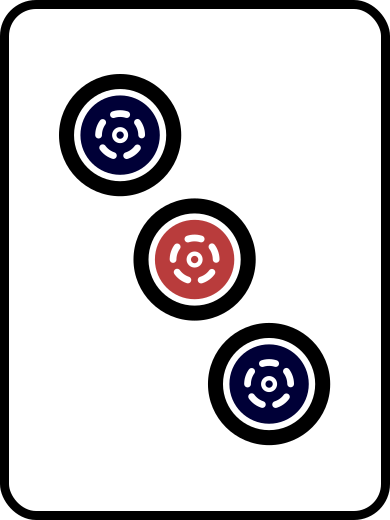
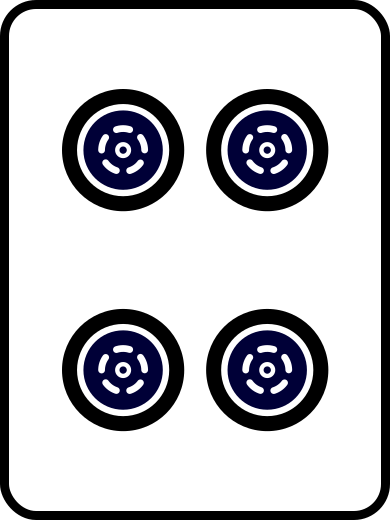
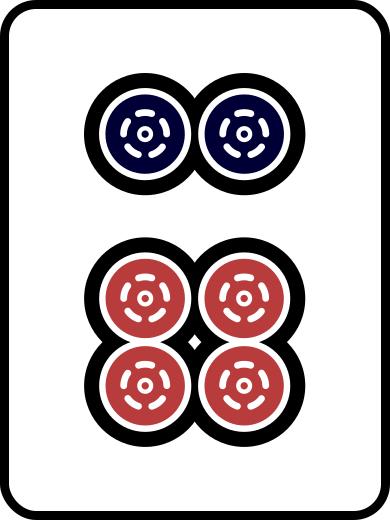
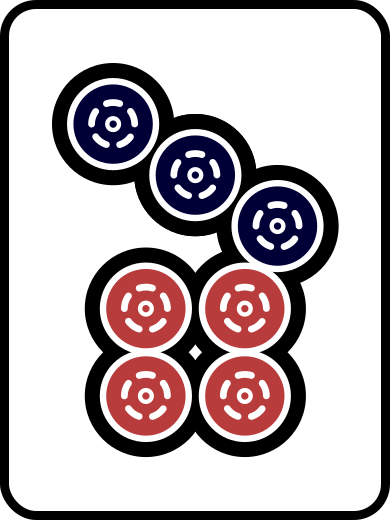
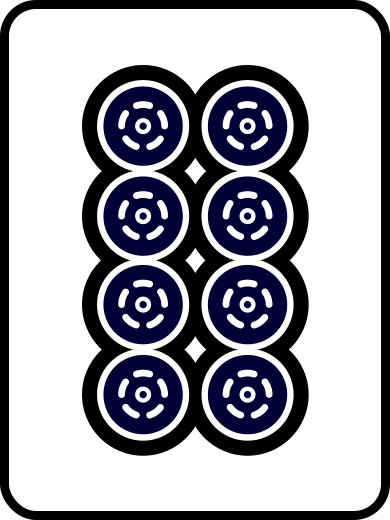
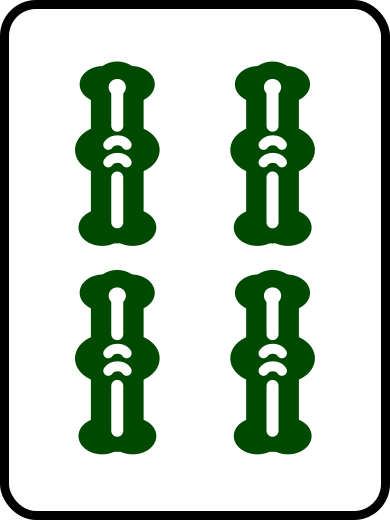
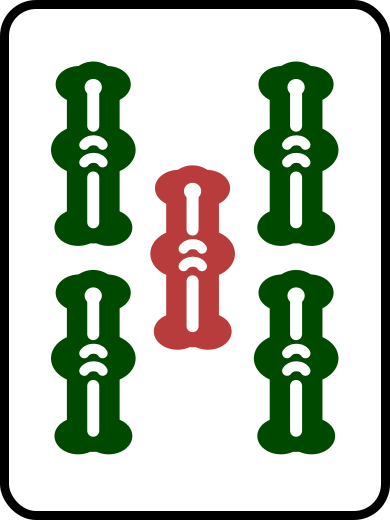
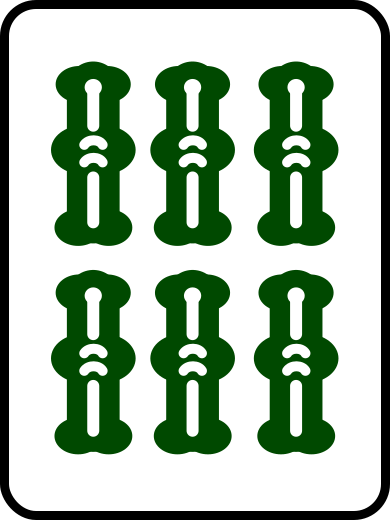
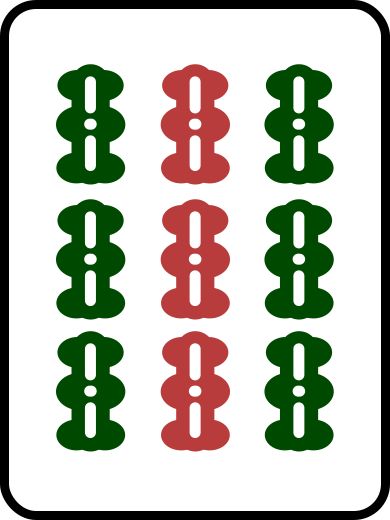
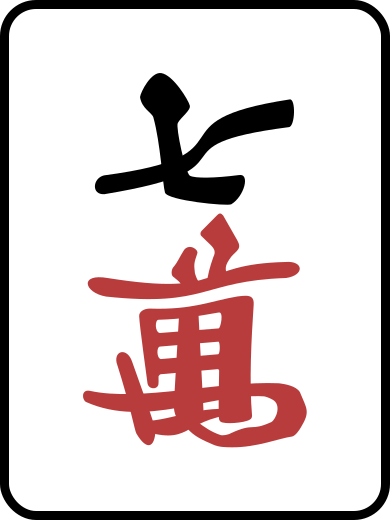
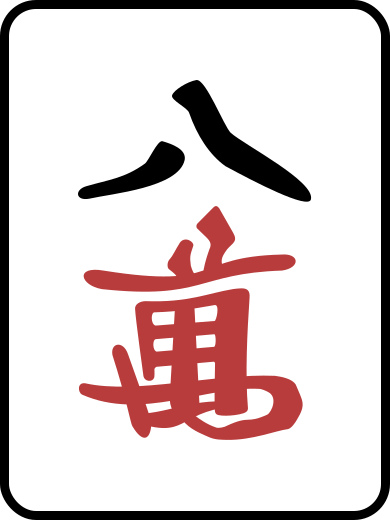
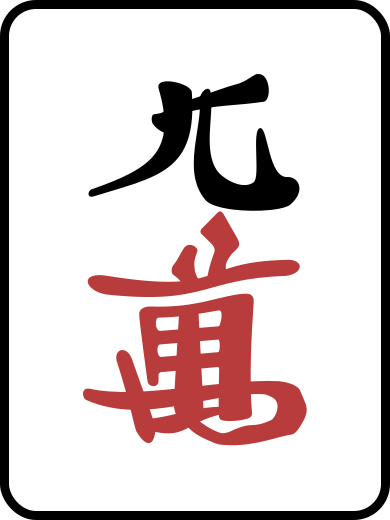
It waits on 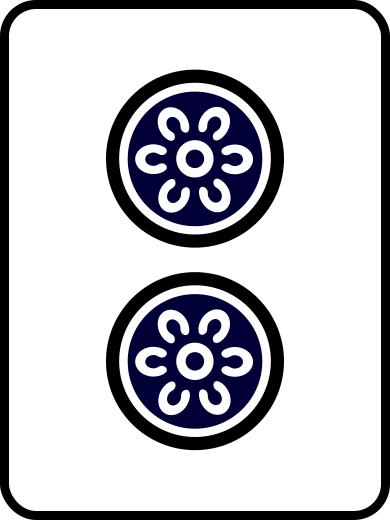 and
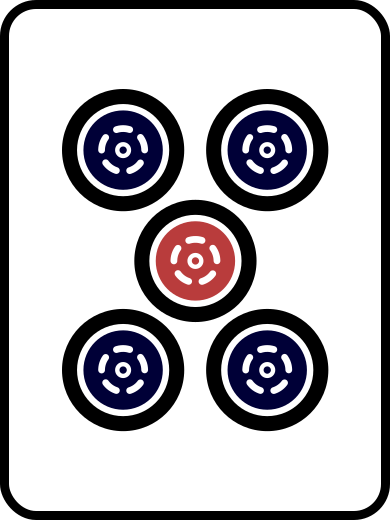 , 8 tiles, and neither brings a yaku. The 9m in the chi and the 99s pair rule out , and the call rules out and . There's no honor set, no straight, and no matching runs across the suits.
In practice it has one way to win: the last tile. A tsumo on the last tile of the wall () or a ron on the (houtei) is a 1-han yaku, open or closed. The haitei and houtei page scores both.
Call for tenpai in the last rows
That's why players chi or late in a hand only to get tenpai. Early on, a closed 1-shanten keeps riichi in reach. Late, with three or four draws left, it may never reach tenpai. The call makes you tenpai now. Unlike in 1-shanten against a riichi, the call needs no yaku.
My rule of thumb: from turn 14, look for a chi or pon that makes you tenpai. With nobody in riichi, take it. Start a turn sooner when the closed 1-shanten is narrow, and wait a turn when it's wide and riichi would make it a mangan. Against a riichi, the call pays only if the tile you cut after it is worth pushing, and the next section prices that.
Settle two things before you call.
- The discard. The tile you throw after the call has to keep you tenpai. When more than one does, throw the safest. A narrow wait collects the same payment as a wide one.
- Your defense. After a call you hold ten tiles, not thirteen. If someone declares riichi next turn, you fold with fewer safe tiles.
You called pon on the 1p.
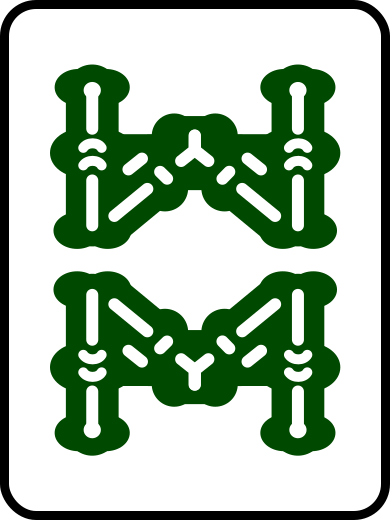

Which tiles complete the hand? Then check whether any of them gives a yaku.
Show the answerHide the answer
Waits 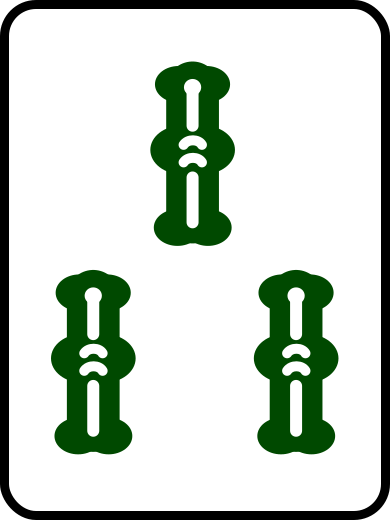
The 3s, 6s, and 9s: 11 tiles, since one 6s is yours. As 45 plus 678, the 45678s takes the 3s or the 6s. As 456 plus 78, it takes the 6s or the 9s. None of them brings a yaku: the 1p pon rules out tanyao, and no winning tile makes a straight or matching runs. That's formal tenpai.
South 2. You're not the dealer, and you have three draws left in the hand. Nobody has declared riichi. The player on your left discards the 8p.
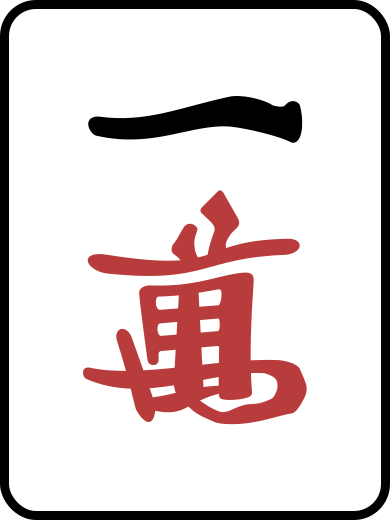
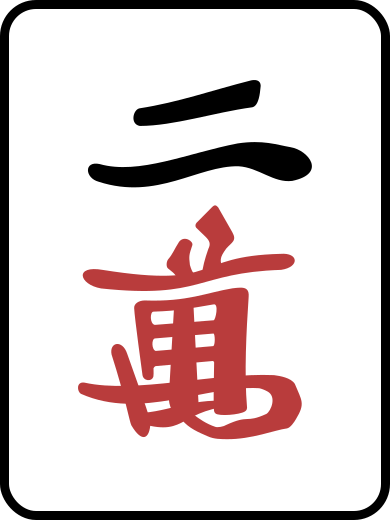
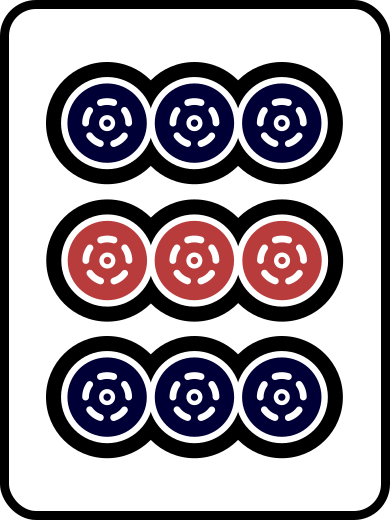
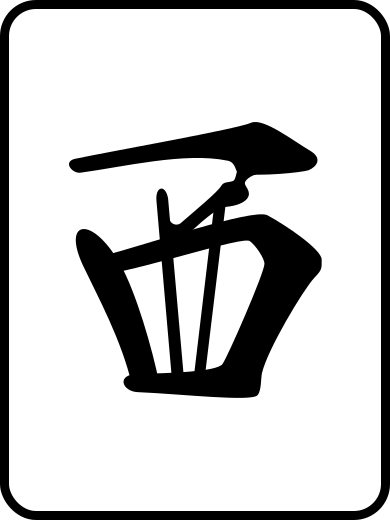
Chi the 8p with your 79p, or let it pass?
Show the answerHide the answer
Call for tenpai
Call. Closed, 7 tiles make tenpai: the four 5s and the three 8p left after this one. About 64 tiles are hidden this late (the other three hands, the , and a dozen in the wall), so the five-sixths rule undercounts: that's near 11% a draw and under in three over three draws. A closed tenpai would collect the same payment, so passing trades a tenpai now for a long shot at one. The chi makes tenpai now: cut the West, and the 46s waits on the 5s.
Price the tile before you push for the payment
Against a riichi, the payment has a price. A formal tenpai has almost no way to win, so a push buys the payment and nothing else.
The push or fold calculator charts this spot in its Keiten at the draw mode. It assumes a single riichi, the other two players fold, and you'd fold with two (tiles the riichi player can't ron). Honors and no-suji 1s and 9s aren't in it. Its columns sort tiles as the safety ladder does, by and by number. Push and Fold mean a clear edge, Lean push and Lean fold a small one, and Close call about even.
Below Mahjong Soul's Master rank, the shuhari post has you fold every riichi, so treat the chart's Push and Lean push cells, and the Push drill below, as play you're growing into. The call for tenpai with nobody in riichi holds at every rank.
| Discards left | Suji 1 or 9 | Suji 2, 3, 7, 8 | No suji 2, 3, 7, 8 | No suji 4, 5, 6 |
|---|---|---|---|---|
| 1 | Push | Push | Push | Lean push |
| 2 | Push | Push | Push | Close call |
| 3 | Push | Push | Lean push | Lean fold |
| 4 | Lean push | Lean push | Lean fold | Lean fold |
| 5 | Close call | Close call | Lean fold | Fold |
Read it as two rules. In your last three discards, push any suji tile and any no-suji 2, 3, 7, or 8, while a no-suji 4, 5, or 6 stays close. With four or five to go, fold the tiles with no suji.
Discards left matter because the payment comes once, at the draw, and every unsafe tile you cut before it is a fresh chance to deal in. On the safety ladder, a 4, 5, or 6 with no read is in about 8% of riichi waits. Push four of them and the chance that one deals in is 28%. Late in a long riichi, a tile with no read is worse than that, as Reading discards counted. And a deal-in costs far more than the 2,500 at stake: in , Tenhou's top room, a riichi from turn 8 (counted from zero) averaged 5,869 on a ron (what folding costs).
The seat moves the line both ways.
- You're the dealer. The deal rides on it too. The chart pushes every tile class in your last two discards, and a no-suji 4, 5, or 6 is still a lean push with three left.
- The dealer declared. A deal-in costs more: a dealer's riichi averaged 8,179 on a ron in the same logs. A no-suji 4, 5, or 6 is a fold even on your last discard, and a no-suji 2, 3, 7, or 8 is a close call in your last two.
South 1. You're not the dealer, and you're in formal tenpai on 2p and 5p. The player on your right, a non-dealer, declared riichi at turn 9. You have four discards left, counting this one. Their river has no 5p, and your 99s pair is genbutsu.
You draw the 8p. Push it to stay tenpai, or fold?
Show the answerHide the answer
Fold
Fold. With four discards left, a no-suji 8p is a lean fold in the keiten chart: a small edge, but it's the fold's. The push wins one 2,500 swing, and each of your next three draws can bring another unsafe tile to push. Fold with the 99s and you pay 1,000 if the wall runs out. Two discards from the end, the same 8p would be a push.
East 3. You're the dealer, in formal tenpai after a pon of the 9p. The player on your right declared riichi at turn 10. This is your second-to-last discard. Their river has no 2p or 8p, and your 66s pair is genbutsu.
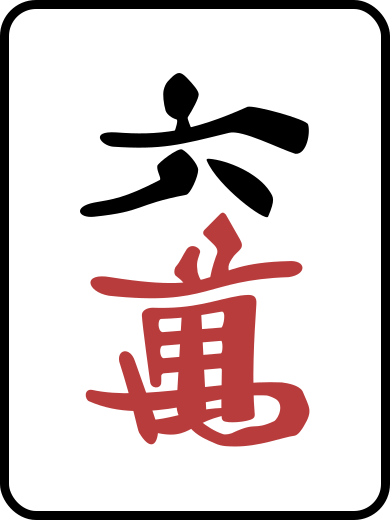
You draw the 5p. Push it to stay tenpai, or fold?
Show the answerHide the answer
Push
Push. A no-suji 5p is the most dangerous class in the chart, and a non-dealer here has a close call. As the dealer, stay tenpai and you deal the next hand, where your wins pay about 1.5 times as much. The keiten chart pushes every tile class in a dealer's last two discards. Fold, and you pay 1,000 and hand the deal on.
South 3, turn 14. You're not the dealer. The dealer, on your right, declared riichi at turn 10. Their river has no 2p or 8p, and your 99s pair is genbutsu. You have four discards left. The player on your left discards the 2s.
Chi the 2s with your 34s, or let it pass?
Show the answerHide the answer
Pass
Pass. The chi makes tenpai only if you then cut the 5p, a no-suji tile, into the dealer's riichi, with three more discards to follow. The keiten chart folds a no-suji 4, 5, or 6 against the dealer at every discard count, so this tenpai isn't worth the tile it costs. Let the 2s go, fold with the 9s, and pay your 1,000 if the wall runs out.
Make sure it counts: karaten and furiten
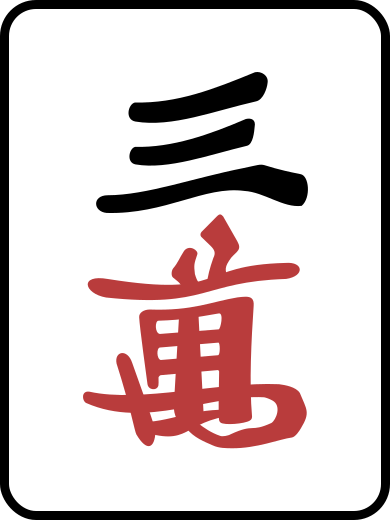
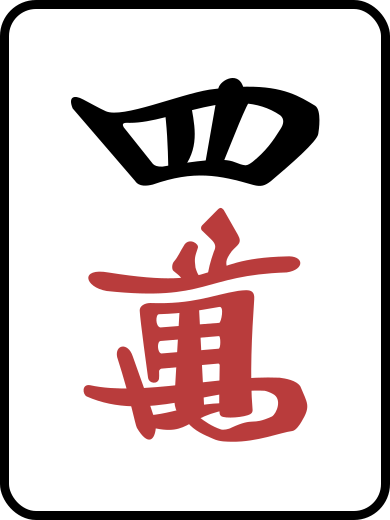
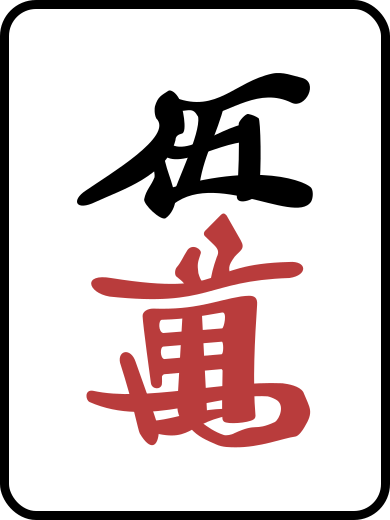
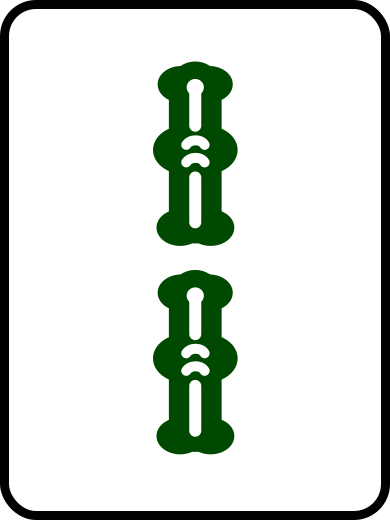
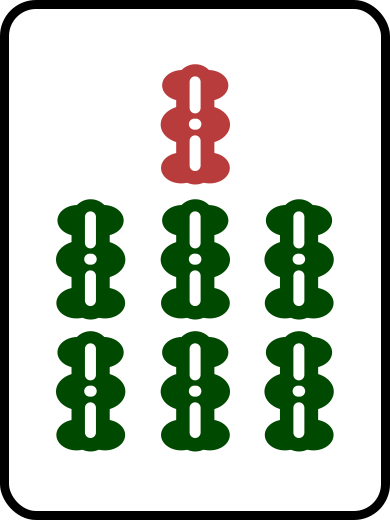
This looks like tenpai on a : 234s and 777s are sets, and the fourth 7s waits for its pair. But you hold all four 7s, so the winning tile doesn't exist. That's (空聴), and neither Tenhou nor Mahjong Soul counts it as tenpai at the draw. The hand analyzer flags it. Fix it on your next draw: cut a 7s and keep the new tile as a single wait.
The other kind of karaten still counts. A wait whose last copies are all visible, in the rivers, in calls, or as the indicator, can't win, but it's tenpai at the draw (the tenpai guide).
blocks ron, never tenpai. A hand with one of its winning tiles in its own discards still collects at the draw (the tenpai guide). A formal tenpai can't ron an ordinary discard anyway, so a furiten wait costs it almost nothing.
Check the keiten chart
The push or fold calculator's keiten mode takes who declared riichi, whether you're the dealer, how many discards you have left, and the tile you'd push. It tells you whether the tenpai payment is worth that tile.
Open the keiten chart