
Out of against a , you hold a 9, a West both other players have cut, a half-suji 5, and a with no read. All four can deal in, but not equally often. The West loses only to a on its last copy, the 9 to a single or , and the 5 to a too. The dora loses most often. Seven rungs sort any tile that way.
How to fold covered genbutsu (現物): the riichi player's own discards plus every tile that passed after their riichi. When genbutsu runs out added two reads: suji, the tiles a two-sided wait can't win on, and , which counts the copies you can see.
Seven rungs, safest first
Each rung answers one question: which waits can still win on this tile? Fewer waits usually means a higher rung, and where the count misleads, data from Tenhou's top room () decides. The waits are the five from Mahjong waits: ryanmen (two-sided), (middle), (edge), tanki (single), and shanpon (pair).
| Rung | Tile | Still loses to |
|---|---|---|
| 1 | Genbutsu | Nothing |
| 2 | An honor with the other three copies visible | Only (one of every terminal and honor) |
| 3 | An honor with two other copies visible | A tanki on the last copy |
| 4 | A suji 1 or 9, or an honor with one other copy visible | A tanki or a shanpon |
| 5 | Other suji tiles, and kabe tiles | Narrow waits only: kanchan, penchan, tanki, or shanpon |
| 6 | A fresh honor, a 1 or 9 with no read, a half-suji 4, 5, or 6, or a tile | Tanki and shanpon, plus one ryanmen and often a kanchan on a number tile |
| 7 | Every other tile with no read, middle tiles last | One ryanmen, or two for a 4, 5, or 6, plus the narrow waits |
The order follows the suji guide, which calls it rough: neighboring rungs can trade places, and a one-chance tile gets less safe later in the hand. Whether to fold is Push or fold, later in the course; the push or fold calculator answers it today.
Honors climb with every copy in view
An honor can't sit in a run, so only a tanki or a shanpon waits on it. With one other copy visible, the riichi player can still hold the last two as a shanpon. With two visible, they hold one at most, so only a tanki is left.
A fresh honor, with no other copy in view, loses to the same two waits yet sits two rungs lower. Its three unseen copies make three possible pairs, against one once a copy is out, and riichi players pick honor waits on purpose, because folding players throw honors. The Houou data prices honors only as the dora: a fresh honor dora is in 6.9% of riichi waits, between a 9 dora (6.3%) and a 1 dora (7.0%). One copy out drops it to 2.1%. So a fresh honor shares rung 6 with a no-read 1 or 9.
No read: the number decides
On the bottom rungs, count the ryanmen. A 1 or 9 with no read can lose to one, a 2 or 8 adds a kanchan, and a 3 or 7 a penchan as well. A 4, 5, or 6 is the winning tile of two: a 4 loses to 23 and to 56. The Houou shares, your chance before any read, follow the count: 4.1% for a 1 or 9, 5.3% for a 2 or 8, 6.2 to 6.3% for a 3 or 7, and 7.8 to 8.0% for a 4, 5, or 6.
A half-suji 4, 5, or 6 keeps one ryanmen and a kanchan, the shapes of a 2 or 8, yet the Houou data puts it in about as many waits as a 1 or 9, so it shares rung 6. The deal-in danger tool prices any number tile, plain or dora.
East 3, turn 7. The player on your right declared riichi with the 7m. Their river: South, 1p, 9m, 4s, 2m, 7m. Before the riichi, one white dragon went into the left player's river and another into the river of the player across. Nobody has discarded a red dragon. No tile discarded since the riichi touches your hand.
You're folding. Which tile is highest on the ladder?
Tap the tile you would choose.
Show the answerHide the answer
Fold with
The . Two other copies are in view, so only a tanki on the last one can win on it: rung 3. The 1s is suji of their 4s, a rung lower, because a shanpon can take it too. The has no copy in view, which drops it to rung 6.
Rank a whole hand in one pass
South 2, turn 7. The declares riichi with the 9s. Their river is 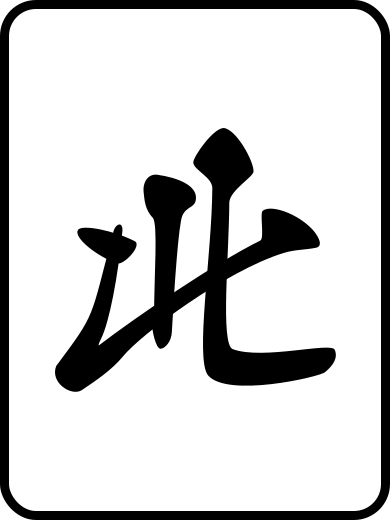
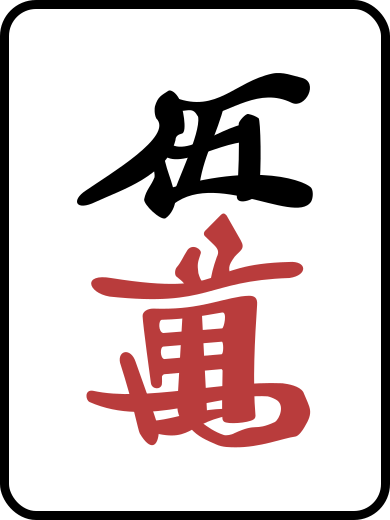
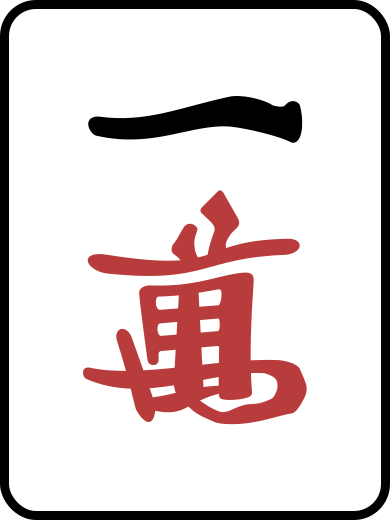
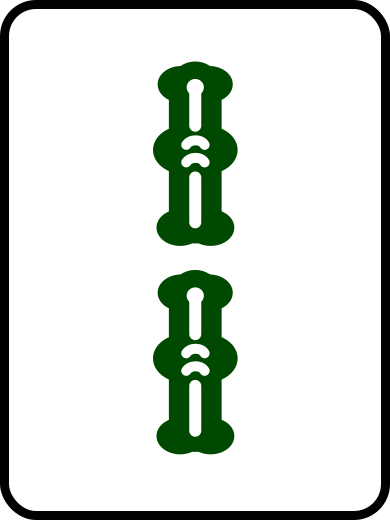
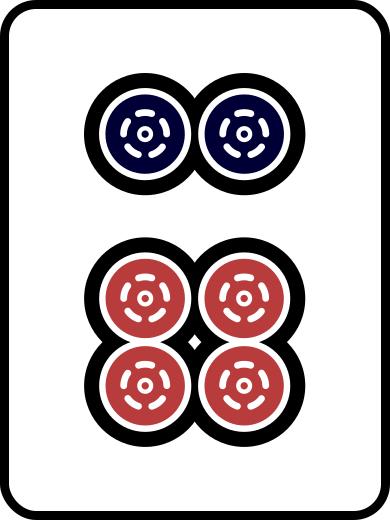
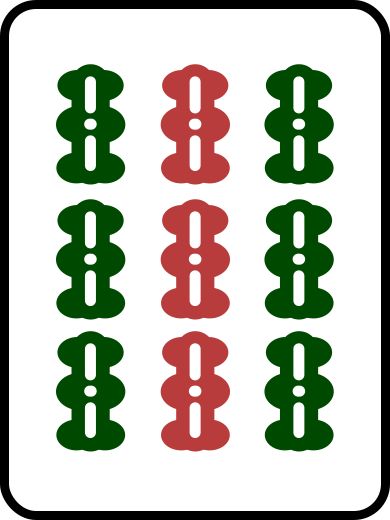 . Before the riichi, the players on your left and right each discarded an East, and the one on your left a South. No tile discarded since the riichi touches your hand. The dora is the 4s. You draw a South and fold: the hand is going nowhere.
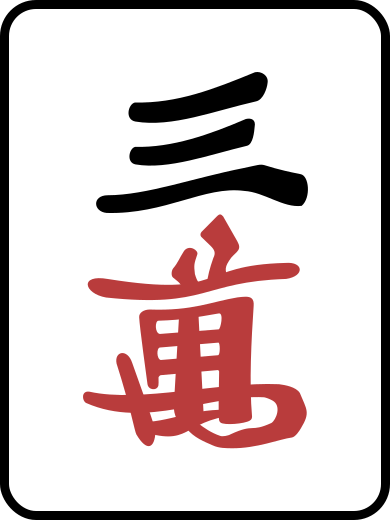
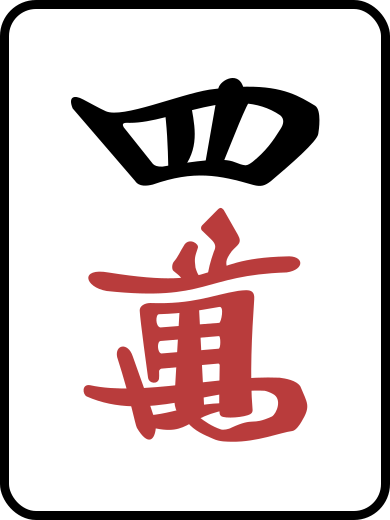
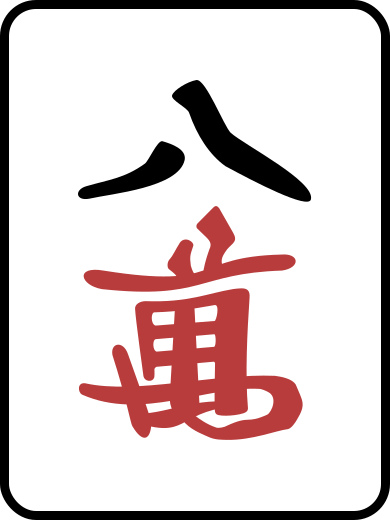
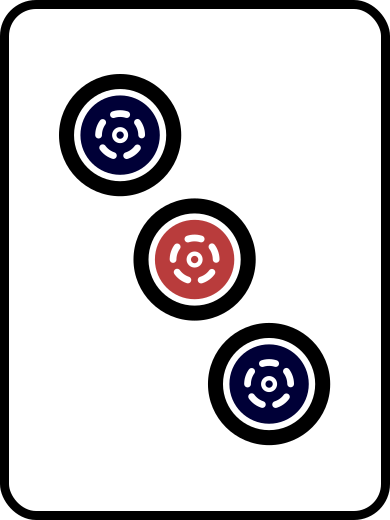
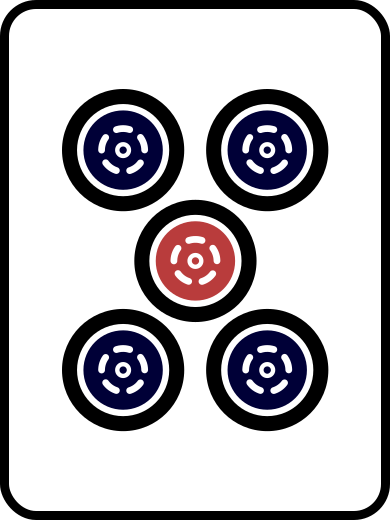
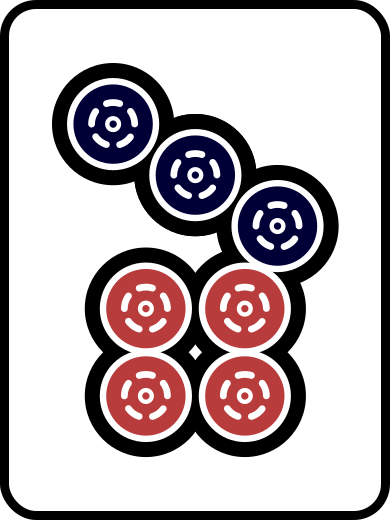
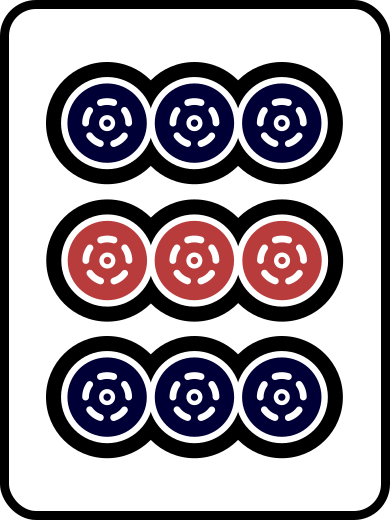

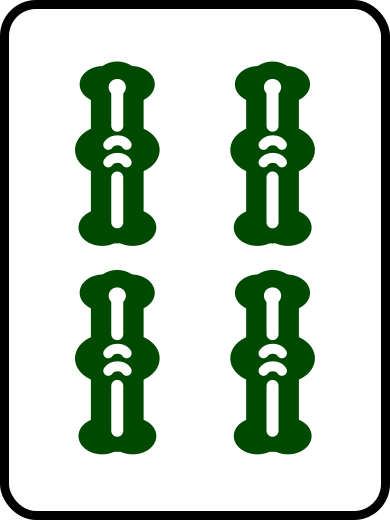
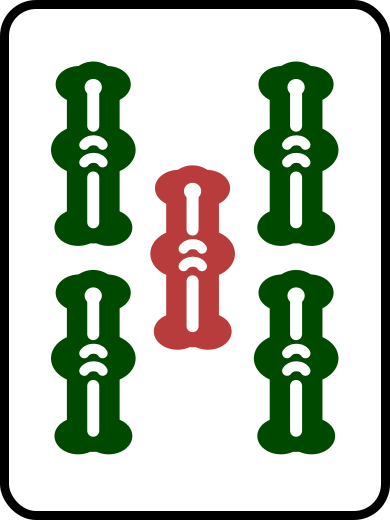
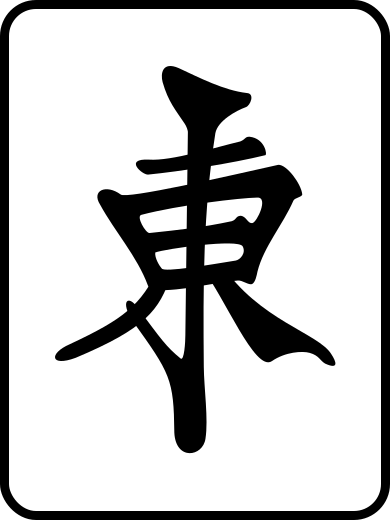
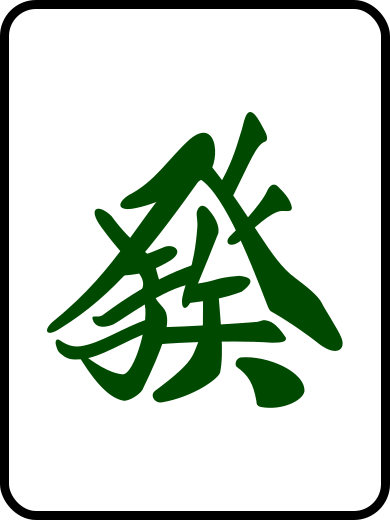
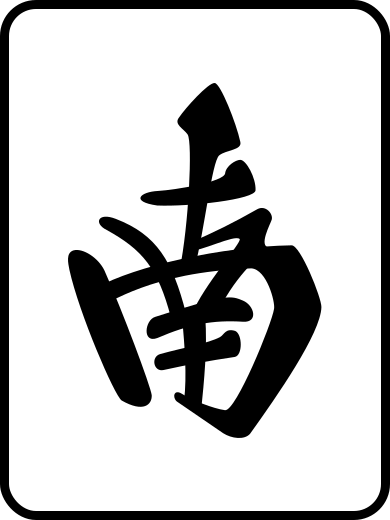
| Rung | Your tiles | Read | Still loses to |
|---|---|---|---|
| 3 | | Two other Easts in view | A tanki on the last East |
| 4 | | 9p: suji of the 6p. South: one other in view | A tanki or a shanpon |
| 5 | | Suji of the 5m and of the 6p | Tanki or shanpon. 8m: a 79m kanchan. 3p: a 24p kanchan or 12p penchan |
| 6 | | 1s: no read. 4m, 5s: half suji. Green: fresh | Tanki or shanpon. Number tiles: one ryanmen, plus a kanchan on the 4m and 5s |
| 7 | | No read. The 4s is the dora | Narrow waits, plus one ryanmen for the 3m and 7p, two for the 5p and 4s |
Fold from the top: the East, both 9p, the South, the 8m, and the 3p. No two-sided wait can win on those six, and six turns give the table time to hand you new genbutsu. Then come the 1s, the half-suji 4m and 5s, and the . The 3m, 7p, 5p, and the dora go last.
Rank again after every discard: each tile that passes the riichi is new genbutsu. A passed 7m makes your 4m full suji, up to rung 5.
Breaking ties on the same rung
Four tiebreakers set the order inside a rung.
Count the waits again, number tiles only. On rung 5, the 8m adds only a 79m kanchan to the tanki and shanpon, the 3p a kanchan and a penchan, so the 8m goes first. A kabe tile left only to a tanki or a shanpon, like a 1 or 2 behind four visible 3s, leads rung 5, as good as a suji terminal.
Hold the honor longest. On rungs 4 and 6, the honor goes after the number tiles: folding players throw honors first, so a copy may pass before you need yours. The green dragon waits behind the 1s, 4m, and 5s.
Then cut from a pair. A pair is two turns of folding: once the first copy passes, the second is genbutsu. Among level number tiles, start on the pair.
Split what's left with an early outside tile. If the riichi player cut a 3 early, the 1 and the 2 of that suit sit outside it (sotogawa, 外側), and waits there are a little less likely: that hand wasn't building around the 3. After an early 3s, cut a no-read 2s before a no-read 8m. Hands change before a riichi, so this only breaks ties (Reading discards).
The dora goes last
A riichi waits on the dora about 1.4 times as often as on the same plain tile: 11.5% for a dora 5 against 8.0% (dora danger data). The extra danger lives in one-sided waits: a kanchan, penchan, or tanki on a dora 2 through 8 turns up 2.0 to 2.7 times as often. Suji can't rule those out, so a suji dora drops about a rung.
With no read, the dora goes last of all. A 1 dora is in fewer waits than a plain 5, 7.0% against 8.0%, but it costs more: the dora you deal in on joins the winner's hand and adds a .
East 2, turn 7. The player on your left declared riichi with the East. Their river: 9m, West, 5s, 2m, 5p, East. Nobody has discarded a dragon. The dora is the 8p.Dora 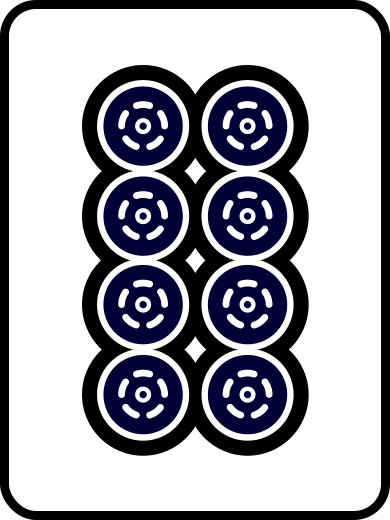
You draw the dora and you're folding. Which tile do you throw?
Tap the tile you would choose.
Show the answerHide the answer
Fold with
The 2s. It and the 8p are both suji of a 5 in their river, so each loses only to a kanchan, a tanki, or a shanpon. But the 8p is the dora, and one-sided waits are where a dora's extra danger sits, so it drops to rung 6 with the 1m, 9p, 9s, half-suji 6m, and both fresh dragons.
Two riichi: a tile needs a read on both
Against two riichi, every tile can deal into either player, so its danger is roughly the two added together. Rank it on both ladders, each built from that player's own river and the tiles that passed after their riichi.
Genbutsu against one still carries the other player's full danger. A tile high on both ladders, such as an honor with two copies in view, beats it. Only genbutsu against both is fully safe, the tile How to fold told you to save.
South 1, turn 10. The player on your left declared riichi with the 3p three turns ago. Their river: West, 9s, 1m, 5s, North, 3p, 4s, South, 6p. The player across declared riichi this go-around with the 9m. Their river: East, 1p, 4m, white dragon, 7s, 2m, 1s, 6p, 9m. Another North sits in the right player's river. No other tile discarded since the first riichi touches your hand.
Two riichi. Which tile do you throw?
Tap the tile you would choose.
Show the answerHide the answer
Fold with
The North: genbutsu against the player on your left, and against the player across two other Norths are in view, so only a tanki on the last copy wins. The 5s and both 9s are genbutsu against the first riichi only. The 7m is suji against the player across, but their 4m came before the first riichi, so it says nothing about the player on your left.
Practice
South 3, turn 9. The player across declared riichi with the South, and you've folded since. Their river: North, 1p, 8m, 3s, white dragon, South, 1s, 9p. Nobody has discarded a green dragon. This turn the player on your left discarded a 7p, and the riichi player let it pass. No other tile discarded since the riichi touches your hand.
You draw the 9s. Which tile is highest on the ladder now?
Tap the tile you would choose.
Show the answerHide the answer
Fold with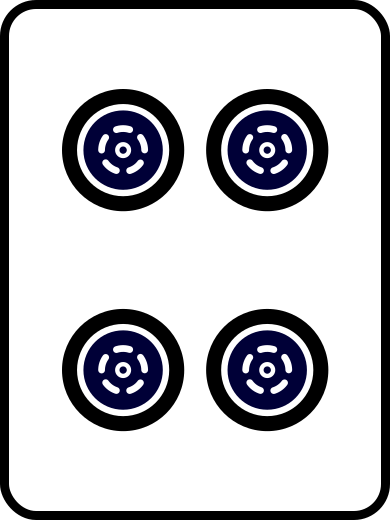
The 4p. Last turn it was half suji: the 1p in their river ruled out 23p, but 56p could still win on it. The 7p that passed rules out 56p too, since the riichi player would be on it, so the 4p is full suji on rung 5. Everything else is rung 6 or lower: the 9m and 9s still lose to a 78 ryanmen, and the green dragon is fresh.
Price a tile against a riichi
Pick a number tile and say whether it's the dora, or pick an honor dora and how many copies are out. The tool shows how often a Houou riichi waits on it, so you can check the bottom rungs of the ladder for yourself.
Open the deal-in danger tool