
A comes at turn 10. Your hand is two steps from with nothing to score but riichi, and when you count your safe tiles you find none. You lost that fold two turns earlier, when you threw a West two players had already discarded and kept a 9m that did nothing for your hand.
How to fold set the target: three safe tiles by the middle of the hand, or two late, carry a fold to the draw. Most of them come from the riichi player's river and the tiles that pass it, so you can count them only once someone declares. You need the first one sooner, and only a tile you kept on purpose is sure to be there.
Keep the spare that will still be safe
Every 14-tile hand holds a tile it doesn't need, and the tile-efficiency lessons taught you to cut the one that adds least. Often two or three cuts tie, and the efficiency trainer counts any of them as right. Early on, before anyone is likely to be tenpai, each of them is safe enough to throw today. Break the tie with one question: which tile would you rather still hold when a riichi comes?
The best keeper is an honor other players have discarded. Nobody can a tile in their own discards, riichi or not, because it makes them . So an honor two players have cut is safe against both of them for the whole hand. With their two and your copy in view, one is left, so against the third player only a (single wait) on that last copy can win. With one copy out, an honor is safe against one player, and a tanki or a (pair wait) can still take it from the others. A number tile in someone's river protects you against that player alone.
A fresh honor, with no other copy in view, isn't a safe tile yet. It sits on rung 6 of the safety ladder, level with a 1 or 9 you can't read. Before any read, a 1 or 9 is in about half as many riichi waits as a 5, as the ladder's data showed, and a 4 in the riichi player's river makes the 1 , a 6 the 9. So a fresh honor or a loose (isolated) 1 or 9 is a fallback keeper: better than a middle tile, never as good as an honor two players have cut.
Here's the turn you lost it. East 2, turn 8. You're South, so the West is a guest wind. You draw a West, and two other players have already discarded one each.
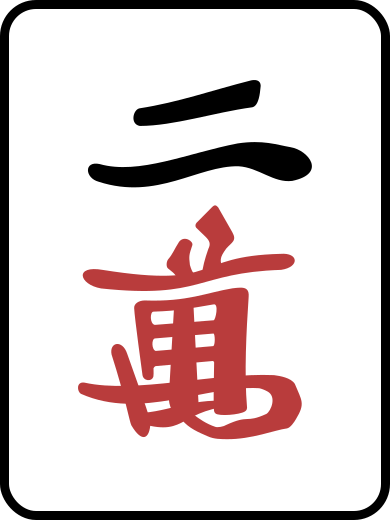
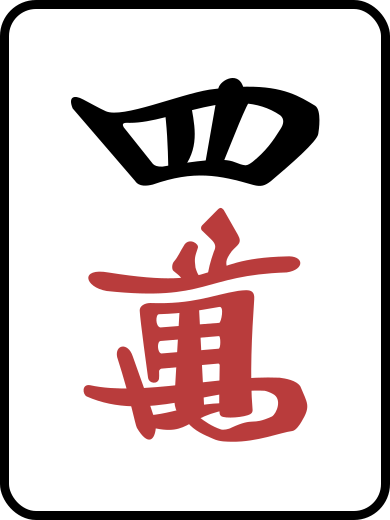
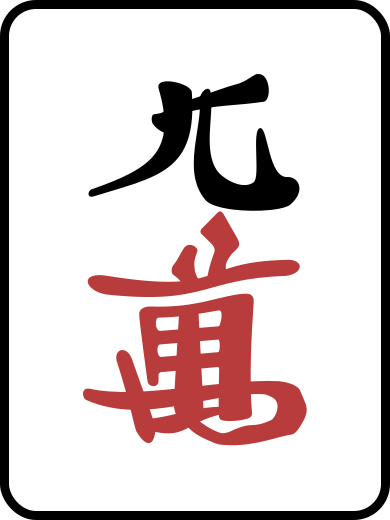

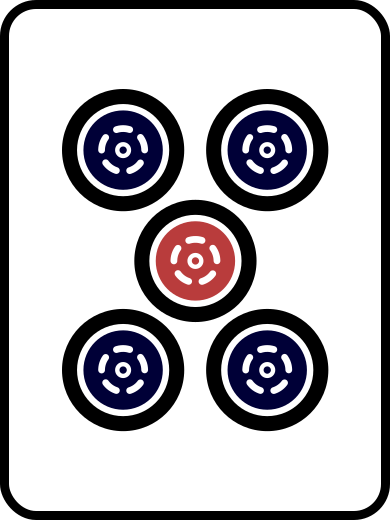
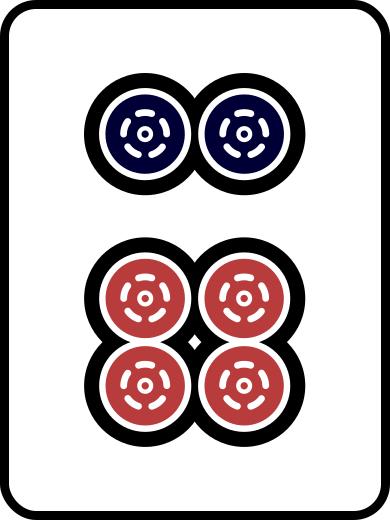
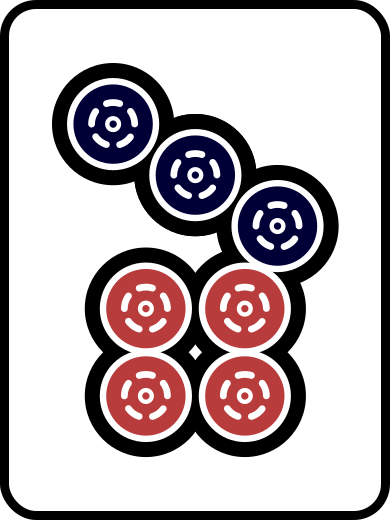
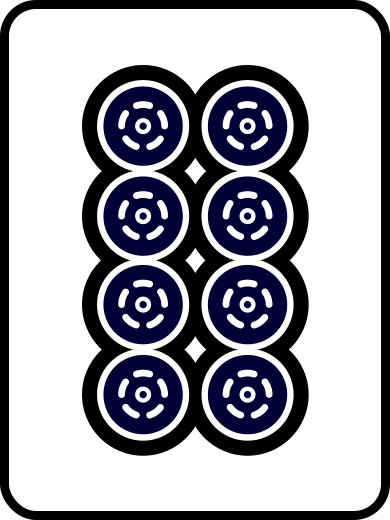
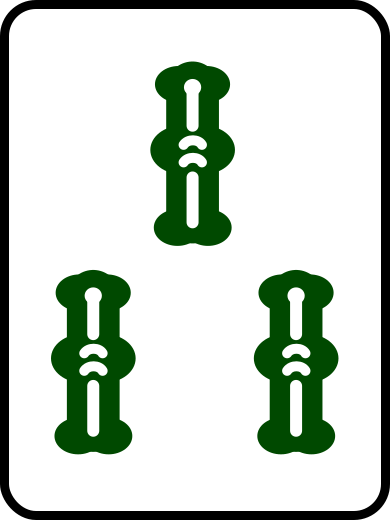
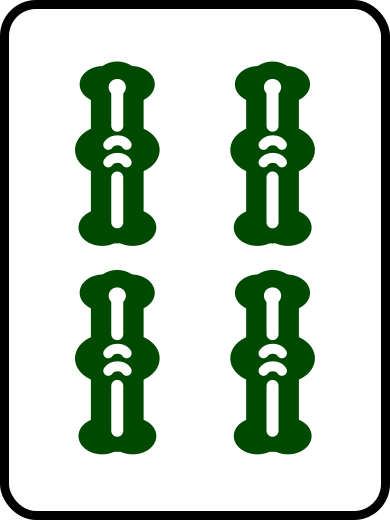
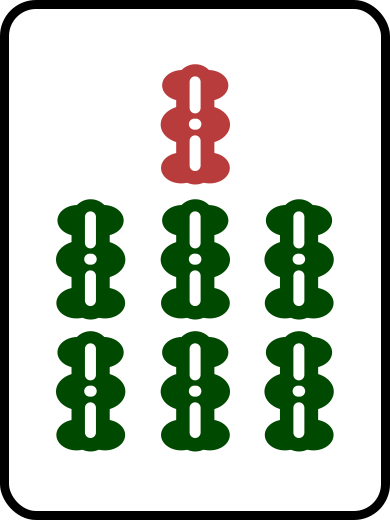
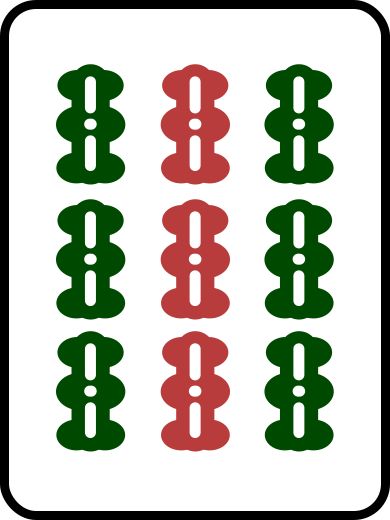
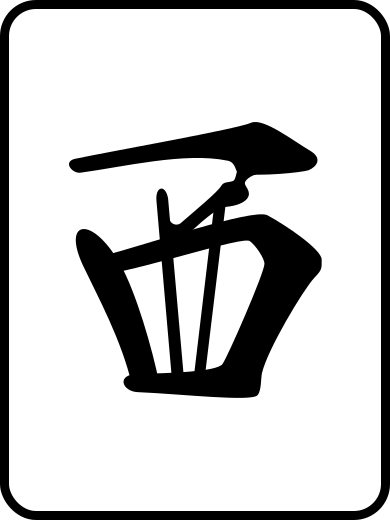
The hand is slow: 2-shanten, two (middle) shapes, no , and but riichi. Cut the 9m, the 1p, or the West, and you keep the same 16 tiles: the 3m, 2s, 5s, and 8s. What to discard first put guest winds ahead of loose 1s and 9s, but that order assumes no copies on the table. This West has two out, and keeping it costs nothing. Throw the 9m now and the 1p next. If a riichi comes, the West is your first fold tile. The 9m and the 1p would be tiles you know nothing about.
When safety costs a few tiles
Free is the easy case. When the safe tile costs acceptance, what you can afford depends on how often the hand will win.
A cheap hand that's still two steps from tenpai in the middle turns rarely wins, and when a riichi comes, it folds. For that hand a safe tile is worth more than a few tiles of acceptance. My rule of thumb: from the middle of the hand, a cheap hand at 2-shanten or worse keeps one safe tile, even when that means dropping a surplus block early.
The cost is smaller than it looks. With six blocks, one has to go whatever you do, as Too many blocks or too few showed. Pure efficiency cuts the loose tiles first and drops the block later. Drop the block first and keep the safe tile, and you've only changed the order.
South 1, turn 9. No dora in your hand. Two players have discarded a West.
The 8s makes your third pair. What do you cut?
Tap the tile you would choose.
Show the answerHide the answer
Drop a pair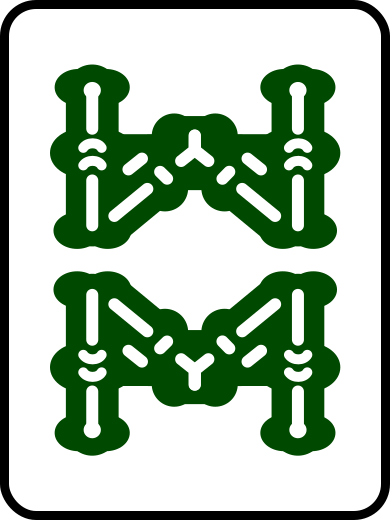
Any pair will do, and the 8s is best: with no read, an 8 sits a rung below a 1 or 9 on the ladder. Your 234s, three pairs, 46m, and 78p make six blocks for five slots, and the cheapest is a pair, worth its last 2 copies. Cutting the West keeps 18 tiles, cutting from any pair 16, and breaking the 46m only 14. Two tiles buy little for a riichi-only 2-shanten at turn 9, while the West buys the first turn of a clean fold: two players can never ron it, and the third only on a tanki.
A hopeless hand, with almost nothing connected, takes this furthest. What to discard first said to keep the honors in a hand like that. You aren't building any more, so throw the middle tiles while they're still safe and hold the honors, even fresh ones. A fresh honor sits a rung above a middle tile with no read, and each copy that comes out lifts it.
When it costs tenpai tiles, keep the tiles
A fast hand flips the trade. At 1-shanten each tenpai tile is worth about 1% a draw, as the 1-shanten lesson counted, and a good 1-shanten wins often enough that those draws beat a fold tile you may never need. So at 1-shanten with two-sided shapes or some value, never give up a tenpai tile to keep a safe one. Early in any hand that can reach a quick riichi, the same goes for acceptance: cut honors in the usual order and build.
East 3, turn 7. Two players have discarded a West. The red 5p is yours.
What do you discard?
Tap the tile you would cut.
Show the answerHide the answer
Cut
Cut the West. The 4s makes 344s beside your 88s, and without the West you hold 23 tenpai tiles: the 3p, 6p, and 9p for the 45678p, the 2s and 5s, and the last two 4s and two 8s. Throw the 4s to keep the West and you're down to 19, every tenpai still two-sided. In a fast hand with a red five, four tenpai tiles are worth more than a fold tile you may never need.
At 1-shanten, safety comes free only from a spare that adds no tenpai tiles, such as the extra tile in a hand of two sets, a pair, and two (two-sided waits). The White drill below is that hand.
Cut it now, while it's still safe
Sakigiri (, early cut) means cutting a tile before it turns dangerous. Every spare leaves your hand sooner or later. An honor other players have discarded stays safe against them all hand. A fresh honor or a middle tile goes the other way: the later you cut it, the more likely someone is tenpai on it. So when two cuts tie, throw the tile that would be hard to cut after a riichi, and keep the one that's already safe. One tile is the exception: a dora you've kept past your first discards stays until tenpai, so the safe tile goes before it, as Playing the dora showed.
There's a second reason. The spare you hold is the tile you'll throw the turn you reach tenpai, maybe into someone's riichi. Make it a safe one.
South 2, turn 8. Two players have discarded a White.
You draw the third White in view. Which tile goes?
Tap the tile you would choose.
Show the answerHide the answer
Cut the spare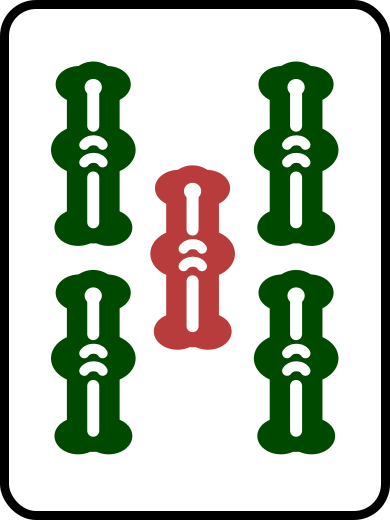
Cut the 5s or the 8s. You're 1-shanten on two ryanmen, the 34m and the 56p, and all three cuts keep the same 16 tenpai tiles, every one two-sided. The White is dead as a yaku, with one copy left, but alive as a safe tile: two players can never ron it, and the third only on a tanki. Cut the White instead and you gain one upgrade, a 4s draw that makes 45678s and 19 tenpai tiles, but at tenpai you throw the 5s or the 8s: a number tile with no read, on the bottom rung of the ladder, maybe into someone's riichi.
The honor discard order post makes the case with a fresh dragon: cutting it on turn 2 costs you almost nothing, and cutting it on turn 12 into an open hand can cost you the game. Its mirror image is shibori (, squeezing): holding a tile only so nobody can call it. Early in the hand that rarely pays. Another player cuts the next copy and the call happens anyway, and your own hand slows down. The post's rule: if you squeeze, squeeze to the end, and otherwise let the tile go now.
East 1, turn 5. You're West, so the North is a guest wind. One North is in the discards. Nobody has discarded a red dragon.
Both honors keep the same tiles. Which one goes?
Tap the tile you would choose.
Show the answerHide the answer
Cut the red dragon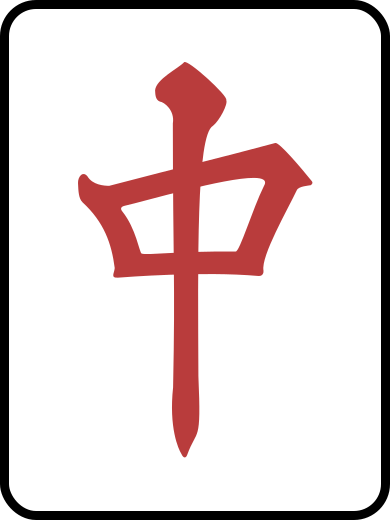
Cut the . Either cut keeps the same 12 tiles, and in a 1-shanten neither honor has a job, because tanyao can't use an honor. The dragon is fresh, so a riichi would find it on rung 6. The North is safe against the player who cut it and loses only to a tanki or a shanpon from the others. A tanyao shape lets a value honor go early anyway, and the North in the river is a second reason: throw the dragon on turn 5, while it's cheap.
Know your first fold tile before anyone declares
From the middle of the hand, ask yourself the fold question: if a riichi came now, what would I throw first? In a slow hand, the answer should be a tile. Once a riichi is down, the riichi player's whole river is , the tiles they can't ron, and more pass every go-around. But you can't know whose river it will be. An honor other players have cut is the one you can count on before anyone declares, and a pair of it covers two turns.
The habit pays. How to fold priced one at about five clean folds. A kept safe tile doesn't decide whether you fold. It makes folding possible. The decision itself is Push or fold, later in the course.
Break ties with safety
The efficiency trainer ranks every discard by tile acceptance. When two cuts tie at the top, keep the tile you'd rather hold after a riichi.
Open the efficiency trainer