
and pay 2,000 on a . Add one and the same hand pays 3,900, and two make it 7,700. Players leak those in three spots: a cut that leaves no room for the dora, a dora thrown away in the middle of the hand, and a hand with two dora played as slowly as a cheap one.
Each dora is a han, and two call for speed
The dora is the tile after the indicator, and each copy in your winning hand adds 1 han. The dora guide has the indicator rules. Red fives count the same way. Tenhou's red-five tables and Mahjong Soul play three of them in four-player games, one per suit, and a red five that is also the dora counts twice. None of this is a yaku. Your hand still needs one to win, as What is a yaku? showed.
Up to 4 han, each han about doubles the payment (What a hand pays), and a dora only has to be in the hand when you win.
Two dora change the plan. Any 1-han yaku plus two dora is 3 han. A dragon with two dora in hand pays 3,900 at 30 fu, or 5,800 for the dealer. Without the dora, the same non-dealer hand pays 1,000. The value is already in the hand, so spend your choices on speed. Make calls you'd pass on with a cheap hand, and don't give up tiles to add a yaku: riichi and two dora are 3 han already. Speed or value showed where extra han stop paying, and When to call chi and pon covers the calls later in the course.
Make room: keep the shapes that can catch the dora
Before each cut, ask one question: if the dora comes on my next draw, can this hand use it? Say the dora is the 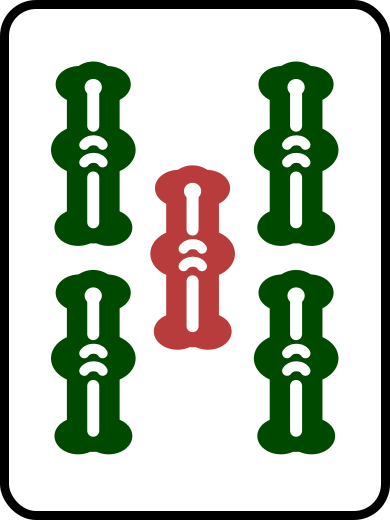 .
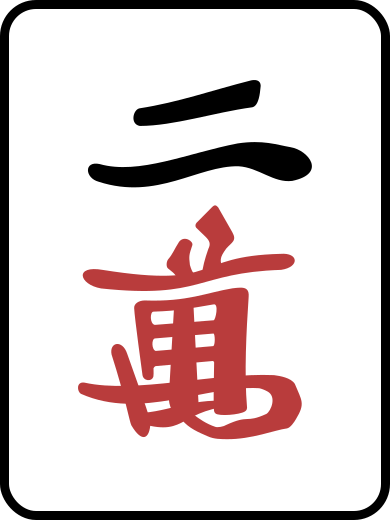
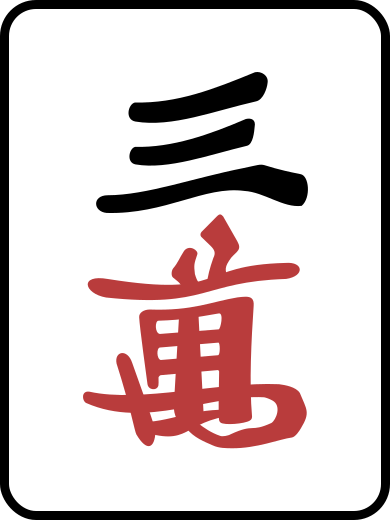
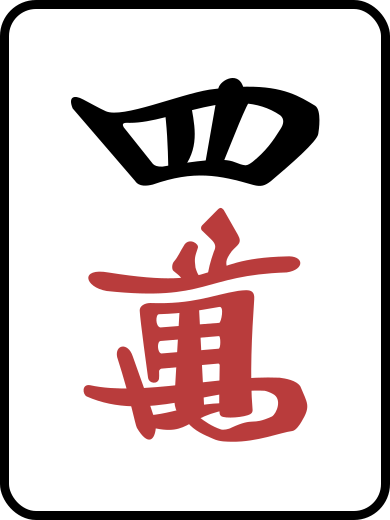
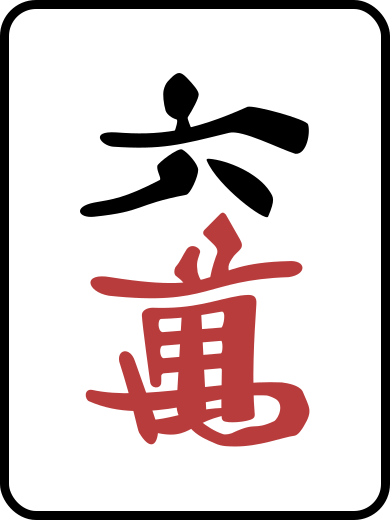
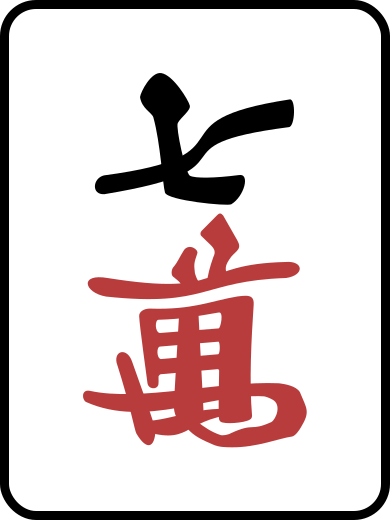
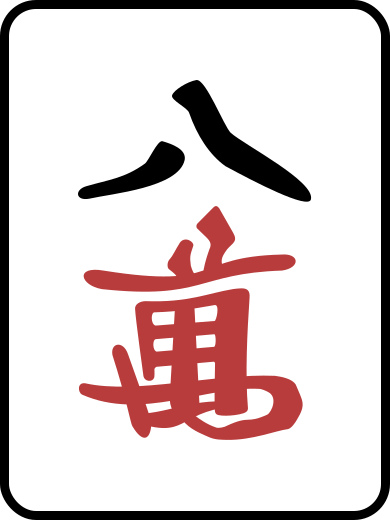
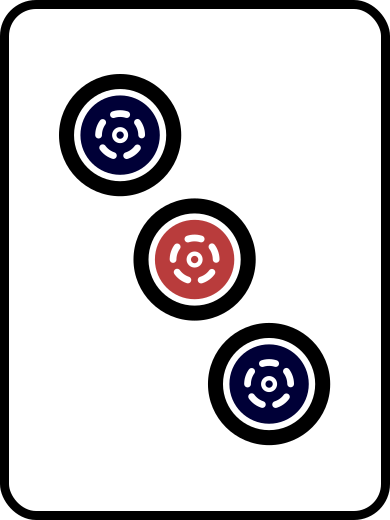
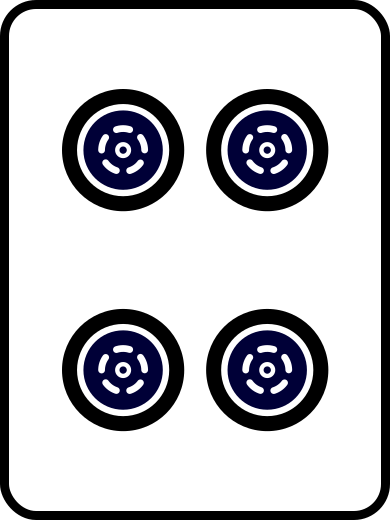
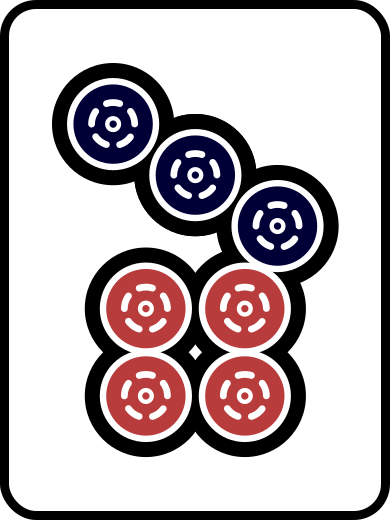
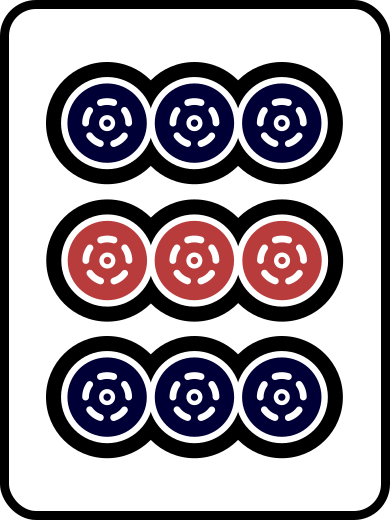
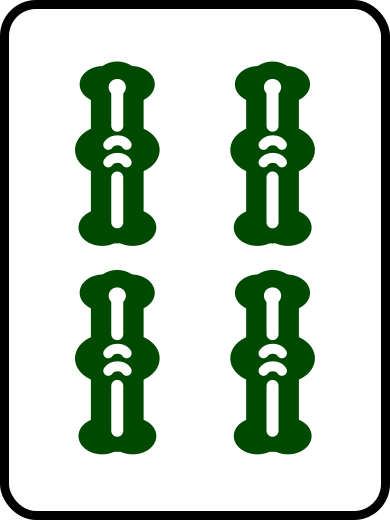
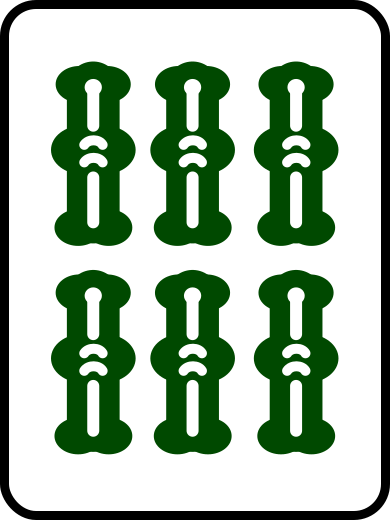
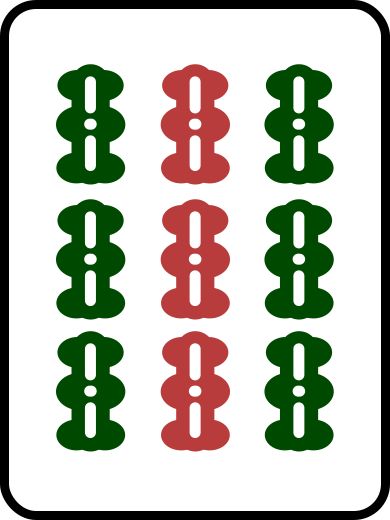
You're 1-shanten with six blocks, one more than a hand can use, the case Too many blocks or too few covers: two sets, the 99s pair, the 34p (two-sided shape), and two (middle shapes), 79p and 46s. Cut any of the 7p, 9p, 4s, or 6s and you keep 12 tiles: the eight 2p and 5p that finish the ryanmen, plus the four that fill the kanchan you keep.
Cut from the 79p. Then the 5s is one of your tiles, and the set it makes carries a han. Keep the 79p instead and a 5s still helps: beside the 4s or 6s it makes a ryanmen that holds the dora. But you stay 1-shanten and need another draw to reach tenpai.
The dora settles close calls like this one, where four cuts tie. It doesn't pay for a big loss. If keeping the 46s had meant breaking the 34p ryanmen, you'd drop to 8 tiles, every one leading to a one-sided wait. That trade isn't worth a dora you haven't drawn.
Loose (isolated) tiles follow the same rule. A 4 or a 6 beside a dora 5 can grow into a ryanmen that holds it. When two loose tiles keep the same count, keep the one next to the dora. The same goes for a dora in your hand: when a block has to go, break one that doesn't contain it.
Treat a red five in your hand the same way. Keep it and the tiles that make shapes with it, and when a 5 has to go, cut the plain one. Don't bend the hand to catch a red five you don't hold, though. Only one copy of each exists, while the dora has four.
East 2, turn 6. You're 1-shanten.Dora
Two cuts keep the most tiles. Which one do you make?
Tap the tile you would choose.
Show the answerHide the answer
Cut the 7s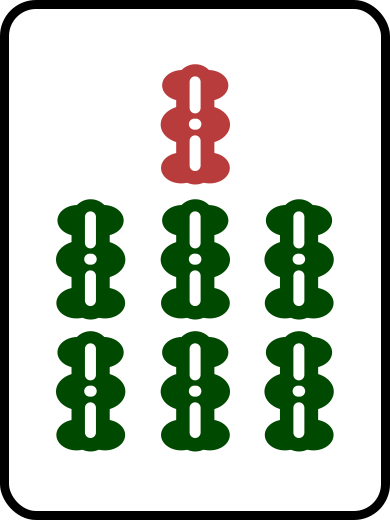
Cut the 7s. The 3s and the 7s are your two loose tiles, and either cut keeps 12 tiles: the 4m, 7m, and 8p. Any other cut breaks a block and drops you to 2-shanten. What separates them is what each can grow into. A 6s or 8s beside the 7s, or a 2s or 4s beside the 3s, makes a ryanmen that replaces the 79p kanchan and lifts you to 16 tiles. Only one of those draws is the dora. Keep the 3s and a 4s brings the han with the better shape. Keep the 7s and a 4s draw makes no shape.
Honor dora: a pair is a prize, a single is hard to use
An honor can't join a run. An honor dora counts only as a pair, as a triplet, or as a .
A pair is 2 han already in your hand. If the honor is a value tile for you (a dragon, your , or the ), pon the third copy: yakuhai plus three dora is 4 han, 7,700 at 30 fu and 11,600 for the dealer, from one call. A guest-wind pair is different. A pon of it gives you three dora and , so the open hand still needs one from somewhere else. Keep it as your pair instead. Pinfu allows a guest-wind pair, so riichi and pinfu with it pay 7,700 too.
A single, a loose honor dora, has three copies left to pair with and nothing else. Decide what to do with it on your first discards. A dragon or a value wind stays, since a pair of it is worth too much to give up. Cut it early only when the hand doesn't need the han: a fast hand that already pays well, or one where any win will do. Keep a guest-wind dora while the hand is short of blocks, since it may pair into your head. It goes early only when the hand has its five blocks, as the five-block method counts them, and the dora is the last tile with no job. Loose terminals and other loose honors go before it.
East 1, turn 1. You're West, so the North is a guest wind for you.Dora 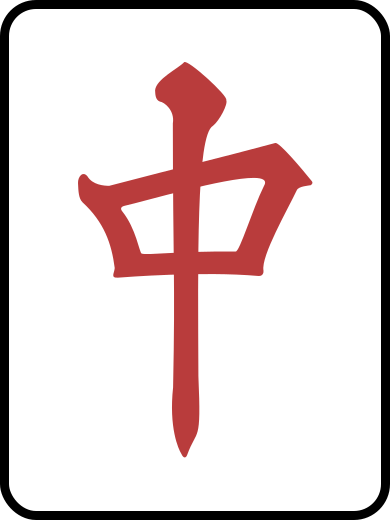
The North and the red dragon keep the same count. Which do you cut?
Tap the tile you would choose.
Show the answerHide the answer
Cut the North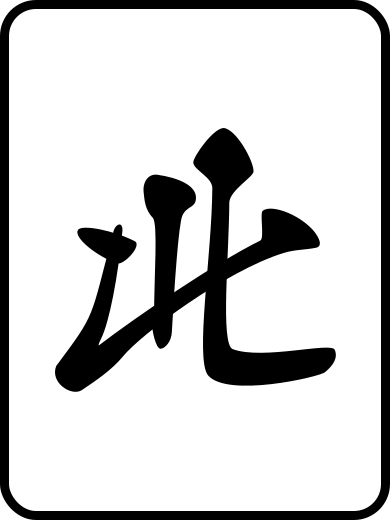
Cut the North. Both honors keep the same 59 tiles, and both can only pair. The is the dora and a value tile for every player. Pair it and you hold 2 han; pon the third copy and you have 4 han, 7,700 or more from one call. A North pair adds no han. This hand is 3-shanten, so the dragon has time to pair. If it never does, it leaves at tenpai.
Cut it on your first discards or at tenpai
The timing rule I teach: a dora leaves your hand on your first discards or at tenpai, almost never in between.
On the first discards, cut a dora your hand can't use: a loose guest-wind or terminal dora, once the hand's blocks are in place and the dora is the last tile without a job. This is the cheapest moment it will ever leave. Nobody is close to tenpai, and you give up only the small chance that it finds a use.
At tenpai, a dora that never found a place becomes the tile you cut to declare riichi. It stayed as long as it could still pair or grow into a shape.
In between is the worst time. The usual reason is fear: "I'll throw it before it gets dangerous." By then the other hands are closer to tenpai, so the cut is riskier than it was on turn 1, and you've held the tile for half the hand only to throw its han away. An honor dora is worse still. A player who pons it holds three dora, so any win of theirs is at least 4 han, 7,700 or more, and from then on every tile you throw might be the one it wins on. So once you've kept a dora past the first discards, every useless tile in your hand goes before it.
The exception is a hand that will never use the dora, like an open hand holding an honor or terminal dora. Cut it as soon as you know, even in the middle of the hand. The one hold: if another player called early and no copy of an honor dora has shown, keep it until one does, as Defending against open hands explains later in the course.
The danger is real. In Tenhou's top room (), 11.5% of riichi hands wait on the dora when it's a 5, against 8.0% for a plain 5: about 1.4 times the risk, as How dangerous is the dora? shows. The deal-in danger tool prices any tile. What to do with a dora once someone declares is a defense question, and How to fold starts on it later in the course. The timing rule keeps you from holding a dora you never meant to use when that moment comes.
East 1, turn 2. You're West, so the South is a guest wind for you.Dora 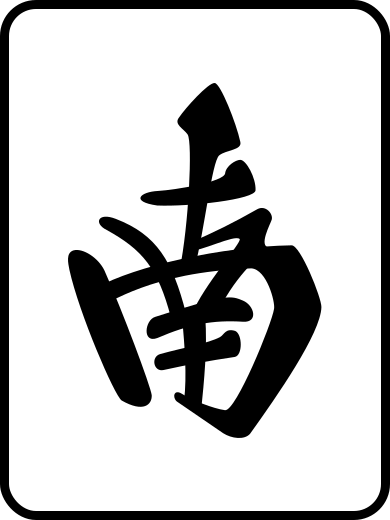
What do you discard?
Tap the tile you would cut.
Show the answerHide the answer
Cut
Cut the South. The 5p makes 556p, a ryanmen sharing a tile with a pair, and with the 33m that's the complete 1-shanten from 1-shanten: the step where hands are won: 20 tiles, and every one ends in a two-sided wait. Throw the 5p back to keep the dora and you have 16. The South can only pair, and it's the one tile here without a job. Cutting it gains 4 tiles and leaves a hand of simples only, so tanyao comes with any win from these shapes. Turn 2 is the cheapest time it will ever leave.
South 1, turn 8. You're the dealer, nobody has declared, and you hold no other dora.Dora
What do you discard?
Tap the tile you would cut.
Show the answerHide the answer
Cut
Cut the 9p and declare riichi. The 5p finished your , and 6788s now waits on the 5s and 8s: 6 tiles, since two of the 8s are yours. Every tile left is a 2 to 8, so a ron is riichi, pinfu, and tanyao: 5,800. Keep the dora by cutting an 8s instead and you wait on the 9p as a single wait, 3 tiles. A ron there makes a 9p pair, two dora, and pays 7,700. A third more points for half the tiles is a bad trade. This is the second good moment for a dora to leave. It goes out as your riichi tile, on the turn the hand is ready.
Break ties with the dora
Paste a hand into the hand analyzer and it ranks every discard by tile acceptance. It doesn't count dora, so when the top cuts tie, keep the one that can catch the dora.
Open the hand analyzer