
One cut keeps 16 tiles. Another keeps 12 and gives every win (all simples). Two counts settle it: the tiles each cut keeps and what each version pays. Sometimes the is worth its tiles. Sometimes it means breaking a good shape for a han the hand has half the time anyway.
A hand is worth its price times its chance
What a hand earns you is its price times how often it wins. On paper, a hand that wins half as often at twice the price earns the same, and you can count both numbers at the table.
The speed side is tile acceptance: the tiles that move your hand forward. On every draw, a 1-shanten hand that takes 16 tiles has four chances to reach for every three that a hand taking 12 has. The hand analyzer counts any hand for you.
The value side is the price from What a hand pays. Count the han the hand will have when it wins, then read the table. Below , one more han about doubles the price.
The tile count tells you how soon you reach tenpai, and a later tenpai wins less often. In the site's data from Tenhou's top room (), a two-sided waiting on a 1 and a 4 wins 79% of the time when declared at turn 2 and 47% at turn 11, about 3.6 percentage points less for each turn (riichi wait win rates). Turns count from zero there, so turn 2 is your third discard. Price times chance also leaves out what a hand you don't win costs: another player can win it, sometimes off your discard, while your win ends the hand. So when the two sides come out close, take the faster hand.
Speed first: riichi and dora add value for free
A rarely needs a yaku you have to build. Riichi gives any closed tenpai a yaku and a han. A win on your own draw adds , and a riichi winner counts the ura too. Tenhou and Mahjong Soul also play with three red fives, one per suit, each a dora by itself, on top of the dora the indicator shows. None of that asks your hand to change shape.
A winning riichi pays well. In the same Houou data, a riichi declared at turn 8 that won by collected 5,869 points on average, included (What folding costs). That counts every kind of riichi hand, but it's well above what riichi, , and tanyao pay by ron: 3,900.
So build the fastest shape and let the value come to you. Yaku and dora still break ties: when two cuts are equal on tiles and shape, keep the one with value. A and a are both kanchans (middle waits) of the outer kind: each waits on 4 tiles and grows into a (two-sided shape) with 4 more (Ryanmen, kanchan, penchan). But a 13m finishes with a 1 in it, so drop it and tanyao stays possible. When a red five and a plain tile do the same job, keep the red five. Pinfu and tanyao and Playing the dora come back to both.
Put the trade in numbers
The real choices start when value costs tiles. You're 1-shanten with no dora in the hand, and you draw a second 2p.
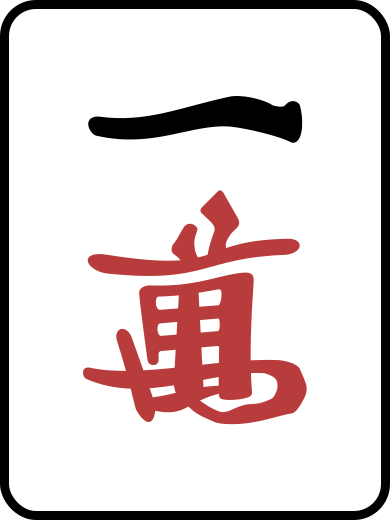
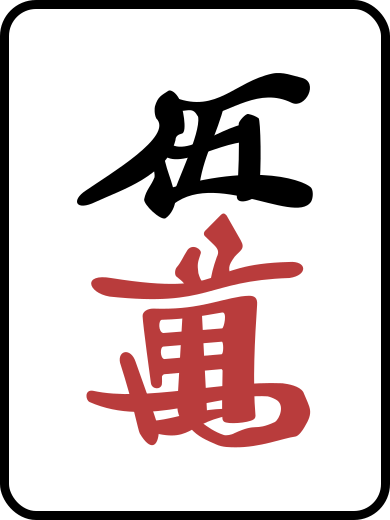
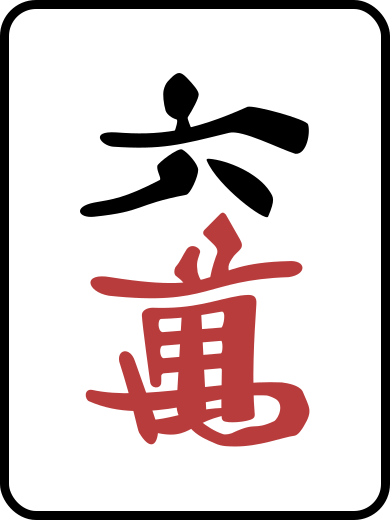
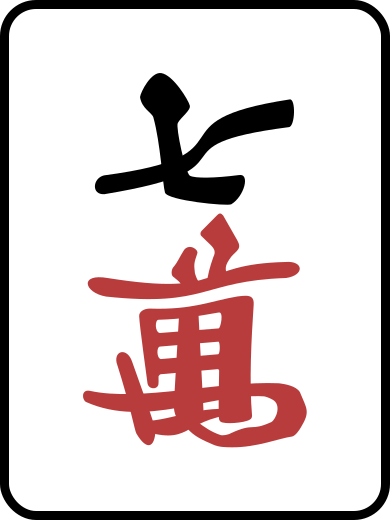
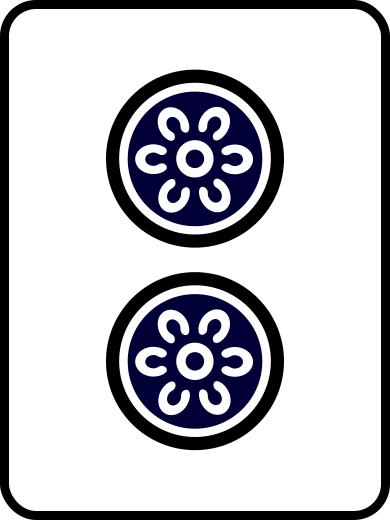
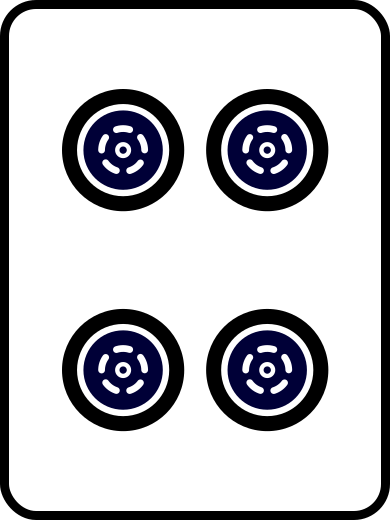
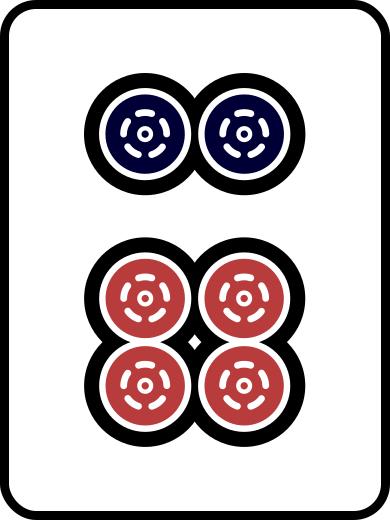
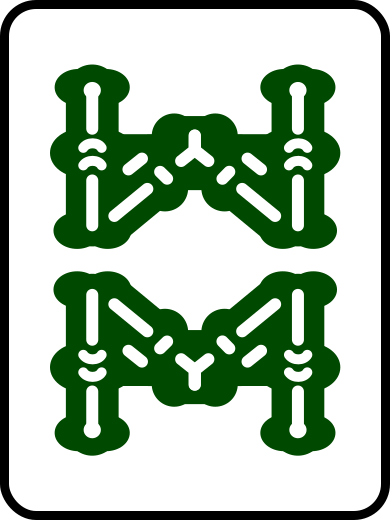
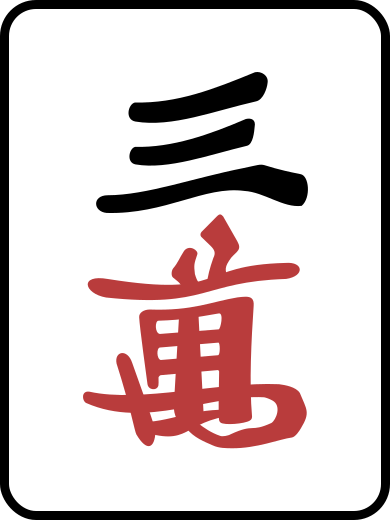
Throw the 2p back and nothing changes. The 11m stay your head, the 246p takes the 3p or the 5p, and the 34s takes the 2s or the 5s: 16 tiles. Or keep the 2p and cut a 1m. The 22p become your head, the 46p a , and the other 1m goes by the time you reach tenpai: 12 tiles. Once it's gone, every tile is a 2 to 8, so every win has tanyao.
| Cut the 2p | Cut a 1m | |
|---|---|---|
| Tiles that make tenpai | 16 | 12 |
| Of those, draws that end on a two-sided wait | 8 | 4 |
| Your head | 11m | 22p |
| Win on a kanchan | 1,300: riichi | 2,600: riichi, tanyao |
| Win on a two-sided wait | 2,000: riichi, pinfu | 3,900: riichi, pinfu, tanyao |
Pinfu needs a closed hand of four sequences, a pair that isn't a value tile, and a two-sided wait (What is a yaku?), so a kanchan finish loses it and counts 40 fu (Fu without counting).
The 1m cut gives up the 3p, which only the 246p could use: 4 tiles of 16, a quarter. It costs shape too: the 3p was one of the draws that end on a two-sided wait, so the tanyao hand lands on the kanchan with 8 of its 12 tiles. It still wins the trade, because its worst finish, 2,600, pays more than the fast hand's best, 2,000. Keep the 2p and cut a 1m. The hand analyzer lists both cuts, plus the 6p, which also keeps 16 tiles without tanyao, and the score calculator checks the prices.
My rule of thumb comes from price times chance, with the tile count standing in for chance. Give up a quarter of your tiles for a han that doubles every win and you keep 3/4 × 2 = 1.5 times what the fast hand earns: take it. Give up half and you get 1/2 × 2 = 1, a tie on paper, and a tie goes to speed. Between the two, let the rest of the hand decide: a riichi-only hand needs the han more than one that already holds two dora.
Before you pay, ask how much of that value you'd get anyway. The first practice problem below costs the same 4 tiles and buys almost nothing.
One more han: where it pays and where it doesn't
Here's what the last han added at each step.
| Han | 30 fu | 40 fu |
|---|---|---|
| 1 | 1,000 | 1,300 |
| 2 | 2,000 (+1,000) | 2,600 (+1,300) |
| 3 | 3,900 (+1,900) | 5,200 (+2,600) |
| 4 | 7,700 (+3,800) | 8,000 (+2,800) |
| 5 | 8,000 (+300) | 8,000 (+0) |
| 6 | 12,000 (+4,000) | 12,000 (+4,000) |
| 7 | 12,000 (+0) | 12,000 (+0) |
At 30 fu, each han up to the fourth roughly doubles the hand. Then the doubling stops at mangan (Every mahjong hand has two invisible han shows why), so the fifth adds 300 or nothing, the sixth 4,000, and the seventh nothing.
That table is ron only, and half or more of a two-sided riichi's wins come by tsumo: 50% to 58% in the same data. Menzen tsumo, ura dora, and ippatsu stack on the han you built. Riichi, pinfu, and two dora is 7,700 by ron, and one more han makes it 8,000. By tsumo it's already a mangan, and the extra han makes it a , 12,000. Split the wins half and half and the han lifts the average from 7,850 to 10,000, about a quarter more. A riichi-only hand doubles with one han, whichever way it wins. Spend your tiles on the cheap hands.
As dealer, lean toward speed
A dealer's win buys more than its points. A dealer who wins keeps the deal (How a game works), so even a 1,500-point win comes with another hand at dealer stakes. And while your hand is slow, a tsumo by another player costs you double, as What a hand pays showed: 4,000 of a mangan instead of 2,000.
The 1.5 times payment doesn't tilt the trade, since it scales both sides: riichi and pinfu pay the dealer 2,900, and tanyao makes it 5,800. A non-dealer gives a close trade to speed. As dealer, my rule of thumb is to take the value cut only when it wins clearly, like the 1m cut above.
Practice
You're not the dealer in these, and riichi is the plan for each hand. Count the tiles each cut keeps, then price the wins.
East 1, turn 6. No dora in your hand.Dora 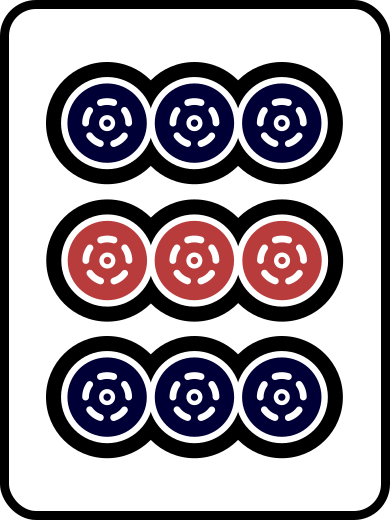
What do you discard?
Tap the tile you would cut.
Show the answerHide the answer
Cut
Cut the 4p, or the 6p: the same 16 tiles, with two ryanmen in the 34m and the 78s and the 88p as head, so every tenpai is two-sided with pinfu. That hand pays 3,900, or 2,000 when a 9s ends up in it, about half its wins. Throw the 8s back for sure tanyao and you keep 12 tiles, 8 of which leave the 46p kanchan at 2,600. Averaged over their tenpai tiles, the two pay about the same, 2,950 against 3,030, so the 8s cut gives up 4 tiles for almost nothing.
East 1, turn 5. No dora in your hand.Dora 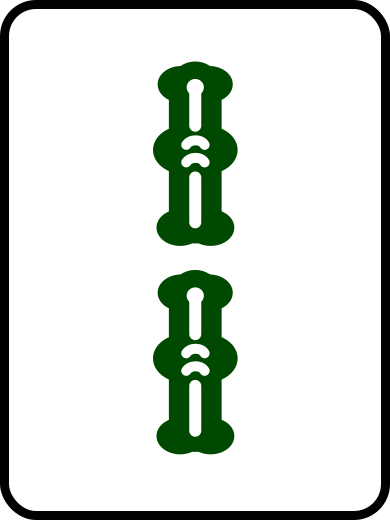
What do you do?
Tap the tile you would choose.
Show the answerHide the answer
Cut a 1p
Cut a 1p. The 2m cut keeps the most, 19 tiles, every one ending on a two-sided wait, but the 11p stay your head, so every win is riichi and pinfu: 2,000. Cut a 1p and the 22m become your head. The 67m and the 34p take 15 tiles, the other 1p goes at tenpai, and every win adds tanyao: 3,900. A fifth of your tiles for about twice the price on every win.
You declared riichi on this 6s kanchan two turns ago, so ippatsu is gone. The ura dora adds nothing.Dora 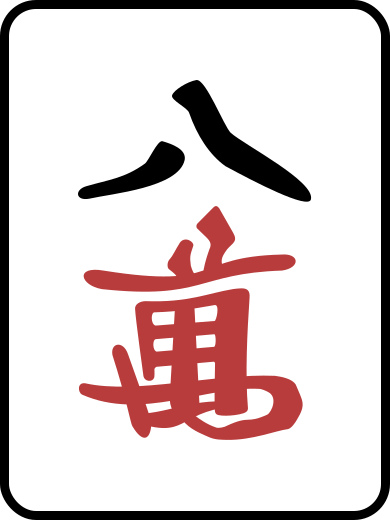
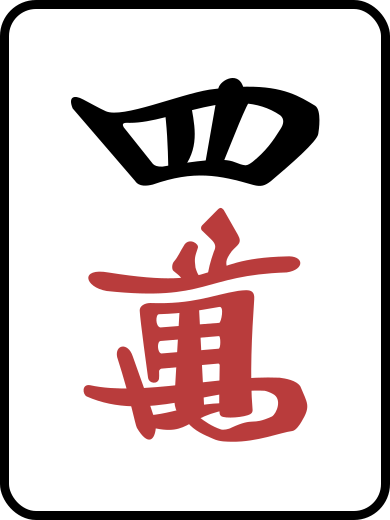
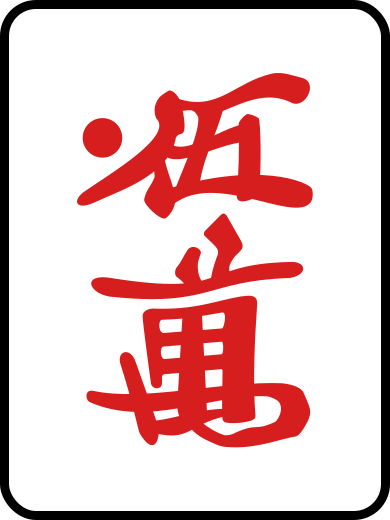
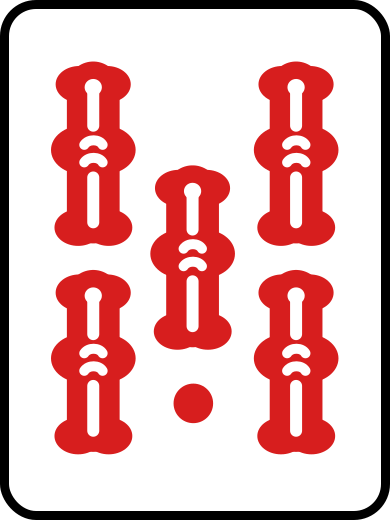
With a pair of 2 to 8 in place of the 99p, the hand would also have tanyao. How much more would a ron pay?
Show the answerHide the answer
Nothing
Nothing. Riichi plus three dora (the red 5m, the red 5s, and the 8m) is 4 han, and a closed kanchan ron counts 40 fu, so the hand is already a mangan, 8,000, and so is 5 han. 300 is a fifth han at 30 fu, 2,800 a fourth han at 40 fu, and 4,000 a sixth han, which the tanyao version would get by tsumo, or with ippatsu or an ura dora. Near mangan a han still buys something, but far less than the double it gives a cheap hand.
Price your own trades
Paste a hand from your last game into the hand analyzer to see how many tiles each discard keeps. Then price each version of the hand and check whether the narrower cut buys enough.
Open the hand analyzer