
or stay quiet, call or wait, push or fold. Each of those choices turns on what your hand pays, and the score screen only appears after the win. One hand from deal to tenpai counted how fast a hand reaches . You can work out its price yourself in a second or two. Count the , then read one of two short tables.
Count every yaku, then every dora
A payment comes from two numbers. Han come from yaku and . Fu come from the shape of the hand and the way it won, and Fu without counting shows how to read them at a glance. Thirty fu is the everyday count. A closed has it, and so do most open hands. A that wins by ron without pinfu usually counts 40, which is why the riichi-only ron in Tenpai, riichi and furiten paid 1,300, not 1,000. Every price below assumes 30 fu unless it says otherwise.
What is a yaku? covered the five everyday yaku, each worth 1 han. To count a hand, add the han of every yaku it has, then 1 han for each dora. That means every copy of the dora tile, every red five, and after a riichi win, every ura dora. The yaku list gives the han of every yaku, closed and open.
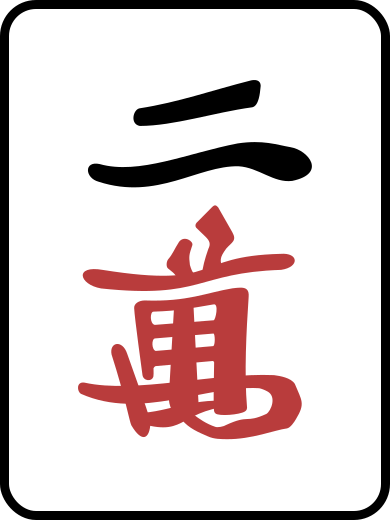
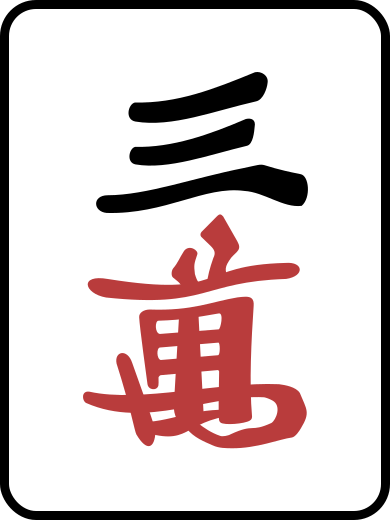
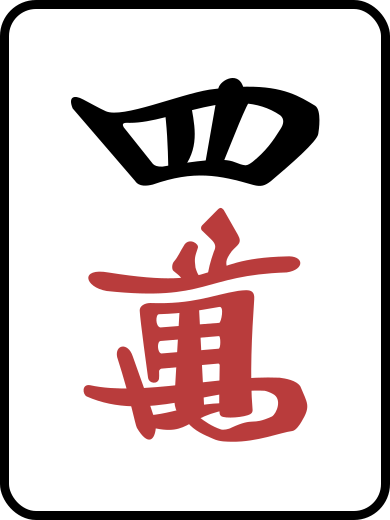
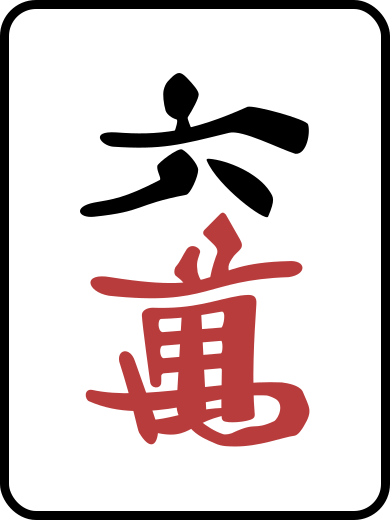
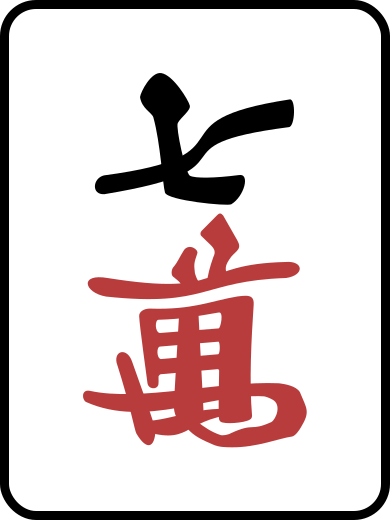
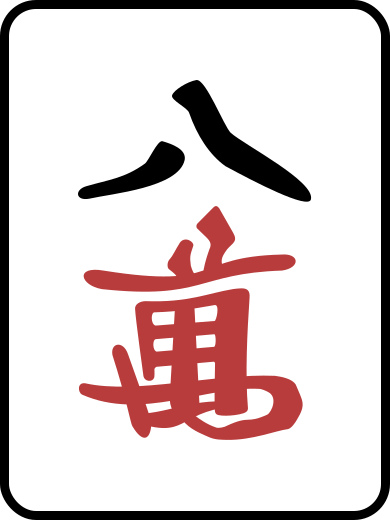
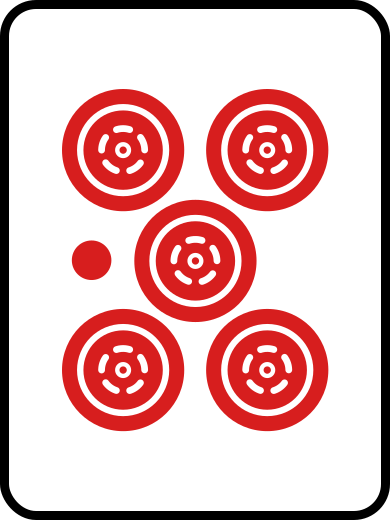
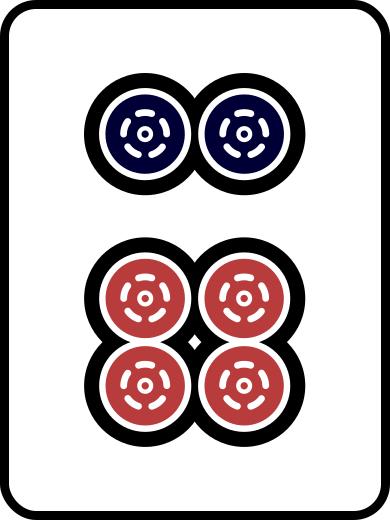
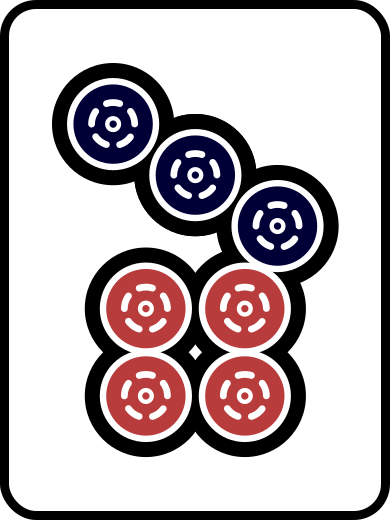
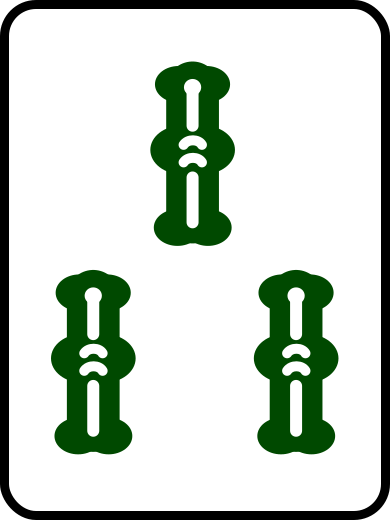
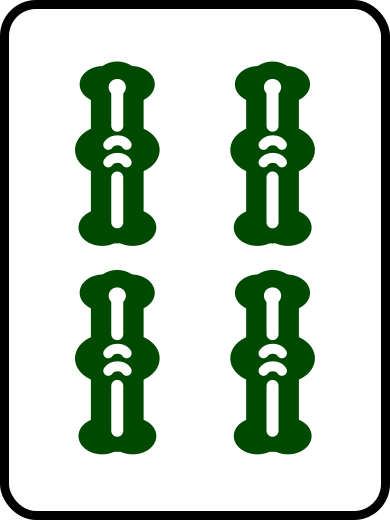
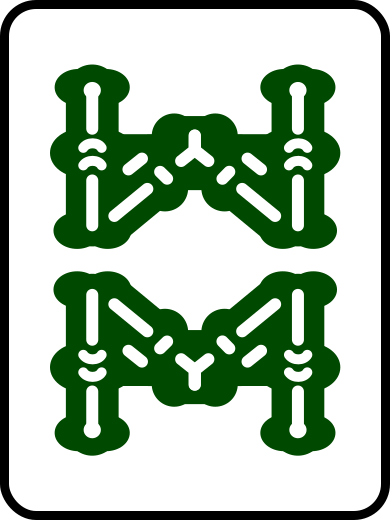
You declared riichi with this hand, and it holds no dora besides the red 5p. Here's the count for a win on the 2s or a plain 5s:
- Riichi: 1 han.
- (every tile a 2 to 8): 1 han.
- Pinfu (four sequences, a plain pair, and a ): 1 han.
- The red 5p: 1 han.
That's 4 han, and a ron pays 7,700. Draw the winning tile yourself and makes it 5 han, a , the first fixed limit, worth 8,000. A ron gets there too if the winning tile is the red 5s, or if an ura dora turns up. One hand, two prices. Know both the moment you reach tenpai.
Each han doubles the price, up to mangan
From 1 han to 4, each han about doubles the payment.
| Han | ron | Dealer ron |
|---|---|---|
| 1 | 1,000 | 1,500 |
| 2 | 2,000 | 2,900 |
| 3 | 3,900 | 5,800 |
| 4 | 7,700 | 11,600 |
| 5 (mangan) | 8,000 | 12,000 |
The odd-looking numbers come from rounding. Behind the table, each han doubles a figure called base points, and every payment is a multiple of it, rounded up to the next 100 at the end. Three han at 30 fu works out to 3,840, which becomes 3,900. Every mahjong hand has two invisible han works the whole column by hand.
The doubling is why one han matters so much in a cheap hand. Riichi turns a 1,000-point pinfu hand into a 2,000-point hand, and one dora turns that into 3,900. Up to 4 han, one more han is worth about as much as the whole hand was before it. The mangan cap ends that.
Where the doubling stops
The doubling stops at mangan (満貫). Base points can't pass a cap, so a mangan pays 8,000 to a non-dealer and 12,000 to the dealer, whatever the fu. At 30 fu the cap arrives at 5 han, and the fifth han adds only 300. Hands with more fu reach it sooner. Four han with 40 fu or more pays a mangan, and so does 3 han with 70 fu or more.
Past mangan, the han pick a tier
From 5 han up, the fu stop mattering, and each tier pays a fixed amount.
| Han | Name | Non-dealer ron | Dealer ron |
|---|---|---|---|
| 5 | Mangan | 8,000 | 12,000 |
| 6 to 7 | 12,000 | 18,000 | |
| 8 to 10 | 16,000 | 24,000 | |
| 11 to 12 | 24,000 | 36,000 | |
| 13 or more | (counted) | 32,000 | 48,000 |
The names give the prices away. A haneman (jumping mangan) is the hand that jumped past the cap, and it pays one and a half mangans. A baiman (double mangan) pays two, a sanbaiman (triple mangan) three, and a yakuman four. The dealer collects exactly 1.5 times each, with no rounding to blur it.
Inside a tier, an extra han adds nothing. Six and seven han both pay a haneman. A han that pushes the hand into the next tier is worth thousands. Going from 5 han to 6 adds 4,000 to a non-dealer's ron. Speed or value puts that to work.
Yakuman come two ways. A named yakuman, such as daisangen (), pays 32,000 or 48,000 by itself, and dora added to it change nothing. A few named hands pay double on Mahjong Soul, and two yakuman in one hand stack. The yakuman page lists them all. Thirteen han or more from ordinary yaku and dora also pays 32,000 or 48,000 on Tenhou and Mahjong Soul. That's a kazoe yakuman, and the EMA rules stop the same hand at sanbaiman.
Who pays: ron, tsumo, and the dealer
On a ron, the player who discarded the winning tile pays the whole amount. On a tsumo, the other three players split it, and a dealer among them pays double.
- A non-dealer's tsumo. The dealer pays half, and each other player pays a quarter. A mangan collects 2,000 from each non-dealer and 4,000 from the dealer, written 2,000/4,000.
- A dealer's tsumo. Each player pays a third. A dealer's mangan is 4,000 all.
Each share rounds up to the next 100 on its own, so a tsumo below mangan can collect a little more than the ron. Three han 30 fu is 3,900 by ron and 1,000/2,000, or 4,000, by tsumo. The limit hands split evenly, so a mangan is 8,000 either way.
When you deal, your own wins pay about 1.5 times as much, exactly 1.5 from mangan up. Another player's tsumo costs you double, though. You pay 4,000 of their mangan while each non-dealer pays 2,000. and riichi sticks go on top of all this. How a game works explains them, and the scoring guide works an example.
Ten numbers to learn first
You don't need the full score table yet. Learn the 30-fu ladder and mangan for both seats.
- Non-dealer ron: 1,000, 2,000, 3,900, 7,700, and 8,000.
- Dealer ron: 1,500, 2,900, 5,800, 11,600, and 12,000.
The cheat sheet prints the full tables and every yaku on two pages, and the score calculator prices any han, fu, seat, and win.
Practice
Price each hand. You aren't the dealer unless the problem says so, and each problem gives the dora and, where it matters, the fu.
You called pon on the green dragon. The hand counts 30 fu.Dora 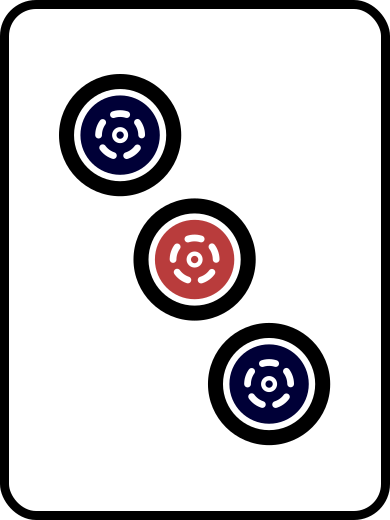
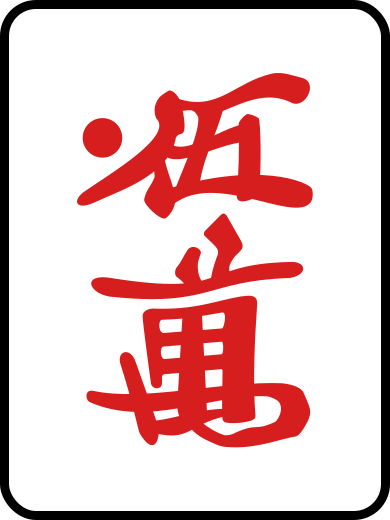
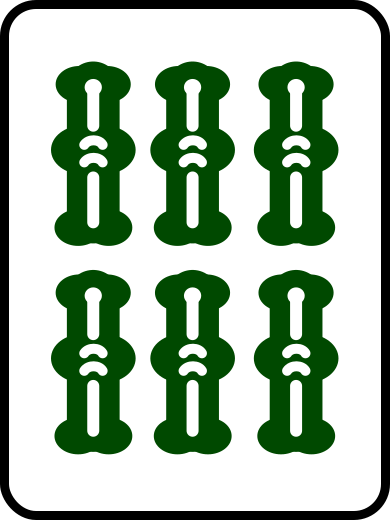
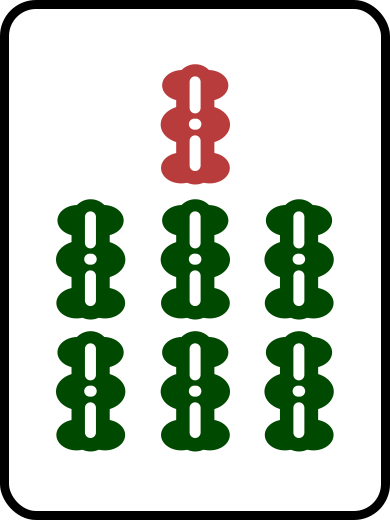
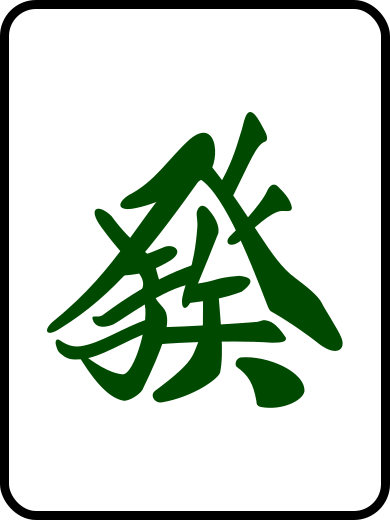
Another player discards the 2s. What does your ron pay?
Show the answerHide the answer
7,700
7,700. The triplet is , 1 han. The 33p pair is two dora, and the red 5m is a third. That's 4 han, and 4 han at 30 fu pays 7,700. It isn't a mangan, which needs a fifth han or a table that plays kiriage. 3,900 is the price if you miss the red five, and 11,600 is what a dealer would collect for the same hand.
You declared riichi on this hand. The ura dora adds nothing.Dora
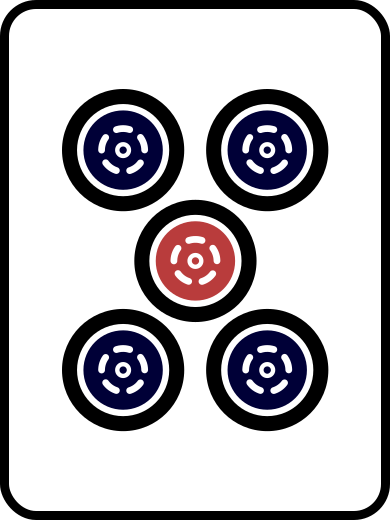
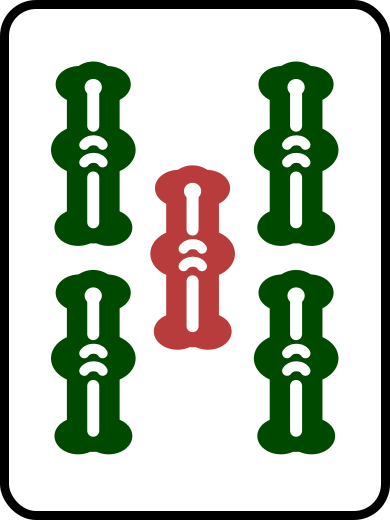
You draw the 7m and win. What does each player pay?
Show the answerHide the answer
2,000/4,000
2,000/4,000. Riichi, menzen tsumo, and tanyao make 3 han, and the 33s pair adds two dora. That's 5 han, a mangan, and from there the fu don't matter. A non-dealer's mangan tsumo takes 2,000 from each non-dealer and 4,000 from the dealer, 8,000 in all. 1,000/2,000 forgets the dora, 2,000/3,900 is the 4-han price, one han short, and 4,000 all is what the dealer would collect.
You're the dealer, and you declared riichi. The ura dora adds nothing.Dora
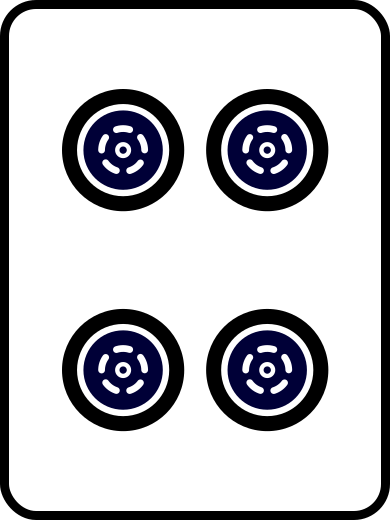
Another player discards the 8s. What does your ron pay?
Show the answerHide the answer
18,000
18,000. Riichi, tanyao, and pinfu are 3 han. The 44s pair is two dora and the red 5m a third, so the hand has 6 han, a haneman. A non-dealer's haneman is 12,000, and the dealer collects 1.5 times that. A ron on the red 5s would make 7 han and still pay 18,000. 12,000 is a dealer mangan, the price if you miss one of the three dora. 16,000 is a non-dealer's baiman, and 24,000 needs 8 han, a dealer baiman.
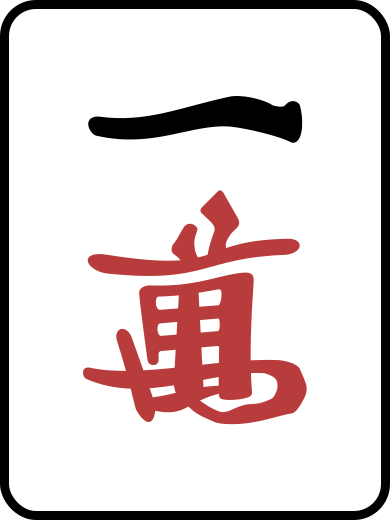
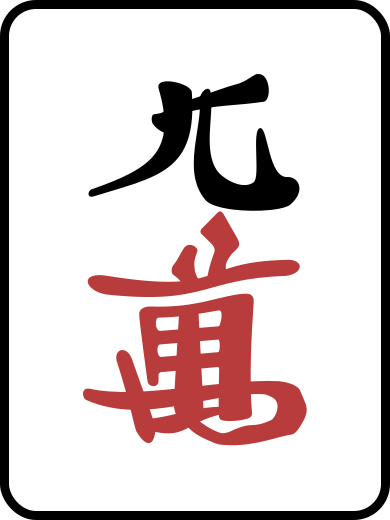
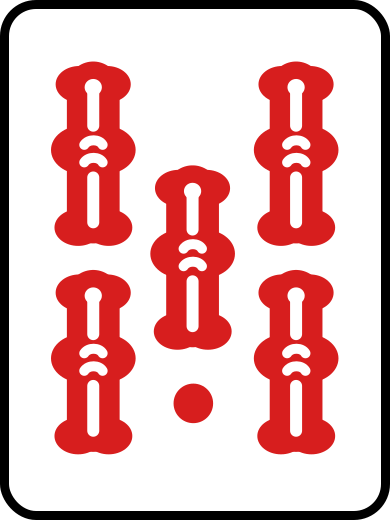
You declared riichi. A kanchan (middle wait) ron isn't pinfu, so this one counts 40 fu. The ura dora adds nothing.Dora 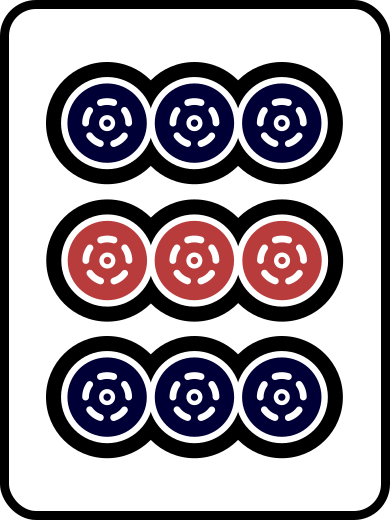

Another player discards the 2s. What does your ron pay?
Show the answerHide the answer
8,000
8,000. Riichi is the only yaku, but the 99p pair is two dora and the red 5s a third. That's 4 han. At 30 fu it would be 7,700. At 40 fu, 4 han already reaches the mangan cap, so the ron pays 8,000. 5,200 is 3 han at 40 fu, the price without the red five, and 12,000 is the dealer's mangan.
Price any hand in seconds
Enter the han, the fu, your seat, and ron or tsumo, and the score calculator gives the exact payment, honba and riichi sticks included. Check your answers to the four problems there, then price your own tenpai hands.
Open the score calculator