
Every turn asks you to throw one tile, but not every turn asks the same question. Far from you're clearing out tiles with no job, and the best cuts often tie. At 1-shanten every tile counts, and the tidy-looking cut can throw away a fifth of your tenpai tiles. Here's one hand played from the deal to a , stage by stage, and then a second hand for you to play.
Name the stage, then ask its question
Your , the count from the shanten lesson, names your stage, and each stage has its own question.
| Stage | Ask | Then |
|---|---|---|
| 3-shanten or farther | Which tiles have no job? | Cut them in the discard order |
| 2-shanten | Which block is weakest? | If cuts tie or nearly tie, compare the 1-shanten each one leads to |
| 1-shanten | How many tiles make tenpai? | If cuts tie, count the ones that end two-sided |
| Tenpai | Which tiles win? | Check your own discards, then declare riichi |
The questions change because the counts shrink. In the hand below, the best cut keeps 32 tiles at 3-shanten, 28 at 2-shanten, 20 at 1-shanten, and 8 at tenpai. A 4-tile gap is an eighth of the first list and a fifth of the third.
One rule sits above the table: a tile with no job goes before any block, at every stage. Usually that's a loose (isolated) tile, with nothing within two of it in its suit, or an honor with no partner. Sometimes it's a spare, like a second copy hanging off a finished set. From the middle turns, a safe tile can outrank this, as Defense before the riichi shows later in the course.
Far from tenpai: cut the tiles with no job
You're West in East 1, so the North is a guest wind: it gives you . Here's your deal.
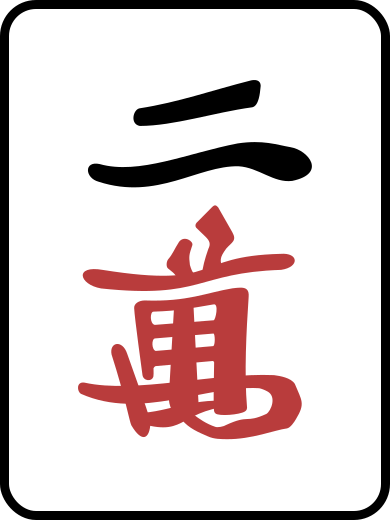
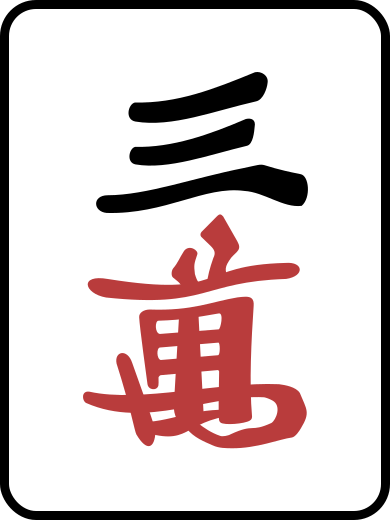
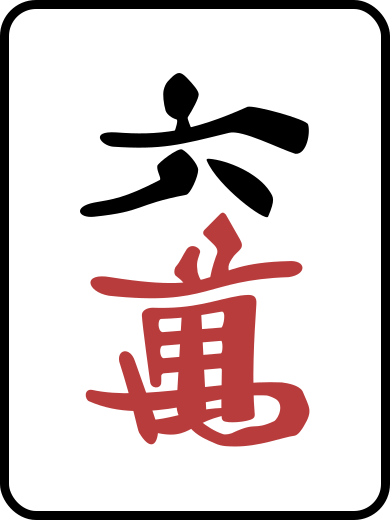
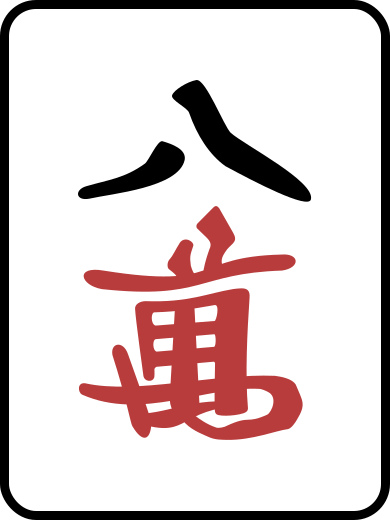

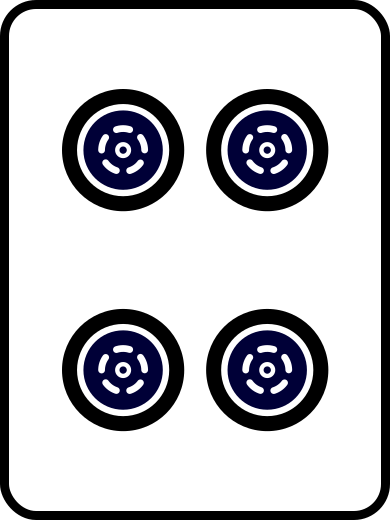
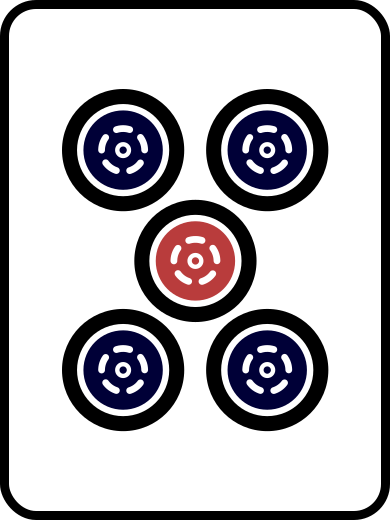
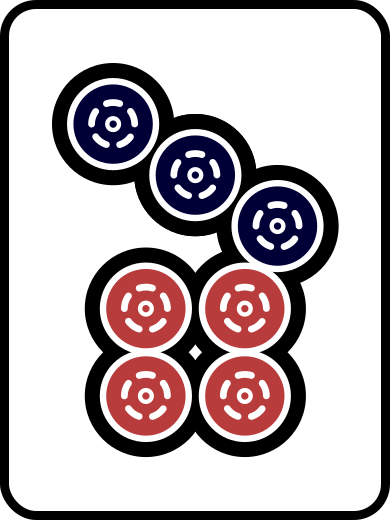
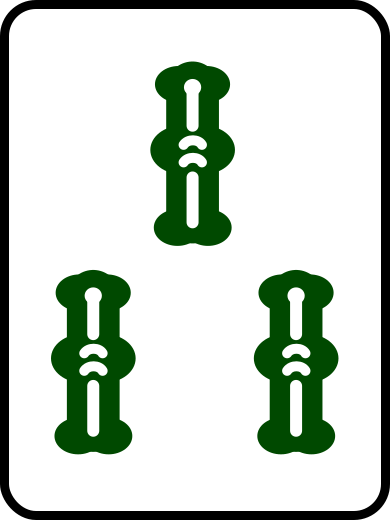
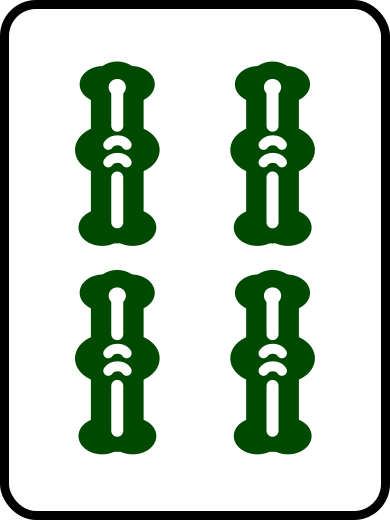
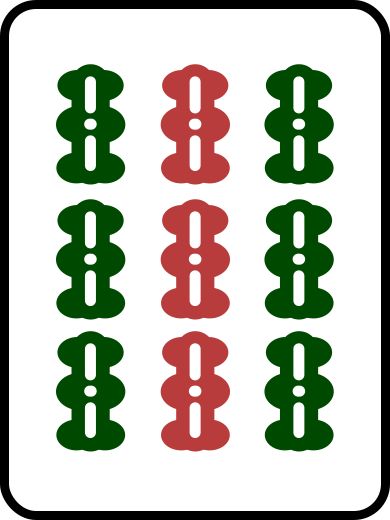
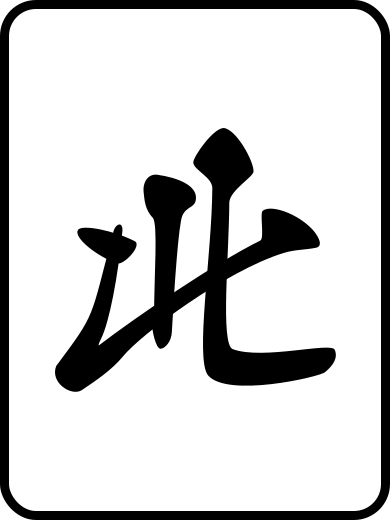
Five blocks: the 23m, 45p, and 34s (two-sided shapes), the 68m (middle shape), and the 77p head. That's 3-shanten. The 1p, the 9s, and the North have no job.
Turn 1: you draw the 3s. It makes 334s, a ryanmen sharing a tile with a pair, from Shapes worth keeping. Keep it. Cut a 3s and you keep 28 tiles, while the 1p, the 9s, and the North each keep 32. With five blocks, none of the three loose tiles adds a tile, so the count ties and the order from What to discard first decides. Guest winds go first, so the North goes.
Turn 2: you draw the 7m. It finishes 678m, and you're 2-shanten. The stage changed, but the rule above the table comes first: the 1p and the 9s still have no job, and either keeps 28. Every 3p that would join the 1p finishes your 45p instead, while nothing covers the 9s, so the 1p goes next.
The tie holds because you have five blocks. With four, each loose tile can still make your fifth block, so keep the one with the most partners, as Too many blocks or too few showed.
2-shanten: drop the weakest block, then look one step ahead
Turn 3: you draw the 8s. It lands beside the 9s and makes an 89s (edge shape). Nothing is loose now, and you hold six blocks for five places.
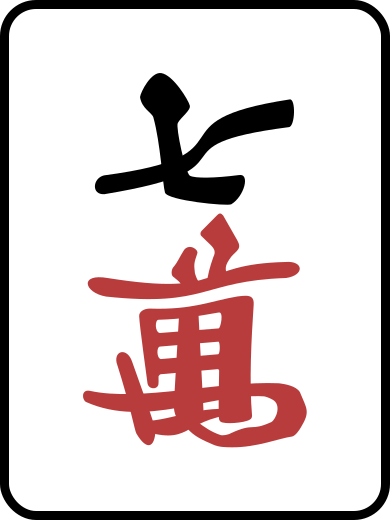
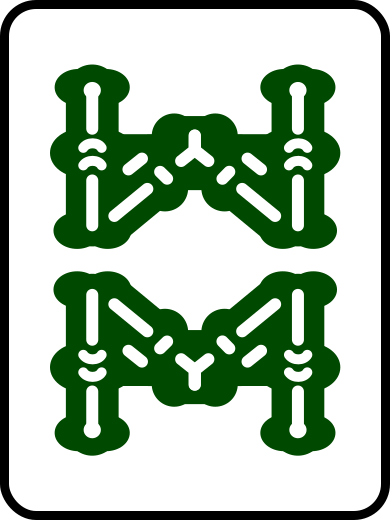
Start with the table's question: which block is weakest? The 89s penchan. It waits on one kind, the 7s, and no single draw turns it two-sided. The count backs that but can't settle it: four cuts keep 28 tiles, the 9s, the 8s, the 3s, and the 4p. So look one step ahead at the 1-shanten each cut leads to.
- Cut the 9s or the 8s. You drop the penchan and keep 334s and 77p. Sixteen of the 28 tiles, the 1m, 4m, 3p, and 6p, give you the complete 1-shanten from 1-shanten: the step where hands are won: 20 tenpai tiles, all two-sided. The other 12 give you 16, all two-sided.
- Cut a 3s. You keep the penchan one more turn. Every draw then leaves 16 tenpai tiles, never 20.
- Cut the 4p. Only the 7s, 4 of the 28 tiles, reaches 20 tenpai tiles. The other 24 leave 12 or 16 tenpai tiles, and in each only 4 end two-sided.
Drop the penchan and every you keep is a ryanmen or a pair, so every 1-shanten it leads to is all two-sided. Cut the 9s first, from the outside: the 8s stays one more turn, and if no draw gives it a job, it's your next cut. The hand analyzer shows the four-way tie but doesn't look ahead. At 2-shanten that's your job.
Here the better shape is free. When it isn't, my rule of thumb: at 2-shanten, give up one kind, 4 tiles, for a 1-shanten with clearly more two-sided tenpai tiles. Give up more only when that 1-shanten also keeps about as many tenpai tiles as the wider cut's. Headless and floating-tile 1-shanten weighed the same kind of trade at 1-shanten.
1-shanten: count every tenpai tile
Turn 4: you draw the 1m. It finishes 123m, and you're 1-shanten.
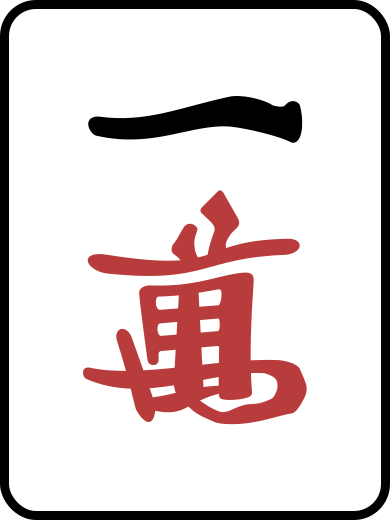
The 8s has no job, so it goes, and you hold the complete shape: two ryanmen (45p and 34s) and two pairs (77p and 33s). That's 20 tenpai tiles, all two-sided. The count shows what breaking the rule costs: the tidy cut, a 3s out of 334s, keeps 16. A 4s keeps 12, and only 4 of those end two-sided.
Turn 5: you draw the 2p. Most draws at 1-shanten miss, and a miss asks one question: does the new tile add tenpai tiles? The 2p doesn't. Cut it and you keep all 20.
Tenpai: list the waits, check your discards, declare
Turn 6: you draw the 6p. It finishes 456p, and two cuts make tenpai.
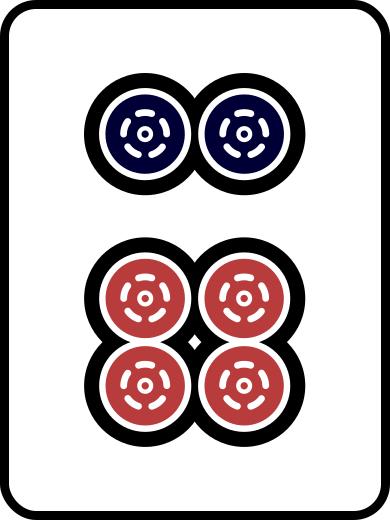
- Cut a 3s. The 34s waits on the 2s and the 5s, with the 77p as your head: 8 tiles.
- Cut the 4s. The 33s and the 77p make a (pair wait) on the 3s and the 7p, 2 copies each: 4 tiles.
Take the 8-tile wait. Then check the waits against your own discards, as the tenpai and furiten lesson showed. Yours are the North, the 1p, the 9s, the 8s, and the 2p. No 2s and no 5s, so you can either one.
The hand is closed, you have the 1,000 points for the stick, and plenty of wall is left. Declare riichi. When to riichi, later in the course, covers the few hands where you'd stay quiet.
| Turn | Draw | Cut | Stage | The lesson it uses |
|---|---|---|---|---|
| 1 | | | 3-shanten | What to discard first |
| 2 | | | 2-shanten | The five-block method |
| 3 | | | 2-shanten | Too many blocks or too few |
| 4 | | | 1-shanten | 1-shanten |
| 5 | 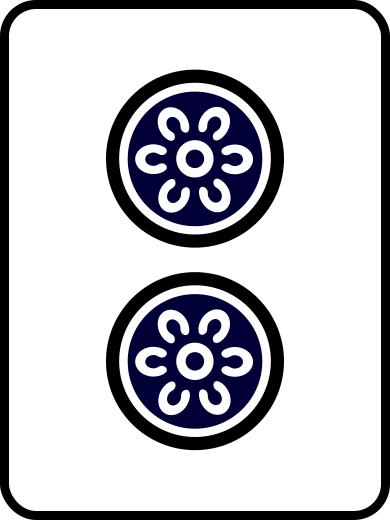 | | 1-shanten | Tile acceptance |
| 6 | | | Tenpai | Mahjong waits |
Practice: a second hand, turn by turn
Each problem is your next turn, after the right answer to the one before. This wall is kind: every draw improves the hand, which real hands rarely allow. Name your stage before you tap.
East 2, turn 1. You're South, so the West is a guest wind.
What do you discard?
Tap the tile you would cut.
Show the answerHide the answer
Cut 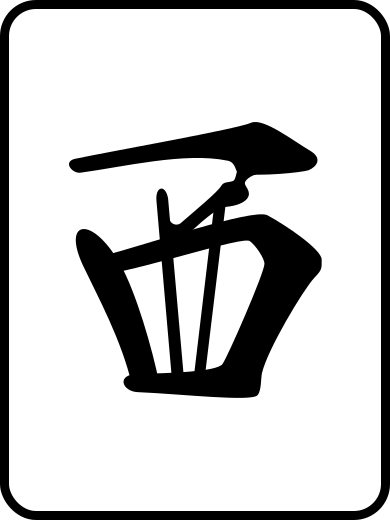
Cut the West. It's the only tile with no job: cut it and you keep 36 tiles. Every block tile you could cut keeps 32 or fewer. The 8m you drew gives you a second pair, and two pairs work as a team, as the pairs lesson showed. Throw it back and you keep 28.
Turn 2. You cut the West.
What do you discard?
Tap the tile you would cut.
Show the answerHide the answer
Cut
Cut an 8m. The 7m finished 678m, and that set took one of your two 8m. The other one now hangs off a finished set, a spare that adds nothing. Cut it and you keep 24 tiles at 2-shanten. Every other cut keeps 20 or fewer, or drops you to 3-shanten: breaking the 678m or the 99s.
Turn 3. You cut an 8m.
Three cuts keep 28 tiles. Which one do you cut?
Tap the tile you would choose.
Show the answerHide the answer
Cut the 5s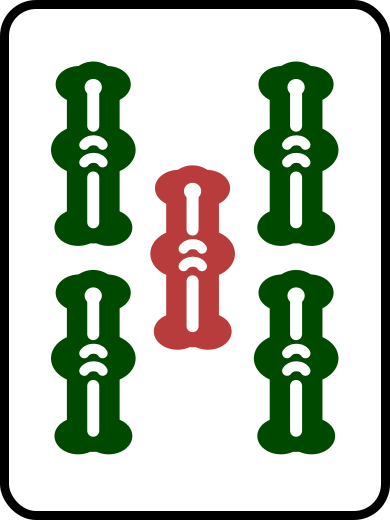
Cut the 5s. The 5s, the 3p, and the 6p each keep 28 tiles, so ask which block is weakest: the 57s kanchan, which waits on one kind, the 6s. Cut its 5s and the 7s stays as 799s, still taking the 8s. With the 34m, the 34p, and the 677p carrying the hand, every tenpai tile of your next 1-shanten ends two-sided, whatever you draw. Cut the 3p or the 6p and the kanchan stays: after most draws, half or more of your tenpai tiles end on a bad wait. Cut the 7s and you keep 24 for the same clean shape.
Turn 4. You cut the 5s.
Two cuts keep 16 tiles. Which one do you cut?
Tap the tile you would choose.
Show the answerHide the answer
Cut the 7s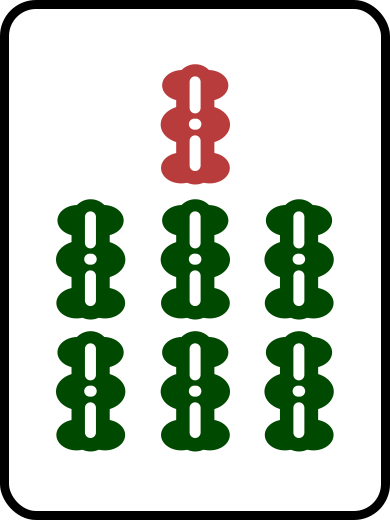
Cut the 7s. The 5m finished 345m. At 1-shanten, count two numbers. The 7s and the 6p each keep 16 tenpai tiles. Cut the 7s and you hold the complete shape: the 34p and 67p ryanmen with the 99s and 77p pairs. All 16 end two-sided. It's 16, not 20, because both ryanmen want the 5p. Cut the 6p and 8 of your 16, the 2p and the 5p, leave you on the 79s kanchan or a shanpon.
Turn 5. You cut the 7s.
What do you discard?
Tap the tile you would cut.
Show the answerHide the answer
Cut
Cut a 7p. The become 34567p, five in a row, with more winning tiles than any other tenpai here. The next problem counts them. Keep both pairs by cutting the 3p or the 6p and you wait on the 9s and the 7p, 2 copies each: 4 tiles.
Still turn 5. You cut a 7p, and you're tenpai. Your discards: West, 8m, 5s, 7s, and 7p.
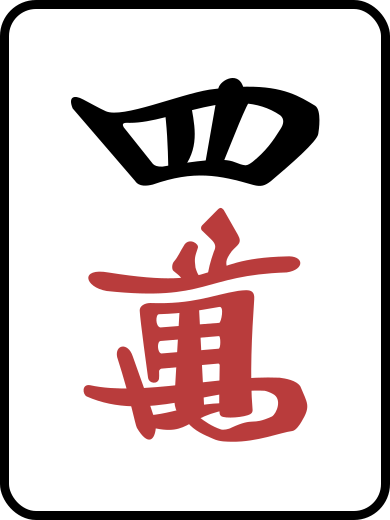
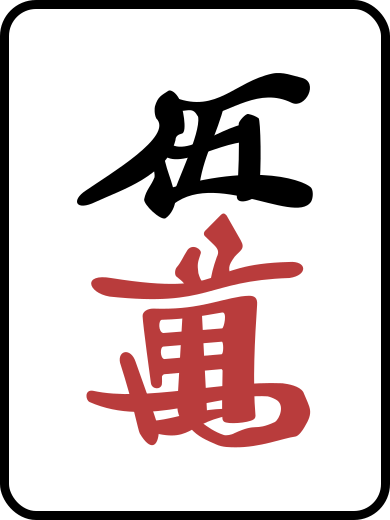
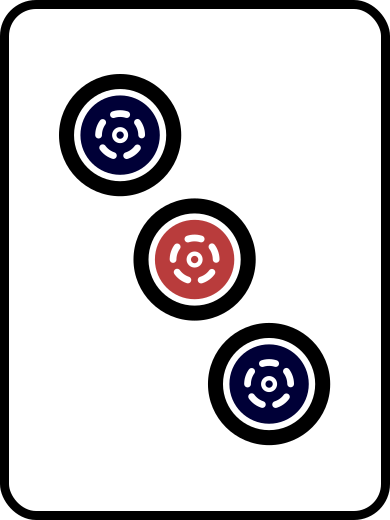
Which tiles win?
Show the answerHide the answer
Waits 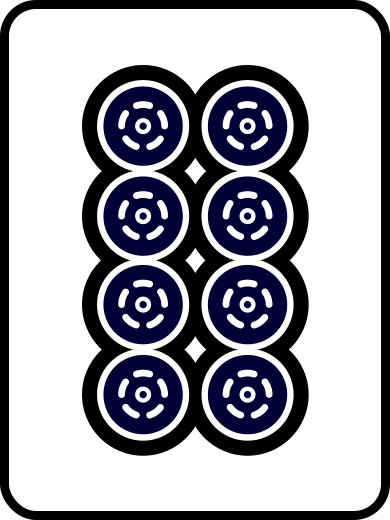
The 2p, the 5p, and the 8p, the from Mahjong waits. Read 34p and 567p and you wait on the 2p or the 5p. Read 345p and 67p and you wait on the 5p or the 8p. You hold one 5p, so 4 + 3 + 4 = 11 tiles. None of the three sits in your discards, so you aren't and any of them wins by ron. Declare riichi.
The efficiency trainer deals 1-, 2-, and 3-shanten hands for the same drill, and the hand analyzer takes the hands from your own games.
Name the stage, then cut
The daily problem deals one hand a day and ranks every discard by tile acceptance. Name its stage and ask that stage's question before you tap, then read the table.
Open the daily problem