
The 6 hanging off your 345, the second 4 in a 3445, the 7 next to a 35: each one looks like a spare, and spares feel like the first thing to cut. Count the draws each one adds, though, and it usually beats the loose (isolated) tile you'd keep instead. These compound shapes, three or four tiles working as one group, take more draws than their size suggests.
Three tiles that take more than two
A is two tiles one draw from a set. A (two-sided) takes 8 tiles, and a (middle) or a (edge) takes 4, as the partial-sets lesson counted. Put a third tile in the right place and the same block takes more.
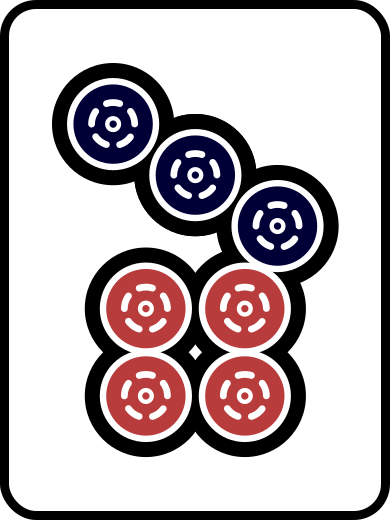
A pair plus a partial set. is the ryanmen 34p with a second 3p. A 2p or a 5p still makes a set, and now a third 3p does too: 3 kinds, 10 tiles. Join a pair to a kanchan or a penchan, as in or , and 4 tiles become 6.
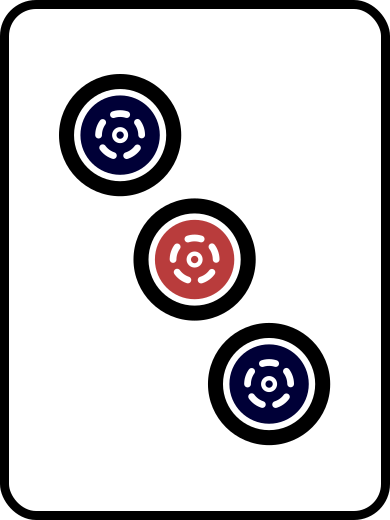
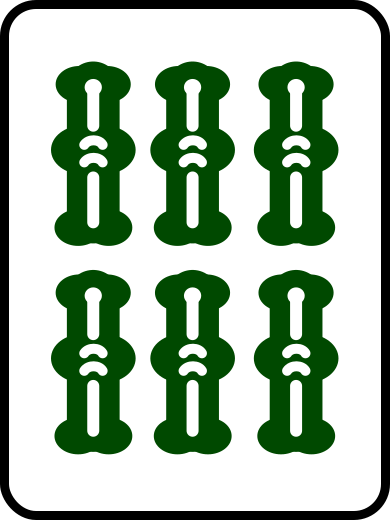
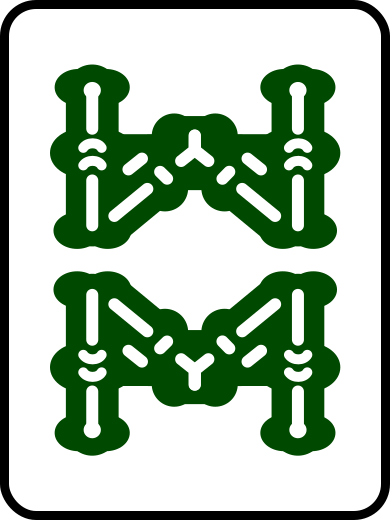
These counts assume a head somewhere else. Then the 33p is a second pair, and a third 3p makes a set while your head stays put, as Pairs: two is right, three is one too many showed. If the 33p is your only pair, it's busy being your head, and the 334p works as a head with a spare 4p.
A . is two kanchans sharing the 5p: the 35p waits on the 4p and the 57p on the 6p. Together that's a ryankan (両嵌), 2 kinds and 8 tiles, as many as a ryanmen. It costs three tiles instead of two and finishes like a kanchan: if the rest of your hand fills first, you cut one end to reach and wait on a kanchan. Far from tenpai, keep all three tiles. Any three tiles spaced two apart make one: 135, 246, 357, 468, or 579.
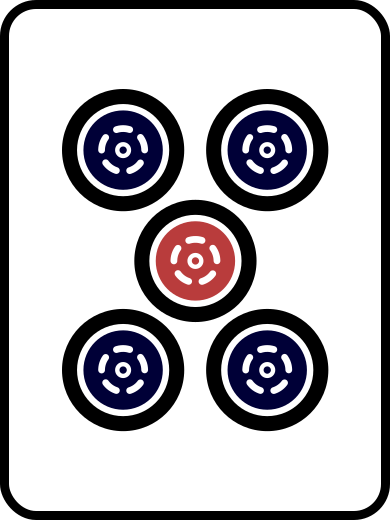
| Shape | Example | Draws that make a set | Tiles | Without the extra tile |
|---|---|---|---|---|
| Pair plus ryanmen | 2p, 3p, or 5p | 10 | 8 | |
| Pair plus kanchan | 6s or 7s | 6 | 4 | |
| Pair plus penchan | 1m or 3m | 6 | 4 | |
| Ryankan | 4p or 6p | 8 | 4 |
What do you discard?
Tap the tile you would cut.
Show the answerHide the answer
Cut 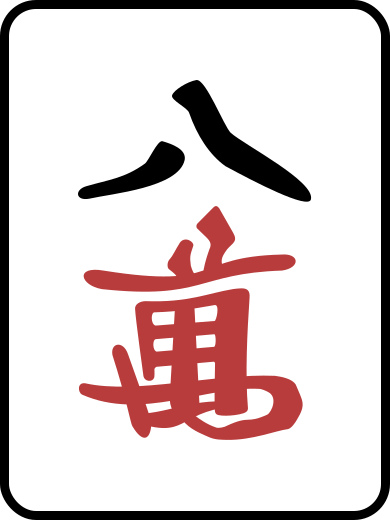
Cut the 8m. The 135m is a ryankan, not a kanchan with a stray terminal: the 2m and the 4m both make a set, 8 tiles, and with the 2p and 5p for the 34p you keep 16. Cut the 1m and the 35m takes only the 4m: 12. The 8s finished 789s, so with 567s and the South pair the hand holds a partial set for every set it still needs, and a partner for the 8m would add nothing.
Four tiles: a set with a spare that isn't loose
Add a fourth tile to a set and the extra one looks spare. It isn't loose, though. A loose tile has nothing within two of it in its suit, and this one touches the set. Draws around the group give it a partner and turn the shape into a set plus a partial set.
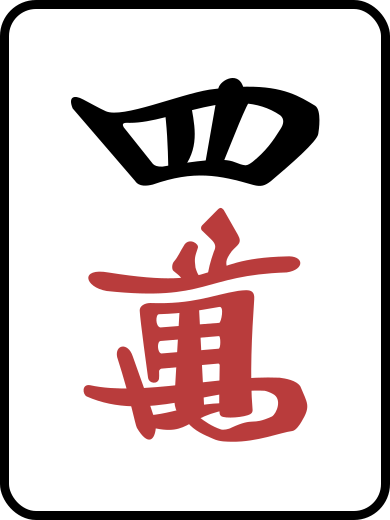
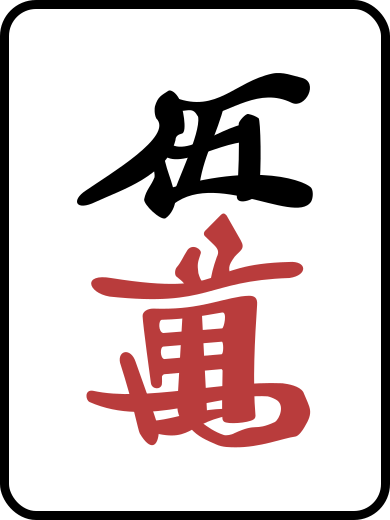
The strongest is four in a row, . Read it as 345m and a 6m, or a 3m and 456m. Every tile from the 1m to the 8m makes it a set plus a partial set: a 2m gives 23m and 456m, a 7m gives 345m and 67m, a 3m gives the 33m pair beside 456m. That's 8 kinds and 28 tiles. At tenpai the same four tiles are the , a on either end, from Mahjong waits. The Tenhou game review calls the shape by its Japanese name, yonrenkei (四連形), and keeps it because so many draws improve it.
| Shape | Example | Takes | Tiles |
|---|---|---|---|
| Four in a row | 1m to 8m | 28 | |
| Run with a tile two away | 2m, and 5m to 9m | 22 | |
| 2m to 7m | 20 | ||
| Four in a row at the edge | 1m to 6m | 20 | |
| 2m to 6m | 16 | ||
| Run with a tile two away, at the edge | 4m, 7m, 8m, and 9m | 14 |
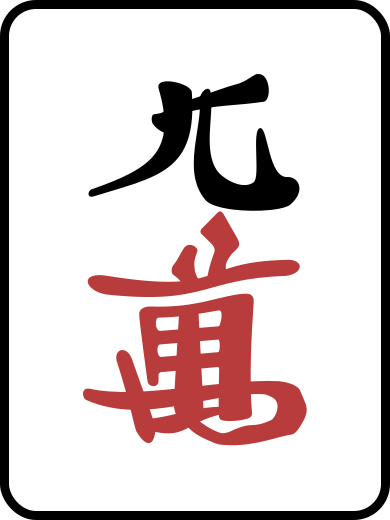
Two more have Japanese names. The aryanmen (亜両面), a run with a pair on one end, is the shape you met as a wait in Mahjong waits. The nakabukure (中膨れ) is a run with its middle tile doubled. Four of its five kinds leave a ryanmen: a 2m gives 234m and 45m, a 6m gives 456m and 34m. Left as it is at tenpai, though, it waits only on its middle tile, the 4m, with 2 copies left.
Now count a loose tile the same way, as What to discard first did: the draws that give it a partner. A loose honor takes 3 tiles, a 1 or 9 takes 11, a 2 or 8 takes 15, and a 3 to 7 takes 19. The top four shapes in the four-tile table beat any loose tile. The nakabukure and the 5679 beat a loose honor or terminal, but a loose 3 to 7 takes more than either, and a loose 2 or 8 tops the 5679 by one tile.
What do you discard?
Tap the tile you would cut.
Show the answerHide the answer
Cut 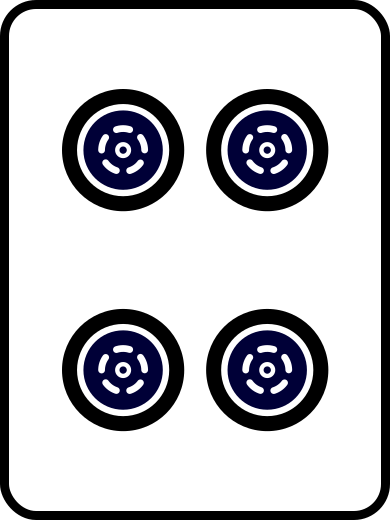
Cut the 4p or the 6s: with 345m, 789p, 123s, and the East pair done, the 6m, the 4p, and the 6s are left over. The 6m looks like the spare, but it makes four in a row: 28 tiles, against 19 for a loose 4p or 6s. Keep the 3456m and one loose tile and 49 tiles make you tenpai: 28 plus 19, plus the last two Easts, since a third East is a set and leaves the 3456m nobetan. Cut the 6m or the 3m and only 40 do.
Count before you cut
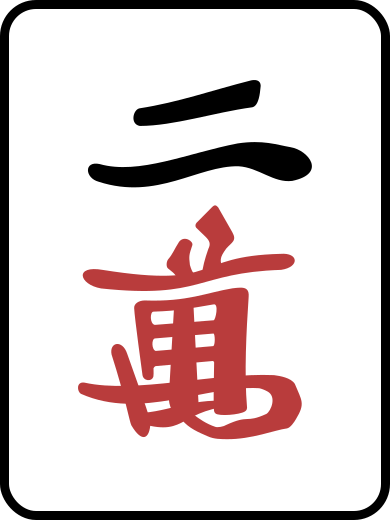
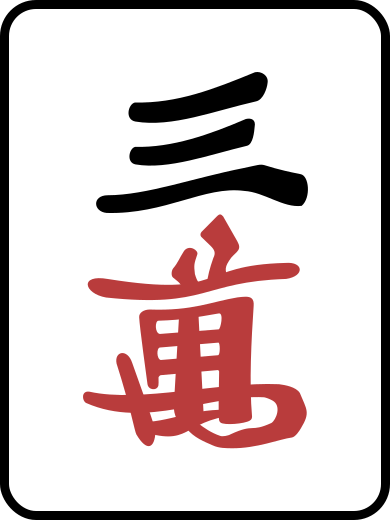
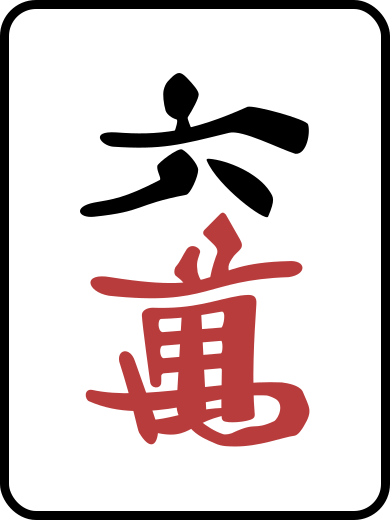
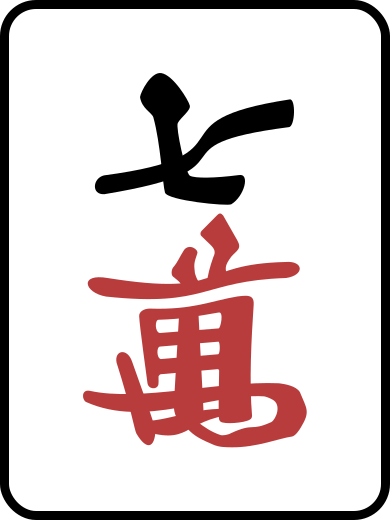
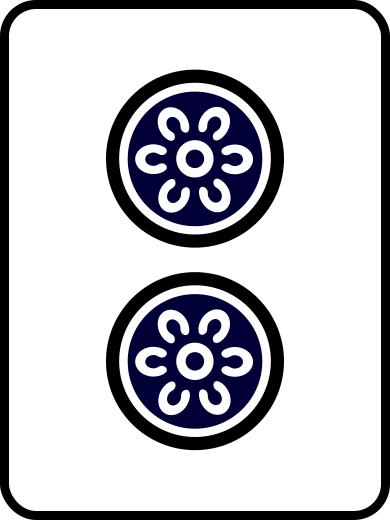
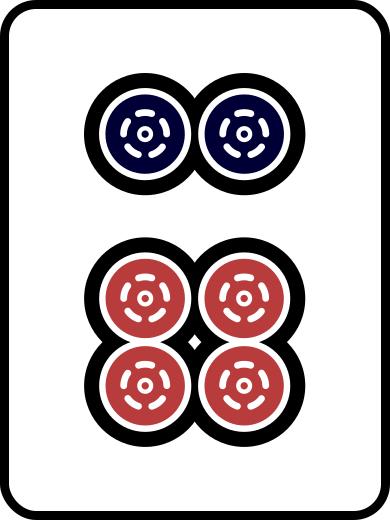
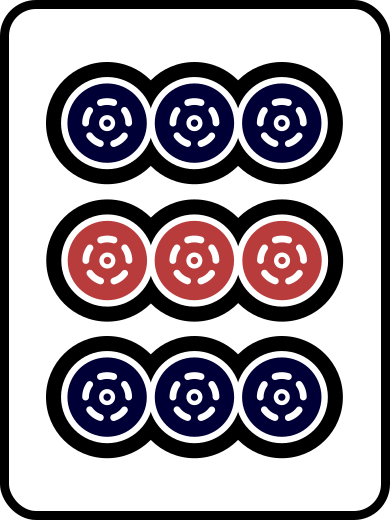
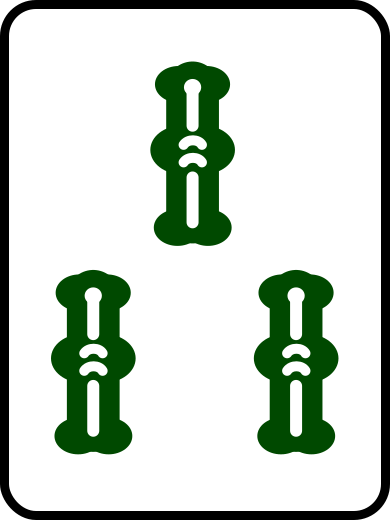
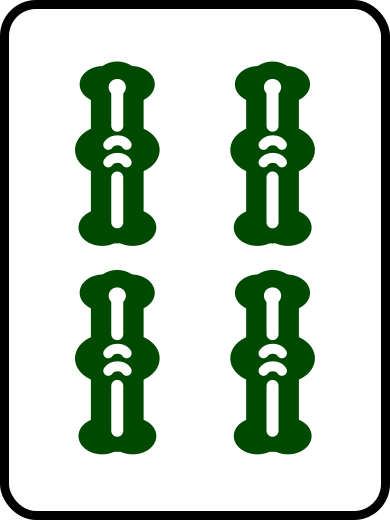
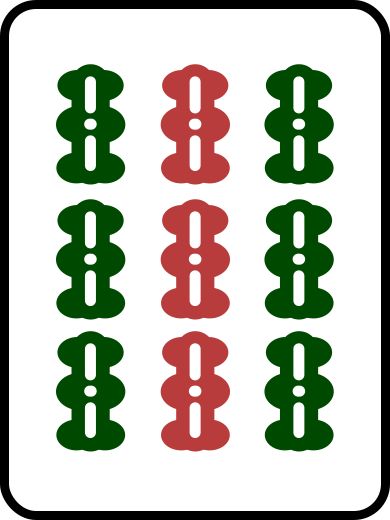
You draw the 8m and finish 678m. That gives you five blocks: the 678m set, the 23m ryanmen, the 246p ryankan, the 344s, and the 99p head. The 9s touches none of them. A 7s, an 8s, or a 9s would give it a partner, but you already hold a partial set for every set you still need, so that partner would only make a spare shape, and its 11 tiles count for nothing. The hand is 2-shanten, and the cuts that keep it there aren't worth the same.
| Cut | What it costs | Tiles |
|---|---|---|
| Nothing: it touches no block | 28 |
| or | The ryankan becomes a kanchan | 24 |
| The 344s becomes a plain ryanmen | 24 |
| The 344s becomes a pair | 20 |
Cut the 9s and you keep 28 tiles: 8 for the 23m, 8 for the ryankan, 10 for the 344s, and the last two 9p. The 9p counts because the two pairs work as a team: draw it and 999p is a set, with the 44s as your head. Cut a 4s and the 9p stops counting as well, since the 99p is now your only pair. That's why one 4s costs 4 tiles, not 2. The hand analyzer opens this hand with every cut ranked. Here the 9s goes and every shape stays.
The two kinds of shape do different jobs, though. A three-tile shape's extra tile helps its partial set become a set, so it counts even with five blocks. A four-tile shape's spare works like a loose tile: it adds tiles only while your hand still needs a partial set. Once the rest of the hand holds five blocks, head included, the spare and a loose tile both sit outside them, and the count ties. In 2379m3456p2267s15z, cutting the 3p, the 6p, the East, or the White each keeps 20 tiles. The five-block method shows how to break that tie.
And a ryankan or a nakabukure that never improves leaves you a one-sided wait. 1-shanten: the step where hands are won shows what to do with a ryankan near the finish, and Headless and floating-tile 1-shanten shows when the nakabukure's better waits are worth a few tiles.
Practice
Find the tiles outside your sets, then count what each one brings.
What do you discard?
Tap the tile you would cut.
Show the answerHide the answer
Cut
Cut the 9p or the 1s. With 123p, 789s, 345m, and the 66p done, the second 4m, the 9p, and the 1s are left over. The 4m isn't loose: the 2m through the 6m make the 3445m a set plus a partial set, 16 tiles against 11 for a loose terminal. Keep the 3445m and one terminal and 29 tiles make you tenpai, 16 plus 11 plus the last two 6p, while cutting a 4m keeps only 24.
Three terminals sit outside your sets. Which one goes?
Tap the tile you would cut.
Show the answerHide the answer
Cut 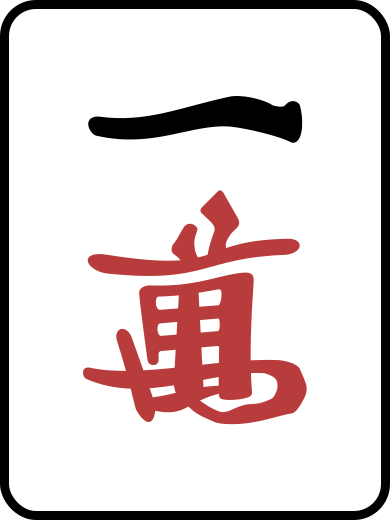
Cut the 1m or the 9s. The 9p sits two away from 567p, so it isn't loose: an 8p gives 789p and 56p, a 4p gives 456p and 79p, and a 7p or another 9p works too, 14 tiles against 11 for a loose terminal. Keep the 9p and one other terminal and 27 tiles make you tenpai: 14 plus 11, plus the last two Norths. Cut the 9p and only 24 do.
Take these shapes to the tile efficiency trainer. Its hands hold no loose tile, so every cut breaks a shape. Name each three- and four-tile group and its count before you cut, then check the ranking.
Count shapes on real hands
The tile efficiency trainer deals 1- to 3-shanten hands with no loose tile, so every cut breaks a shape. Name each shape and its count before you cut, then check the ranking.
Open the efficiency trainer