
You reach on a two-sided shape and declare . The hand also waited on a third tile, one already in your own discards, so the riichi was from the start. A few seconds of taking the hand apart would have caught it, and the same few seconds tell you whether your wait has 8 tiles left or 2.
The five basic waits, counted
Your wait (, 待ち) is every tile that finishes a tenpai hand, as the tenpai and furiten lesson put it. Most tenpai hands are three sets, a pair, and one , and that partial set decides the wait. You met three of the five basic waits as partial sets in the partial-sets lesson.
| Wait | Example | Wins on | Tiles |
|---|---|---|---|
| (two-sided wait) | 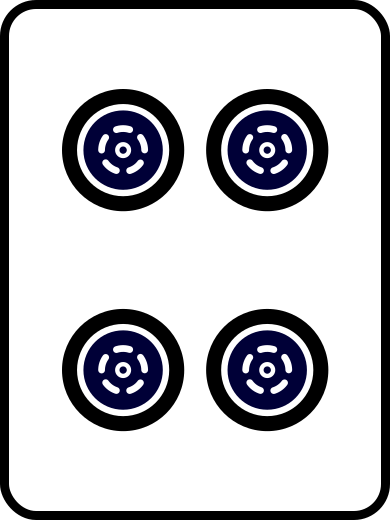 or 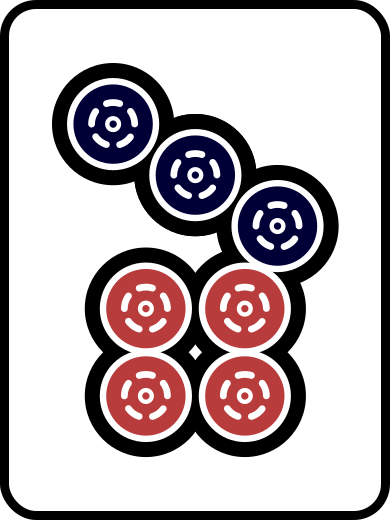 | 8 | |
| (middle wait) | 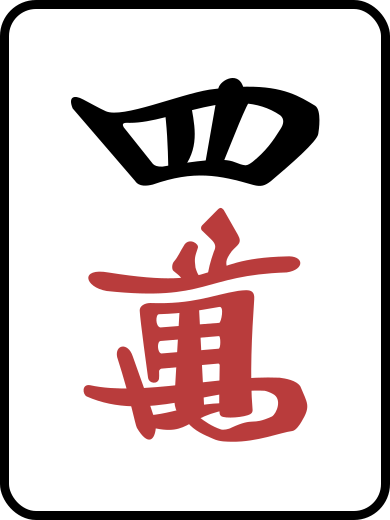 | 4 | |
| (edge wait) | | 4 | |
| (pair wait) | 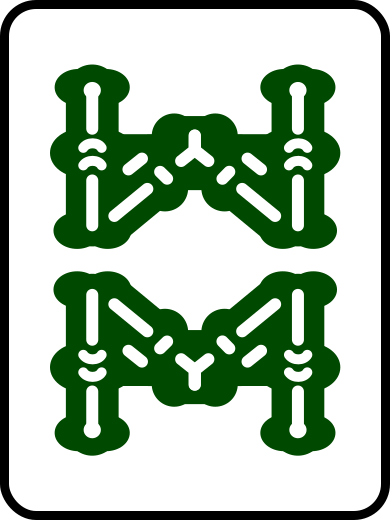 | or | 4 |
| (single wait) | 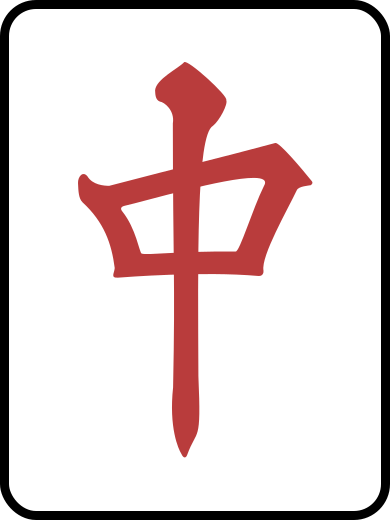 | 3 |
Count each one the same way: 4 copies of every tile that wins, minus the copies in your hand. A shanpon holds two pairs, so 2 copies of each are left, 4 in all. A tanki holds one copy of its tile, so 3 are left. The kanchan, penchan, and tanki are one-sided waits, on a single tile kind. The tenpai guide lists the same counts.
Split the hand every way it splits
Many groups read more than one way, each reading leaves its own basic wait, and your wait is all of them together. Here's the smallest case.
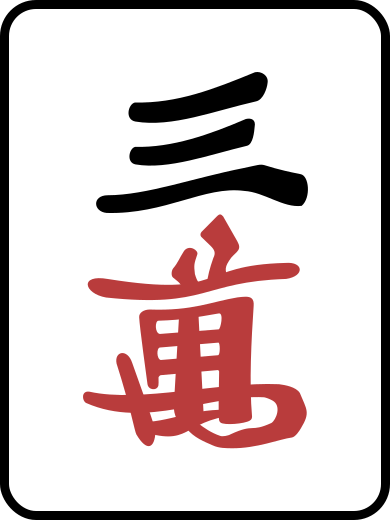
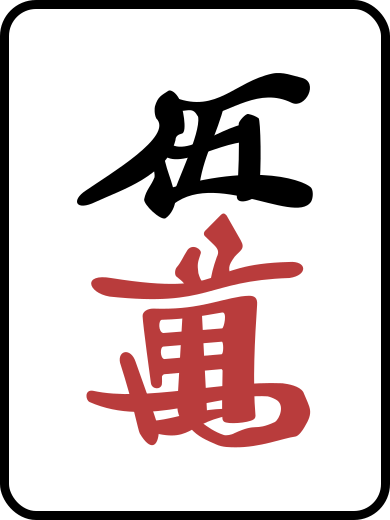
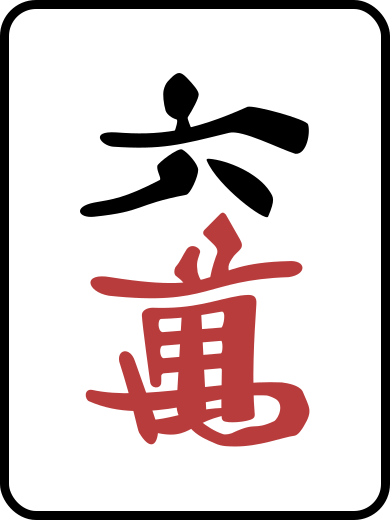
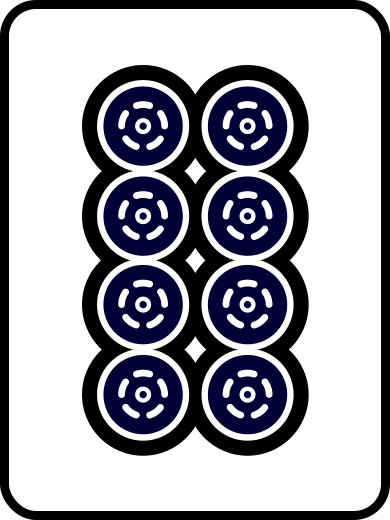
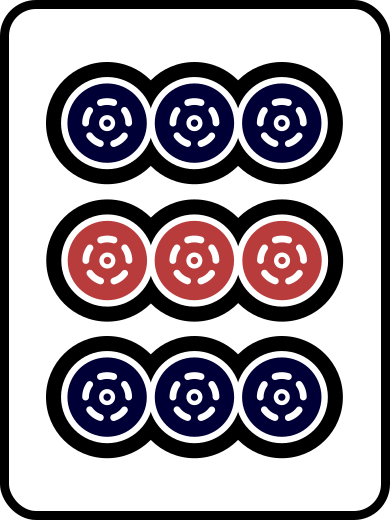
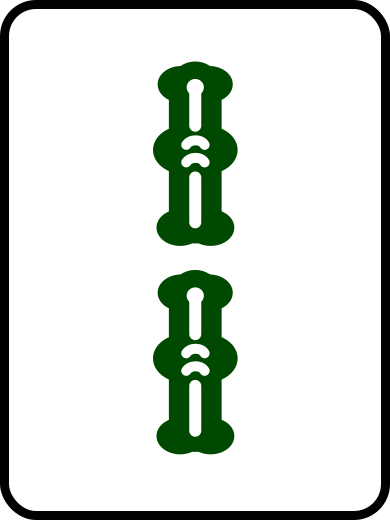
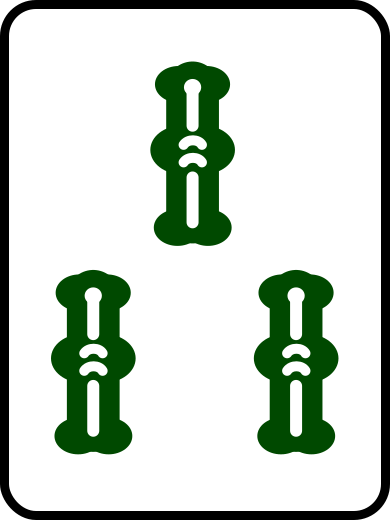
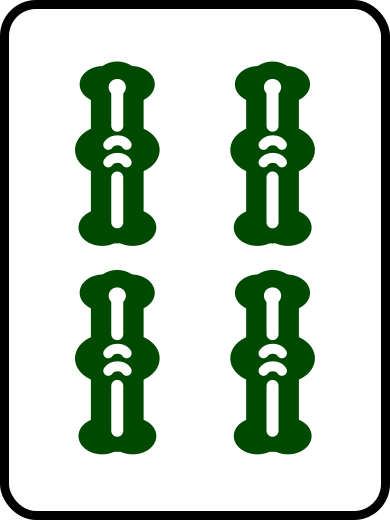
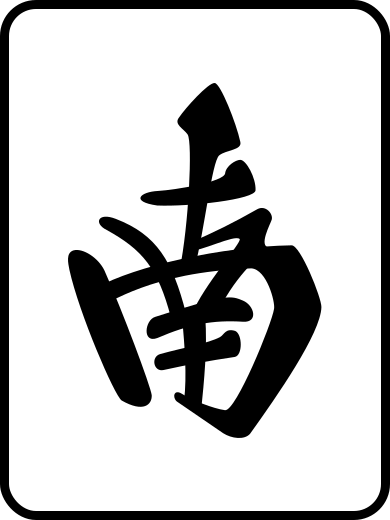
The 789p, the 234s, and the three South winds are sets whichever way you look. Everything happens in 3456m.
- Read it as 345m and a single 6m. A second 6m makes the pair: a tanki on the 6m.
- Read it as a single 3m and 456m. A second 3m makes the pair: a tanki on the 3m.
So the hand waits on and . Four in a row is the nobetan (): two single waits in one shape. It waits on two kinds, like a ryanmen, but you hold one copy of each. That makes 6 tiles, not 8.
The same steps work on any hand.
- Set aside the groups that read only one way, like a set alone in its suit.
- Try every reading of what's left as sets, a pair, and one partial set, or as sets and a single tile waiting for its pair. Where you hold three of a tile, read them once as a set and once as a pair with the third joining its neighbors. In a row of four or five, try the set at each end and see what's left over.
- Write down each reading's basic wait. Your wait is every tile on the list.
- Check the neighbors. A winning tile has to join tiles you already hold, so outside it's always one you hold or one right next to one, in the same suit. For the 3456m, that means the 2m through the 7m. Add each one in your head and look for four sets and a pair (or ). A tile you missed in step 2 shows up here.
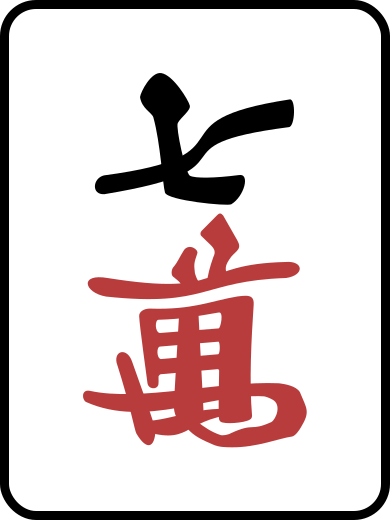

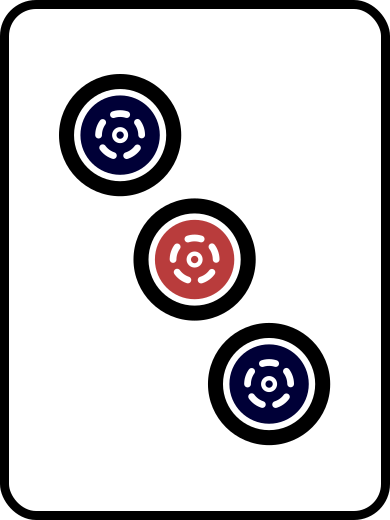
Which tiles win?
Show the answerHide the answer
Waits 
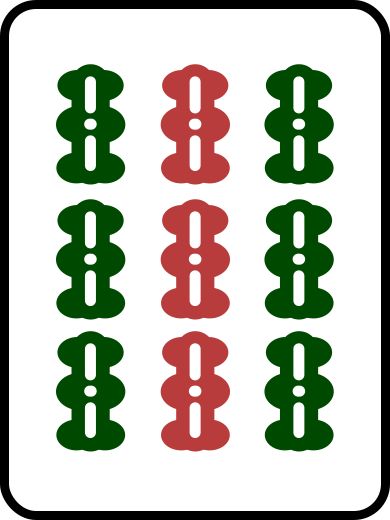
The 6s and the 9s. 6789s is a nobetan at the edge of the suit. Read a single 6s plus 789s, and a second 6s makes the pair. Read 678s plus a single 9s, and a second 9s does. You hold one of each, so 6 tiles win. The 9s is the tile players miss, because 789 looks finished. The 5s does nothing: 56789s has no split into a set and a pair.
Shapes that wait more than one way
A few shapes come up often enough to know on sight. Each is two basic waits sharing tiles, with its own count.
Five in a row: the sanmenchan
reads as 34p plus 567p, waiting on the 2p or the 5p, or as 345p plus 67p, waiting on the 5p or the 8p. Together that's a sanmenchan (, three-sided wait) on 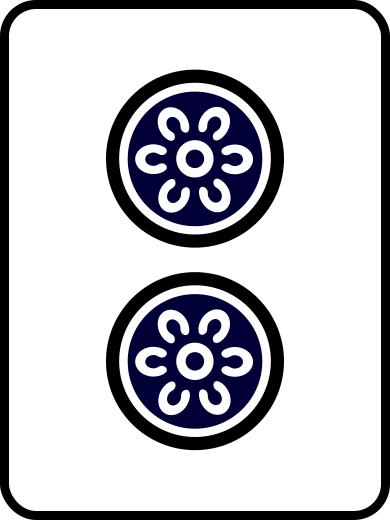 ,
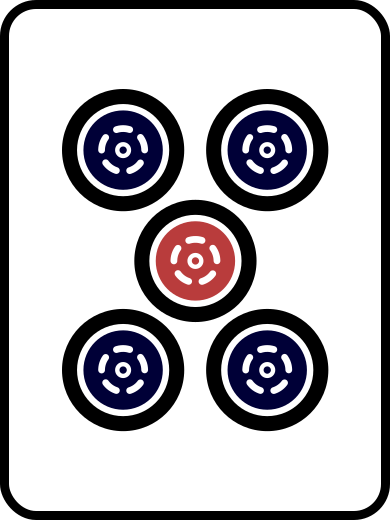 , and . You hold one 5p, so 4 + 3 + 4 = 11 tiles win. The three tiles always sit three apart: 1-4-7, 2-5-8, or 3-6-9.
Five in a row needs room at both ends. reads as 123p plus 45p, waiting on the 3p or the 6p, or as 12p plus 345p, a penchan on the 3p. You hold one 3p, so that's two kinds and 3 + 4 = 7 tiles. Split it before you assume three sides.
A run with a pair on one end: the aryanmen
reads as an 88s pair plus 67s, waiting on the 5s or the 8s, or as 678s plus a single 8s waiting for its pair. That single wait adds no new kind, because the 8s is already on the ryanmen's list. So an aryanmen () waits like a plain ryanmen, on fewer tiles. Two of the four 8s are in your hand, so 2 + 4 = 6 tiles win.
A triplet beside a two-sided shape: the entotsu
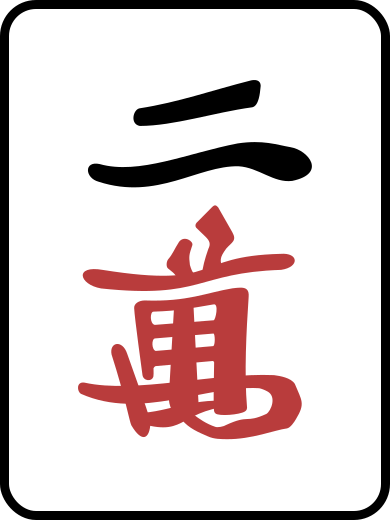
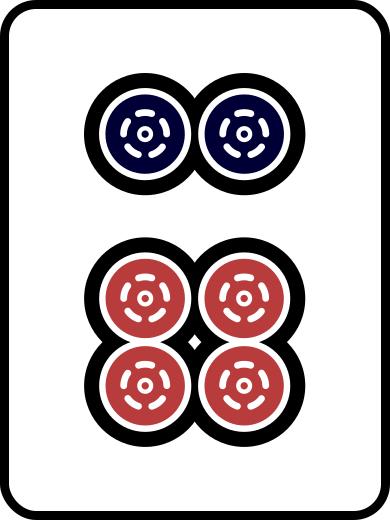
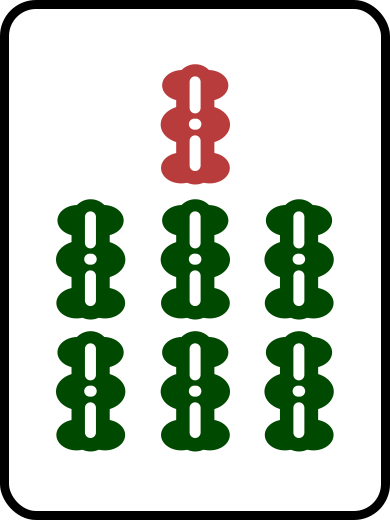
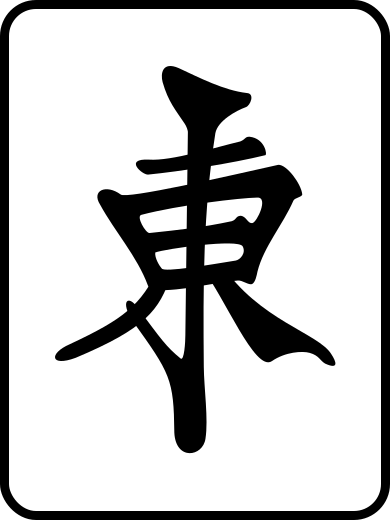
Read 666s as a set. Then 78s is a ryanmen on the 6s or the 9s, and the East winds are the pair. Now read 66s as a pair and 678s as a set. You hold two pairs, 66s and the East winds, so that's a shanpon on the 6s or the East. Together, the hand wins on , , and .
This is an entotsu (, chimney shape): a ryanmen and a shanpon sharing one triplet. Three kinds, but only 7 tiles: 1 copy of the 6s, 4 of the 9s, and 2 of the East. A plain ryanmen, with two kinds, has 8.
Count the tiles that are still live
The counts so far assume you've seen nothing. As Tile acceptance showed, every copy in sight is a copy you can't draw. Count a wait in three steps.
- Take 4 for each tile kind you wait on.
- Take away the copies in your hand.
- Take away every copy you can see: the discards, the called sets, and the indicator.
Go back to the entotsu hand. Two 9s sit in the discards, and the dora indicator is an East wind. The 9s drops to 2 and the East to 1, so the hand has 1 + 2 + 1 = 4 tiles left. Three kinds, half the tiles of a ryanmen nobody has touched. A wait is worth its tiles, not its kinds. A wait at 0 can't win at all, and the tenpai guide calls it karaten.

Other things equal, more tiles means more wins. In the site's riichi wait win rate data, from Tenhou's top room (), a sanmenchan riichi (up to 11 tiles) declared at turn 8 wins 65% to 66% of the time, and a ryanmen (up to 8) 52% to 57%. Turns count from zero there, so turn 8 is your ninth discard. Choosing between waits comes later, in Choosing your wait.
Two 9p sit in the discards. The dora indicator is a 6p.
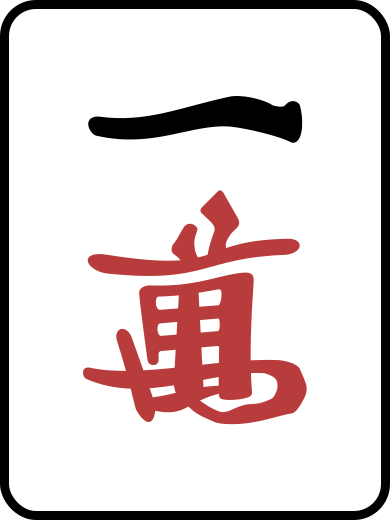
How many winning tiles are left?
Show the answerHide the answer
3
- The 66p pair plus 78p waits on the 6p and the 9p, and 678p plus a single 6p adds the 6p again. Before you look around, 2 copies of the 6p and 4 of the 9p are outside your hand: 6 tiles. The dora indicator takes one 6p and the discards take two 9p, which leaves 1 + 2 = 3. An 8 counts the aryanmen like a plain ryanmen, a 6 ignores what's in sight, and a 4 forgets the dora indicator.
Every tile on your list counts for furiten too. One of them in your own discards blocks on the whole wait, the tiles you spotted first included.
Practice: name every winning tile
Split each hand, list the waits, then count the tiles. The wait quiz deals new hands, mixed like these or one suit, and shows the split behind each winning tile.
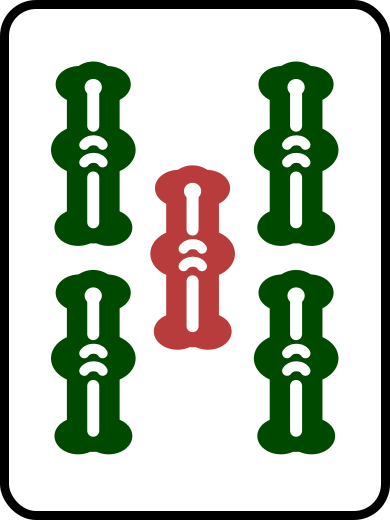
Which tiles win?
Show the answerHide the answer
Waits 
The 1s, the 4s, and the 7s. Split 23456s as 23s plus 456s for the 1s and the 4s, or as 234s plus 56s for the 4s and the 7s. Stop at the first split and you list two of the three tiles. That's a sanmenchan: 4 + 3 + 4 = 11 tiles, since you hold one 4s. The rest of the hand adds nothing.
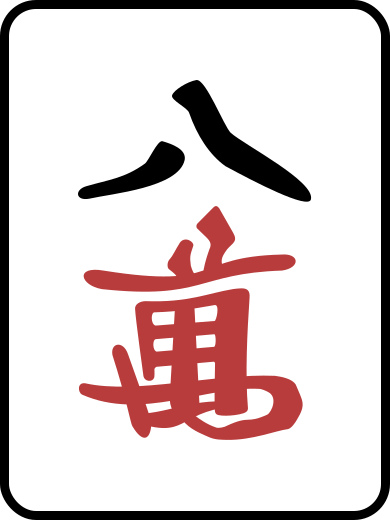
Which tiles win?
Show the answerHide the answer
Waits
The 2p, the 5p, and the 9s. Read 222p as a set, and 34p waits on the 2p or the 5p, with 99s as the pair. Read 22p as a pair and 234p as a set, and you hold two pairs: a shanpon on the 2p or the 9s. Stop at the 34p and you miss the 9s, which comes only from the shanpon reading. You hold three 2p and two 9s, so 1 + 4 + 2 = 7 tiles win.
Which tiles win?
Show the answerHide the answer
Waits 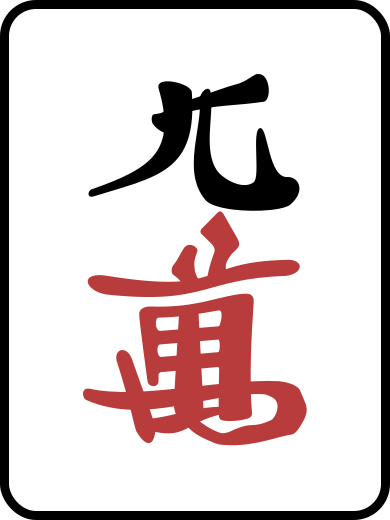
The 3m, the 6m, and the 9m, from three splits. 456m, a 66m pair, and 78m wait on the 6m or the 9m. 45m, a 66m pair, and 678m wait on the 3m or the 6m. 456m, 678m, and a single 6m wait on the 6m as the pair. The 3m and the 9m each come from one split only, so they're the tiles players drop. The kinds match a sanmenchan's 3-6-9, but you hold three 6m, so 4 + 1 + 4 = 9 tiles win, not 11.
Name every winning tile
The wait quiz deals tenpai hands, one suit or mixed. Mark every tile that wins, then see the split behind each one, the same way this lesson reads a hand.
Open the wait quiz