
Your draw makes , and two different discards both get you there. One leaves more winning tiles. The other leaves a bigger hand, or a tile the other players are more likely to throw. locks whichever wait you keep, so settle it with three checks in a fixed order: tiles, then value, then ease.
Mahjong waits showed how to count a wait's tiles. When to riichi had you declare on the discard that makes tenpai.
Count the tiles each wait has left
A wait's name gives its ceiling: 8 tiles for a (ryanmen), 4 for a (middle wait) or a (pair wait). A kanchan, (edge wait), or (single wait) is a one-sided wait: it waits on one tile kind. The rivers, the calls, and the indicator tell you how much of the ceiling is left.
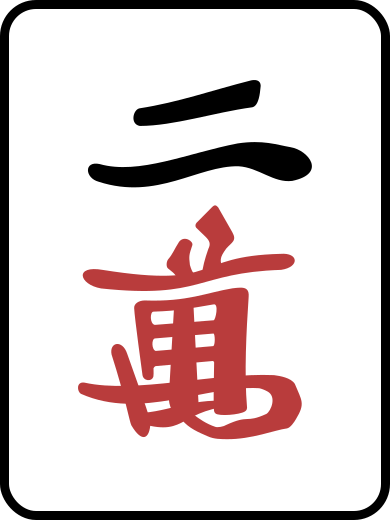
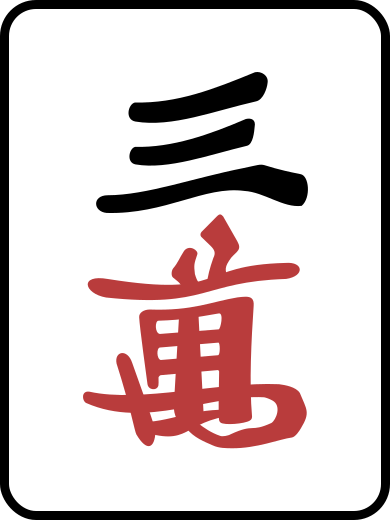
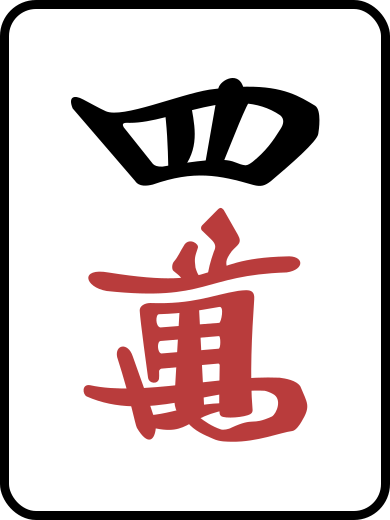
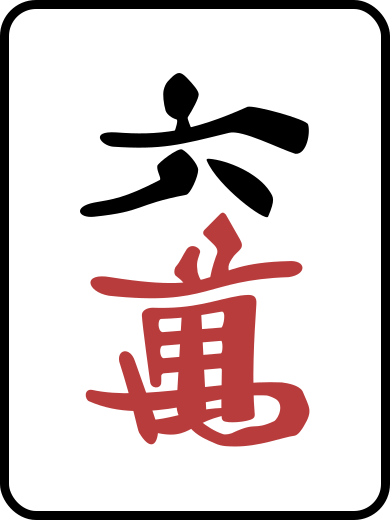
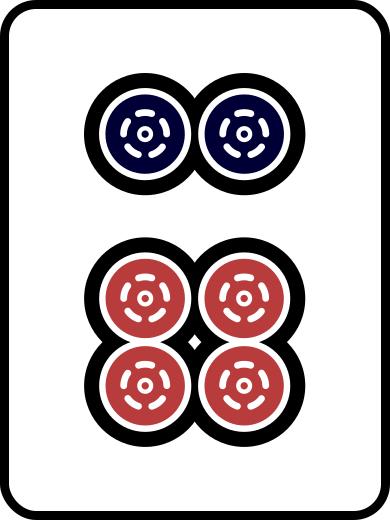
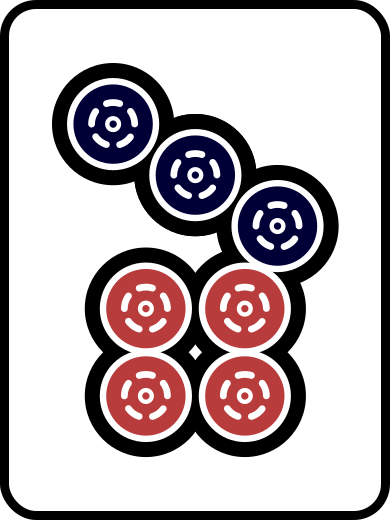
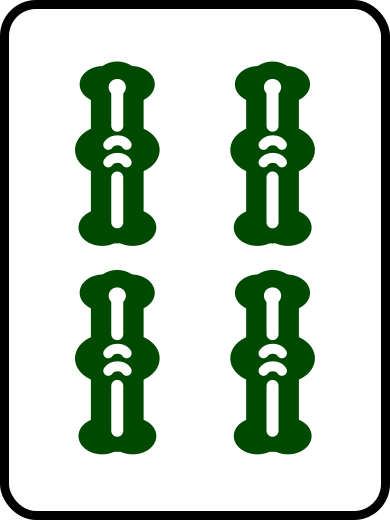
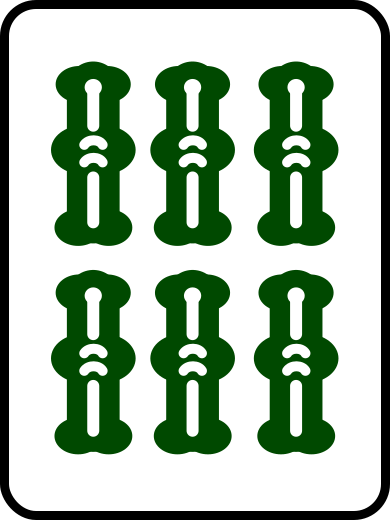
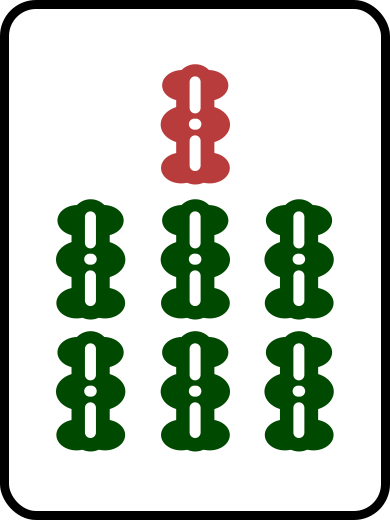
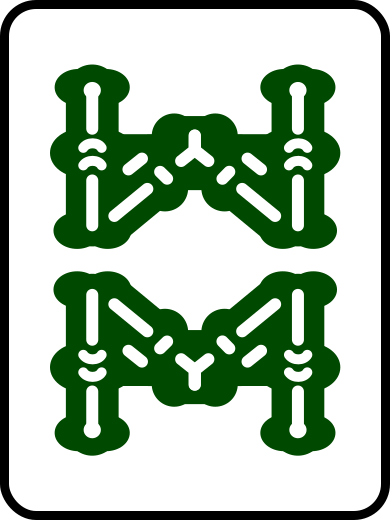
The 6m makes your triplet, and two cuts give tenpai. Cut a 7p and the 67p waits on the 5p and the 8p: 8 tiles. Cut the 6p and you wait on both pairs, a shanpon on the 7p and the 4s: 2 copies each, 4 tiles. Both pay riichi and (all simples), 2,600 by , since the 666m triplet rules out . Prices here assume the winning tile isn't a red five, which adds a . On a fresh board, cut a 7p.
Now say three 5p and two 8p sit in the rivers. The two-sided wait has 1 + 2 = 3 tiles left. The shanpon still has 4. Cut the 6p. The shapes didn't change. The count did.
The wait win rate tool gives win rates from Tenhou's top room () by wait and by how many of its tiles you can see, over all turns. A two-sided wait on 3 and 6 wins 58.1% with every copy unseen, 46.9% with two copies in sight, and 34.5% with four. A kanchan on a 5 with nothing in sight wins 35.7%. With half its tiles gone, a two-sided wait plays like a one-sided one (the two side by side).
Price the waits when the counts are close
Below , one more han about doubles what a win pays (What a hand pays). A tile or two costs far less: two copies in sight took about a fifth of that 3-6 wait's wins. So treat a gap of a tile or two as a tie on count, and take the wait with tanyao, pinfu, or a dora.
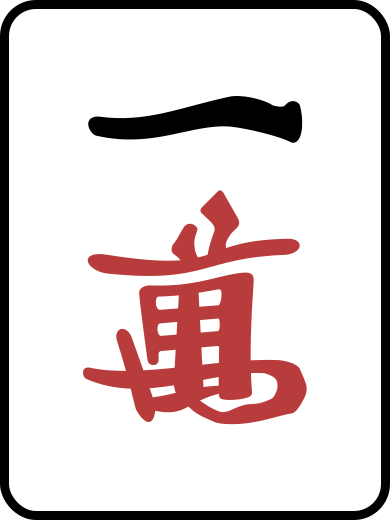
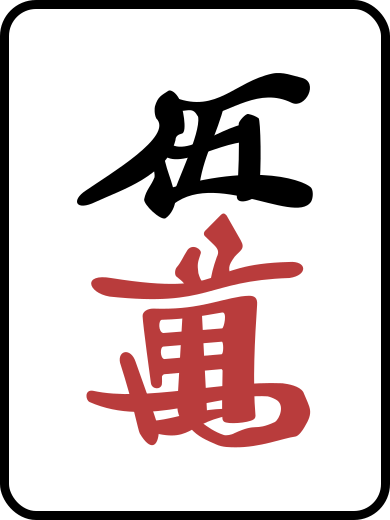
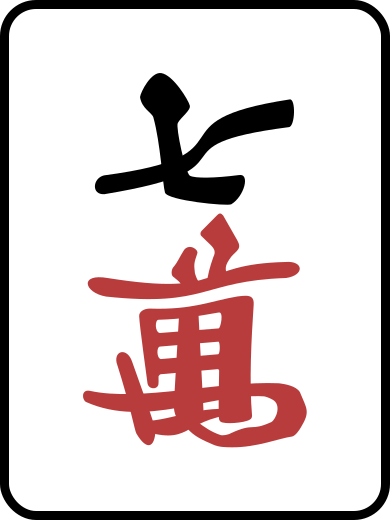
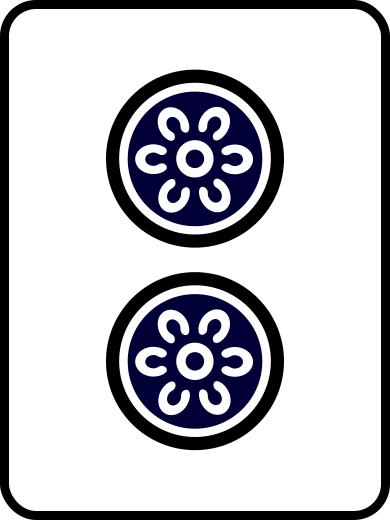
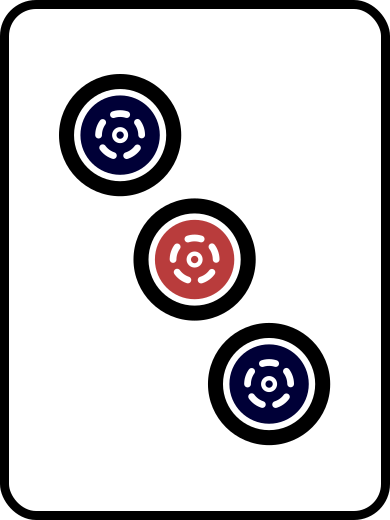
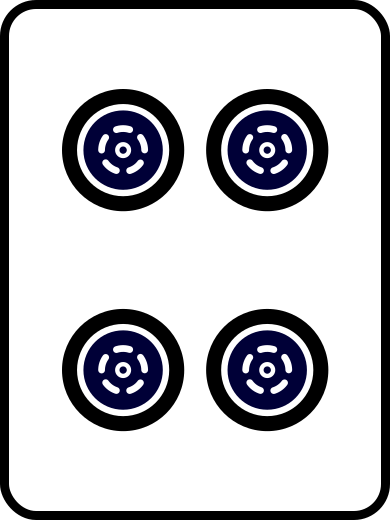
Cut a 7m and the 1333m waits two ways. With 333m as a set, the 1m is a tanki. With 33m as the pair, the 13m is a kanchan on the 2m. That's 3 + 4 = 7 tiles, and the 1m kills tanyao, so every win is riichi alone, 1,300 by ron. Cut the 1m and 5677m waits on the 4m and the 7m, an (a run with a pair on one end): 4 + 2 = 6 tiles. Now every tile is a simple, and a win pays riichi and tanyao, 2,600. One tile fewer for twice the price. Cut the 1m.
When the gap is wider, multiply each wait's price by its tiles, as Speed or value did. One han on half the tiles comes out even on paper. Tiles flatter the wide wait a little: the kanchan above wins 35.7% to the two-sided wait's 58.1%, more than half as often. But a narrow riichi deals in more: at turn 8, 14% to 15% of the time against 10% to 11% for a two-sided one (riichi wait win rates). That data also comes from Houou and counts turns from zero: turn 8 is your ninth discard.
So the narrow wait needs clearly more than double the price. As dealer, riichi and pinfu on 8 tiles pay 2,900. A kanchan with riichi, tanyao, and a dora pays 7,700 on 4 tiles. That's 30,800 against 23,200: take the kanchan.
Break ties with the tile others throw
Ease is how likely other players are to throw your tile. When tiles and price come out level, take the wait that gets thrown. Tiles that fit few shapes leave hands first: honors, then 1s and 9s, then 2s and 8s. Middle tiles fit the most shapes, so players keep them. The dora and its indicator are the hardest tiles to get.
The same data shows the order. At turn 8, a one-sided wait wins 47% on a 1 or 9, 41% on a 2 or 8, 38% on a 3 or 7, 36% on a 4 or 6, and 33% on a 5. Two-sided waits follow it: 1-4 or 6-9 wins about 5 points more than 3-6 or 4-7. And a one-sided wait on a 2 or 8 drops from 41% to 28% when that tile is the dora.
- Shanpon over kanchan. Both hold 4 tiles, but a shanpon waits on two kinds, and either can turn useless in someone's hand or look safe to a folding player. A kanchan has one. At turn 8, a shanpon on two pairs of 2s to 8s wins 41%, more than a one-sided wait on any tile from 3 to 7.
- Honors bend the count. An honor never joins a run, so a hand that can't pair it lets it go, and folding players throw honors early. At turn 8, a shanpon with an honor pair wins 52% to 59% on 4 tiles, level with an 8-tile two-sided wait at 52% to 57% (honor waits).
East 2, turn 8. You're West, so the North is a guest wind for you. Nobody has declared. Two copies of the 4s and one of the 7s sit in the other players' rivers.
You draw the 2p. Which tile do you cut to declare riichi?
Tap the tile you would choose.
Show the answerHide the answer
Cut the 6s
Cut the 6s and wait on the 5s and the North. Both waits pay riichi alone, 1,300 by ron, since the 222p triplet rules out pinfu. On a fresh board the 56s would keep a small edge: 8 tiles, and 58.2% against 55.6% in the tool. With three of its tiles in sight it has 5 left and wins 40.5%, while the shanpon, on 4, still wins 55.6% (compare them). One tile is a gap ease can close.
Suji traps: make your wait look safe
are tiles three apart in one suit: 1-4-7, 2-5-8, and 3-6-9 (glossary). A two-sided wait always sits on two tiles of one suji, like the 4 and the 7. If either tile is in your own river, the whole wait is (Tenpai, riichi and furiten). So a player folding against your riichi reads your 4 and treats your 1 and 7 as safer.
Suji says nothing about a one-sided wait. Put one on a tile your river already makes look safe, and you've set a suji trap (, 引っ掛け). Seven pairs or toitoi built one with a single wait.
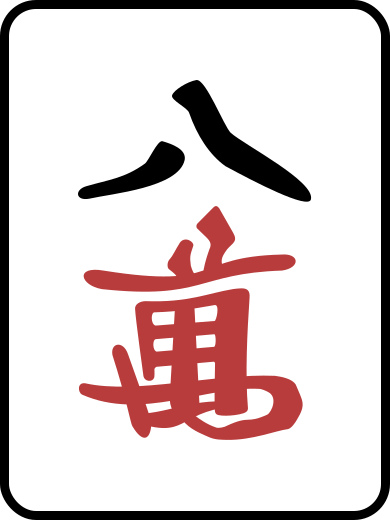
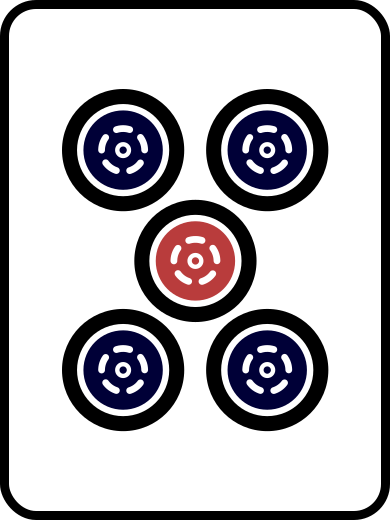
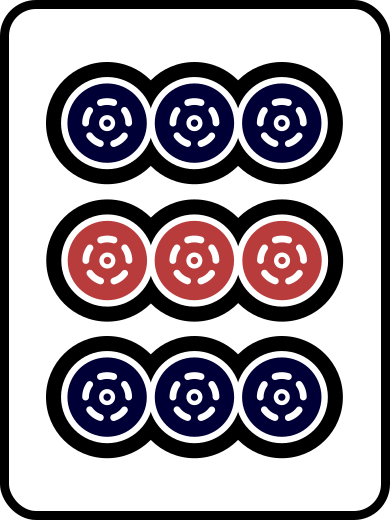
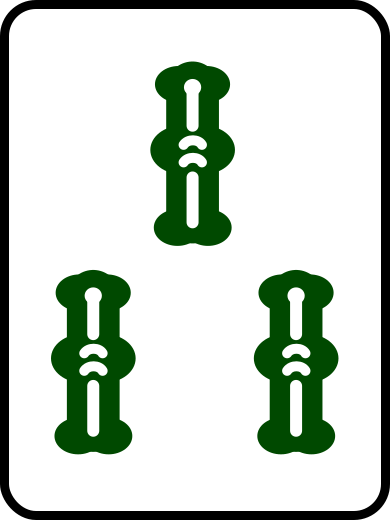
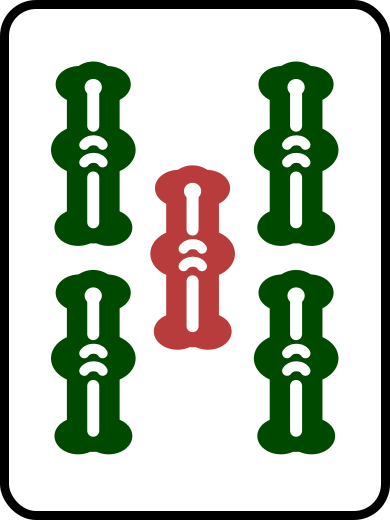
Your third discard was a 1s. Now the 5s gives you two kanchan waits, 4 tiles each, and both pay riichi alone. Cut the 3s to wait on the 6s, or the 7s to wait on the 4s. Tiles and price tie, so read your own river. A folding player knows a 4s can only hit a two-sided wait through 23s or 56s. Your 1s rules out 23s, since that wait would be furiten, and your riichi tile, the 7s, rules out 56s. The 6s gets half that cover: your 3s rules out 45s, but nothing rules out 78s. Cut the 7s.
In the site's data, a trap adds 9 to 14 points to a one-sided wait, and the middle tiles gain most: a wait on a 4 or 6 wins 36% at turn 8, and 50% with both its suji tiles in your river. A 4, 5, or 6 needs both its suji tiles there, and every other number needs one. The suji guide has more.
Practice
You're not the dealer, nobody has declared, and riichi is the plan.
East 1, turn 7. No dora in your hand.
What do you discard?
Tap the tile you would cut.
Show the answerHide the answer
Cut
Cut the 5m. The 23m waits on the 1m and the 4m, 8 tiles, and with every set a run and the 77p as your pair, each win has pinfu: a 4m pays 3,900 with tanyao, a 1m 2,000. Cut the 2m for sure tanyao and the 35m kanchan waits on the 4m alone, 4 tiles, without pinfu: 2,600. Multiply: 8 tiles averaging 2,950 make 23,600, against 4 at 2,600 for 10,400. Four of the wide wait's tiles already bring the tanyao you'd pay for.
East 3, turn 6.Dora
What do you discard?
Tap the tile you would cut.
Show the answerHide the answer
Cut
Cut the 4m, the dora. The 67m waits on the 5m and the 8m, 8 tiles, with riichi, pinfu, tanyao, and the two red fives: 5 han, a mangan. Keep the dora and the 46m kanchan waits on 4 tiles of the 5m. It loses pinfu, but riichi, tanyao, two red fives, and the dora make 5 han too. Both pay 8,000 by ron and a by tsumo. Near mangan, check what the han buys before you pay tiles for it.
South 1, turn 8. No dora in your hand.
You draw the 8s. Which tile do you cut to declare riichi?
Tap the tile you would choose.
Show the answerHide the answer
Cut the 5p
Cut the 5p. The 56p waits on the 4p and the 7p, 8 tiles, and every win is riichi, tanyao, and pinfu: 3,900. Cut the 6p instead and the 55p and 33345678s wait on the 5p, 3s, 6s, and 9s: 10 tiles, the widest cut. But every one of those wins keeps a triplet, so none has pinfu. Six tiles pay riichi and tanyao, 2,600, and the four 9s pay riichi alone, 1,300. That's 20,800 against 31,200: two tiles are a tie on count, and the han decides.
South 2, turn 9. Your fourth discard was a 5m.
Both cuts leave a single wait. Which tile do you cut to declare riichi?
Tap the tile you would choose.
Show the answerHide the answer
Cut the 2p
Cut the 2p and wait on the 8m. Both single waits have 3 tiles and pay the same, riichi and tanyao, so ease decides. The only two-sided wait on an 8m is 67m, and your 5m makes it furiten, so a folding player reads the 8m as suji and lets it go sooner. In the site's data, a one-sided wait on a 2 or 8 wins 41% at turn 8, and 52% as a suji trap. Nothing in your river covers the 2p.
Compare two waits
Pick each wait shape and the copies you can see, and the tool puts their Houou win rates side by side. Try the honor shanpon against the two-sided wait with three tiles gone.
Open the wait win rate tool