
A fresh hand usually holds a few tiles that belong to nothing: a North, a 9 with no neighbors, a 2 far from the rest of its suit. Most will go in your first few discards, and the order still matters. Cut them in the wrong order and you lose draws that would have built your hand, or you throw away a yaku while a useless wind stays put. Your first ranked games gave the short version. Here's the full order and the count behind it.
Count the ways a loose tile can grow
A loose (isolated) tile has nothing within two of it in its suit, or it's an honor with no partner. The partial sets lesson showed why it usually goes before any : it needs two more tiles to become a set, not one. They aren't equal, though: what separates them is how many tiles can join them.
| Loose tile | Grows into | Copies |
|---|---|---|
3 to 7, like 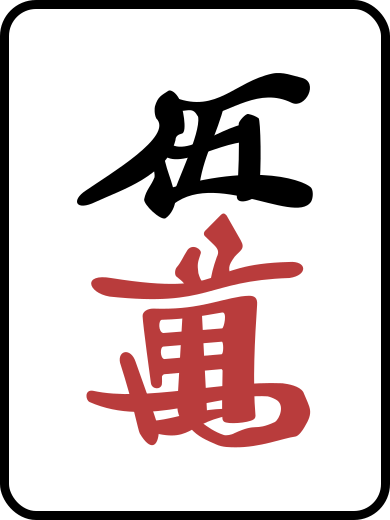 | (two-sided) or , (middle) or , or a pair | 19 |
2 or 8, like 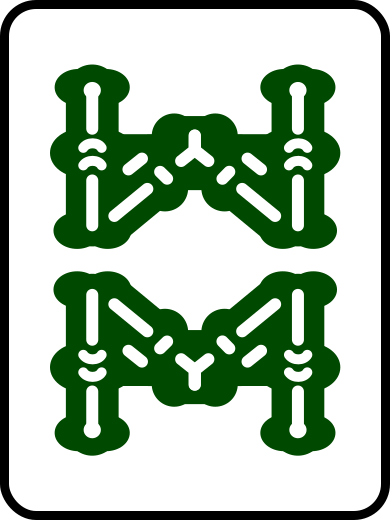 | ryanmen , kanchan , (edge) , or a pair | 15 |
1 or 9, like 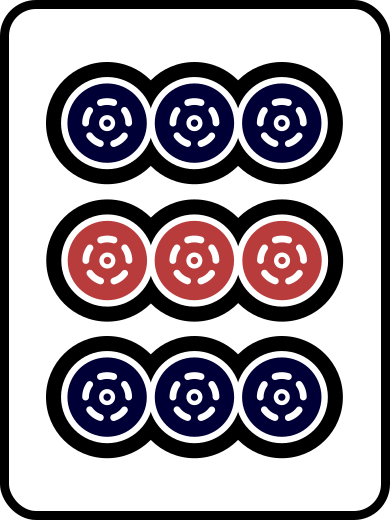 | kanchan , penchan , or a pair | 11 |
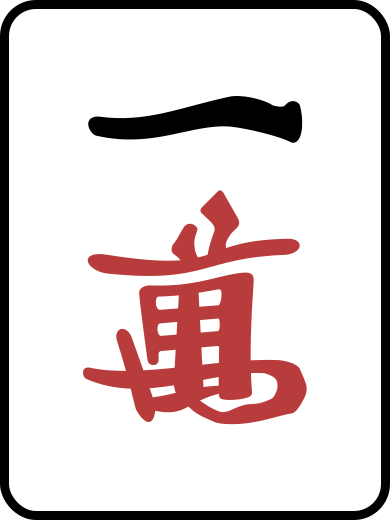
Honor, like 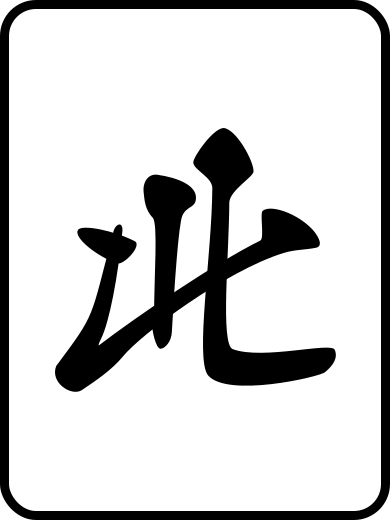 | a pair | 3 |
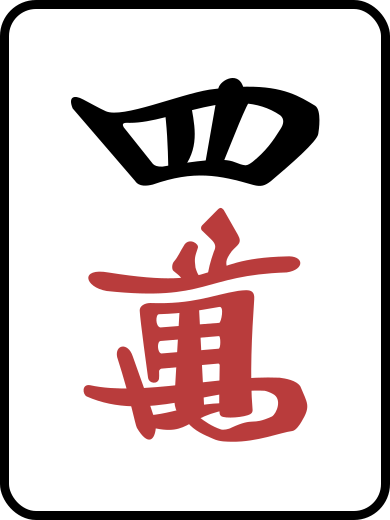
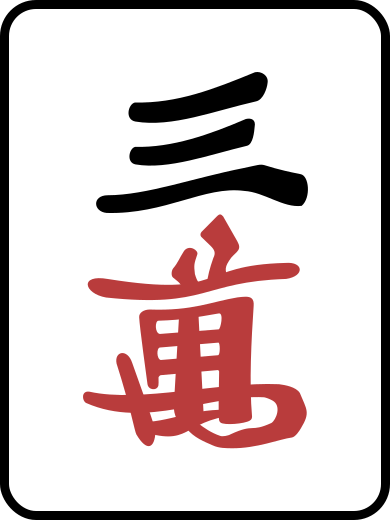
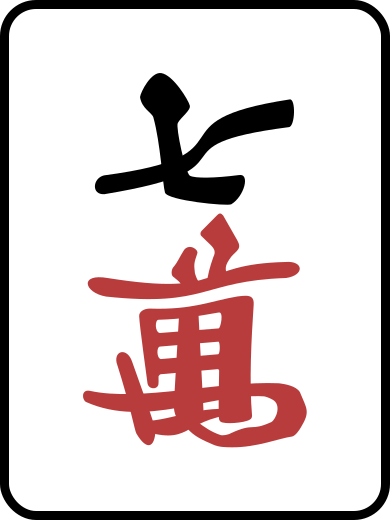
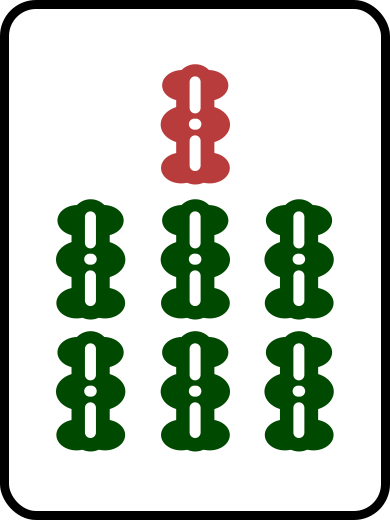
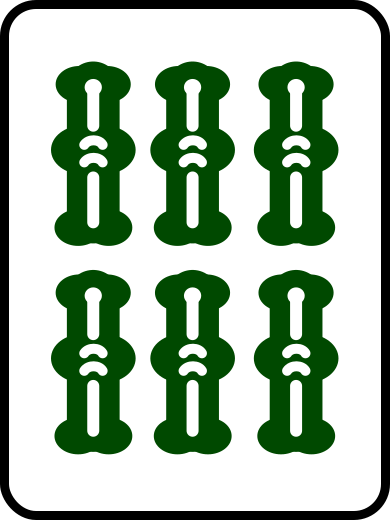
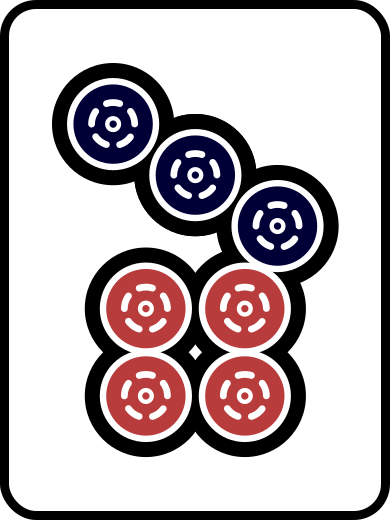
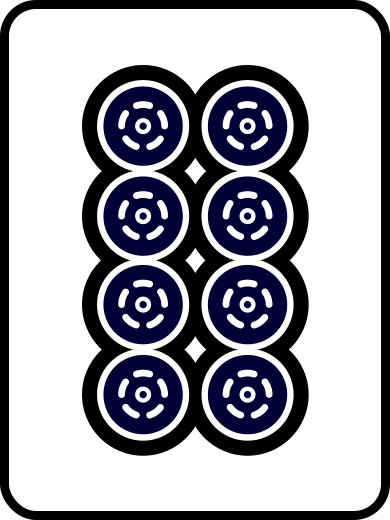
A 1 or a 9 never makes a ryanmen, because nothing sits below the 1 or above the 9.
Here's what that does to a real hand. You're South in the East round, so the North is a guest wind: it gives you .
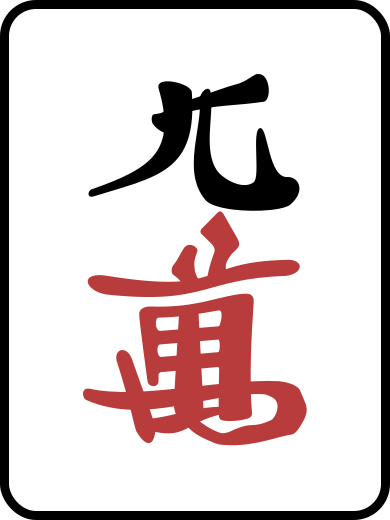
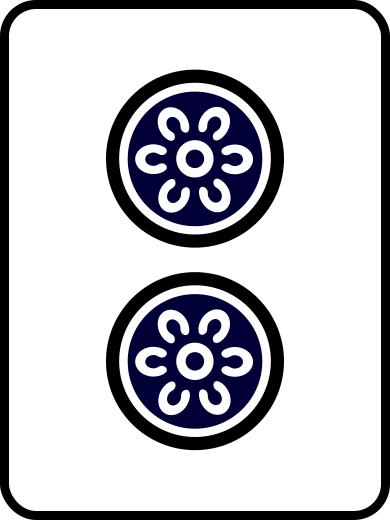
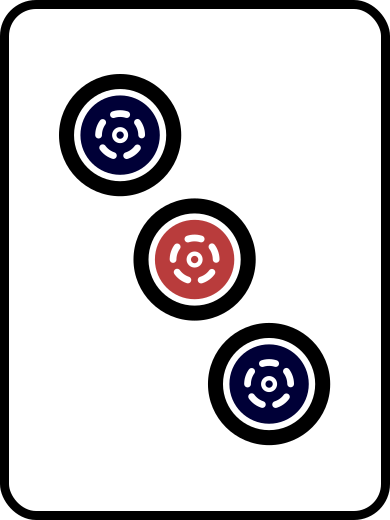
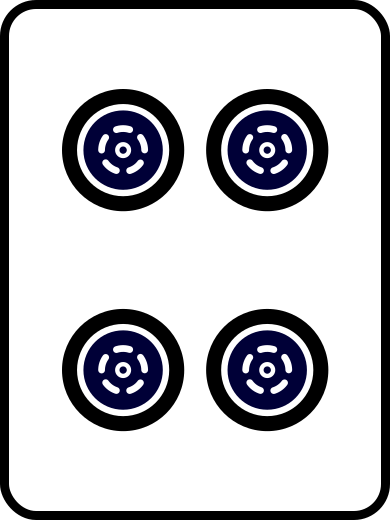

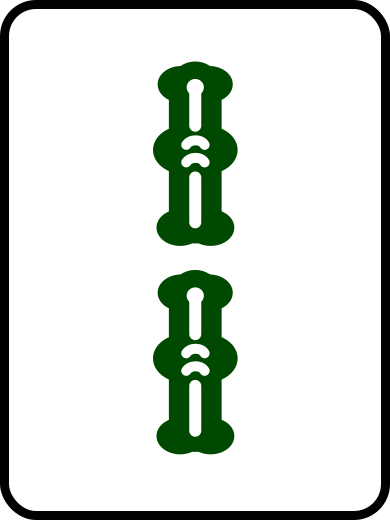
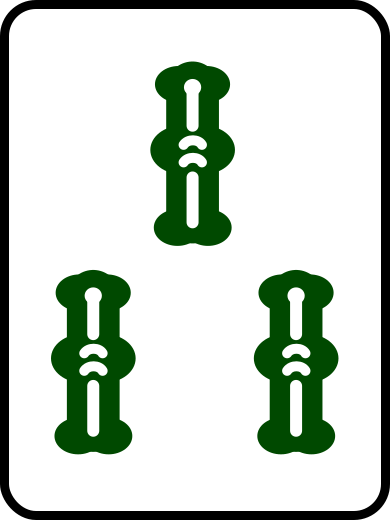
Two sets (234p and 123s), two pairs (11m and 99m), and four loose tiles: the 5m, the 9p, the 8s, and the North. One pair is the head and the other works as a partial set, so the hand needs one more partial set. Any draw that joins a loose tile moves the hand closer to . Cut each loose tile in turn and count the tile acceptance you keep.
- Cut the North: 49 tiles.
- Cut the 9p: 41 tiles.
- Cut the 8s: 37 tiles.
- Cut the 5m: 33 tiles.
The gaps come straight from the table. Keeping the 9p instead of the North is worth 8 tiles (11 against 3), the 8s another 4, and the 5m 4 more again. So loose tiles leave from the outside in: honors, then 1s and 9s, then 2s and 8s, with 3s through 7s last. Opening the hand with a loose honor is normal.
East 1, turn 2.
What do you discard?
Tap the tile you would cut.
Show the answerHide the answer
Cut
Cut the 9p. The 9p joins with 11 copies, the 2m with 15, and the 7m and the 5s with 19 each. So cutting the 9p keeps 57 tiles, the 2m 53, and the 7m or the 5s 49. The 9s look like edge tiles too, but 999s is a finished set.
Guest winds first, your own wind last
By that count, every loose honor goes first. Some honors have a second way in, though. A triplet of a dragon, your , or the is yakuhai, a yaku that survives a call, as the yaku lesson showed. Pair one and you can the third copy from any player. A guest wind, a wind that's neither your seat wind nor the round wind, has no such route.
That gives the default order I teach for loose honors and terminals, first to last. The honor order post lays it out seat by seat.
- Guest winds. No yaku, and they can only pair. Cut the wind of the player on your right first, then the , and the player on your left last. When the right-hand player pons from anyone but you, your draw is skipped, so let their wind go before they can pair it.
- Loose 1s and 9s. They can grow, but only into a kanchan or a penchan.
- The round wind. A yaku for everyone, and 2 for the player whose seat wind it also is: the dealer, in the East round. Let it go before that player can pair it.
- Dragons. A yaku for everyone. Which dragon goes first barely matters.
- Your seat wind. A yaku for you and, unless it's also the round wind, a guest wind for the other three. They discard it freely, so your pair finds its third copy more often. As the round wind too, it's a double wind, 2 han from one pon, and goes last of all.
Loose 2s and 8s, then 3s through 7s, usually stay longer than any of these.
Value honors usually outlast loose 1s and 9s, even when the count disagrees. Swap the North above for a Green: cutting the Green keeps 49 tiles, the 9p 41. Keep the Green anyway in most hands. The 9p grows at best into a kanchan or a penchan, while a Green pair can take its third copy from any player's discard, and that one pon gives the hand a set and a yaku together. The same post cites a study of the NAGA AI's opening discards, which follow this order in about nine hands out of ten. The efficiency trainer grades acceptance only, so it gives a yaku no credit.
Once your hand has a partial set for every set it still needs, plus a pair, a draw next to a loose tile only adds a partial set you have no room for. As the lesson showed, that isn't acceptance. Every loose tile then keeps the same count, and the order alone decides.
East 1, turn 3. You're South, so the North is a guest wind.
All three loose tiles keep the same count. Which goes first?
Tap the tile you would choose.
Show the answerHide the answer
Cut the North
Cut the North. The hand has the 789m set, the 22s pair, and a partial set for each set it still needs (34m, 13p, and 57s), so the 9p, the North, and the Green each keep the same 16 tiles. A pair of North gives you nothing, so it leaves first. The 9p can still grow if the hand needs a partial set later, so it goes next. The Green stays longest: a pon of it is the only yaku that lets this hand call.
A loose 9 beside a 6 adds almost nothing
Loose tiles can overlap. Take a 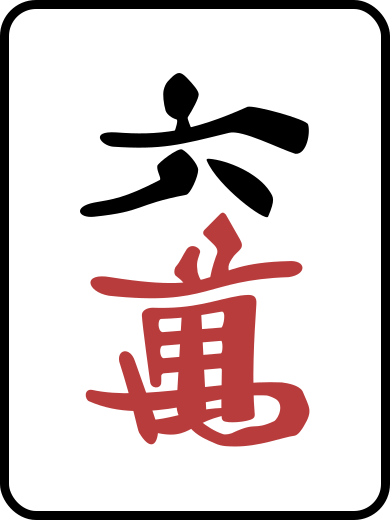 and a . Both are loose, but every 7m or 8m that would join the 9m joins the 6m too, and makes a better shape: the ryanmen instead of the kanchan , or the kanchan instead of the penchan . So the 9m adds only its own pair, 3 tiles, the same as an honor. A 1 beside a 4 works the same way.
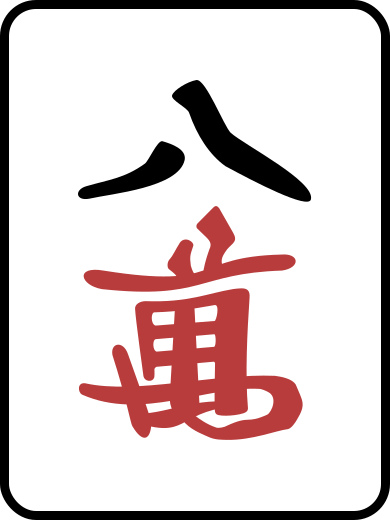
Tiles three apart, like this 6 and 9, share a : 1-4-7, 2-5-8, or 3-6-9. Only a 9 beside a 6, or a 1 beside a 4, is covered completely. An 8 beside a 5 still adds the 9 and its own pair.
So a 1 beside your 4, or a 9 beside your 6, goes before any loose 1 or 9 that nothing covers, and usually before the value honors too.
The reverse case is a terminal two away from one of your runs. It isn't loose. In , a 2p makes 123p plus the ryanmen 45p, where a loose 1p would only make the penchan 12p.

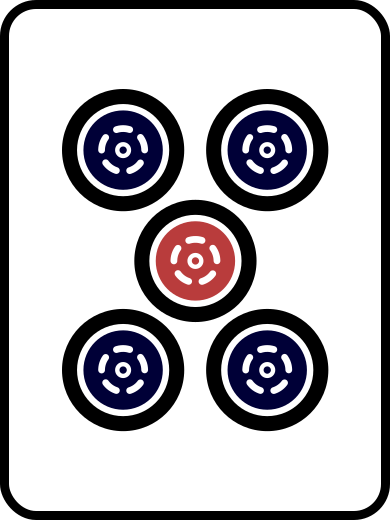
East 2, turn 2.
What do you discard?
Tap the tile you would cut.
Show the answerHide the answer
Cut 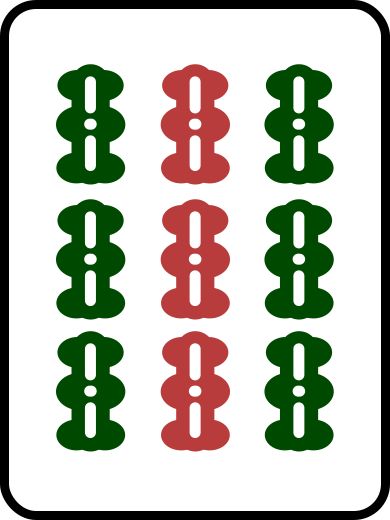
Cut the 9s. The 6s you drew joins with every 7s and 8s the 9s could use, so the 9s adds only its own pair, and cutting it keeps 53 tiles. Cutting the 6s instead keeps 45: the 9s still takes the 7s and 8s, but the 4s and 5s are gone. The 2m and the 8p are loose 2s and 8s, and cutting either keeps only 41.
When to break the order
The order breaks ties between tiles that are close, like a dragon and a loose 9. Shape comes first: cut a guest wind before you break a ryanmen. A few kinds of hand also move the honors around.
- and shapes. A aiming at pinfu (all runs and a two-sided wait) or tanyao (all simples) doesn't need a value honor. Cut those early, while they're cheap to let go. Keep a guest wind instead, as a pinfu head or a later safety tile.
- . An honor that's dora stays longer. Every copy in a winning hand adds 1 han.
- A hopeless hand. When the hand has little chance to win, keep the honors: they turn into safer discards as copies show up. Defense before the riichi covers that plan.
East 1, turn 2. You're West, so the North is a guest wind.
The North and the White keep the same count. Which do you cut?
Tap the tile you would choose.
Show the answerHide the answer
Cut the White
Cut the White. Both honors keep the same 45 tiles, so look at the shape: two runs and three ryanmen, the start of a pinfu . The hand still needs a head, and a second copy of either honor would make one. A North head keeps pinfu. A White head rules it out, and the White only becomes a yaku as a triplet, usually through a pon that ends any chance of riichi.
Practice
East 3, turn 2. You're South, so the West pair is a guest wind.
Which loose tile goes first?
Tap the tile you would choose.
Show the answerHide the answer
Cut the 1s
Cut the 1s. The 4s already reaches every 2s and 3s the 1s could use, so the 1s adds only its own pair, the same 3 tiles as the Green. Cutting either keeps 45 tiles. With the count tied, the Green stays: a pon of it is a yaku, and a pair of 1s gives no yaku. The 4s and the 5m grow on their own, so cutting the 4s keeps 37 and cutting the 5m only 29.
The daily problem never makes a loose tile its answer. To check the order, enter hands from your own games in the hand analyzer: when its top cuts are loose tiles that tie, the order settles them.
Rank the loose tiles in your own hands
Paste a hand from your last game into the hand analyzer. It ranks every discard by acceptance, loose tiles included. Put the loose tiles in order first, then check where each one lands.
Open the hand analyzer