
Three pairs feel like three chances at a set. Count them, though, and the third pair is the weakest block in your hand: it adds 2 tiles to your acceptance, while the (middle shape) you'd break to keep it adds 4. A wants two pairs. When a third arrives, one of them should go.
A pair does two jobs
A pair, or toitsu (), is two identical tiles, like . It can be your head, the one pair every standard hand needs. Or it can be a waiting on its third copy, with 2 tiles left to finish it. The partial-sets lesson ranked it the narrowest partial set for that reason.
With one pair, you get one job. Once your hand has its five blocks (four sets or partial sets, plus the head), the third copy of that pair makes a set and leaves you with no head. You're no closer to , so that draw isn't acceptance.
A hand with no pair is less trouble than it looks, because the head often turns up on the way.
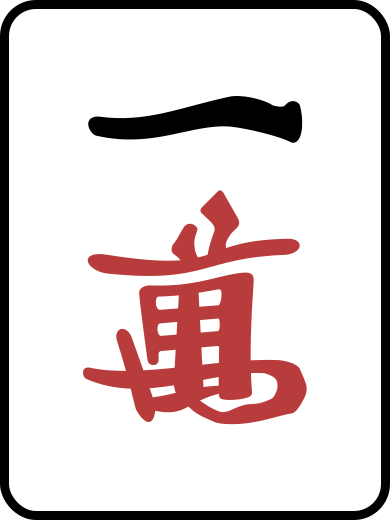
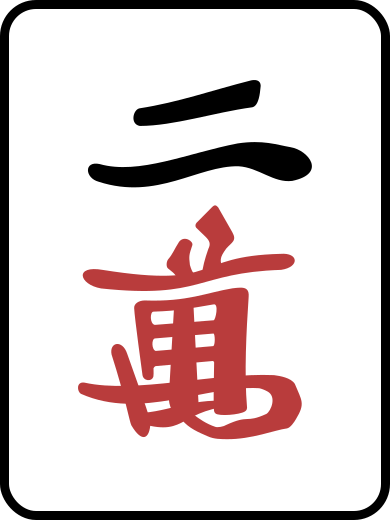
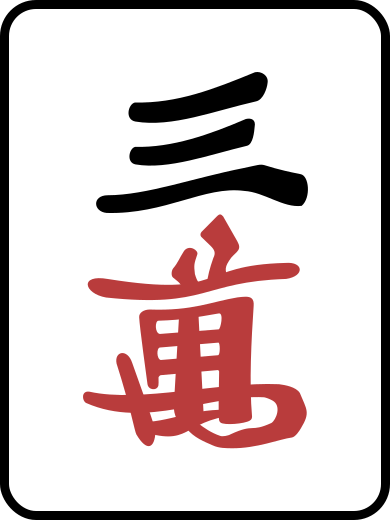
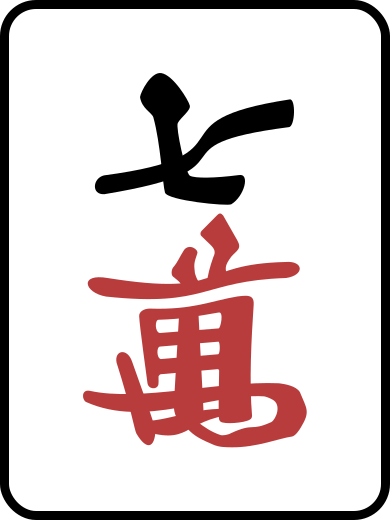
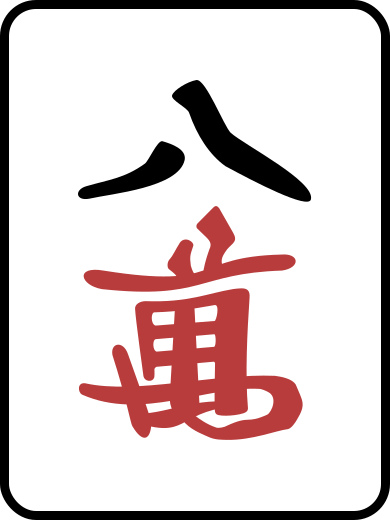
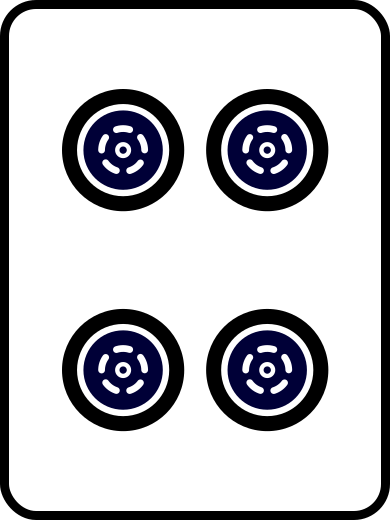
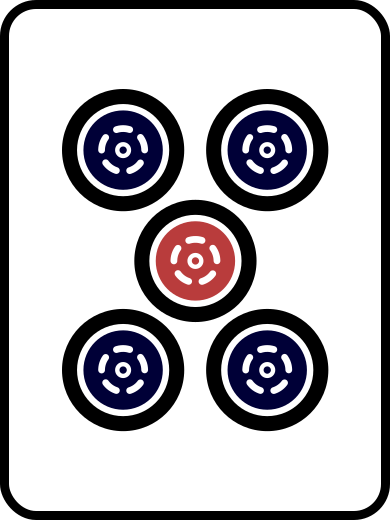
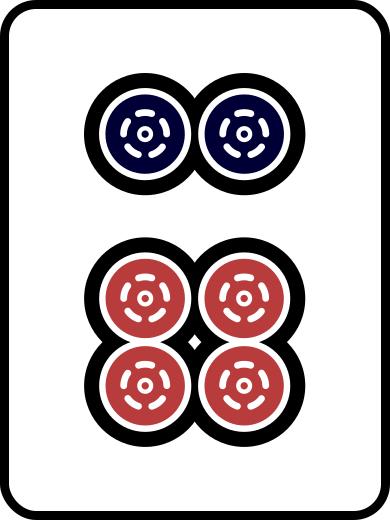
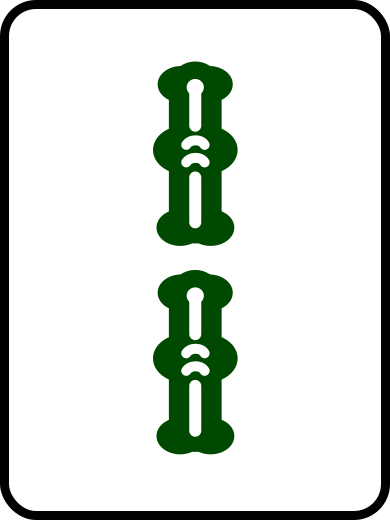
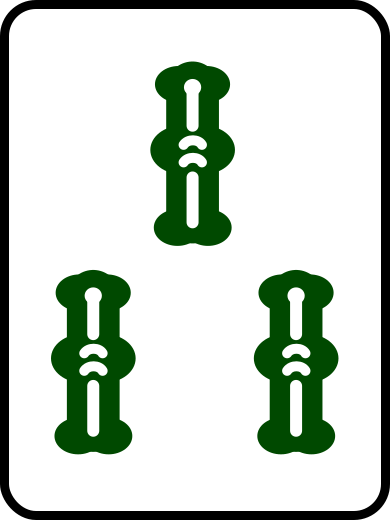
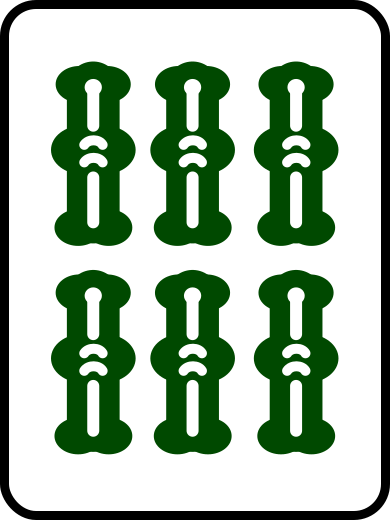
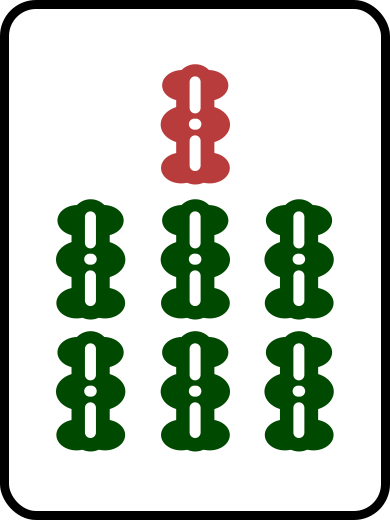
It has three sets, the 78m and 23s (two-sided shapes), and no pair, yet it's already 1-shanten and accepts 28 tiles. Sixteen finish a ryanmen, and the other 12 pair a ryanmen tile, any 7m, 8m, 2s, or 3s, to give you your head. Headless and floating-tile 1-shanten shows the waits each kind leaves, later in the course. Sets are the hard part. Don't break a set or a ryanmen early to build a head.
Two pairs work as a team
Add a second pair and both start to count. Either one can become a set, because the other is there to be the head. Each brings 2 tiles, so together they bring 4, as many as a kanchan or a (edge shape). If both are still pairs at tenpai, you win on either one: a (pair wait), the 4-tile wait from Mahjong waits.
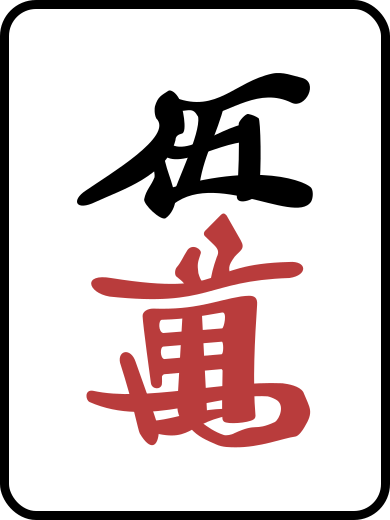
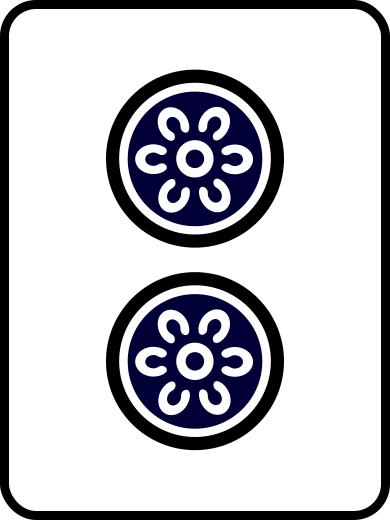
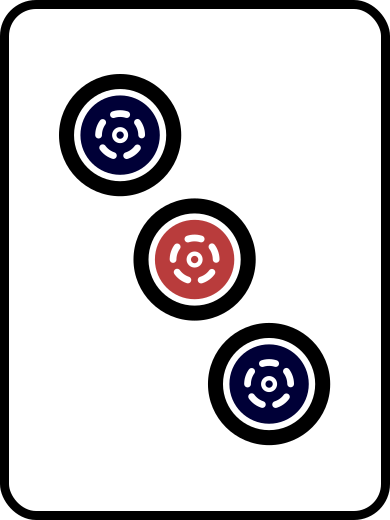
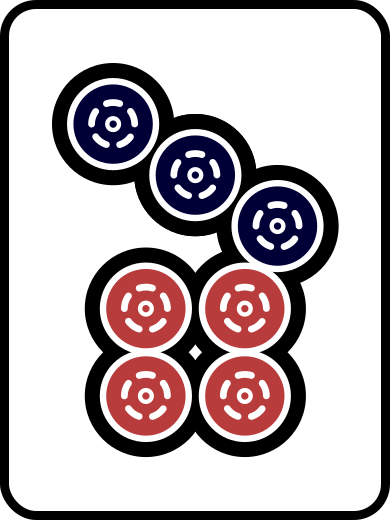
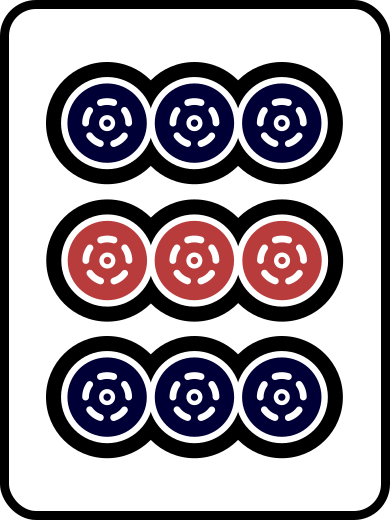
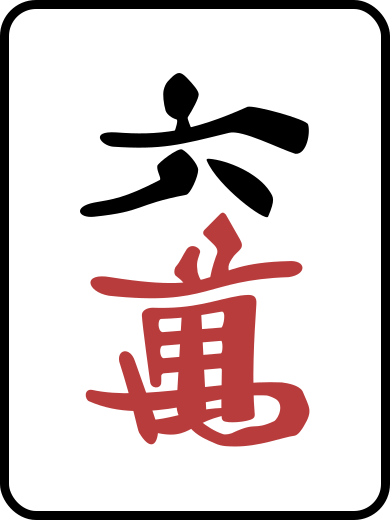
You've drawn your 14th tile and must cut one. The hand holds six blocks, one more than it can use: two sets (234p and 678s), the 55m and 33s pairs, the kanchan, and the penchan. Add up what finishes each partial set: four 3m, four 8p, two 5m, and two 3s, 12 tiles in all. Every cut takes something off that 12.
- Break the penchan: 8 tiles. Four 8p for the kanchan, plus two 5m and two 3s for the pairs.
- Break the kanchan: 8 tiles. Four 3m for the penchan, plus the same two pairs.
- Break a pair: 8 tiles. Four 3m and four 8p, and nothing from the pair you kept.
Breaking one of two pairs costs 4 tiles, not 2. The pair you broke loses its own 2, and the pair you kept can't become a set any more, because it's your head now.
When the count ties, shape decides, as Tile acceptance showed. Every partial set here but the penchan can grow. A 6p lets the 79p become the ryanmen 67p. A 4m or a 6m next to the 55m makes or , a pair sharing a tile with a two-sided shape, which Shapes worth keeping covers. No single draw turns the 12m two-sided. So cut the 1m and keep both pairs. If a 4m comes next, cut the 2m: the hand then accepts 16 tiles, twice the 8 you have now.
A third pair is the cheapest block to break
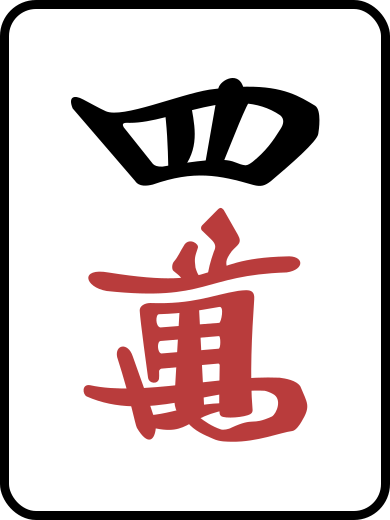
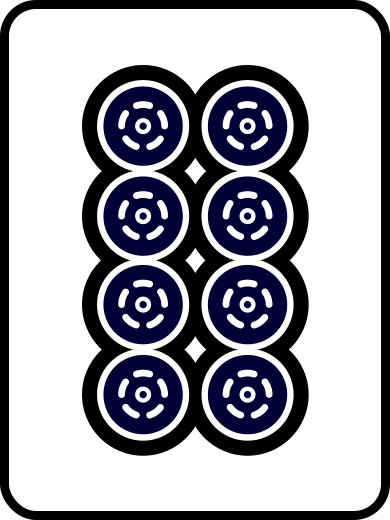
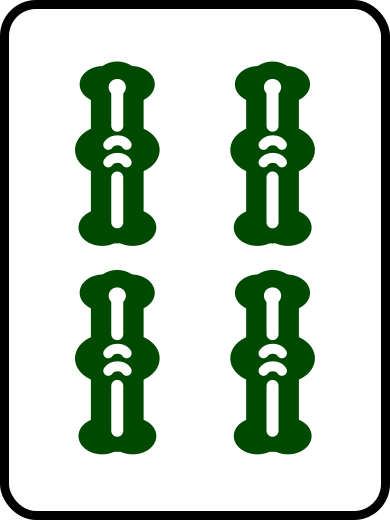
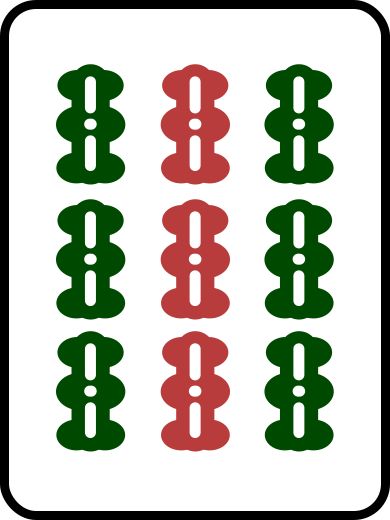
Two sets (234m and 678p), three pairs (88m, 22p, and 99s), and the kanchan. Six blocks again, so one has to go. Together the partial sets take 10 tiles: four 5s and 2 for each pair.
- Break a pair, say the 99s: the other two still work as a team. The 5s (4), the 8m (2), and the 2p (2) make 8 tiles. That cut costs 2.
- Break the kanchan: the three pairs bring 2 tiles each, 6 in all. That cut costs 4.
The third pair adds only 2 tiles, because the other two already cover the head.
| The block you break | Example | What it costs |
|---|---|---|
| One of three pairs | 2 tiles | |
| One of two pairs | 4 tiles | |
| A kanchan or a penchan | 4 tiles | |
| A ryanmen | 8 tiles | |
| Your only pair | A step of |
A pair joined to other tiles, like the 455m above, is a bigger shape and counts differently.
What do you discard?
Tap the tile you would cut.
Show the answerHide the answer
Cut 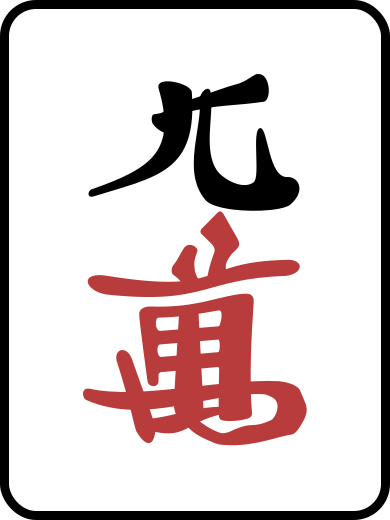
Break a pair. The 4m finished 234m, so you hold six blocks: two sets, three pairs, and the 12s penchan. Cut a tile from any pair and you keep 8 tiles: four 3s for the penchan, plus 2 each for the two pairs you kept. Cut the 1s or the 2s and the three pairs keep only 6. The pairs tie, and the 12s rules out whichever one goes, so the 9m, the 1p, and the 5p are all right. Cutting the 9m or 1p keeps the 55p, which can still grow into 455p or 556p.
Which pair to let go
With nothing visible, a cut from any of the three pairs keeps the same count. At the table, two things split them, in this order.
- Value. A pair of dragons, your , or the is a yakuhai pair: while a copy is left, its third copy is a set and a yaku, and you can it from any player, which the yakuhai lesson covers. A pair of dora is 2 even as your head. Keep both kinds. The exception is a pinfu-shaped hand, where every partial set is two-sided: a head rules out , so keep the guest-wind or number pair as your head, as Pinfu and tanyao shows. Tanyao (all simples) counts too: when a 1, 9, or guest wind pair is all that keeps your hand off it, break that pair. In the three-pair hand, 23488m22678p4699s, every tile but the 99s is a 2 to 8.
- Copies left. A pair with one copy in the discards has 1 tile left, not 2. In that same hand, say both other 9s already sit in the discards. The 99s can still be your head, but it can never become a set. Break it and you keep 8 tiles. Break the 88m or the 22p instead and the dead 99s adds nothing: 6. Here both rules point at the 99s.
When value and copies tie too, two small pulls cancel out. A middle pair can grow into a shape like 455m on the way to tenpai. A 1, 9, or honor pair makes the easier pair wait once you're there, because folding players throw those tiles, as Riichi wait win rates shows. Any pair is fine.
One 3p is already in the discards.
Which tile do you cut?
Tap the tile you would choose.
Show the answerHide the answer
Break the 3p pair
Break the 3p pair. The 7s made a ryanmen, so the hand holds one block too many, and with three pairs a pair goes. Every tile is a 2 to 8, so no pair cut costs tanyao, and value can't split them. With one 3p gone, the 33p has 1 tile left. Cut a 3p and you keep 12 tiles: four 5s and four 8s for the ryanmen, plus two 2m and two 2s. Cut a 2m or a 2s instead and you keep 11: the 33p brings 1 tile where the pair you broke brought 2. Cutting the 6s or the 7s keeps only the pairs: 5 tiles.
Which tile do you cut?
Tap the tile you would choose.
Show the answerHide the answer
Break a number pair
Break the 33p or the 99s, and keep the White dragons. The 9m finished 789m, and three pairs make one block too many. Every pair cut keeps 8 tiles: four 7p for the 68p kanchan, plus 2 each for the two pairs you kept. The count can't split them, so value does. A third is a set and a yaku worth 1 han, and you could pon it. A third 3p or 9s is a plain set. Cutting from the kanchan keeps only the pairs: 6 tiles.
When extra pairs earn their place
Everything so far assumes a closed hand built as four sets and a pair. Two things change the count.
Calling. Before tenpai, a closed hand turns a pair into a set only with your own draw. Once you're willing to call, any other player's discard can do it, by pon. That makes pairs faster, so a hand that plans to call can keep three pairs over a kanchan or penchan: pon one and you're back to two. A called hand still needs a yaku, as the yaku lesson showed, and When to call weighs what a call costs.
Four or five pairs. Seven pairs () wins with seven different pairs in a closed hand, for 2 han. The shanten lesson counted that route as 6 minus your pairs, so four pairs put you 2-shanten on it and five put you 1-shanten. Seven pairs or toitoi covers which route to take once the pairs pile up.

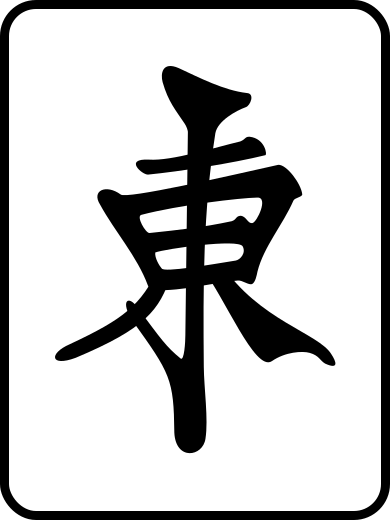
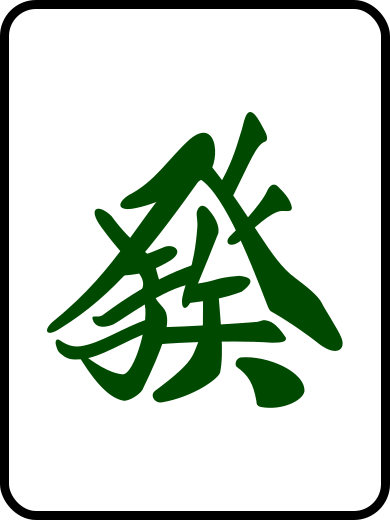
How many tiles from tenpai is this hand?
Show the answerHide the answer
1-shanten
1-shanten, through seven pairs. You hold five different pairs, and 6 − 5 = 1. As four sets and a pair it's 3-shanten: one pair is the head, the other four count as partial sets, and there's no set yet, so 8 − 4 − 1 = 3. Your shanten is the lower of the two counts. Pair the 4s, the East, or the and it's tenpai for seven pairs.
Price the pair cuts
The efficiency trainer deals 1- to 3-shanten hands and ranks every discard by tile acceptance. When a hand holds three pairs, price each break from this lesson's table first, then check the trainer's ranking. It also counts seven-pairs draws, so on Hard deals and four-pair hands it can keep a pair the table would break.
Open the efficiency trainer