
You hold two red dragons in a ragged hand. On turn 4 the discards a third, and you let it go by, hoping to draw the last one and declare . That's one of the two common ways players waste a value pair. The other is breaking the pair to keep a number shape that looked tidier.
Which honors carry a yaku, and what the pon pays
(value tiles) are the that carry a yaku. A triplet of any dragon, of your , or of the is 1 , and a call doesn't remove it. When your seat wind is also the round wind, one triplet counts twice: a double wind, 2 han. The two you'll see are the dealer's East in the East round and the South seat's South in the South round. Every other wind is a guest wind, and a triplet of it gives no han. The yakuhai page has the full rules.
A pair of any of them is not a yaku. It's two thirds of one, and everything below is about getting the third tile.
An open hand usually counts 30 fu, as Fu without counting showed. At 30 fu the alone pays 1,000, and each or red five on top about doubles it.
| The hand | Dealer | |
|---|---|---|
| One value-honor pon | 1,000 | 1,500 |
| A double wind pon, or one pon plus a dora | 2,000 | 2,900 |
| A pon of a dragon that is the dora | 7,700 | 11,600 |
The first row is small. What it buys is speed: the hand has its yaku, so any tile that completes it wins, with no riichi needed.
A value pair plays like a good partial set
Count what finishes each block. A (edge shape) like waits on one tile kind, four 3s, and so does a (middle shape). You get that tile by drawing it or by a from the player on your left. A dragon pair waits on two tiles. But you can pon either of them from any of the three other players, and the set it makes is your yaku. Fewer tiles, more ways to get them, and the value comes free.
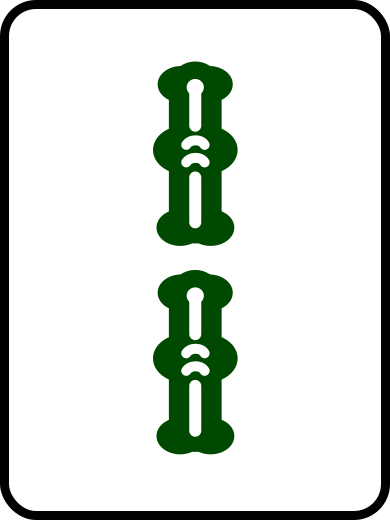
The pair needs a partner to work this way. If the dragons are your only pair, a pon turns your head into a set and leaves you without one. That doesn't rule the pon out, as the next section shows. It decides which block you break: keep the second pair as your head, and cut the weak .
East 1, turn 6. You're West, and you hold no dora.
The 1s, the 8m, and the red dragon all keep 12 tiles. Which do you cut?
Tap the tile you would choose.
Show the answerHide the answer
Cut the 1s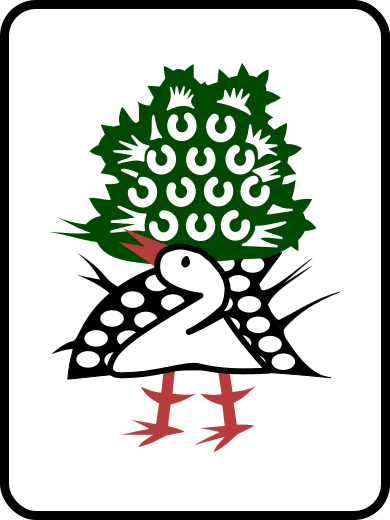
Cut the 1s (the 2s does the same job). Those 12 tiles count only your own draws. Keep both pairs, and a from any player makes a pon and on the 2p and 5p, with a yaku and the 88m as your head. Cut a dragon and you've traded the yaku for a penchan that fills from four 3s you draw yourself or chi from the left. Cut the 8m and the dragons become your head, so a pon leaves you headless and still one step away.
A single value honor gets the same respect. A loose (isolated) dragon and a loose guest wind can each grow only by pairing. A paired dragon can become this pon, while a guest-wind pon gives . So the guest wind usually goes first, and a loose 1 or 9 usually goes before the dragon too, as What to discard first showed. A pinfu-shaped hand is the exception: it keeps the guest wind as a head candidate and lets the dragon go (Pinfu and tanyao). Honor tile discard order has the full order, seat by seat.
Pon the first copy
When the first copy comes out, pon it. Passing feels patient: you hope to draw the third tile, keep the hand closed, and declare riichi. But the pon is a step and a yaku you can have now, and the third tile may come late or never. In Tenhou's top room (), a closed dragon or round-wind pair still held at turn 8 got its third tile only 42% of the time. One with a copy already discarded did a little better, 51%, because players let go of an honor once someone has cut it (the honor order post). That data counts turns from zero, so turn 8 is your ninth discard. Even the better number is a coin flip, and the pon is certain.
The pon also frees the rest of the hand. With the yaku on the table, every later draw and call can chase speed. Yakuhai hands are the fastest open hands: with one call at turn 8, 28% are tenpai, against 25% for the mostly hands and 14% for (open hand tenpai).
The slower the hand, the more the pon matters. A ragged hand with no dora and a dragon pair has one cheap road to a win, and the pon starts it.
East 1, turn 4. You're South, and you hold no dora. The player across discards the green dragon.
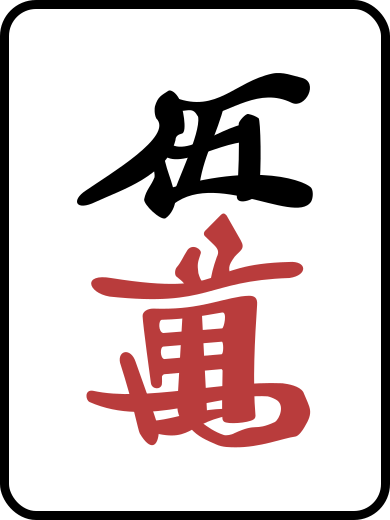
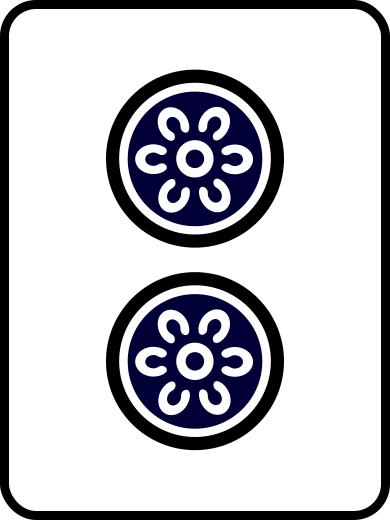
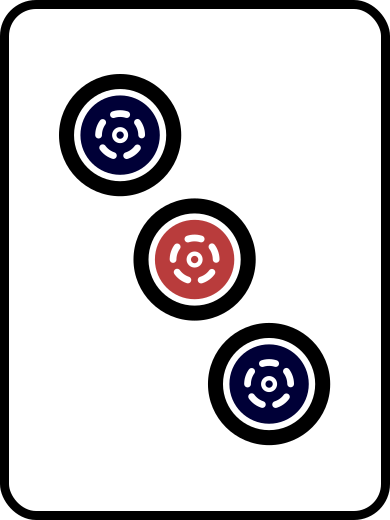
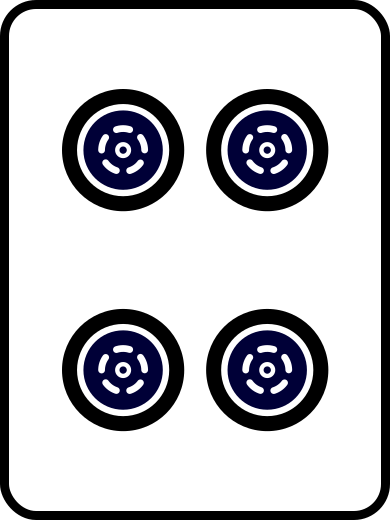
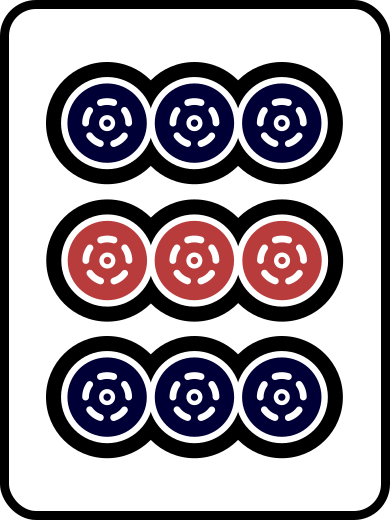
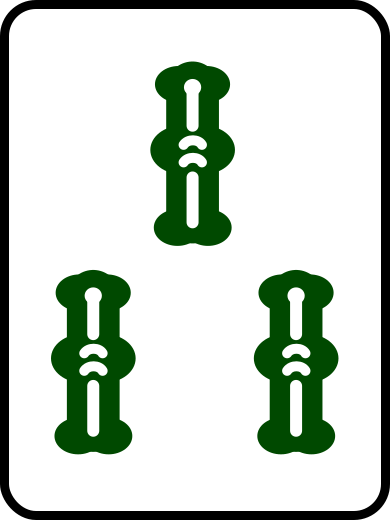
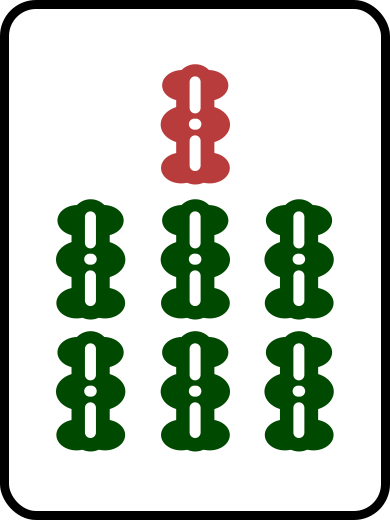
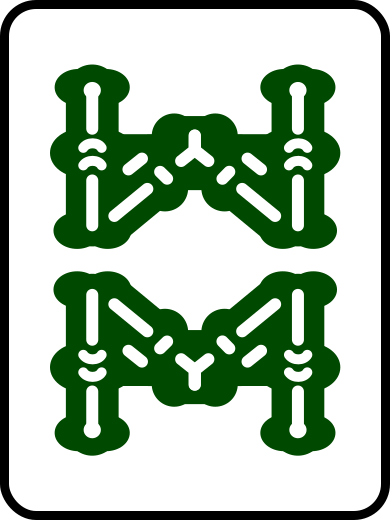
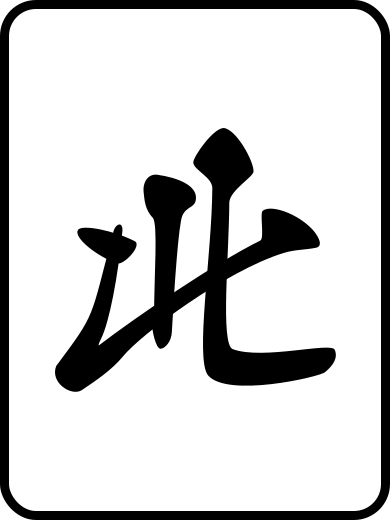
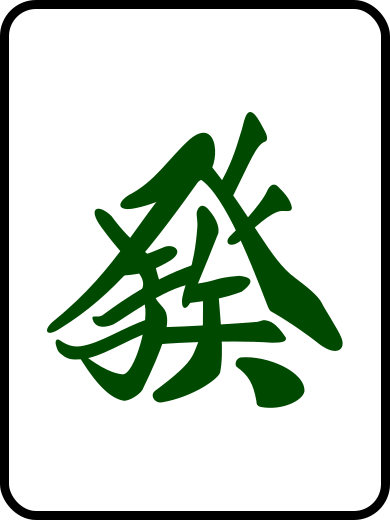
Pon the green dragon, or let it pass?
Show the answerHide the answer
Pon
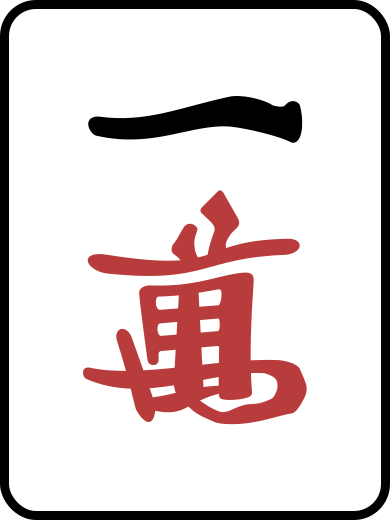
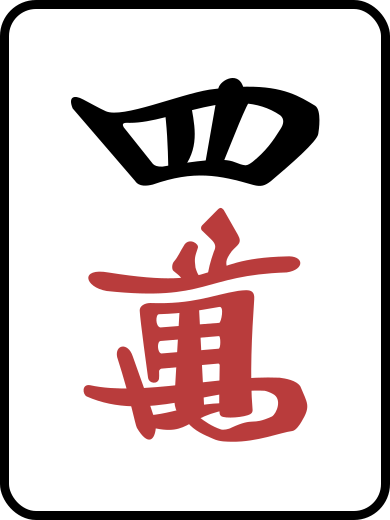
Pon. Closed, you're 3-shanten, and unless you draw the third dragon, only riichi lets you win off a discard. The pon takes you to 2-shanten in one move, with two two-sided shapes left and the yaku on the table. Cut the North next. Pass, and one is left for you to draw or catch, while the still needs three good draws before it can declare riichi. A cheap hand that moves beats a closed one that waits.
Let it pass when the closed hand is worth more
Sometimes the pon saves no step. When the hand already has its five blocks and the dragons are its only pair, the pon leaves you headless, so your stays where it was, as When to call chi and pon showed. The pon is still right in most of those hands, because it brings a yaku. My rule of thumb is to let the first copy pass when three things hold: the hand is a 1-shanten early in the hand, every partial set is two-sided, and the closed hand has value beyond riichi that the call would throw away.
This assumes nobody is attacking yet. Against a riichi, a pon also leaves fewer tiles to fold with, which How to fold picks up later.
East 1, turn 4. You're not the dealer, and you hold no dora. The player across discards the white dragon.
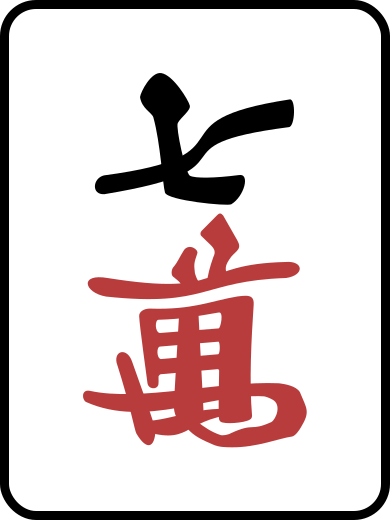
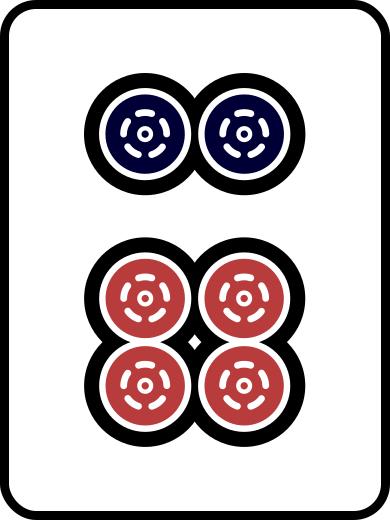
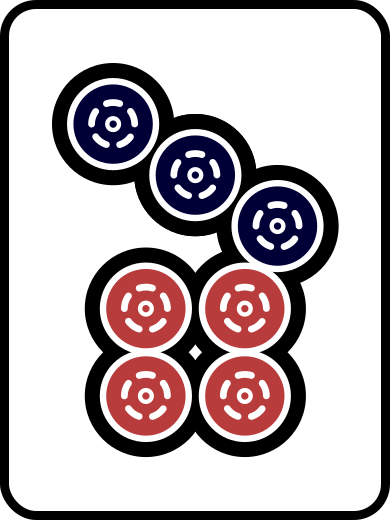
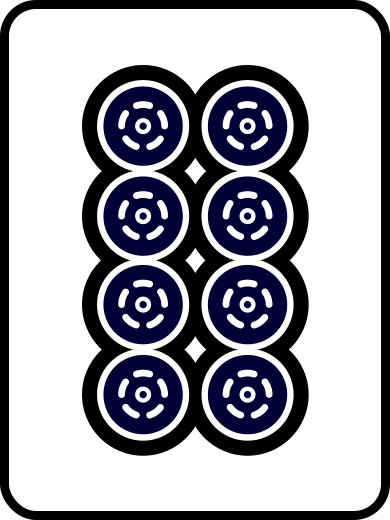

Pon the white dragon, or let it pass?
Show the answerHide the answer
Pass
Pass. The 667788p is iipeikou (two identical runs), a yaku only a closed hand keeps. You're 1-shanten, and the 3m, 6m, and 9m, 12 tiles, each give a or better. Riichi there pays 2,600 by and 4,000 in all by tsumo. The pon uses up your pair, so you stay 1-shanten. It lets 24 tiles help, but a third of them, the 3m and 9m, leave only a , and the open hand pays 1,000.
Back calls: chi first, pon the dragon later
A back call (, 後付け) is a chi or pon of another tile while your only yaku is a value pair you haven't completed. Tenhou and Mahjong Soul allow it, as What is a yaku? showed: a hand needs its yaku when it wins, not when it calls. Some house rules demand the yaku at your first call (atozuke in the glossary).
Three checks come before a back call:
- Keep another pair. The dragons have to become a set, so they can't be your head.
- Count the live copies. If both copies you don't hold are already in the discards, the yaku is gone.
- Know which tiles win. A back call often ends on a (shanpon) between the dragons and your other pair. Only the dragon wins. The other tile finishes the shape with no yaku, and letting it pass makes you until your next turn, the same rule the yakuhai page shows for a closed hand. If that tile is already in your discards, you can't ron the dragon either.
Make the back call when the hand already has value and the call fixes its worst shape. A dora pair does two jobs here: it's the value, and it's the second pair the dragons need.
East 2, turn 7. You're West. Nobody has discarded a red dragon. The player on your left discards the 4p.Dora 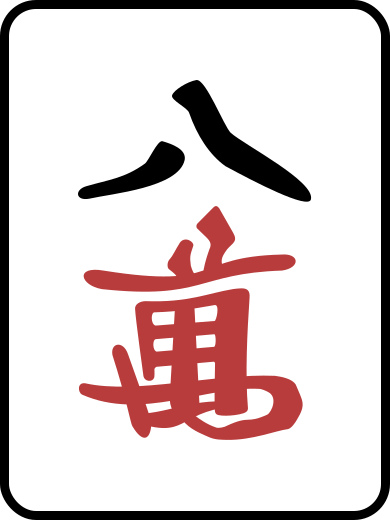
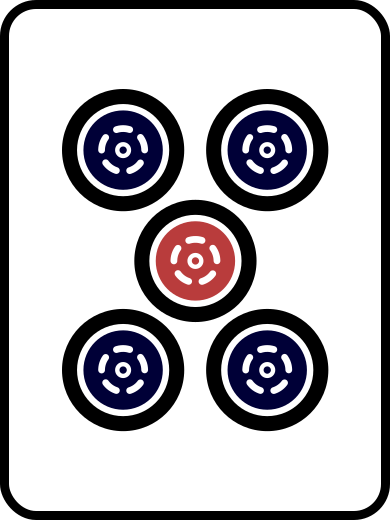
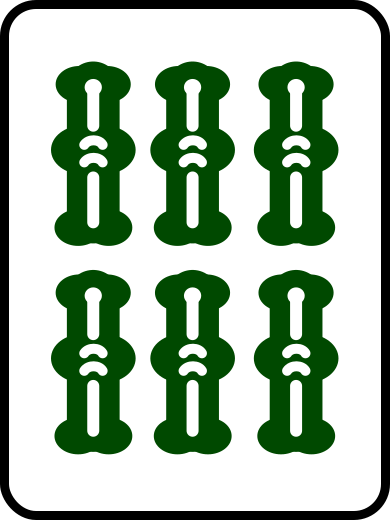
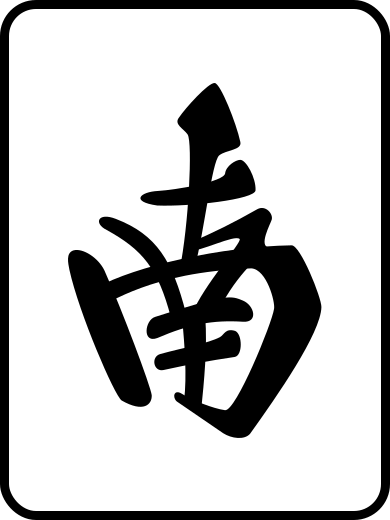
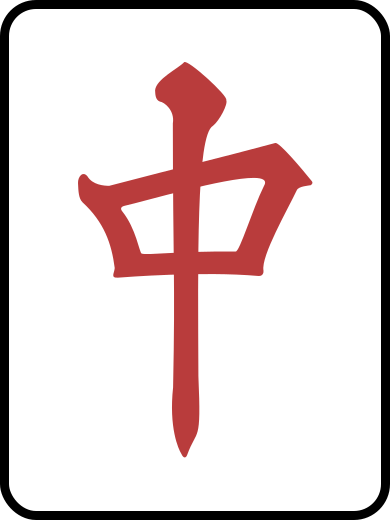
Chi the 4p with your 35p, or let it pass?
Show the answerHide the answer
Call
Call. With the two dora, the dragon triplet makes any win at least 3 han, 3,900 by ron. The 35p is the worst shape: it fills on the 4p alone, from your own draw or a chi like this one. The chi takes you from 2-shanten to 1-shanten; cut the 1s or the South next. The red dragon, drawn or ponned, is still your only yaku. Draw a 3m or 6m first and you're on a pair wait between the 88m and the dragons, where only the dragon wins. Closed, riichi could pay more, but it's two steps away at turn 7.
What the table reads from a dragon pon
Every call also talks. A dragon pon tells the table you have a yaku and you're moving. A pon of a dragon that is the dora shows 7,700 on its own, and one red five more makes it a , so careful players treat it as one from the moment it goes down. Defending against open hands covers that seat.
Opponents hold on to a dora dragon, too. In the same Houou data, a value pair that was also the dora, still held at turn 8, got its third tile only 27% of the time, against 42% for a dragon or round-wind pair (the honor order post). So pon a dora dragon the moment one shows, and think twice before a back call that needs one.
See how fast a yakuhai hand moves
Set the hand type to Yakuhai with one call and step through the turns. The tool shows the share of Houou hands in that spot that were already tenpai: the speed your first pon buys, and what the table reads from it.
Check open-hand tenpai odds