
Two things go wrong with an open hand. You and end up waiting on a 23s, and the 1s that finishes it takes away your only yaku. Or you call a good down to 1,000 points and fewer safe tiles. You fix both before you press the button.
Open tanyao is cheap until the dora join in
Tanyao (all simples), from Pinfu and tanyao, needs every tile in the hand to be a 2 to 8, the called sets, the pair, and the winning tile included. It's 1 closed or open, and the open version has its own name, kuitan (喰いタン). Mahjong Soul and the EMA 2016 rules allow it. On Tenhou it's a lobby setting, on in the main ranked lobbies. Some clubs play without it (kuitan nashi), so ask at a new table. The tanyao page has the rule and the glossary card the short form.
A bare open tanyao usually counts 30 fu (Fu without counting) and pays 1,000. Each or red five about doubles it, until the hand reaches 4 han (7,700).
| Dora and red fives | Dealer | |
|---|---|---|
| None | 1,000 | 1,500 |
| One | 2,000 | 2,900 |
| Two | 3,900 | 5,800 |
| Three | 7,700 | 11,600 |
Closed, , , and tanyao with no dora pay 3,900 by , the same as open tanyao with two dora.
Every winning tile has to be a 2 to 8
The winning tile (What is a yaku?) is where open tanyao hands lose wins.
You called chi on the 6m with your 78m, and the hand is .
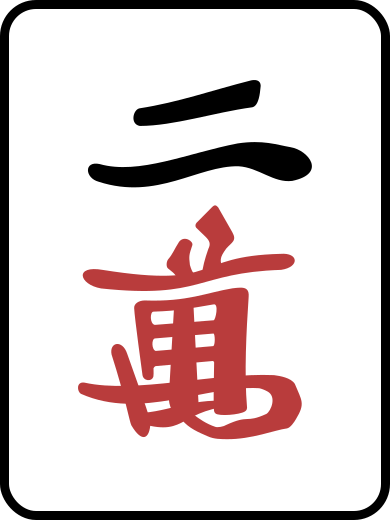
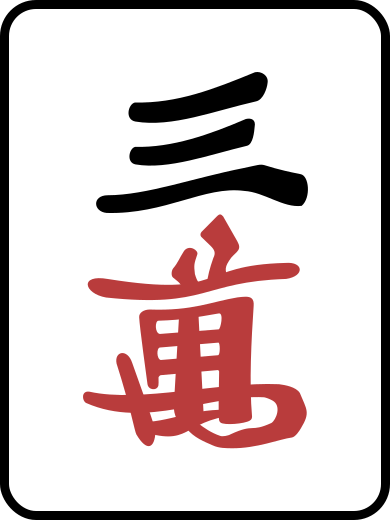
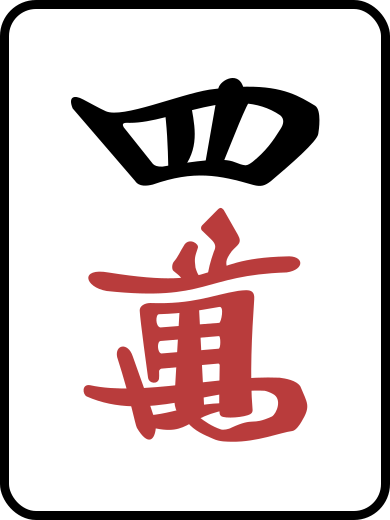
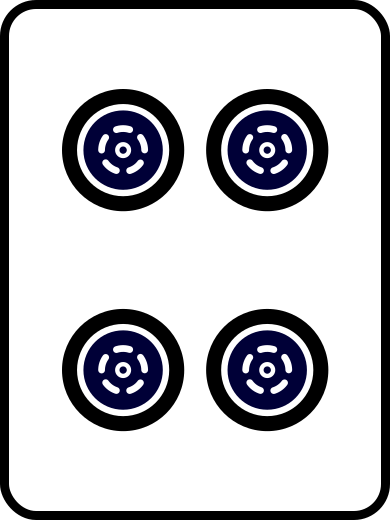
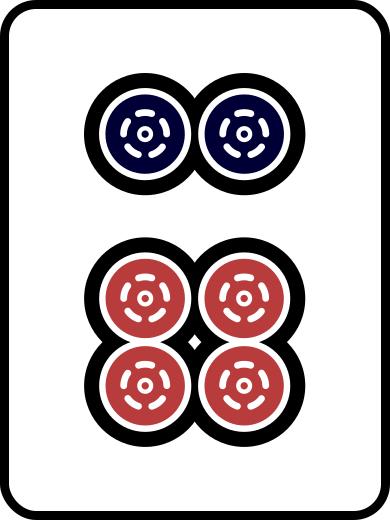
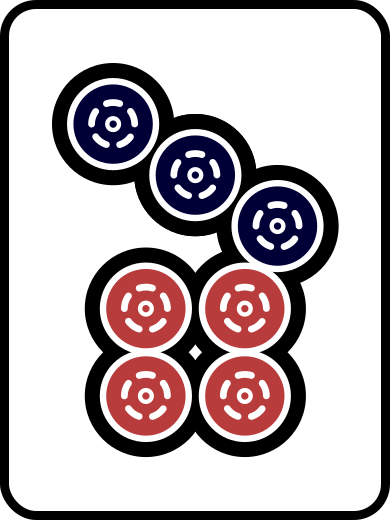
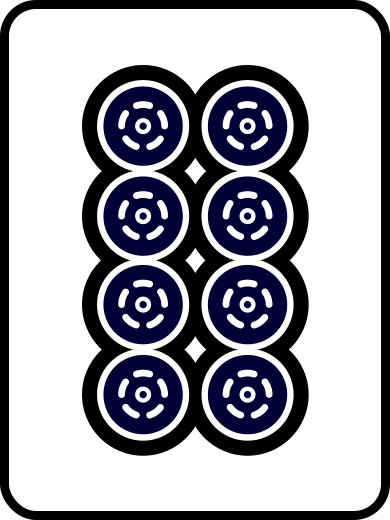
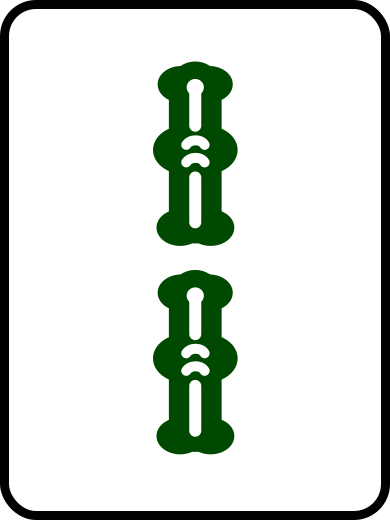
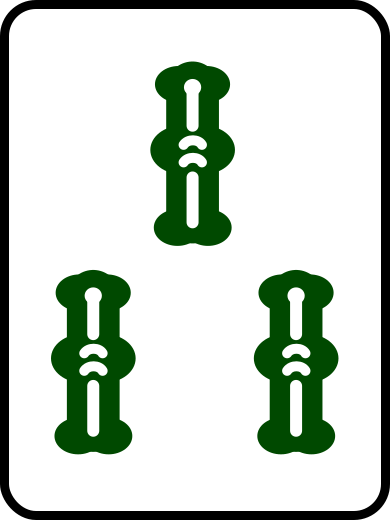
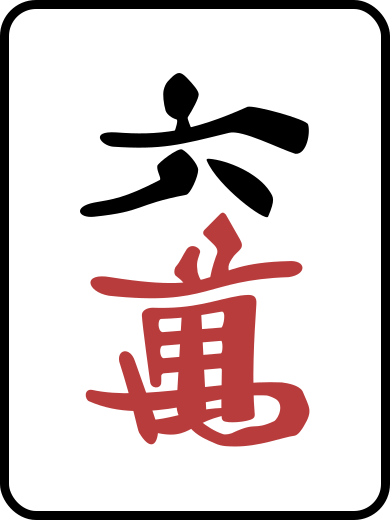
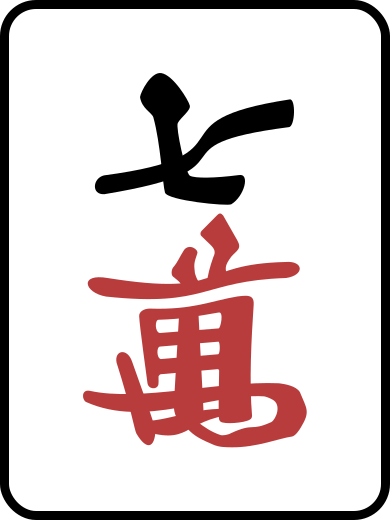
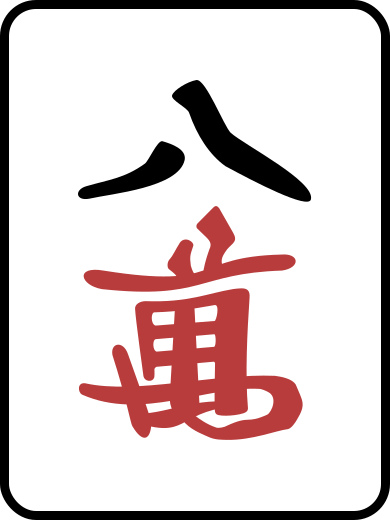
It waits on 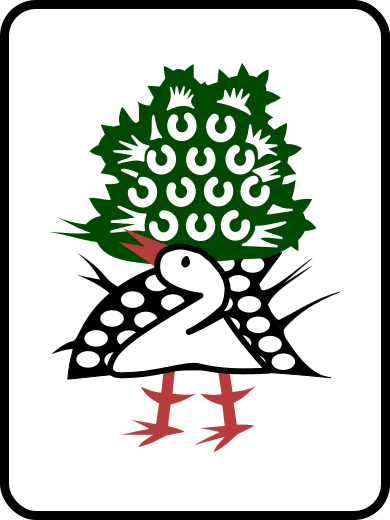 and
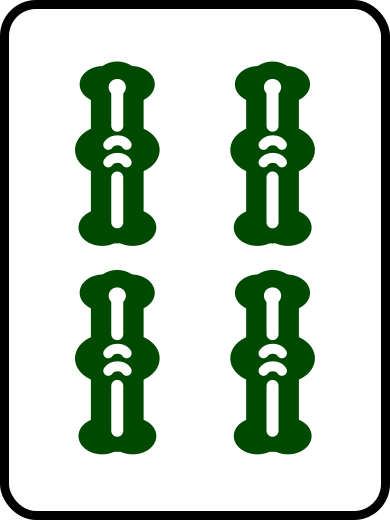 , 8 tiles, and only the four 4s win. A 1s finishes four sets and a pair, but the 123s holds a 1, so the hand loses tanyao, its only yaku. This is kata-agari (片上がり): a wait that wins on one side only. The back call in the yakuhai lesson can end on one too, a where only the dragon wins.
, the rule that blocks ron, makes it worse. It counts every tile that completes your shape, yaku or not (the furiten guide). A tanyao plan cuts its ones and nines early, so a 1s in your own discards is likely. Then the whole wait is furiten, and you can't ron the 4s either. If another player throws a 1s, letting it pass puts you in temporary furiten until your next turn (Tenpai, riichi and furiten). A 4s you draw yourself still wins in both cases. A 1s doesn't, even by tsumo, unless it's the last tile of the wall (haitei).
So in an open tanyao hand, a or a is worth what a (middle shape) is worth: one tile kind that helps, 4 tiles, with a furiten trap on top. The shapes that keep every winning tile inside are two-sided shapes from 34 to 67, kanchan from 24 to 68, and pairs from 22 to 88. A (edge shape) or a pair of ones or nines can't stay at all.
Fix the wait before you call:
- Use the 23 or the 78 for the call. Say your last two partial sets are and . Chi a 4s with the 23s, and the 56p waits on 4p or 7p: 8 tiles, every one a winner. Chi a 4p or a 7p with the 56p, and you're tenpai on the 23s with 4 winning tiles.
- With a to spare, cut the 23 or the 78 before an inside two-sided shape. A closed hand headed for riichi still wins on the 1 or 9, so the shape keeps all 8 tiles. On a tie it still goes first when the rest of the hand is all simples, because that win loses tanyao (Pinfu and tanyao).
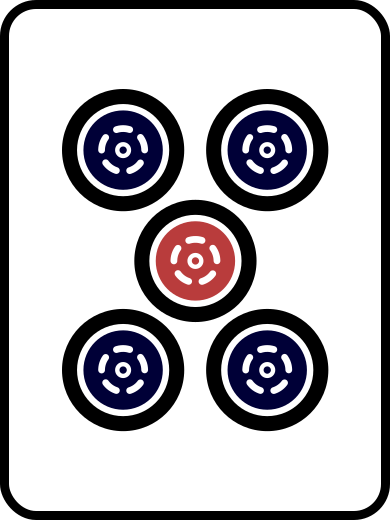
You called pon on the 6p. Your yaku is tanyao.
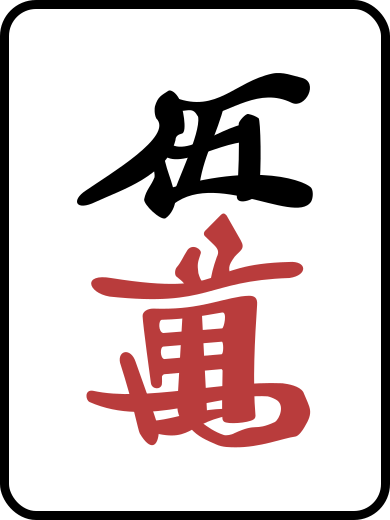
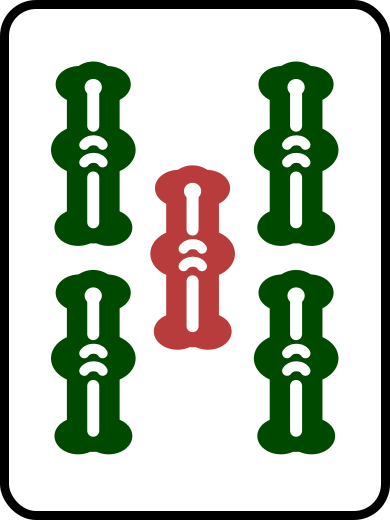
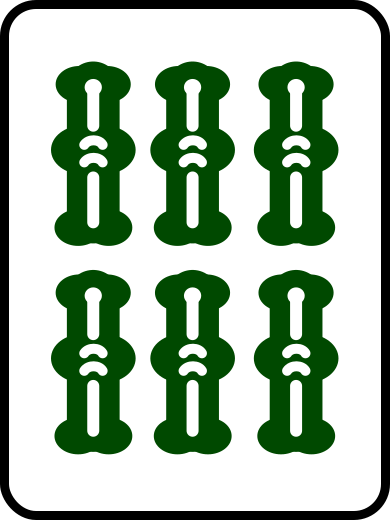
Which tiles complete the hand? Then check which of them you can win on.
Show the answerHide the answer
Waits 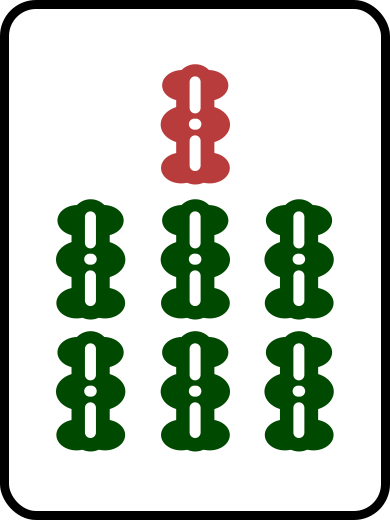
The 23456s completes on the 1s, 4s, and 7s. Read it as 23 plus 456 and it takes the 1s or the 4s. Read it as 234 plus 56 and it takes the 4s or the 7s. That's 11 tiles, since one 4s is already yours. Only the 4s and the 7s keep every tile a 2 to 8, so 7 of the 11 win. A 1s makes 123s and takes away the only yaku. And with a 1s in your discards, all three are furiten: no ron on the 4s or the 7s either.
Call when the hand is worth it
A call costs you riichi, pinfu, and , as When to call chi and pon showed. For open tanyao, four situations make the speed worth that price.
- Two dora or red fives. Open tanyao already pays 3,900, so speed comes first: make the calls you'd pass on with a cheap hand, as Playing the dora advised. With one, it pays 2,000. Call when the chi or takes you a step closer and leaves good shapes, unless the closed hand is already good (below).
- You're the dealer. A bare open tanyao pays you 1,500, and a win keeps the deal for another hand at dealer prices (How a game works). My rule of thumb: treat a bare tanyao like a one-dora hand.
- Any win will do. A fast 1,000 that ends another player's deal, or settles your place near the end of the game, is worth more than its points. The AI engines call for these cheap hands (When to call chi and pon), and Play for placement comes back to them.
- The last turns. Tenpai when the wall runs out moves your score by 2,500 to 3,000 points at a four-player table (A draw pays the tenpai players). A late call that makes tenpai earns that, and with tanyao in place the hand can still win.
East 1, turn 6. You're not the dealer. The player on your left discards the 7s.
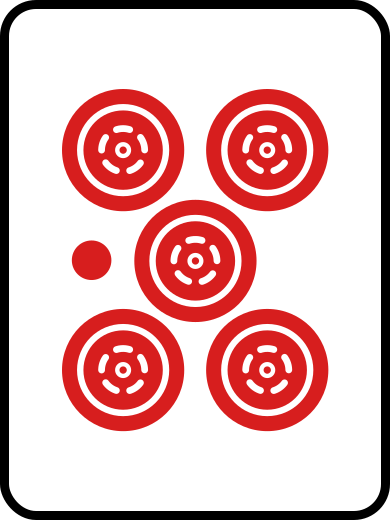
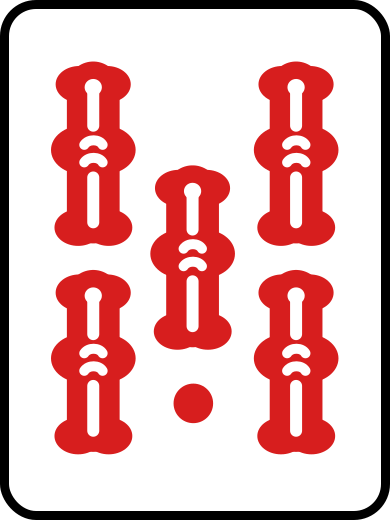
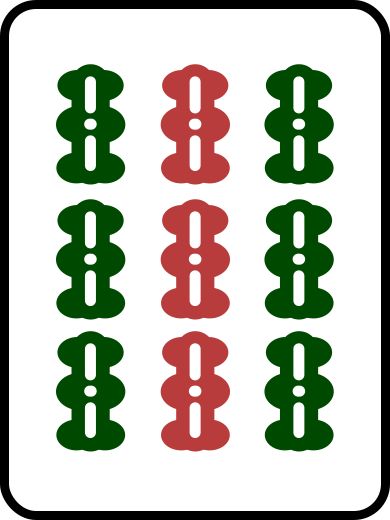
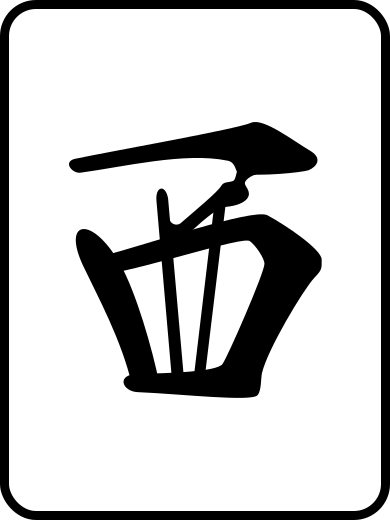
Chi the 7s with your red 5s and 6s, or let it pass?
Show the answerHide the answer
Call
Call. The red 5p and the red 5s make open tanyao 3 han: 3,900 by ron, locked in now. Closed, riichi, tanyao, and the two red fives would pay 7,700 or more, but the hand is 2-shanten: you need two useful draws before you can declare, and then the riichi still has to win. The chi takes you to 1-shanten, on 12 tiles. Once the loose (isolated) West and 9s go, every tile is a 2 to 8, and both shapes left wait inside: the 34m on 2m or 5m, the 68m on 7m.
East 3, turn 13. You're the dealer. Nobody has declared riichi, and you hold no dora. The player on your left discards the 5m.
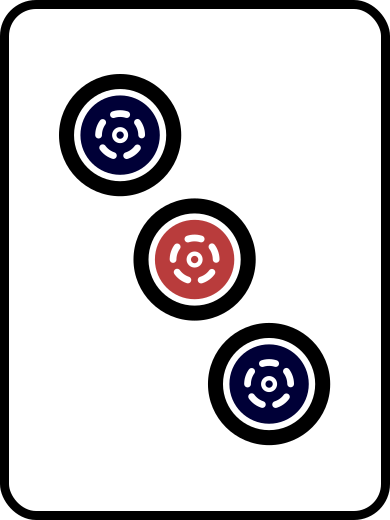
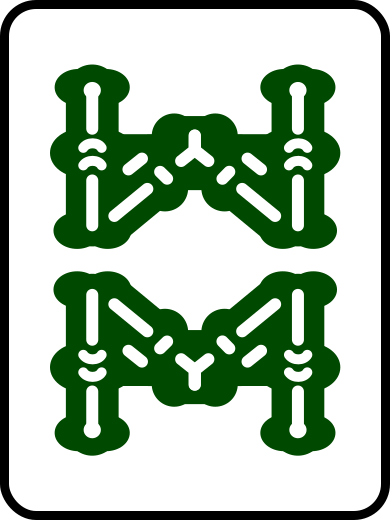
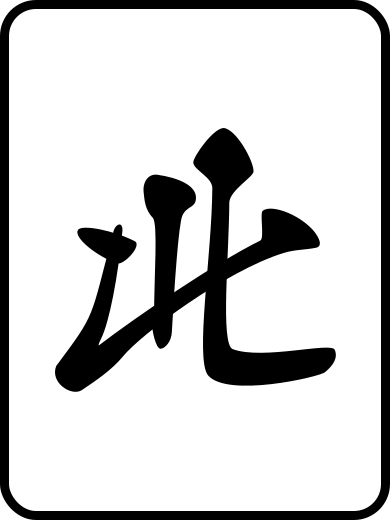
Chi the 5m with your 46m, or let it pass?
Show the answerHide the answer
Call
Call. Closed, 12 tiles take you to tenpai, and you have only a few draws left to find one. The chi makes tenpai now: cut the North, and the 67p waits on 5p or 8p, 8 tiles, both kinds inside 2 to 8. A win pays 1,500 and keeps your deal. If the wall runs out, tenpai keeps the deal too and collects the payments.
Let it pass when the closed hand is better
A good closed hand with one dora or none. Two two-sided shapes and a pair of simples are headed for riichi, pinfu, and tanyao: 3,900 by ron, 7,700 with a dora. Early in the hand, a chi cuts that to about a quarter to save one step, the trade When to call chi and pon warned against.
A ragged hand. If the call still leaves you two steps from tenpai on one-sided shapes, you've made a cheap, slow hand. Stay closed, and fold if a riichi comes.
Every call also costs defense, and in a tanyao hand the tiles left are all simples, the tiles most likely to deal in because they finish the most waits. As a sequence, a 5 completes a 34, a 46, or a 67, while a 1 completes only a 23. After two calls you hold seven of them, and that's what you'd fold with if someone declares riichi. Call for 1,000 only when the rest of the hand is good enough to finish.
East 1, turn 5. You're not the dealer, and you hold no dora. The player on your left discards the 2p.
Chi the 2p with your 34p, or let it pass?
Show the answerHide the answer
Pass
Pass. The chi makes tenpai on the 4s and 7s, but open tanyao with no dora pays 1,000. Closed, 16 tiles take you to tenpai, the 2p, 5p, 4s, and 7s, and every one leaves a for riichi, pinfu, and tanyao: 3,900 by ron before tsumo or ura dora. That's nearly four times the price for one more step, at turn 5 with most of the wall still to come.
Pick the call and the discard before you press
A chi on a two-sided shape opens fastest, but only by a few points. In the site's data from Tenhou's top room (), 27.6% of one-call hands with no or , mostly tanyao, that opened with a chi from a two-sided shape were tenpai at turn 8. A plain pon made 25.6%, and a chi from a kanchan or edge shape 23.5%. That data counts turns from zero, so turn 8 is the ninth discard (Is the open hand tenpai?). Once the hand is worth calling, take the call it gets.
, the swap-calling rule from How a hand is played, still limits what you can throw after the call. And the tile you throw decides the wait you end on.
You called chi on the 3s. Early in the hand, you discarded a 1p.
You draw the 5p. What do you discard?
Tap the tile you would choose.
Show the answerHide the answer
Cut the 2p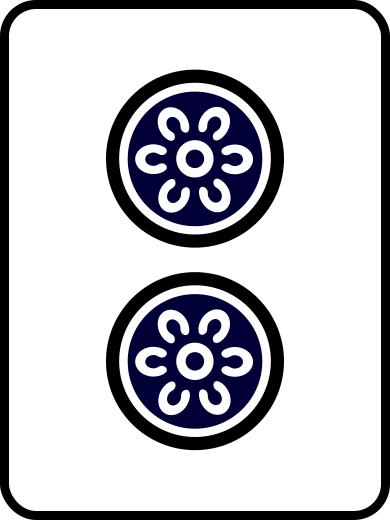
Cut the 2p. Both tenpai choices wait on the 4p. Throw the 5p back and you keep the 23p, which also waits on the 1p. That 1p brings , but it still counts for furiten, and yours sits in your discards: you can't ron the 4p from anyone. The 35p kanchan waits on the 4p alone, so all four 4p win, by ron or by tsumo. The 5p cut looks almost twice as wide, 7 tiles to 4, and none of them wins by ron.
How fast open hands reach tenpai
Set the hand type to Other (mostly tanyao) and the tool shows how often a called hand is tenpai by number of calls, turn, and first call, from Tenhou's top-room logs. Use it to see what your open tanyao hand looks like to the other three players.
Open the tenpai odds tool