
A riichi-only pays at least 1,300, not 1,000. A tsumo pays 700/1,300, not 1,000/2,000. Both numbers come from fu, the second count behind every payment, and you don't have to count fu to get them right. Put the hand in one of five boxes, then read most prices off one of two columns.
What a hand pays priced hands by , at 30 fu. Fu (minipoints) are the other half: points for the shape of the hand and the way it won, which the scoring guide counts item by item. The shortcuts below skip that count.
Sort the hand into one of five boxes
You can name the fu at . Check the table's last row first, with the winning tile added. If nothing in it applies, ask two things: is the hand closed or open, and is it pinfu or ? Ron or tsumo settles the rest.
| Your hand | Ron | Tsumo |
|---|---|---|
| Seven pairs | 25 | 25 |
| Pinfu | 30 | 20 |
| Any other | 40 | 30 |
| Open hand | 30 | 30 |
| A , a closed triplet of terminals or honors, two triplets, or a double-wind pair | Count it | Count it |
Pinfu is the closed hand of four runs, a , and a pair that isn't a value tile (a dragon, your , or the ). Seven pairs (chiitoitsu) is the 2-han yaku of seven different pairs. "Any other closed hand" covers every closed hand that is neither: a riichi on a (middle wait), a closed hand with one triplet of simples, or a hand on a .
Why a closed ron jumps to 40
Every hand starts at 20 fu. A closed hand that wins by ron adds 10, so it sits at 30 before anything else counts. Pinfu is the closed hand with nothing else to count. Every other closed hand holds at least one item worth 2 or more: a triplet or kan, a pair of , or a one-sided wait, which means a kanchan, a (edge wait), or a tanki (single wait). A (shanpon) adds no fu for the wait, but the winning tile makes a triplet. Fu round up to the next 10, so 32 becomes 40.
A tsumo adds 2 instead of 10. The same small items still round up to 30, and pinfu tsumo skips even the 2 and stays at 20. An open hand gets no 10 for a ron. Its small items round up to 30, ron or tsumo, and an open hand with nothing to add still counts as 30.
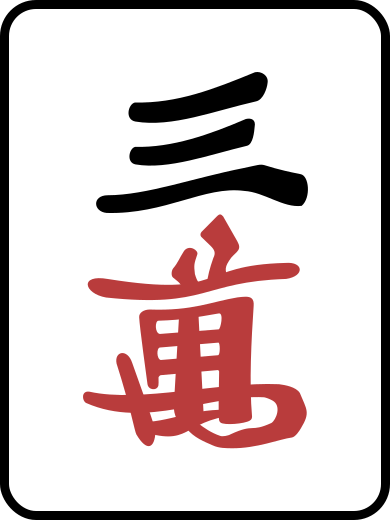
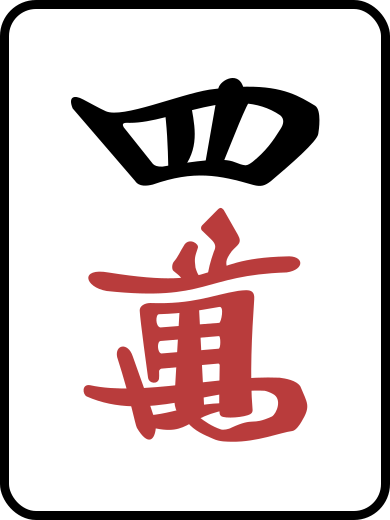
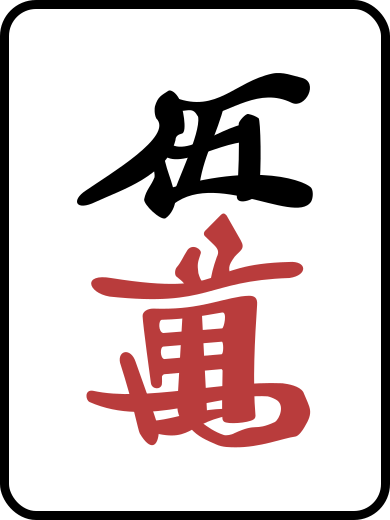
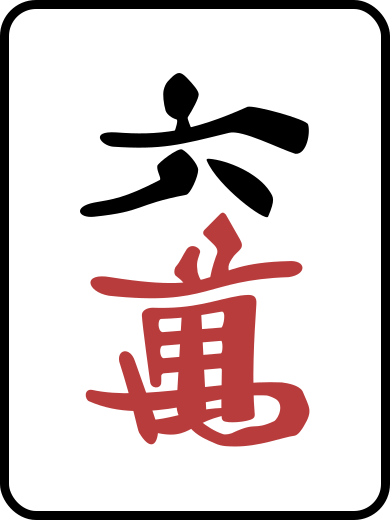
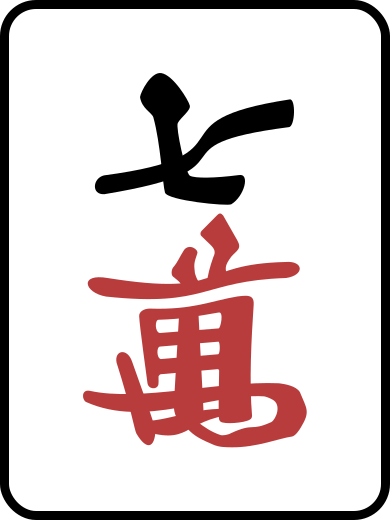
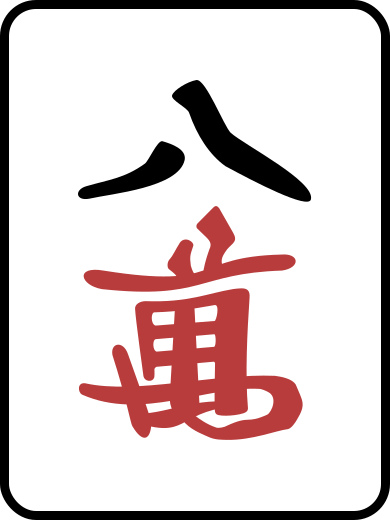
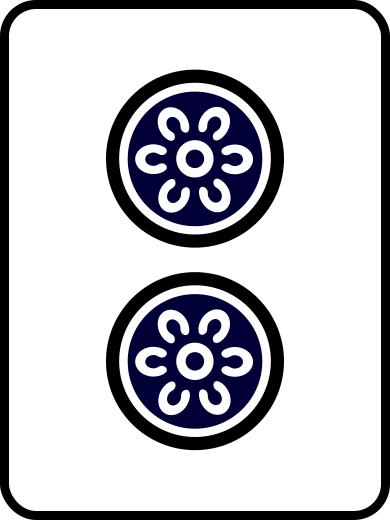
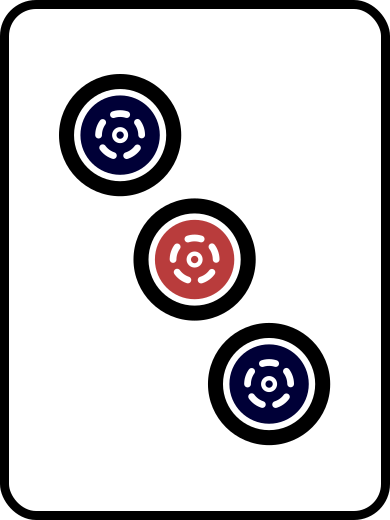
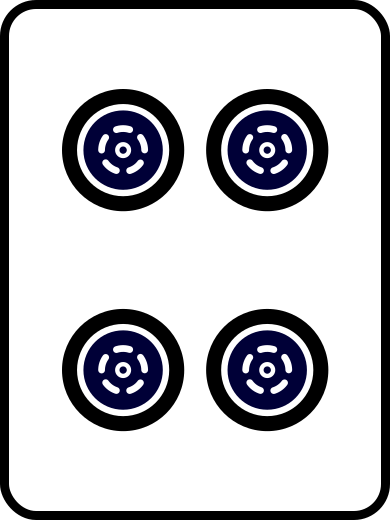
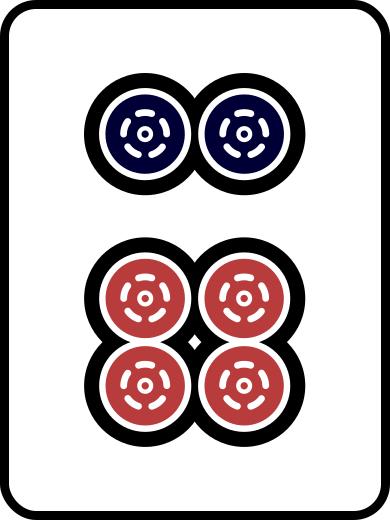
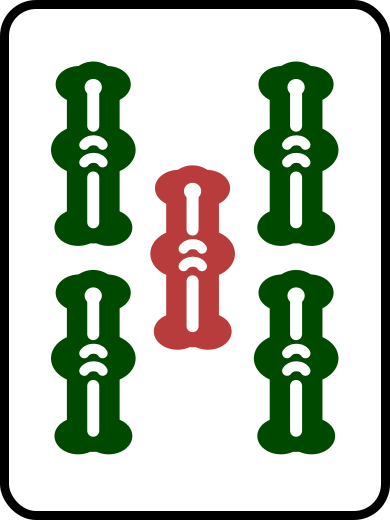
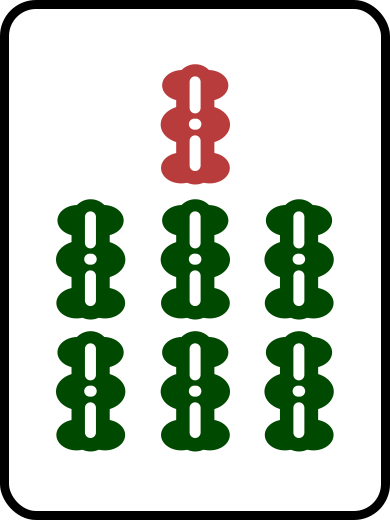
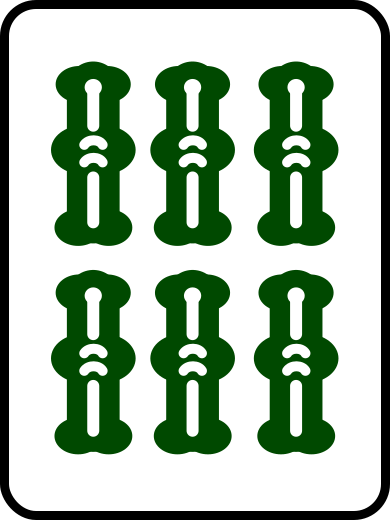
You declared riichi on this tanyao hand, with no . It waits on the 6s, a kanchan. A ron is riichi and tanyao, 2 han 40 fu: 2,600. A tsumo adds and drops to 30 fu: 3 han 30 fu, 1,000/2,000.
Swap the for and the hand becomes pinfu, waiting on the 4s and the 7s. The fu go down and the price goes up. A ron is 3 han 30 fu, 3,900. A tsumo is 4 han 20 fu, 1,300/2,600. Below , one han is worth more than 10 fu.
When to count it out
Four things can push a hand past a rounding line: a kan, a closed triplet of terminals or honors, a second triplet, and a double-wind pair. That's a pair of your seat wind that is also the round wind, such as East for the dealer in the East round. A closed terminal or honor triplet is worth 8 fu by itself, a kan at least 8, and Tenhou counts the double-wind pair as 4. The scoring guide's middle-wait example shows one: a closed triplet of 9m lifts even its tsumo to 40. Without any of the four, the boxes are exact. With one, count it with the step-by-step list, or press Help me count fu in the score calculator. The fu quiz drills the full count on random hands.

The two columns to know cold: 30 and 40 fu
The boxes leave two fu counts for most hands you'll win: 30 and 40. Learn their columns and you can price a hand before your discard lands.
| Han | 30 fu | 40 fu | 30 fu, dealer | 40 fu, dealer |
|---|---|---|---|---|
| 1 | 1,000 | 1,300 | 1,500 | 2,000 |
| 2 | 2,000 | 2,600 | 2,900 | 3,900 |
| 3 | 3,900 | 5,200 | 5,800 | 7,700 |
| 4 | 7,700 | 8,000 | 11,600 | 12,000 |
Learn the columns first. Each row about doubles the one above. The 40-fu column reaches mangan at 4 han, so riichi, tanyao, and two dora on a kanchan is a full 8,000. The 30-fu column stops at 7,700, because Tenhou and Mahjong Soul don't round 4 han 30 fu up to a mangan.
The dealer's 40-fu column needs no new numbers. At 1, 2, and 3 han it pays what the non-dealer's 30-fu column pays at 2, 3, and 4 han: 2,000, 3,900, and 7,700.
| Han | 30 fu | 40 fu | 30 fu, dealer | 40 fu, dealer |
|---|---|---|---|---|
| 1 | 300/500 | 400/700 | 500 all | 700 all |
| 2 | 500/1,000 | 700/1,300 | 1,000 all | 1,300 all |
| 3 | 1,000/2,000 | 1,300/2,600 | 2,000 all | 2,600 all |
| 4 | 2,000/3,900 | 2,000/4,000 | 3,900 all | 4,000 all |
The dealer's tsumo columns come free: on a dealer's tsumo, everyone pays what the dealer pays on yours. At 3 han 30 fu the dealer pays 2,000 of yours, and the dealer's own tsumo is 2,000 all.
Seven pairs and pinfu tsumo: 25 and 20 fu
Two boxes sit off those columns. Both start at 2 han: seven pairs is a 2-han yaku, and pinfu tsumo always comes with menzen tsumo.
Seven pairs is fixed at 25 fu and never rounds up. Its ron doubles cleanly: 1,600 at 2 han, 3,200 at 3, 6,400 at 4, and a mangan at 5. The dealer collects 2,400, 4,800, and 9,600. A seven pairs tsumo adds menzen tsumo, so it starts at 3 han: 800/1,600.
Pinfu tsumo is 20 fu. Pinfu gives up the 2 fu a tsumo normally adds. It pays 400/700 at 2 han, 700/1,300 at 3, and 1,300/2,600 at 4. A dealer's pinfu tsumo is 700 all, 1,300 all, and 2,600 all.
The trap is riichi, pinfu, and tsumo. That's 3 han 20 fu, 700/1,300, not the 1,000/2,000 of a 30-fu hand. The scoring guide works the same hand by ron and by tsumo.
Double the fu, drop a han
Pinfu tsumo's 700/1,300 at 3 han is the 40-fu tsumo at 2 han, and its 1,300/2,600 at 4 han is the 40-fu tsumo at 3. Base points are the fu times 4, doubled once for each han, so doubling the fu does the job of one more han. Every mahjong hand has two invisible han works the formula by hand.
The same rule reads the rare high-fu hands. 60 fu pays the 30-fu price one han up, and 80 fu the 40-fu price: 2 han 80 fu is 5,200, like 3 han 40 fu. The doubling stops at mangan. The formula's base points stop at 2,000, so 3 han 80 fu is a mangan, the same as 4 han 40 fu, and the price doesn't move again until 6 han, a .
Practice
Price each hand. Each problem gives the dora and what you declared; the fu are yours to find. You aren't the dealer unless the problem says so.
You declared riichi. The ura dora adds nothing.Dora 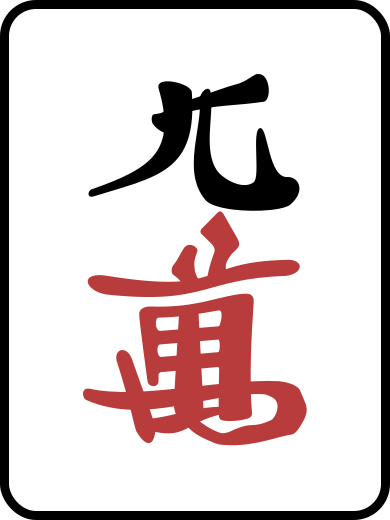
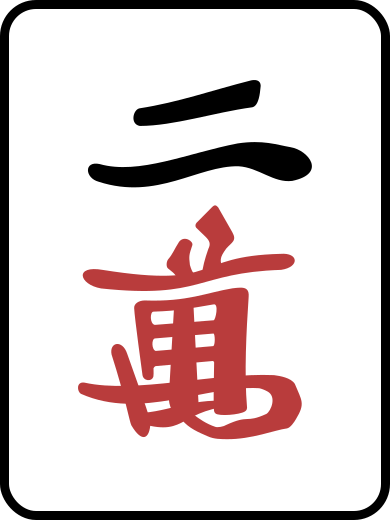
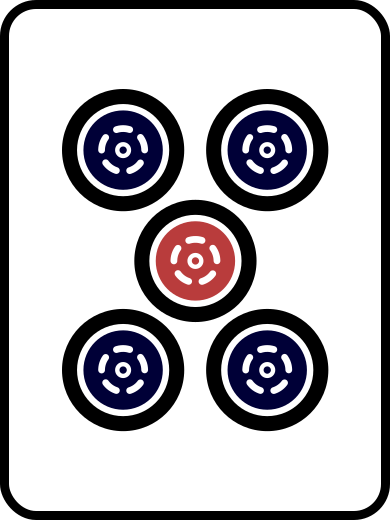
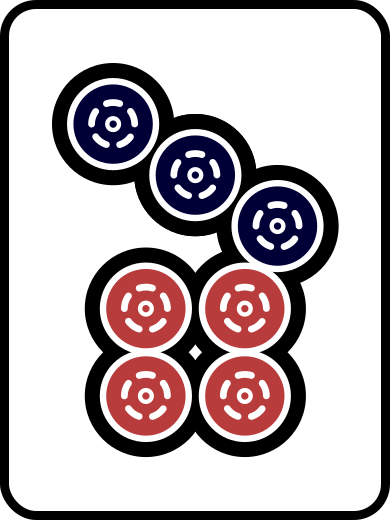
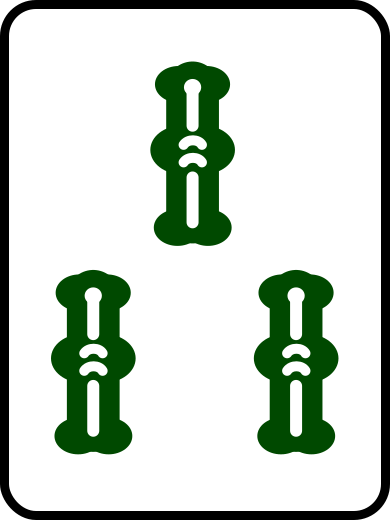
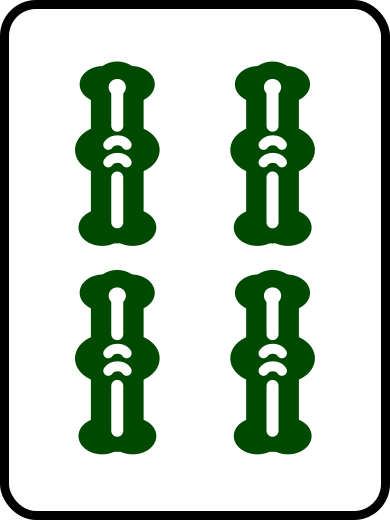
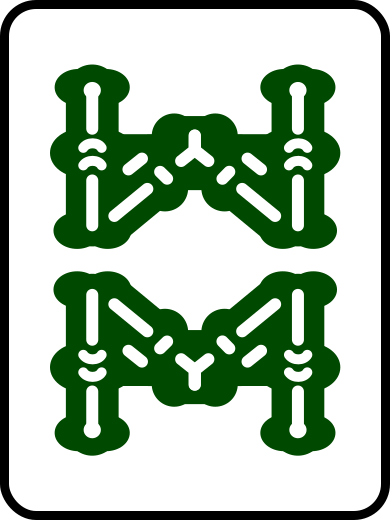

Another player discards the 5s. What does your ron pay?
Show the answerHide the answer
1,300
1,300. The wait is two-sided, but the pair is the , a value tile, so the hand isn't pinfu and riichi is its only yaku. The fu are 20, plus 10 for the closed ron and 2 for the dragon pair: 32, which rounds up to 40. 1 han 40 fu pays 1,300. 1,000 prices the hand as pinfu, and 2,000 and 2,600 count a second han it doesn't have.
You're the dealer. You declared riichi. The ura dora adds nothing.Dora 
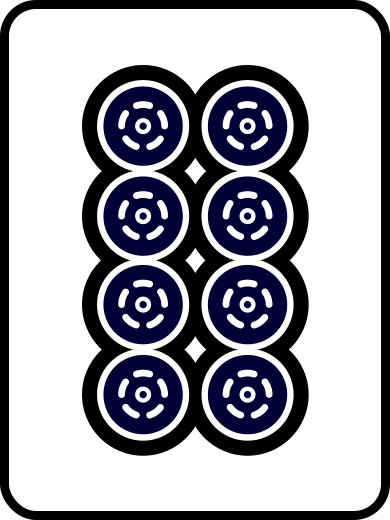
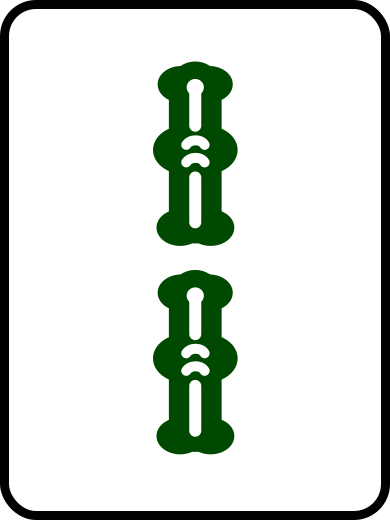
You draw the 8s and win. What does each player pay?
Show the answerHide the answer
2,600 all
2,600 all. Riichi, menzen tsumo, pinfu, and tanyao make 4 han. Pinfu won by tsumo is 20 fu, so the hand is 4 han 20 fu. 3,900 all adds the 2 fu for a tsumo, which pinfu doesn't get. 4,000 all is a mangan and needs a fifth han. 1,300 all misses tanyao.
You're the dealer. You called pon on the white dragon.Dora
Another player discards the 3s. What does your ron pay?
Show the answerHide the answer
2,900
2,900. The white dragon triplet is yakuhai, 1 han, and the 6p is one dora: 2 han. The hand is open, so the ron adds no 10. That leaves 20, plus 4 for the open dragon triplet: 24, which rounds up to 30 fu. A dealer's 2 han 30 fu ron is 2,900. 3,900 is the dealer's price at 40 fu, the count for a closed ron. 2,000 and 2,600 are a non-dealer's prices at 30 and 40 fu.
Seven pairs, waiting on the North. You didn't declare riichi.Dora
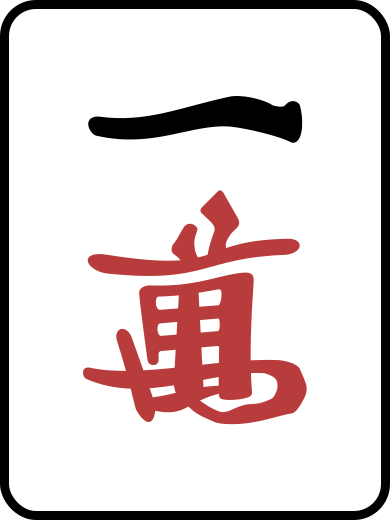
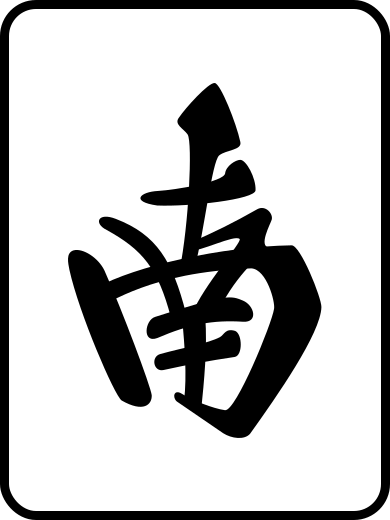
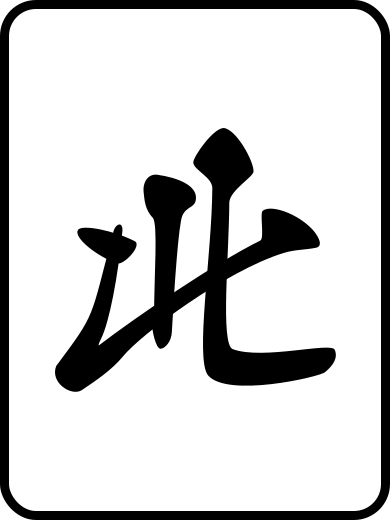
Another player discards the North. What does your ron pay?
Show the answerHide the answer
6,400
6,400. Seven pairs is 2 han, and the 33p pair is two dora: 4 han. Seven pairs is always 25 fu and never rounds up, so 4 han 25 fu pays 6,400. 7,700 treats the hand as 30 fu. 8,000 needs a fifth han. 3,200 counts one dora instead of two.
You declared riichi. The ura dora adds nothing.Dora 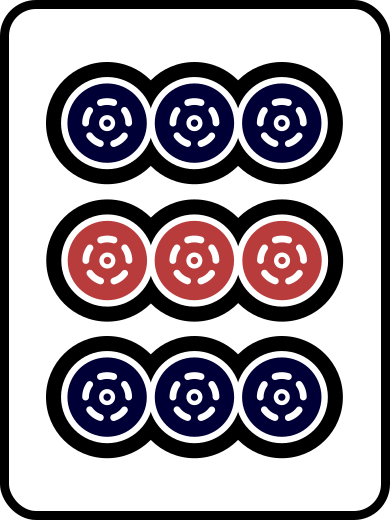
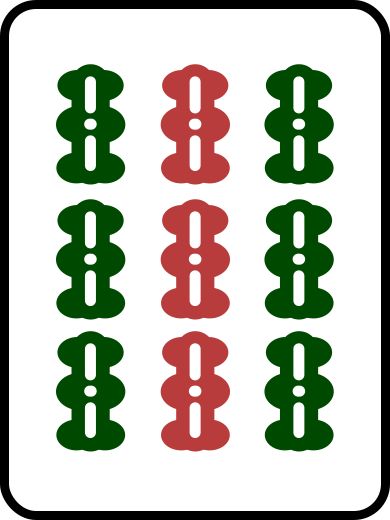
You draw the 3m and win. What does each player pay?
Show the answerHide the answer
2,000/3,900
2,000/3,900. Riichi, menzen tsumo, and the 99p pair of dora make 4 han. A closed tsumo that isn't pinfu is 30 fu, and one triplet of simples doesn't change that: 20, plus 2 for the tsumo, 4 for the closed 444p, and 2 for the edge wait is 28, which rounds up to 30. 4 han 30 fu by tsumo is 2,000/3,900. 2,000/4,000 gives the tsumo a closed ron's 40 fu, but a tsumo adds 2, not 10. 1,000/2,000 counts only one of the dora.
Count fu on random hands
The fu quiz deals a random winning hand, asks for its fu or its price, then adds up the count line by line. Put each hand in one of the five boxes before you tap.
Open the fu quiz