
Ten tiles of one suit and honors in your opening hand, and the flush starts to look obvious. The tile count only raises the question. The honors you hold and the shapes you'd throw away answer it.
What a flush pays, and what it costs
(half flush) is a hand whose number tiles are all one suit, with honors mixed in: 3 closed, 2 open. (full flush) is one suit and nothing else: 6 han closed, 5 open. The honitsu and chinitsu pages have the full rules.
Two things make them worth building on purpose. They lose only one han when you call, so you can and your way to one. And honitsu stacks with (value tiles): the honors it keeps are the same tiles that make a value triplet.
| Hand | Han | |
|---|---|---|
| Open honitsu alone | 2 | 2,000 |
| Open honitsu plus a value-honor pon | 3 | 3,900 |
| Closed honitsu with | 4 | 8,000 |
| Open chinitsu | 5 | 8,000 |
| Closed chinitsu | 6 | 12,000 |
The cost is speed. In the site's data from Tenhou's top room (), a honitsu with one call is at turn 8 only 14% of the time. A one-call hand built on a value honor is tenpai 28% of the time (Is the open hand tenpai?). Turns count from zero there, so turn 8 is your ninth discard. Decide in your first few turns. A flush you only start at turn 8 is already behind.
Three counts before you commit
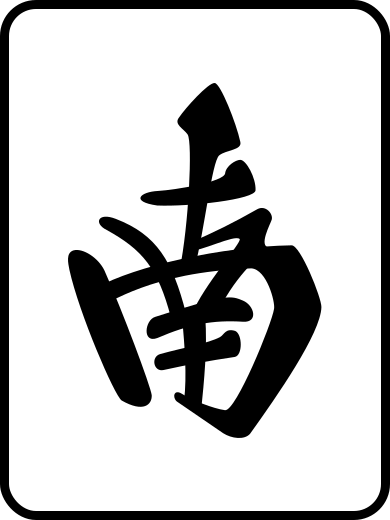
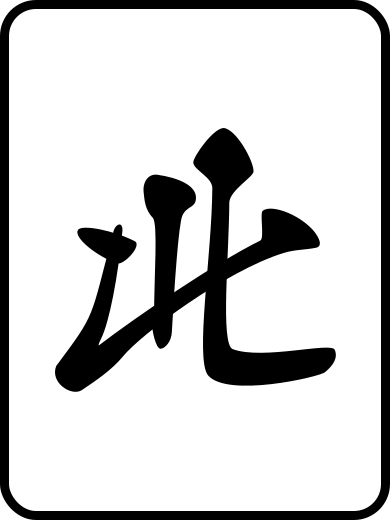
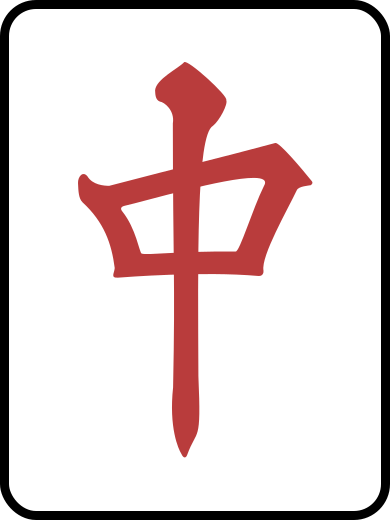
You're South in the East round, on your first turn, with no in your hand.

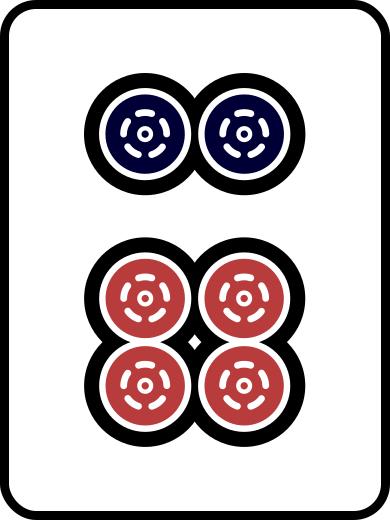
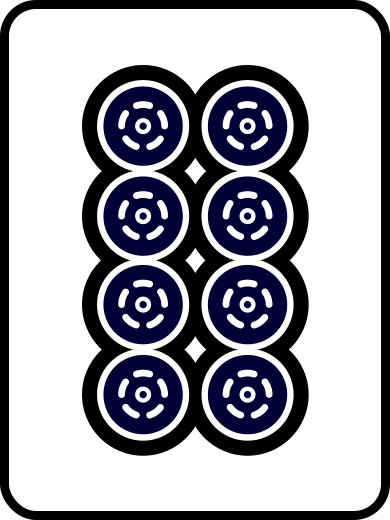
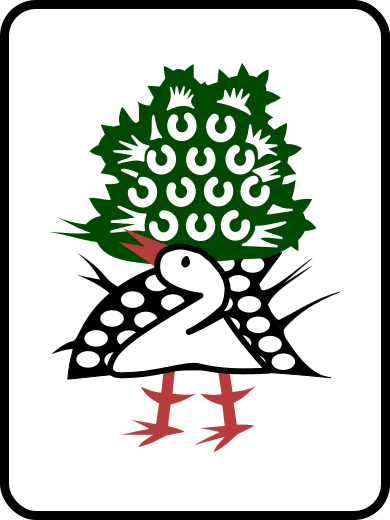
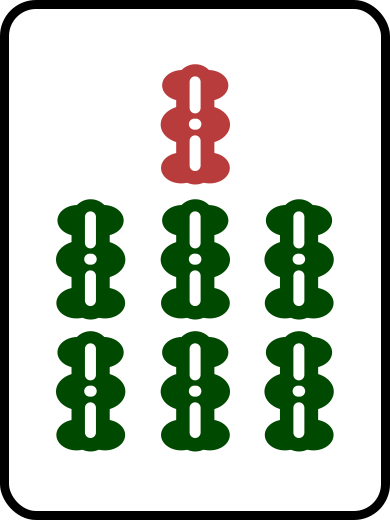
Count the suit and the honors
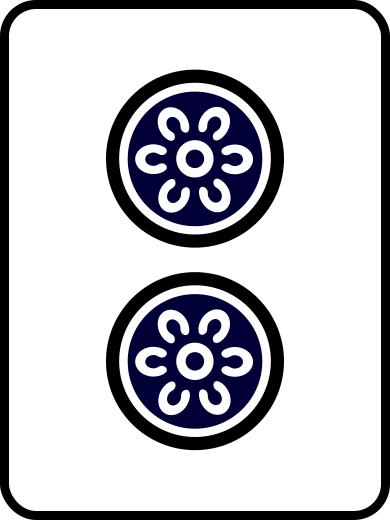
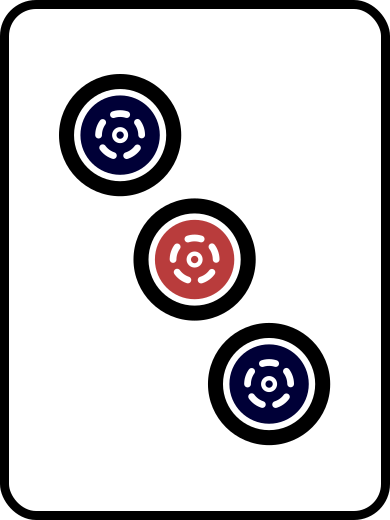
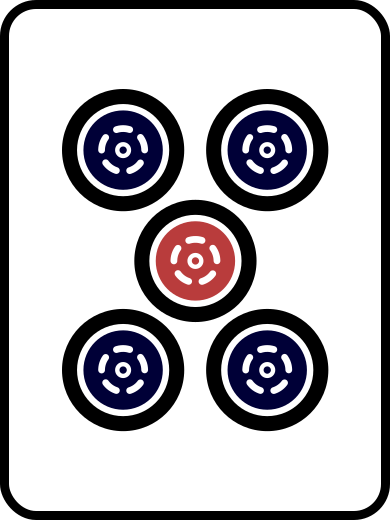
Ten of the thirteen tiles are or honors. Count only live honors: one with two copies already discarded can pair at best, never make a triplet. Now count blocks inside the flush, the way the five-block method counts a whole hand: the 123p set, the 568p, and the pair. South and North are loose (isolated) tiles , and each becomes a block when it pairs.
My rule of thumb: ten tiles of one suit plus live honors, with three blocks among them, is worth a look. The next two counts decide.
Count what you'd throw away
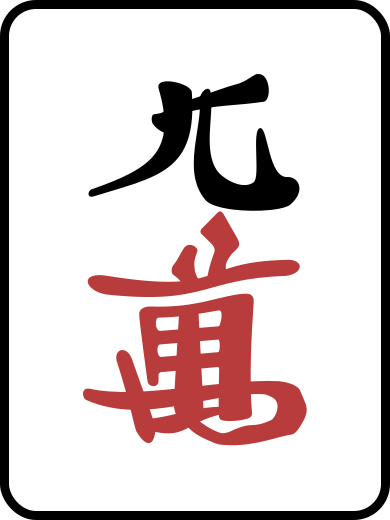
The flush gives up the off-suit tiles, the two suits you aren't collecting. Here that's the 9m, the 1s, and the 7s: three loose tiles you'd cut early in any plan. The flush costs almost nothing.
It gets expensive when the off-suit holds real progress. A dora or red five you throw away is a han gone. A flush with a value pair is worth giving up one two-sided shape, 8 tiles of acceptance, but almost never a finished set or two good shapes.
Count the value with and without it
The red dragon pair makes this hand. Pon it without the flush and you win 1,000. With the flush the same pon pays 3,900. Pair the South, your , and pon it too: 4 han, 7,700. Kept closed, a riichi on it pays 8,000.
Now swap the red dragons for a pair of West, a guest wind for you. The count holds, but the value collapses. Open, the flush is the only yaku unless you pair and pon the South, so it pays 2,000, and every call bets the hand on the flush: one off-suit tile left at the end and it can't win. That flush pays well only closed: 8,000 with riichi.
So the value pair works twice. It adds a han, and it gives the hand a yaku that doesn't need the flush: if your suit dries up, the dragon still wins.
A hand that already pays gains less in proportion. A value pair plus two dora is 3,900 with a call. The flush makes it 8,000, about double, where it nearly quadrupled the 1,000-point pon. Doubling pays only if the flush keeps more than half your wins, so take it when the draws hand it to you, not by breaking shapes.
Once you commit, cut the off-suit you hold most of
Both off-suits are leaving, so the order is free. In the hand above, cut the first, the 1s and the 7s, then the 9m. After two souzu cuts your river says "not souzu", and and pinzu are both still possible. Cut the 9m first and your second discard, a souzu, already points at pinzu. The Tenhou game review shows the rule in a real hand.
Keep the honors. When you need room, a guest wind goes before a value honor (the honor discard order).
That order is the one free disguise. A flush is easy to read: a river with no pinzu says it, calls in one suit say it louder, and once your hand looks close, opponents hold on to your suit and your honors. Don't spend tiles to hide it. Holding a spare off-suit tile, or cutting a useful tile of your suit, costs speed, and the color shows anyway. Reading other players' flushes is a defense skill, covered in Defending against open hands.
Calls: the value honor first, then speed
Pon the value honor the first time it comes: a set, a yaku of its own, and the han that turns 2,000 into 3,900. The yakuhai lesson covers that call later in the course.
Once you've ponned it, the hand is open, so call to speed it up. Open honitsu keeps 2 of its 3 han, so a chi or pon in your suit that takes you a step closer is worth making. One more han makes 7,700: a dora, a red five of your suit, a second value pon, or or , which keep 1 han each when open (Sanshoku, ittsu and chanta). A fifth han is the . Draw the third copy instead and the hand, still closed, pays 8,000 without riichi. A first call would cut that to 3,900 or 5,200.
With no value honor, dora, or red five, the first call is expensive. Closed, riichi plus honitsu pays 8,000. Open, the flush alone pays 2,000, or 2,600 at 40 fu, so the call has to make the hand about three to four times as likely to win (Speed or value has the price-times-chance rule). Early on, one call rarely does that, because the still has time to reach riichi. My rule of thumb: stay closed through your first eight discards. After that, call only when it takes you to 1-shanten or tenpai on good shapes and nobody has declared riichi. A cheap flush still two steps away by then is a hand to fold with, and each call spends tiles you'd fold with.
Chinitsu: when the honors go too
Once your suit by itself holds five blocks, the honors are spare: cut them, and honitsu becomes chinitsu, 3 more han. An open chinitsu is a mangan by itself, 8,000. A closed one is a , 12,000.
The hard part comes at tenpai. One-suit hands wait on more tiles than they seem to, because a triplet next to a run can be read two ways.
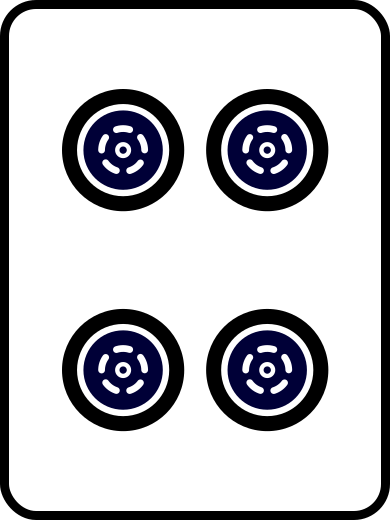
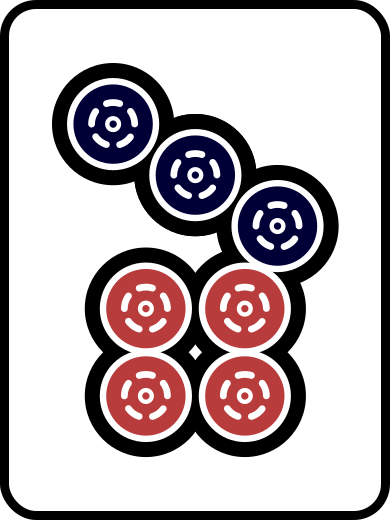
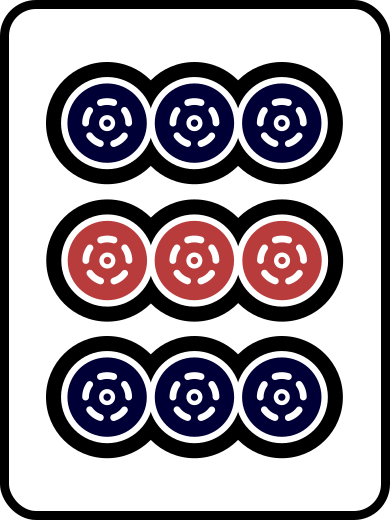
This hand waits on six kinds: . Read 222p, 345p, 678p, and 999p as sets, and the spare 6p waits on another 6p. Make the 22p the head instead, with 234p, 678p, and 999p as sets, and the 56p waits on the 4p and the 7p. Other splits find the 1p, the 3p, and the 9p. Miss one and you may throw it away, which makes the whole wait (Tenpai, riichi and furiten). The wait quiz has a one-suit mode built for this.
Which tiles win?
Show the answerHide the answer
Waits
Read 111p, 234p, and 567p as sets, and the 88p and the 99p make a on the 8p or the 9p. The 7p is the hidden one: split the 111p into a 11p head and a 123p, and the rest reads 456p, 789p, and an 89p edge shape waiting on the 7p. That's 7 tiles: 3 sevens, 2 eights, and 2 nines.
Practice
You're not the dealer in these.
East 2, turn 3. You're West. No dora in your hand.Dora 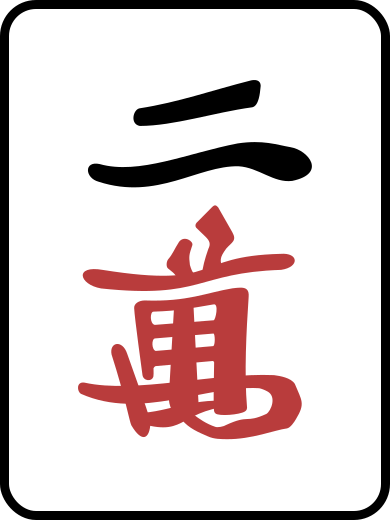
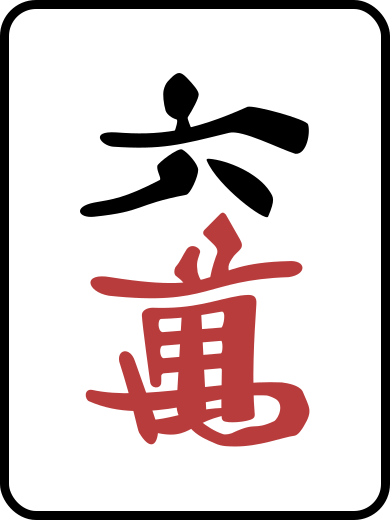
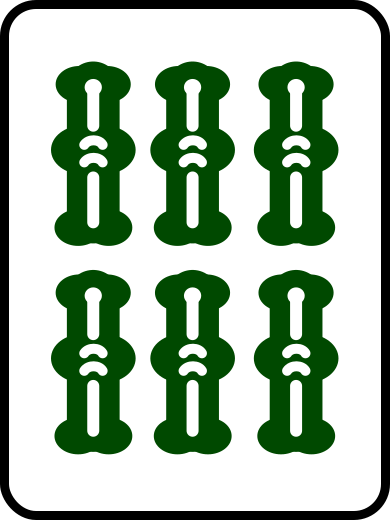
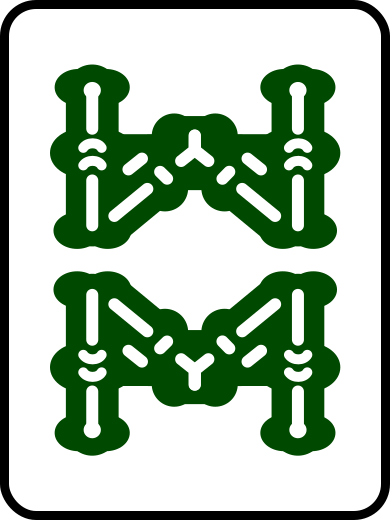
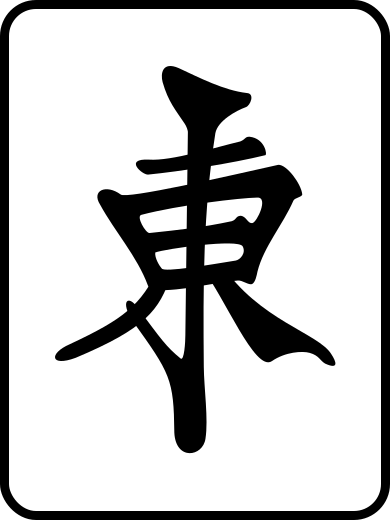
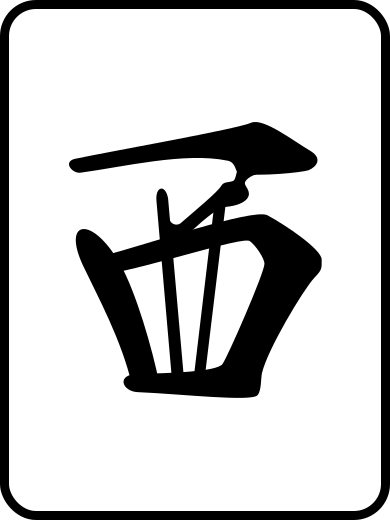
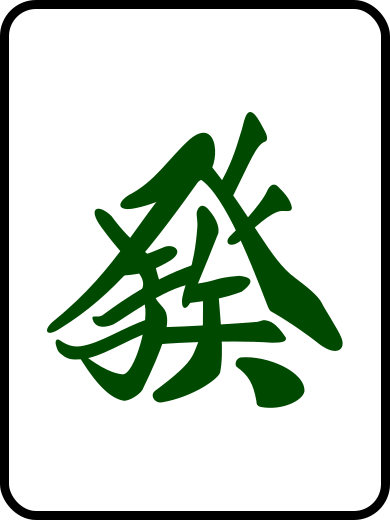
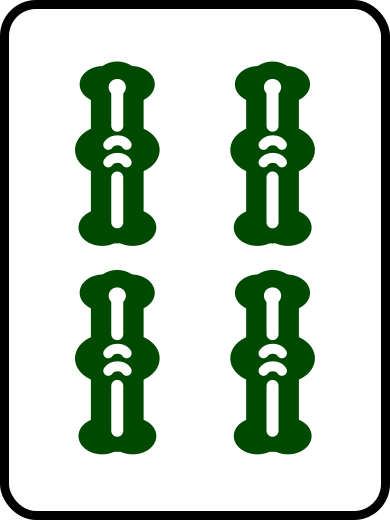
Go for the flush, or play a normal hand?
Show the answerHide the answer
Go for honitsu
Ten tiles are souzu or honors, and every honor is a value tile for you: the green dragons, East (), and West (seat wind). The flush costs the 67m and a step from tenpai, but it turns the 1,000-point green pon into 3,900, and pairing East or West and ponning it makes 7,700. Cut the 1p or the 9p now. Cutting East or West keeps more tiles, 65 to 57, but each is a han once it pairs, and the 1p and 9p leave anyway.
East 3, turn 3. You're North. No dora in your hand.Dora 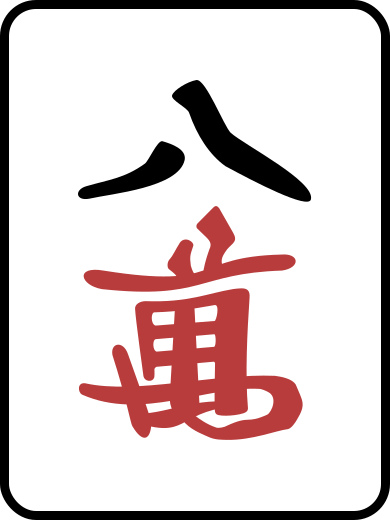
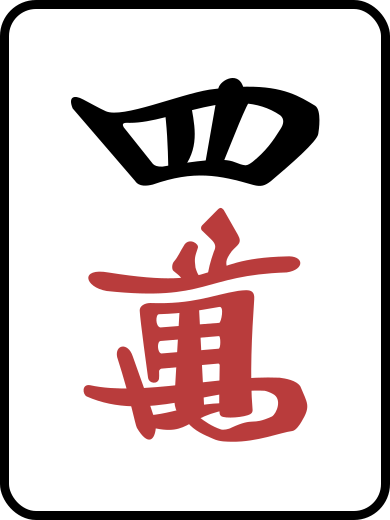
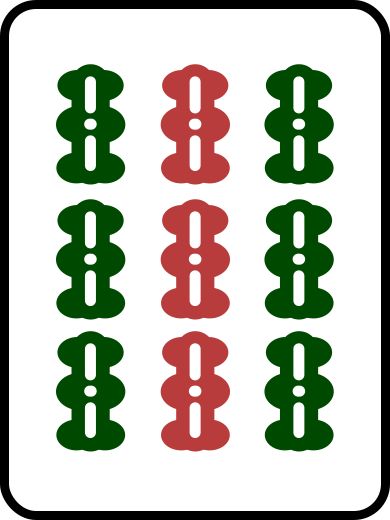
Go for the flush, or play a normal hand?
Show the answerHide the answer
Play a normal hand
Ten tiles are souzu or honors, enough for a look, but South and West are guest winds for you: the flush pays 2,000 open, and 8,000 only closed with riichi. It would throw away the 34m and the 67p, two two-sided shapes worth 16 tiles, and drop the hand from 2-shanten to 3-shanten. Without a value pair, that's too much. A normal riichi pays 1,300, or 2,000 with , from a step closer. Cut the 9s or the West and build toward riichi.
East 1, turn 2. You draw a second green dragon and decide on a pinzu honitsu.Dora
Which tile goes first?
Tap the tile you would choose.
Show the answerHide the answer
Cut a manzu tile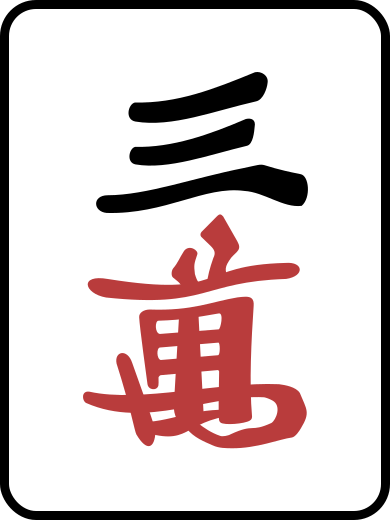
The 3m or the 9m. All three off-suit tiles are loose, and each cut keeps the same 10 tiles, so the order costs nothing. Manzu is the bigger group: after the 3m and the 9m, your river still allows a souzu flush or a pinzu one. Cut the 6s first and your second discard, a manzu, already says pinzu.
Find every wait in a one-suit hand
Chinitsu tenpai hides winning tiles. Pick one-suit hands in the wait quiz and tap every tile that wins until you stop missing the hidden one.
Open the wait quiz