
Two cuts leave you on the same 8 tiles, ready to declare . On a non-dealer's one pays 2,000 and the other 3,900, and the only difference is which end of a 1234 you threw away. and (all simples) are 1-han yaku that grow out of the shapes good tile efficiency keeps anyway. Most of the time they show up without a plan. Your part, as with the in Playing the dora, is to stop throwing them away on cuts that gain you nothing.
Pinfu comes with two-sided shapes
Pinfu is 1 , and it asks four things of the finished hand:
- Closed. One or removes it.
- Four runs (sequences). A triplet removes it, even one of simples.
- A plain pair. Not a value tile: no dragon, no , and no . A number pair is fine, and so is a guest wind, a wind that is neither your seat wind nor the round wind.
- A two-sided finish. The winning tile completes a (two-sided wait). A (middle wait), a (edge wait), a (tanki), or a (shanpon) doesn't count.
Read that list as a building plan and most of it takes care of itself. Two-sided shapes are already your fastest partial sets, as Ryanmen, kanchan, penchan showed. Keep them, and your sets come out as runs and your wait comes out two-sided. Pinfu arrives with the shape. The pinfu page has its fu and prices.
Pick a head pinfu allows
The head is the condition you most often have to choose. You're North in the East round, so the South is a guest wind for you. You hold no dora, and you've drawn a second .
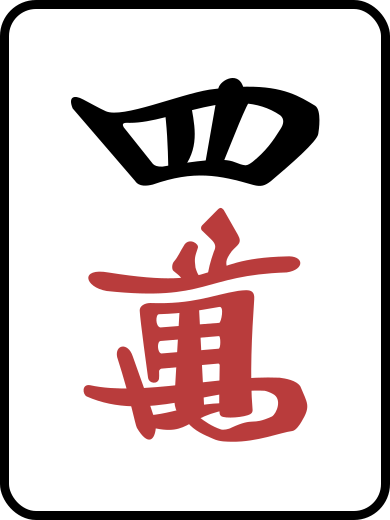
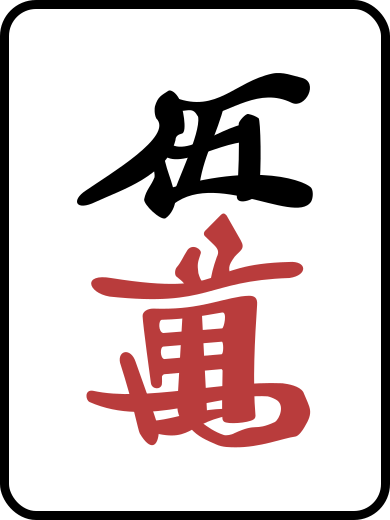
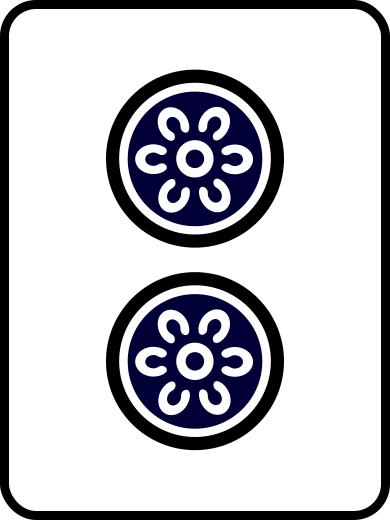
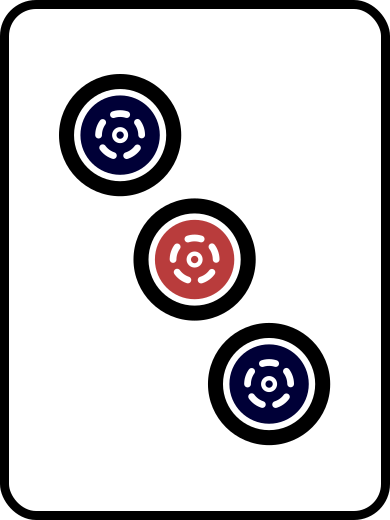
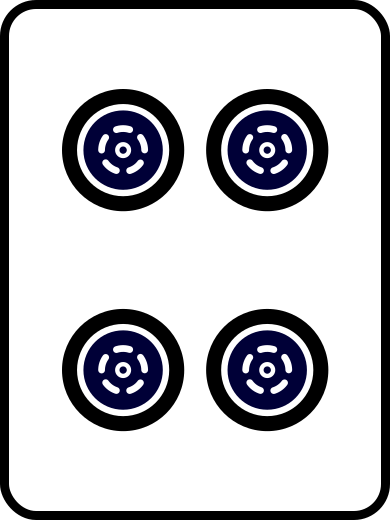
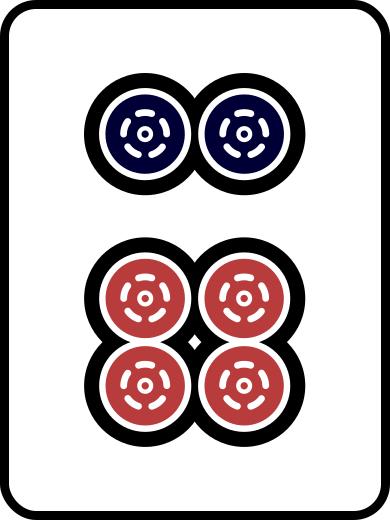
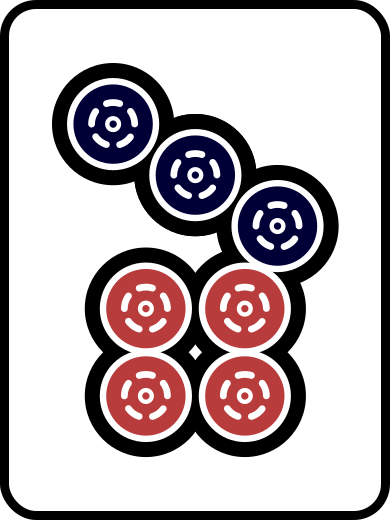
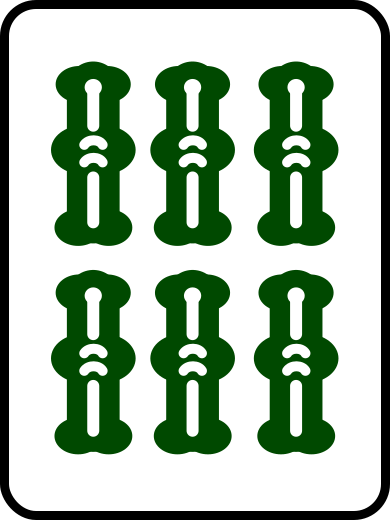
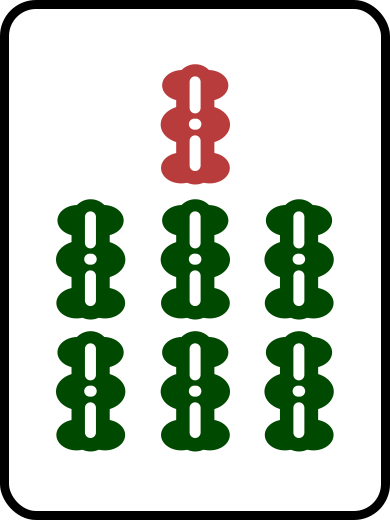
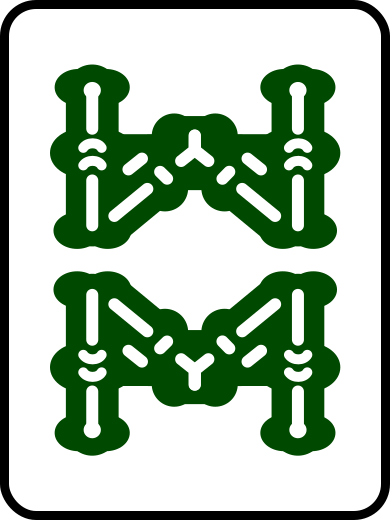
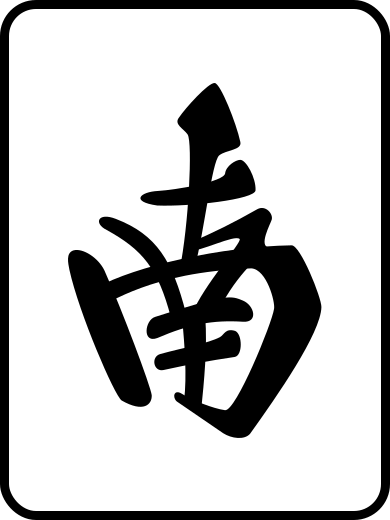

You're 1-shanten with two pairs and room for one head. Break either pair and you keep the same 16 tiles: the 3m, 6m, 5p, and 8p, each one leaving a two-sided wait.
Throw the white back. A guest-wind head is legal for pinfu, so a riichi on that wait pays 2,000 by ron: riichi and pinfu. Keep the white pair as your head instead and the same wait pays 1,300. A dragon head rules out pinfu, and a value pair adds fu, so the closed ron counts 40 (Fu without counting). A number pair works like the South, and a pair of 2s to 8s can add tanyao too.
A dragon pair earns its place in a slow hand, because a pon of the third copy is a yaku (Yakuhai: keep the pair, pon the first one). This hand is one useful draw from a two-sided riichi. Keep the white pair and a pon turns your only pair into a set, so you need a new head and stay 1-shanten. In a pinfu-shaped hand with no pair yet, keep a loose (isolated) guest wind over a loose dragon, because its second copy makes a head pinfu allows, as What to discard first showed.
You're not the dealer, and you declared riichi two turns ago, so ippatsu is gone. You hold no dora, and the ura dora adds nothing.Dora 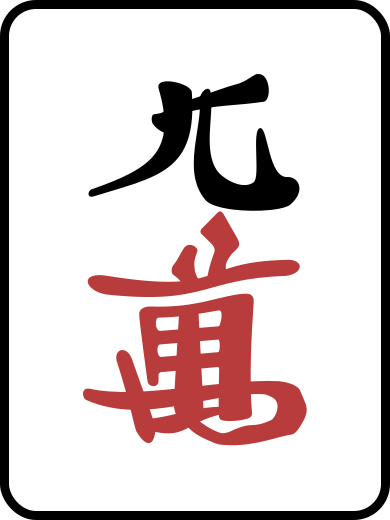
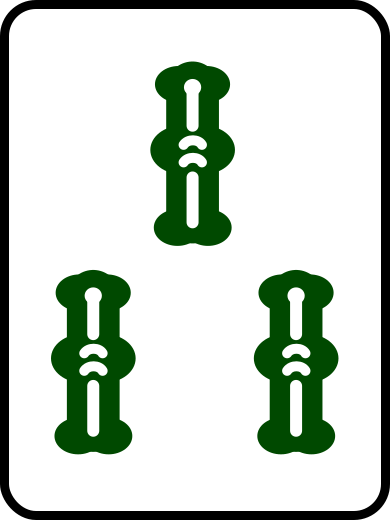
Another player discards the 5s. What does your ron pay?
Show the answerHide the answer
2,600
2,600. The wait is two-sided and every tile is a 2 to 8, so you have riichi and tanyao, but the 666p triplet leaves three runs instead of four: no pinfu. A closed ron without pinfu counts 40 fu (20, plus 10 for the closed ron and 4 for a closed triplet of simples, rounded up), and 2 han 40 fu pays 2,600. 3,900 is the dealer's price or a pinfu the hand doesn't have, 5,200 adds that han and keeps the 40 fu, and 2,000 is riichi and pinfu without tanyao.
Tanyao: let the 1s, 9s, and honors go first
Tanyao needs every tile in the finished hand to be a 2 to 8: the sets, the pair, and the winning tile. It's 1 han, open or closed, and the tanyao page has the rule in full. Tenhou's main ranked lobbies and Mahjong Soul both allow open tanyao, and Open tanyao covers those calls later in the course. Here the hand stays closed.
Tanyao needs no plan, only an order. When most of your hand is already 2s to 8s, let the honors, 1s, and 9s go first, from your first discards on. When two cuts keep the same tiles, cut the one that holds a 1, a 9, or an honor. Neither rule applies to a tile with value of its own: a dora, or a tile that's part of another yaku, stays.
Watch for the shapes that carry a 1 or a 9:
- A penchan, 12 or 89, always finishes with a terminal in it.
- A kanchan at the edge, 13 or 79, does too.
- A ryanmen of 23 or 78 is two-sided, but one of its two winning tiles is a 1 or a 9.
- A ryanmen from 34 to 67 never touches one.
Runs work the same way. Here's the choice from the top of the page. You're not the dealer, you hold no dora, and at 1-shanten you draw the 2m, which completes 234m.
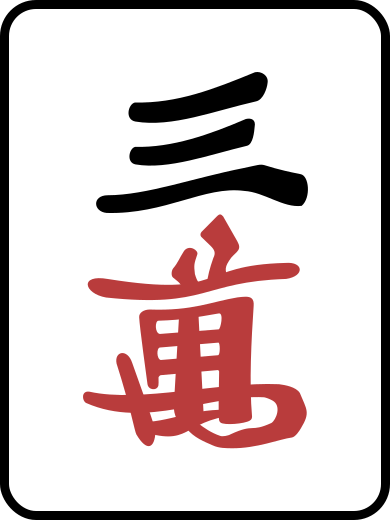
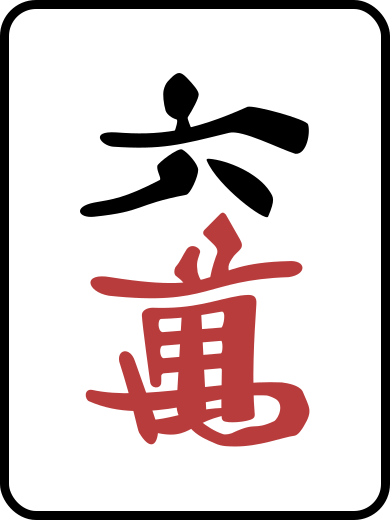
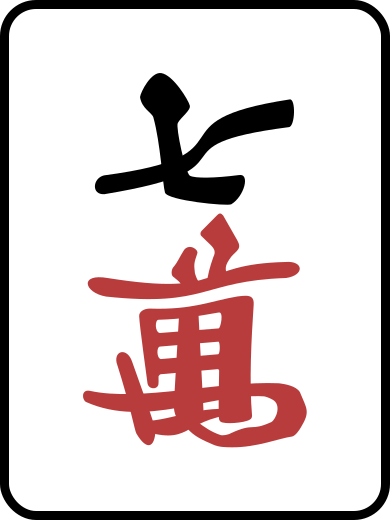
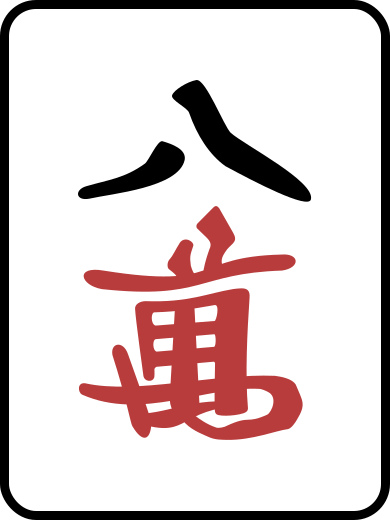

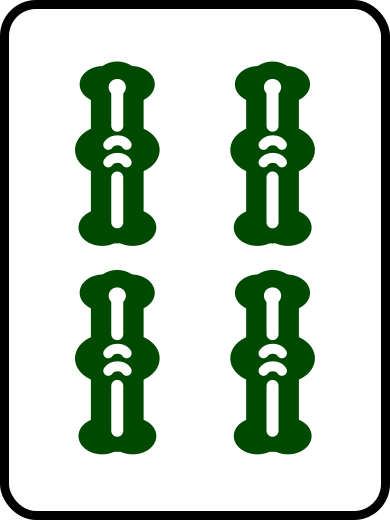
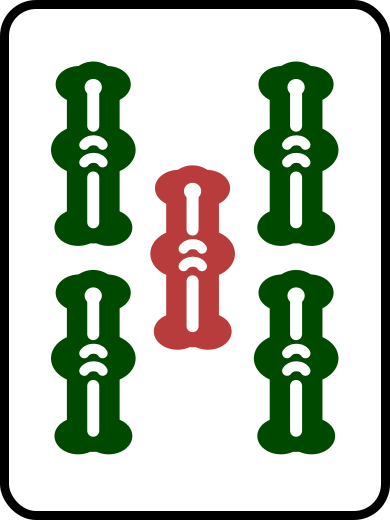
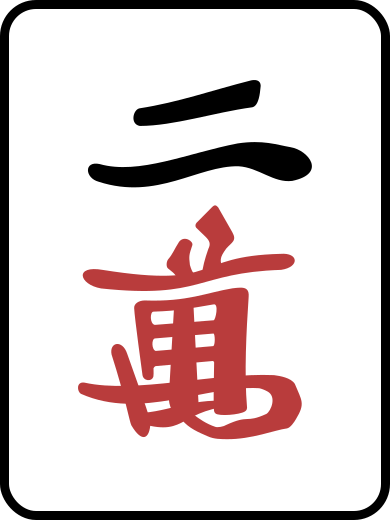
Now whichever end of the 1234p you cut, you're tenpai on the 3s and 6s, 8 tiles. Cut the 1p. Every tile left is a 2 to 8, and the 45s waits two-sided with the 88s as your head: riichi, pinfu, and tanyao, 3,900 by ron. Cut the 4p and the 123p keeps a 1 in the hand: riichi and pinfu, 2,000. Same tiles, nearly twice the price, decided by which end of one run you let go.
Sometimes the tanyao cut costs a tile or two. Then count both sides, as Speed or value does: the tiles you give up, and how many of your wins gain the han. The last practice problem below is one of those.
Riichi, pinfu, tanyao, and a dora: the everyday 7,700
Up to 4 han, each han about doubles the price (What a hand pays). That's why two small yaku matter: riichi and a dora make a 2-han hand, and pinfu and tanyao turn it into a 4-han hand.
| The hand | Dealer | |
|---|---|---|
| Riichi and one dora, on a kanchan | 2,600 | 3,900 |
| Riichi and pinfu | 2,000 | 2,900 |
| Riichi, pinfu, and tanyao | 3,900 | 5,800 |
| Riichi, pinfu, tanyao, and one dora | 7,700 | 11,600 |
Win the last row by tsumo and adds a fifth han: a , 2,000/4,000, or 4,000 all for the dealer. The score calculator prices any other mix.
None of those han cost a call or an odd shape. Riichi needs a closed tenpai, a dora only has to be in the hand when you win, and pinfu and tanyao come from the two-sided, middle-tile shapes you'd keep for speed. That's the everyday 7,700, and it's why breaking ties toward the middle tiles is worth making a habit.
Iipeikou: a bonus you notice, not a plan
Iipeikou is 1 han for two identical runs in one suit, and like pinfu it's closed only. It grows out of shapes you keep anyway. is a run plus a ryanmen that takes a 2m or a 5m, and the 5m makes : 345m twice. Its runs are still runs, so sits inside pinfu hands, and riichi, pinfu, tanyao, and iipeikou is 4 han, 7,700 with no dora at all. Notice it when it comes. Don't break a better shape to chase it.
Practice
You're not the dealer in these, and riichi is the plan for each hand.
East 2, turn 5. You hold no dora.Dora
What do you discard?
Tap the tile you would cut.
Show the answerHide the answer
Cut
Cut the 9m. The 4s made a sixth block, one more than a hand can use (Too many blocks or too few), and the 79m kanchan is the weakest and the only one with a terminal. Cutting it keeps 20 tiles, every one leading to a two-sided wait in 2s to 8s; 16 of them keep pinfu too, while a 7m or a 7s makes a triplet. Cut the 6m or the 7m instead and you keep 16, with the 9m still in the hand.
East 3, turn 8. You hold no dora.Dora
The 5m makes you tenpai. Which tile do you cut?
Tap the tile you would choose.
Show the answerHide the answer
Cut the 9s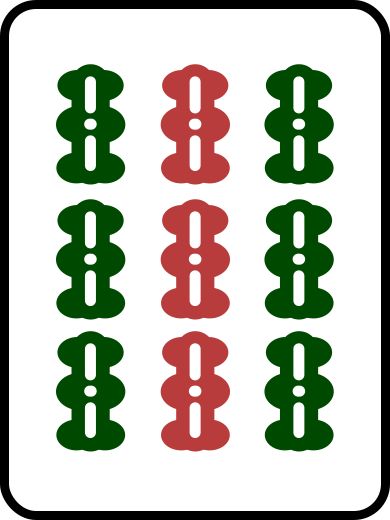
Cut the 9s. The 3s, 6s, and 9s each leave you tenpai on the 4m and 7m, the same 8 tiles, with the 88p as your head, so all three have riichi and pinfu. Only the 9s cut leaves every tile a 2 to 8, so every ron adds tanyao: 3,900. Cut the 3s or the 6s and the 789s puts a 9 in every win: 2,000 for the same wait.
East 1, turn 6. You hold no dora.Dora
The 2m gives you a third ryanmen, one block more than you need. Which tile do you cut?
Tap the tile you would choose.
Show the answerHide the answer
Cut the 2m
Cut the 2m (the 3m does the same): you keep 15 tiles, one fewer than the widest cuts because your 678p holds a 7p, and every tenpai is two-sided in 2s to 8s, so every ron is riichi, pinfu, and tanyao, 3,900. Cut the 5p, 6p, or 8p to keep the 23m and you keep 16, but the 23m can finish on a 1m, so half your wins pay 2,000 and the 16 tiles average 2,950. Breaking the 34s keeps 15 and leaves the 23m in. The first practice problem in Speed or value turned this trade down at 4 tiles; at one tile, take it.
Send ties to the middle
The efficiency trainer ranks every discard by tile acceptance and counts every tied widest cut as right. When two cuts tie, pick the one that drops a 1, a 9, or an honor that isn't a dora, then find it in the ranking.
Open the efficiency trainer