
The five-block method finds your discard when the hand holds exactly five blocks. Plenty of hands hold six, with no slot for the last one, or four, with loose tiles everywhere. The count still settles the cut: with six, a whole block goes once nothing is loose, and with four, the loose tile that can grow stays.
Count your blocks before you count tiles
A standard winning hand is five blocks, four sets and a pair, as the five-block method showed. A block is a set, a , or a pair. A loose (isolated) tile belongs to none of them: nothing sits within two of it in its suit, or it's an honor with no partner.
What a loose tile is worth depends on how many blocks you already hold. A draw that joins it starts a new block, and a new block only helps when the hand has a slot for it.
| Blocks | A draw that joins a loose tile | What you cut |
|---|---|---|
| Four | Makes your fifth block: it's acceptance | Loose tiles from the outside in. A value honor outlasts a 1 or 9 |
| Five | Makes a sixth block: no help | Loose tiles, in the same order |
| Six | Makes a seventh block: no help | Loose tiles and spares, then the weakest partial set, whole |
Your head is one block, and a second pair is another: a partial set waiting on its third copy.
Six blocks: drop the weakest one whole
Six blocks means one partial set has no slot. Japanese players have a name for that, taatsu over (ターツオーバー): more partial sets than the hand can use. Once every tile belongs to a block and no spare is left over, the surplus block is your cut, and it goes whole. Don't pull a tile out of a better block to keep it.
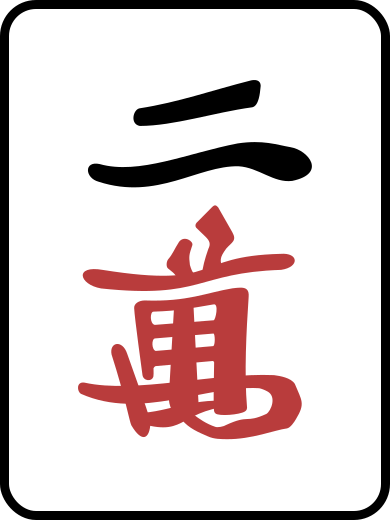
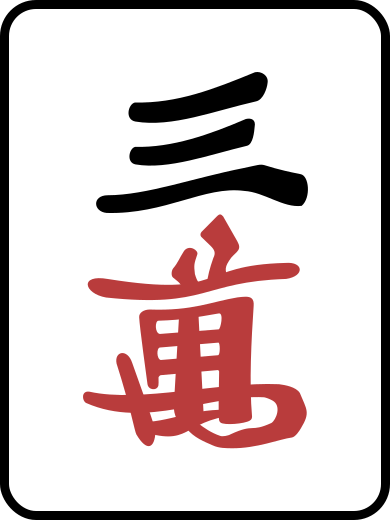
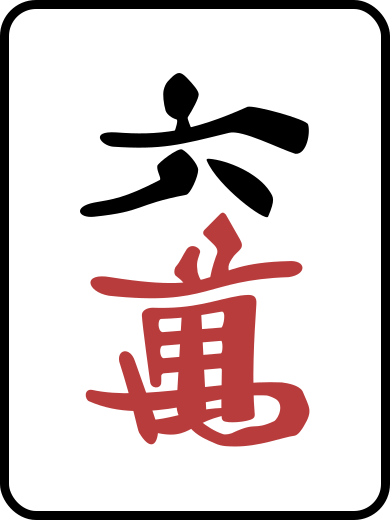
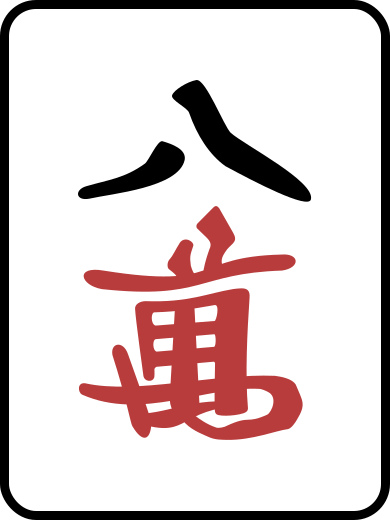
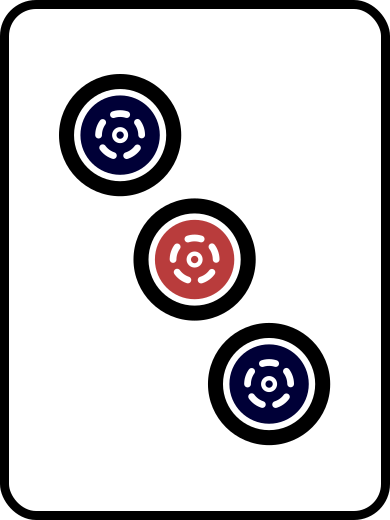
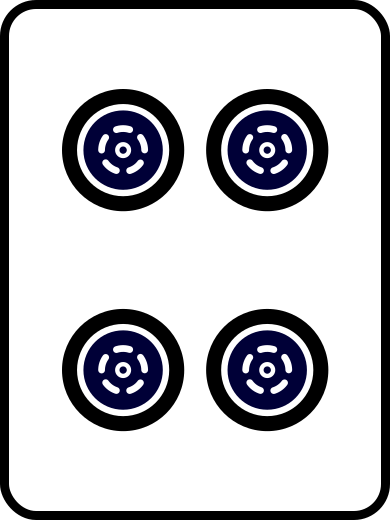
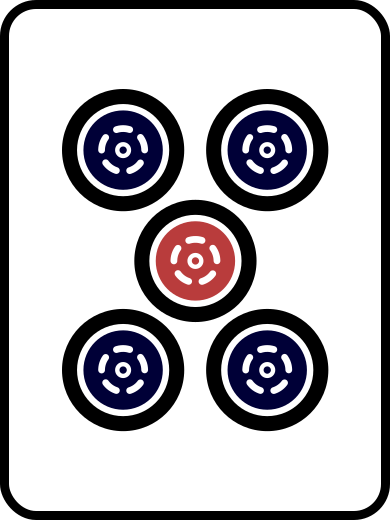
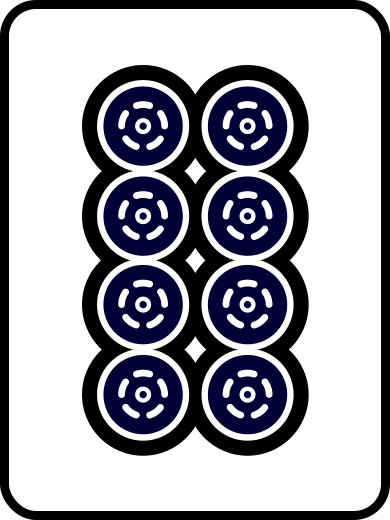
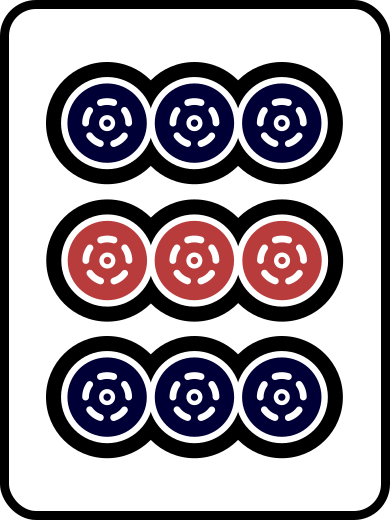
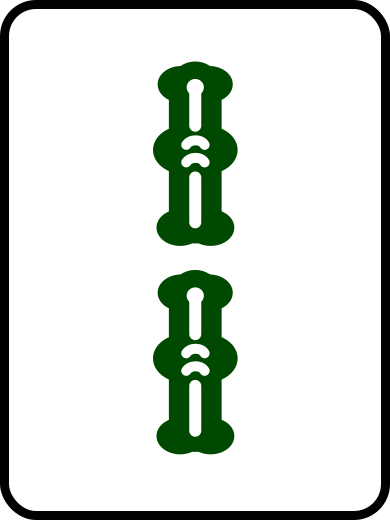
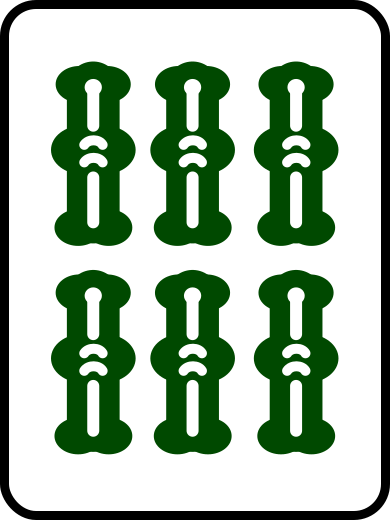
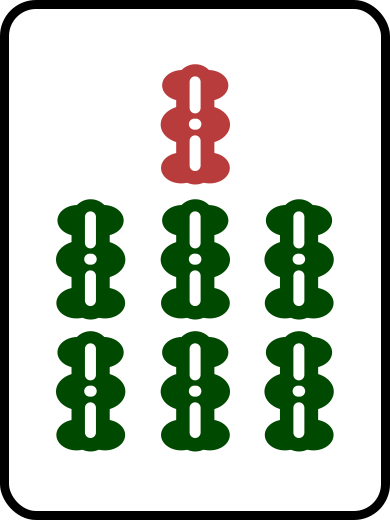
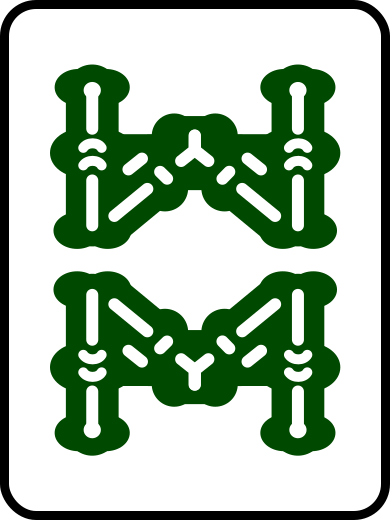
The 8s finishes 678s. You now hold two sets (345p and 678s), the 22s head, and three partial sets: the (two-sided), the (middle), and the (edge). Two sets and a head leave room for two partial sets, so one of the three goes.
- Break the 89p: 12 tiles, the 1m, 4m, and 7m.
- Break the 68m: 12 tiles, the 1m, 4m, and 7p.
- Break the 23m: 8 tiles.
The ryanmen stays. The two one-sided shapes tie, so ask what each can still become. A 5m turns the 68m into 568m, which holds the two-sided 56m. No single draw does that for the 89p, as the partial-sets lesson showed. Drop the penchan.
Three questions find the weakest block
The first two settle most hands, in that order. The third can overrule both.
- How many tiles finish it? Count the copies you haven't seen, as Tile acceptance showed. A third pair is the cheapest block of all, at 2 tiles, as the pairs lesson counted.
- Can it grow? A ryanmen beats an inner kanchan (35, 46, 57), which beats an outer one (13, 24, 68, 79), which beats a penchan.
- Is it worth something? A block holding a red five or the , or the one your yaku needs, can be worth keeping over a wider one. Speed or value covers when.
The first question overrules the second. Say two 7m already sit in the discards. The 68m has 2 tiles left and the 89p still has 4, so break the kanchan instead: 12 tiles against 10. The hand analyzer opens this hand with those two 7m entered.
Cut the outside tile first
A block leaves one tile at a time. Cut the tile nearer the edge first: the 9p of the 89p, or the 8m of the 68m. Both keep the same count now. What differs is the tile left behind. With the 8p left, a 7p draw makes the two-sided 78p, the 68m becomes the block to drop, and you climb to 16 tiles. A leftover 9p can't make a ryanmen with any draw. If nothing joins the leftover, it's your next cut.
What do you discard?
Tap the tile you would choose.
Show the answerHide the answer
Cut the 2p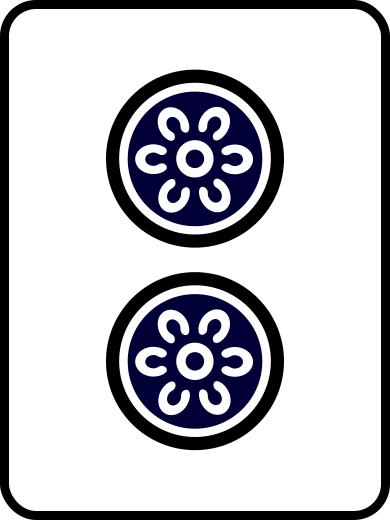
Cut the 2p. The 9m finished 789m, so you hold six blocks: 789m, the triplet, the 88p head, and three partial sets for two slots, the 34m, 24p, and 35s. Breaking either kanchan keeps 12 tiles and breaking the 34m keeps 8, so a kanchan goes. Growth picks which: the 35s turns two-sided with a 2s or 6s, the 24p only with a 5p, and a leftover 4p with a 3p or 5p. That's 16 such draws after the 2p, and 12 after the 4p, 3s, or 5s.
Four blocks: keep the tile that can grow
With four blocks, one of them your head, the hand is a partial set short. A draw that joins a loose tile fills the gap and moves you a step closer to . So every loose tile carries acceptance, and the counts from What to discard first rank them: an honor joins with 3 tiles, a 1 or 9 with 11, a 2 or 8 with 15, and a 3 to 7 with 19. The honor order from the same lesson makes one exception: a dragon or a value wind usually outlasts a loose 1 or 9.
You're South in East 1, so the North is a guest wind.
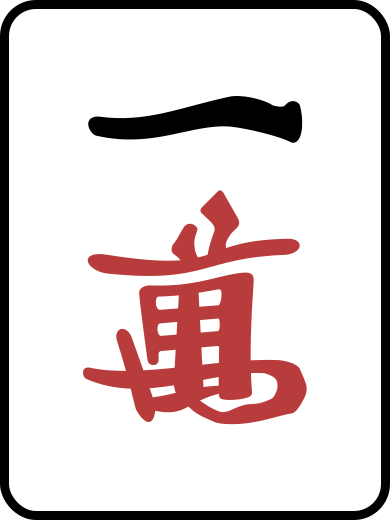
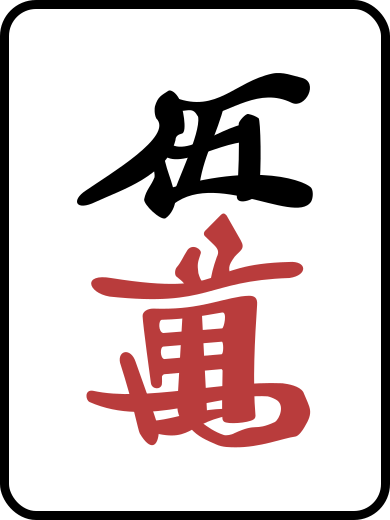
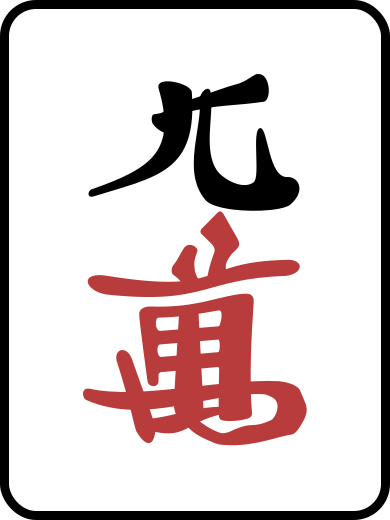
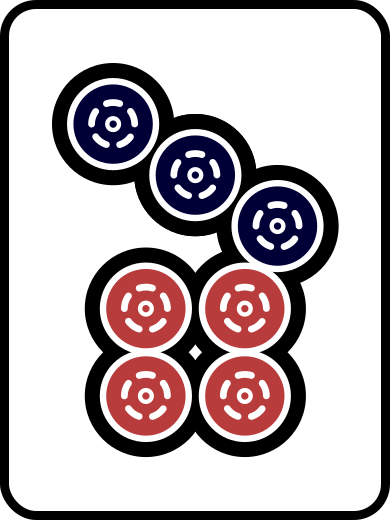
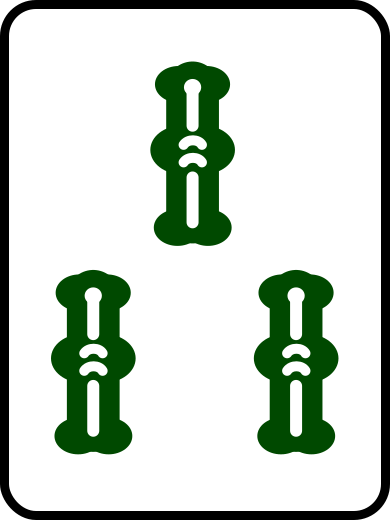
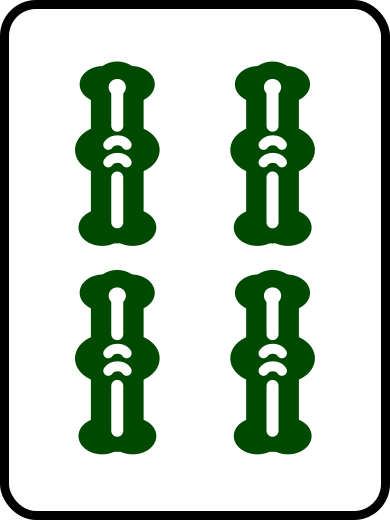
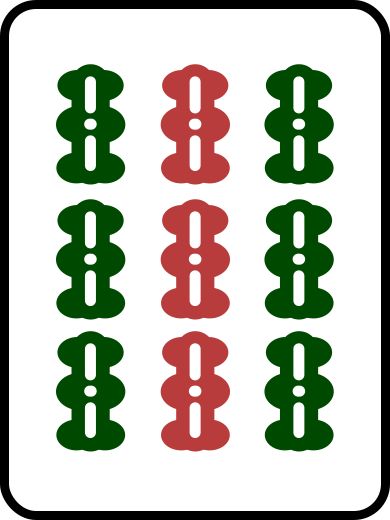
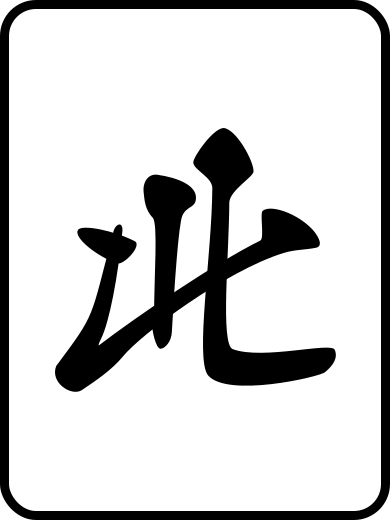
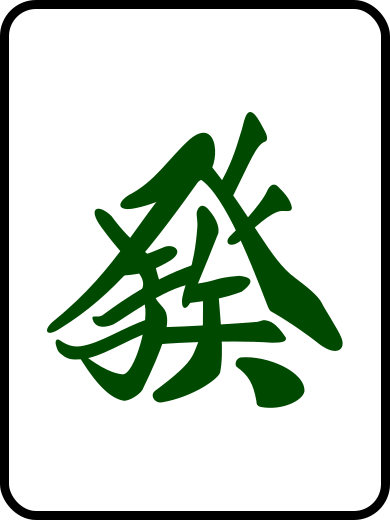
Four blocks: 234p, the 77p head, the 34s ryanmen, and the 79s kanchan. Five loose tiles: the 1m, 5m, 9m, North, and Green.
- Cut the North or the Green: 50 tiles.
- Cut the 1m or the 9m: 46.
- Cut the 5m: 42.
- Break any block: you fall to 4-shanten.
The honor order cuts the North first. By count the Green would go next, 50 tiles against 46, but the order cuts the 1m and 9m first: one Green gives you a set and a yaku together, and a terminal grows at best into a kanchan or penchan. The 5m stays longest, the hand's best chance at a fifth block.
Being short never makes a block cheap: break one, even a penchan, and you lose a step. It does make spares valuable. With five blocks, the 6m of 3456m is a spare, a tile hanging off a finished set, and it adds nothing. When you're a block short, every from the 1m to the 8m turns 3456m into a set plus a partial set, the 28 tiles Shapes worth keeping counted.
What do you discard?
Tap the tile you would cut.
Show the answerHide the answer
Cut
Cut the 1m or the 9m. You hold four blocks, 456m, 234s, the 99p head, and the 12p penchan, so each loose tile is worth the tiles that join it. Cut either terminal and you keep 51, the 5p 47, and the 7s 43. The 5p brings 15 tiles, not 19, because the 3p that would join it already finishes the penchan. Cutting the 1p or the 2p drops you to 3-shanten: with four blocks you need every one.
The same tile, opposite answers
Go back to the four-block hand, where the 5m was the last loose tile to go. Swap the North and the Green for a 2m and an 8m. The 1m and the 9m become two penchans, and the count jumps to six.
What do you discard?
Tap the tile you would cut.
Show the answerHide the answer
Cut
Cut the 5m. The 8m made the 89m, so you hold six blocks: 234p, the 77p head, and four partial sets with room for three, the 12m, 89m, 34s, and 79s. A draw next to the 5m would build a seventh block, so the 5m adds no tiles now. Cut it and every partial set stays: 20 tiles. Cut the 8m back, or drop the 12m or the 79s, and you keep 16. The 5m might grow into a better shape later, but keeping it costs 4 tiles today, so the loose tile goes before the penchan.
The 5m didn't change. The count around it did: with four blocks, keeping it over the North was worth 8 tiles, and with six it adds none. Both hands follow one rule, loose tiles before blocks. With four, cut the loose tile with the fewest partners, value honors aside. With six, cutting a loose tile costs no tiles, so cut them in the usual order. Once they're gone, the weakest block goes whole.
Practice
Count the blocks before you pick a tile.
What do you discard?
Tap the tile you would cut.
Show the answerHide the answer
Cut
Cut the 6s. Before the draw you held six blocks: 234p, the North pair as your head, and the 12m, 67m, 79p, and 46s. The 3s makes 346s, the two-sided 34s plus a 6s spare that adds nothing. Cut the 6s and all six blocks stay, with the 46s kanchan now the 34s ryanmen: 24 tiles. Drop the 12m penchan to keep the 346s, or cut the 3s straight back, and you keep 20. Drop a whole block only when every tile has a job.
What do you discard?
Tap the tile you would cut.
Show the answerHide the answer
Cut
Cut the 9m. You hold four blocks, 345m, 789p, the 55s head, and the 89s penchan. The 6m makes 3456m, which takes 28 tiles when you're a block short. The 9m adds only its own pair, since the 7m and 8m that would join it already join the 3456m. Cut the 9m and you keep 60 tiles, the 1p 52, the 2s 48, and the 3m or the 6m only 43. In a five-block hand that 6m would add nothing. Here it's worth more than any loose tile.
The efficiency trainer on Normal and Hard deals 2- and 3-shanten hands with no loose tile, and six blocks are common there. Name the surplus block before you tap, then check the ranking. The daily problem never makes a loose tile the answer either. For four-block hands, paste a deal from your own games into the hand analyzer.
Count blocks, then cut
The trainer deals 2- and 3-shanten hands on Normal and Hard. They hold no loose tile, so you're choosing which spare or block goes. Say your block count before each cut, then check where your tile ranks.
Open the efficiency trainer