
Sort a fresh hand and much of it comes in twos: a here, a there, a at the edge. Each needs one more tile to become a set, but they aren't equal. Eight tiles finish the 67m. Four finish the 46p or the 12s. That gap tells you which part of your hand to give up first.
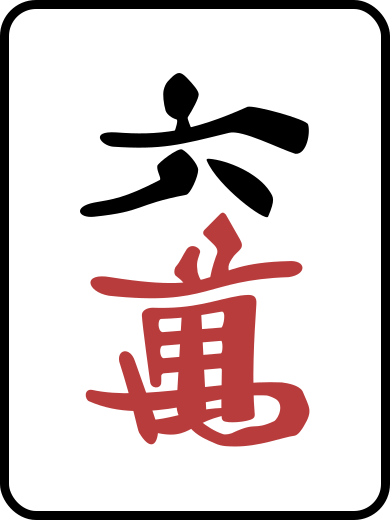
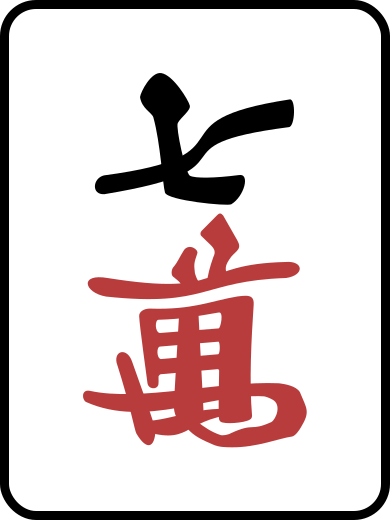
The four partial sets and what finishes them
Almost every winning hand is four sets and a pair, as How to play riichi mahjong showed, and Your first ranked games told you to keep the tiles close to a set. Those are partial sets. A , or taatsu (搭子), is two tiles that need one more to become a set. There are four kinds.
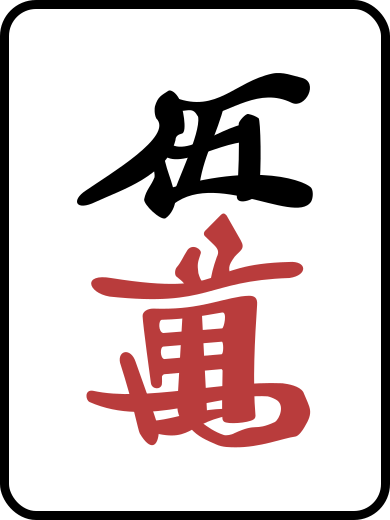

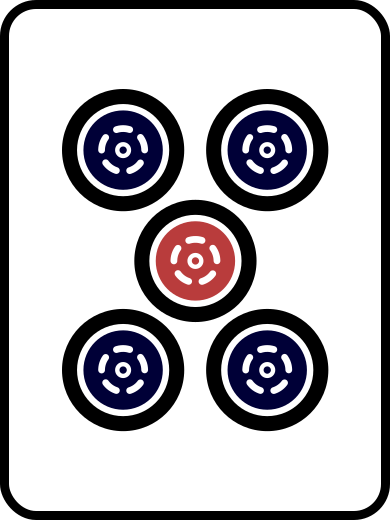
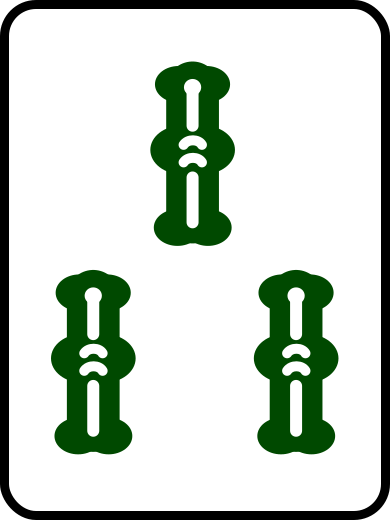
Count the same way every time: four copies of each tile that finishes the shape, minus the copies in your own hand. That's why the pair gets 2. You already hold two of its four.
Two details catch new players. Any two in a row from 23 up to 78 is a : 23 waits on the 1 and the 4, and 78 on the 6 and the 9. Only 12 and 89 are , because nothing sits below the 1 or above the 9. A , two tiles with a one-tile gap, can sit anywhere from 13 to 79.
The pair is the odd one out. As a partial set it's the narrowest, with 2 tiles left to finish it. But every standard hand needs exactly one pair, the head, so a pair has a second job the other three can't do. How many pairs to keep gets its own lesson.

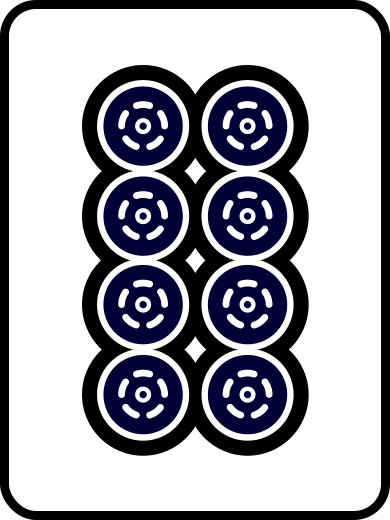
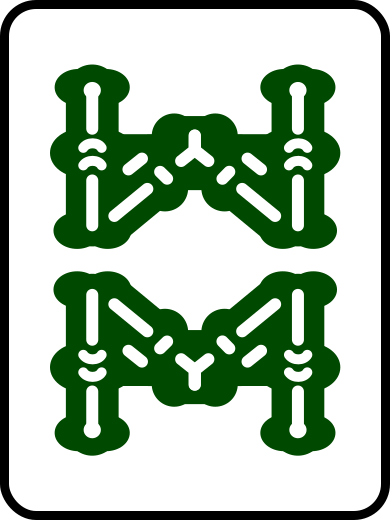
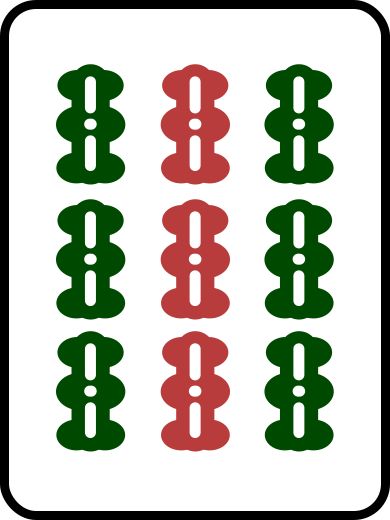
What are the waits?
Show the answerHide the answer
Waits 
The 23s is a ryanmen, not an edge shape. A makes 123s and a makes 234s, so 8 tiles win. The rest is done: 234m, 678p, and 789s are sets, and 11p is the pair. Had the last partial set been 12s, the same hand would win on the 3s alone, 4 tiles.
Why a ryanmen is worth two of the others
Eight tiles against four makes each draw twice as likely to finish a ryanmen as a kanchan or a penchan. And you can either tile that finishes it when the player on your left discards one.
The gap matters most once you're tenpai. Your wait is usually the last partial set you have left, as in the problem above. Keep a ryanmen to that point and you wait on 8 tiles. A kanchan or a penchan leaves you on 4. Mahjong waits covers the waits wider than a ryanmen.
That gap shows up in results. The wait win rate page follows the first of each hand in Tenhou's top room (). It counts turns from zero, so its turn 8 is your ninth discard. A riichi on a two-sided wait at that turn wins 52% to 57% of the time. A one-sided wait on a 5, like the 46 kanchan, wins 33%.
Good shapes pay more, too. Pinfu, one of the everyday yaku from the yaku lesson, needs a two-sided wait, so a hand that ends on a kanchan or a penchan can't have it. And every penchan holds a 1 or a 9, so the set it makes rules out tanyao.
What do you discard?
Tap the tile you would cut.
Show the answerHide the answer
Cut
The 8p made a set, and now every tile belongs to something: two sets, the 99m pair, the 34p and 67s ryanmen, and the 12s penchan. Cut from the penchan and both ryanmen stay, with 16 tiles that finish a set: 2p, 5p, 5s, and 8s. Break the 34p or the 67s instead and you keep 12. The 1s and the 2s score the same here, so either is right. Leave the 99m alone: it's your only pair, and breaking it leaves the hand hunting for a new head.
Kanchan beats penchan because it can grow
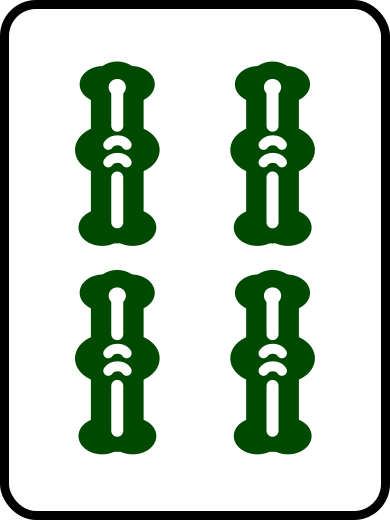
A kanchan and a penchan both wait on 4 tiles, so the finishing count can't split them. The draws that don't finish them can. Add a 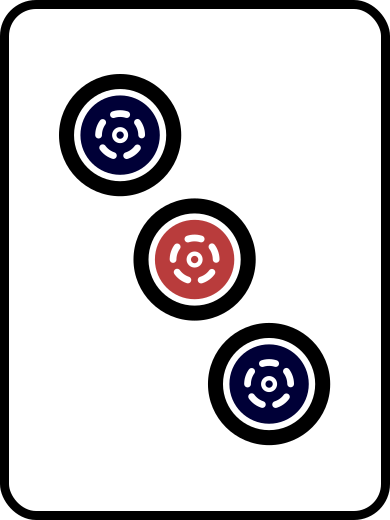 to and you hold
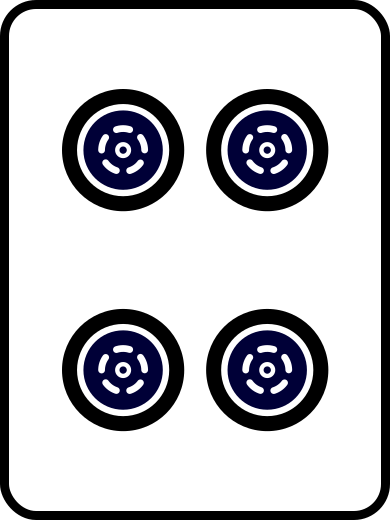
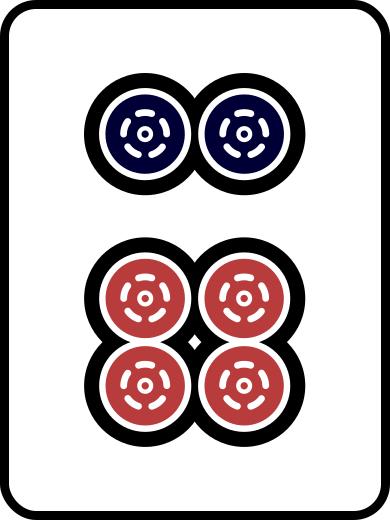 , with the ryanmen inside it and the 6p spare. A
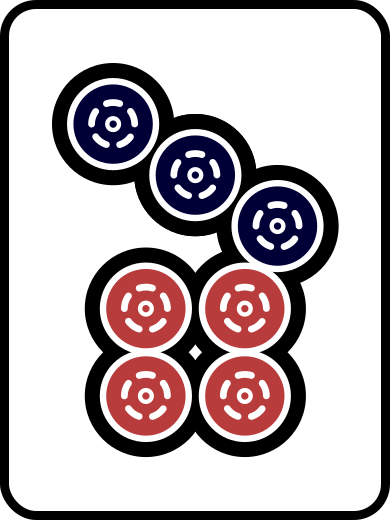 works from the other side: holds the ryanmen .
Kanchans differ among themselves. An inner kanchan (35, 46, or 57) can grow from either side. An outer kanchan (13, 24, 68, or 79) grows from one side only, the side away from the edge: 79 needs a 6, and 68 needs a 5.
No single draw turns a penchan into a ryanmen. Add a to and you hold 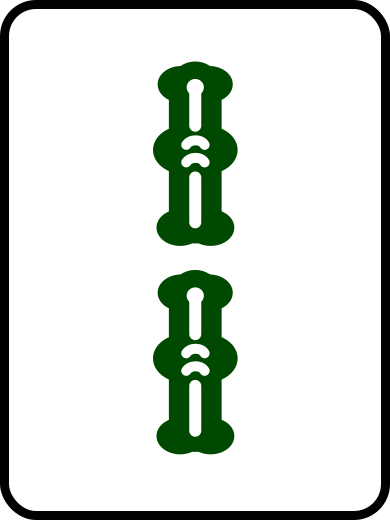 . The 24s inside it is an outer kanchan, still a one-sided wait. Only a 5s on top of that gives you the ryanmen 45s, so the penchan needs two exact tiles, a 4s and a 5s, before it becomes a ryanmen.
| Shape | Finished by | Turned into a ryanmen by |
|---|---|---|
| Inner kanchan: 35, 46, 57 | 4 tiles | 8 tiles (46 takes a 3 or a 7) |
| Outer kanchan: 13, 24, 68, 79 | 4 tiles | 4 tiles (79 takes a 6) |
| Penchan: 12, 89 | 4 tiles | none in one draw |
So while you build a hand, the order runs ryanmen, inner kanchan, outer kanchan, penchan: first by the tiles that finish a shape, then by the draws that turn it into a ryanmen.
That order is for building, while a draw can still change a shape. Once you're and about to riichi, growth no longer counts, and the tile you wait on decides. On the same win rate page, a one-sided wait on a 3 or a 7, the tile a penchan waits on, wins 38% at turn 8. A wait on a 4, 5, or 6, where an inner kanchan waits, wins 33% to 36%. Choosing your wait covers that step.
Visible tiles can also change the order. If three 5m and three 8m already sit in the discards, your 67m has 2 tiles left, and a kanchan with all four of its tiles unseen is worth more. Tile acceptance shows how to count what you can see.
East 2, turn 5.
What do you discard?
Tap the tile you would choose.
Show the answerHide the answer
Break the penchan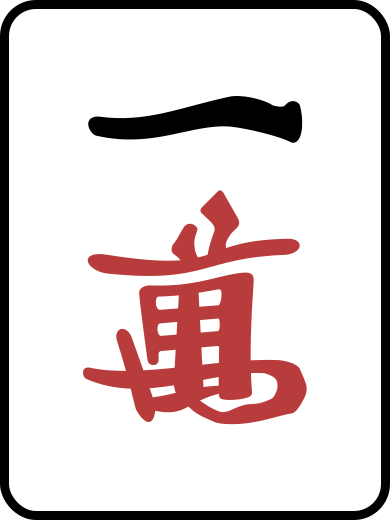
Break the penchan, from either tile. All four cuts from the 12m and the 46p keep 12 tiles that finish a set: 8 for the 34s ryanmen, plus the 5p if the kanchan stays or the 3m if the penchan does. With the count tied, keep the shape that can grow: a 3p or a 7p, 8 tiles, turns the 46p into a ryanmen, and no single draw does that for the 12m. Cut the 4p or the 6p and the spare pin tile can still grow, but you've kept the one shape here that can't. I cut the 1m, since the 2m left behind can still become the ryanmen 23m.
Label every tile before you discard
Before you choose a discard, give every tile a label: set, partial set, pair, or loose tile. A pair is a partial set too, but it gets its own label because it can also be your head. A loose (isolated) tile has nothing within two of it in its suit, or it's an honor with no partner. You'll also see it called a lone tile. It needs two more tiles to become a set: one to make a partial set, then one to finish it.
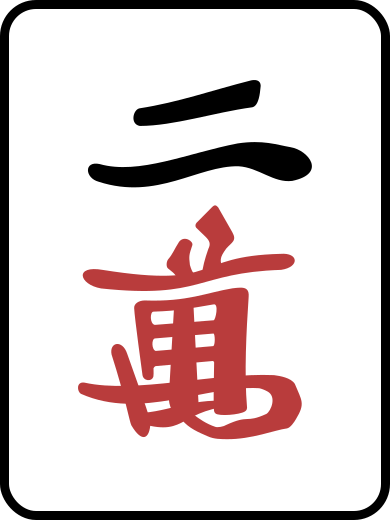
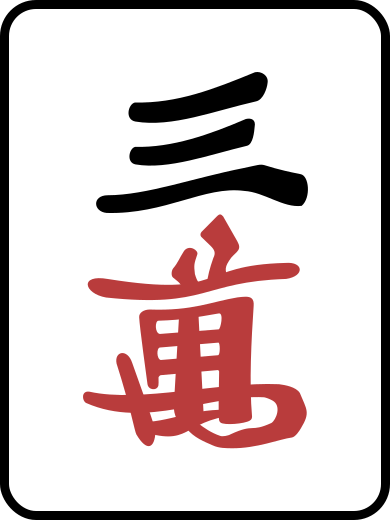
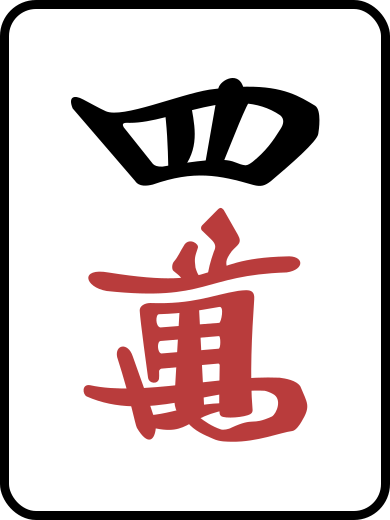
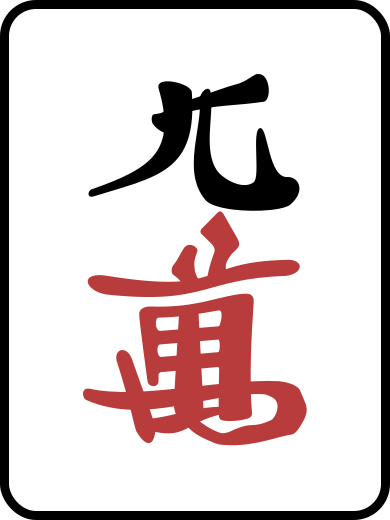
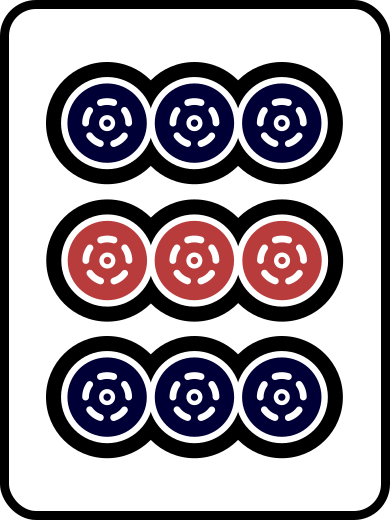
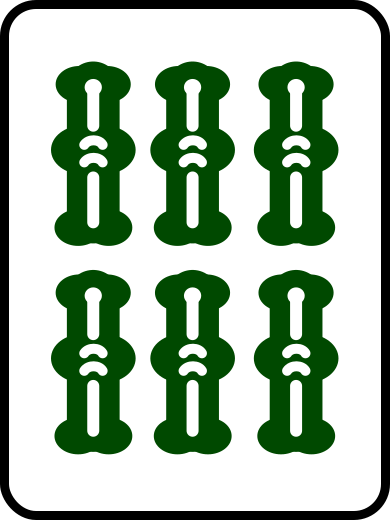
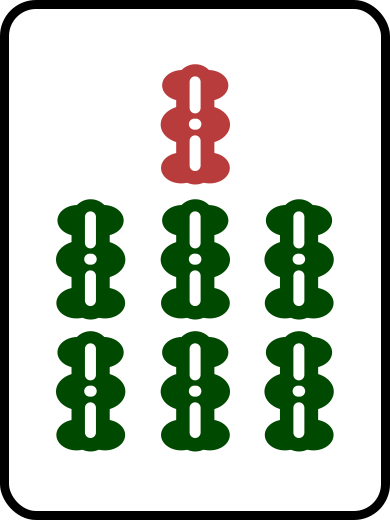
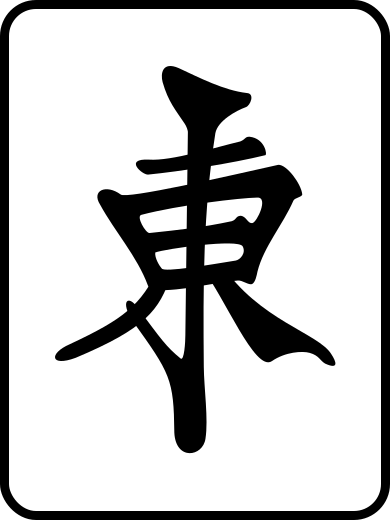
Label the finished sets first, then the partial sets and the pair, then check what's left over.
- Set: 234m. It's done, so leave it alone.
- Partial sets: the ryanmen (8 tiles), the kanchan (4), and the penchan (4).
- Pair: , your head .
- Loose tiles: the and the East wind . Nothing sits near either one.
The 6p and the 9p are three apart, too far to work together, so the kanchan and the pair are separate parts. Between them, the three partial sets have 16 tiles that finish a set. Open the hand in the hand analyzer and it lists the same 16: the 5p, 3s, 5s, and 8s, four of each. The 9p isn't on the list. A third 9p makes a set but uses up your only pair, so the hand gets no closer to tenpai.
With the parts labeled, your next discard narrows to the two loose tiles. What to discard first puts loose tiles in order. A loose terminal or honor usually goes before any partial set, even a penchan, because the penchan is one tile from a set and the loose tile is two. When nothing is loose, break the weakest partial set on the ranking and keep your only pair. With three pairs, a pair is usually the part to break. How many pairs to keep explains why.
What do you discard?
Tap the tile you would cut.
Show the answerHide the answer
Cut
Read the parts: one set (789p), the 99m pair, four partial sets (34p, 67s, 46m, 12s), and one loose tile, the 1m. Cut the 1m and all four partial sets stay, with 24 tiles that finish one of them. Cut a penchan or kanchan tile and you keep 20. Break a ryanmen and you keep 16. The penchan is the weakest partial set, but it needs one tile, and the 1m needs two.
Name the shapes, then cut
The efficiency trainer deals a hand and ranks every discard by how many tiles would move it closer to tenpai. Name each partial set and loose tile before you tap, then check whether the top cut came from the weakest part.
Open the efficiency trainer