
and are worth 2 in a , enough to turn a 2,000-point into 7,700. That price tempts players into holding tiles for a yaku that never comes, and the same players walk past it when it costs nothing. One count tells the two cases apart: how many tiles the yaku costs you right now.
What the two han buy
Sanshoku (three colored runs) is the same run in all three suits, like 234m, 234p, and 234s. Ittsu (pure straight) is 123, 456, and 789 in one suit. Both are 2 han closed and 1 han after a call.
| The hand already has | Without | With sanshoku or ittsu |
|---|---|---|
| Riichi | 1,300 | 5,200 |
| Riichi and | 2,000 | 7,700 |
| Riichi, pinfu, and one | 3,900 | 8,000 |
| Riichi, pinfu, and two dora | 7,700 | 12,000 |
On a cheap hand the yaku multiplies the price by about four. Once the hand holds dora, the limits from What a hand pays cap the gain: 3,900 only doubles, and 7,700 grows by about half.
Spot sanshoku from two of its pieces
Sanshoku hides because its runs sit in three suits, and hands are easy to read one suit at a time. When two suits hold the same three numbers, as a run or a , look in the third suit for the last piece.
You draw the 6s for .
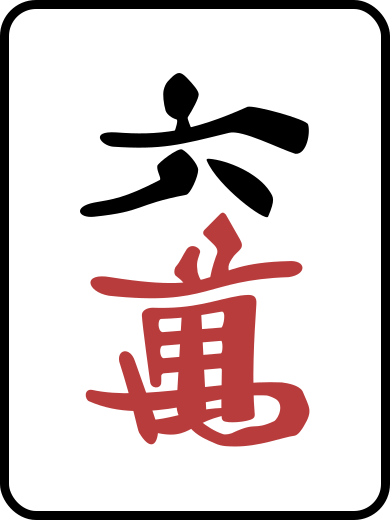
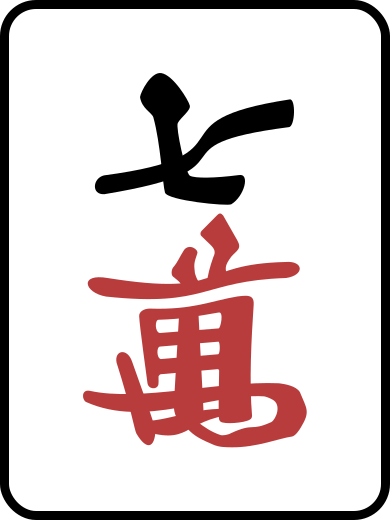
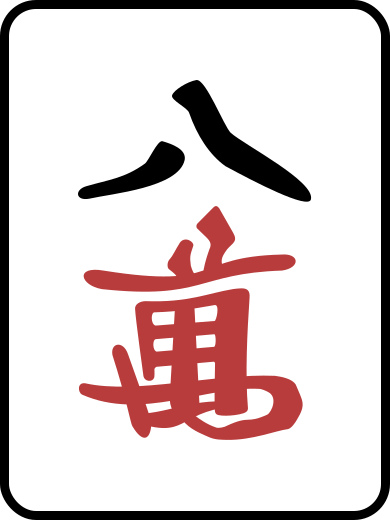
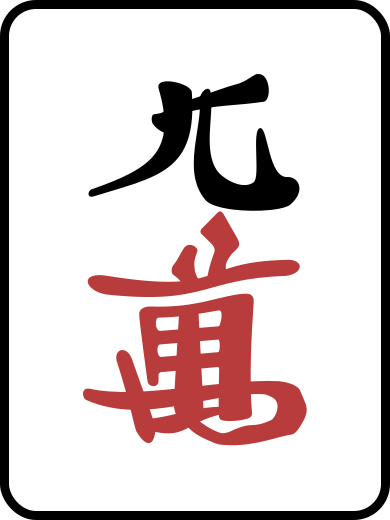
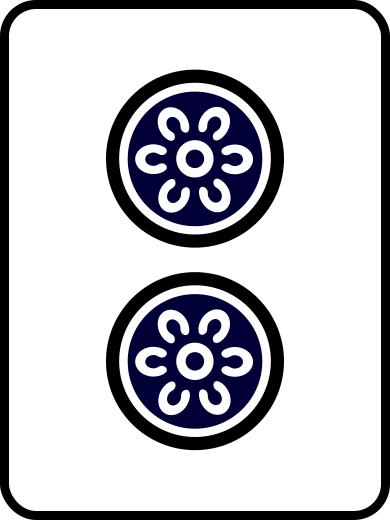
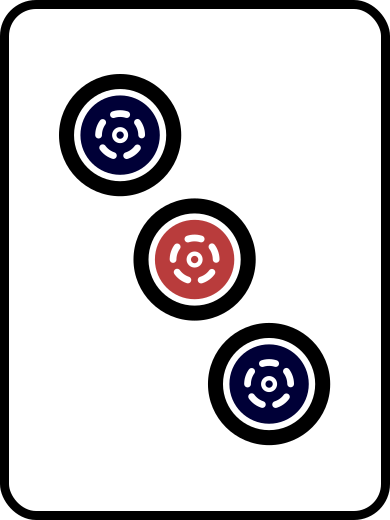
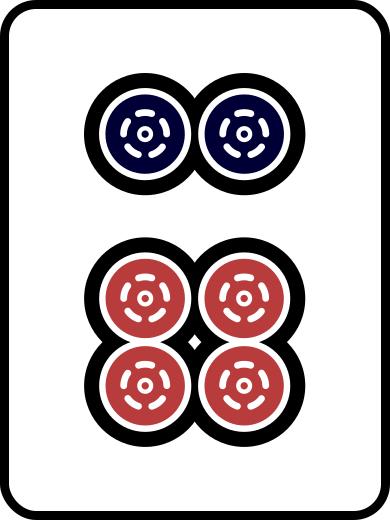
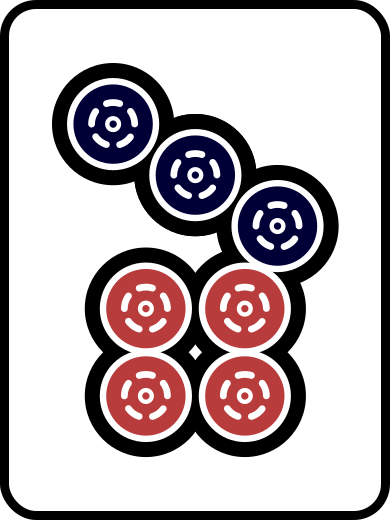
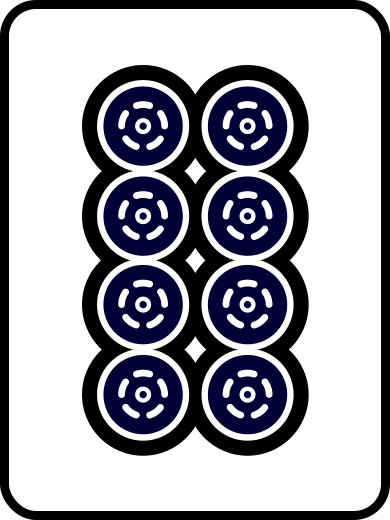
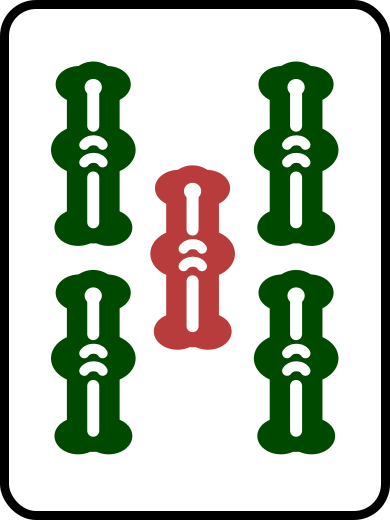
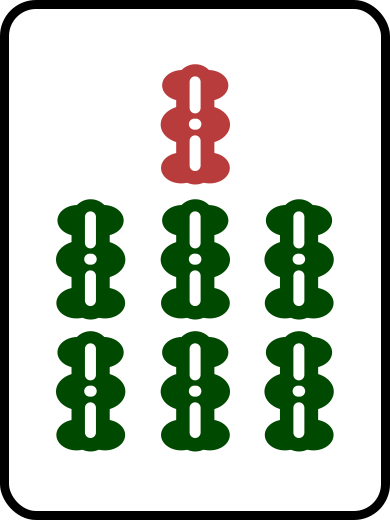
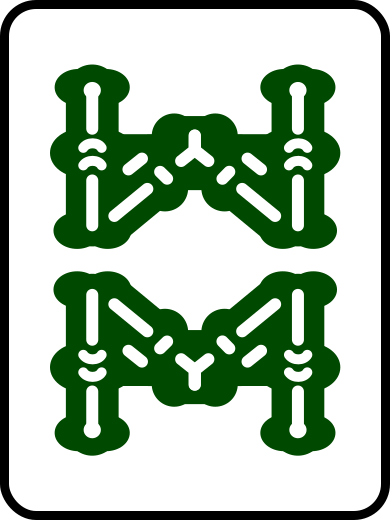
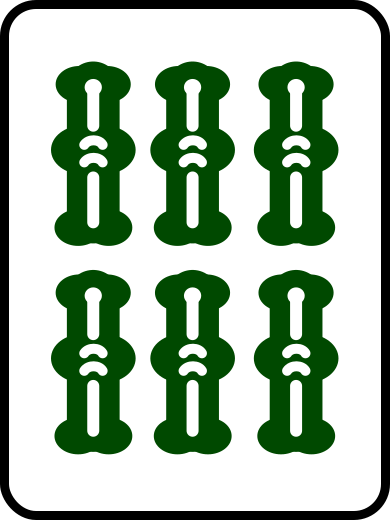
The 5678s has a spare tile, and you pick which end goes. Cut the 8s and you keep 567s. Cut the 5s and you keep 678s, and now 678 sits in all three suits. Both cuts wait on the 1p and the 4p, the same 8 tiles. With riichi, the 567s hand pays 2,000 by and the 678s hand 7,700. When both cuts keep the same wait, the slide is free, so check whenever a draw lands next to a run.
The shape of the third piece decides how often the yaku arrives. Here the hand holds 567 in two suits, and the third piece is a (two-sided shape), .
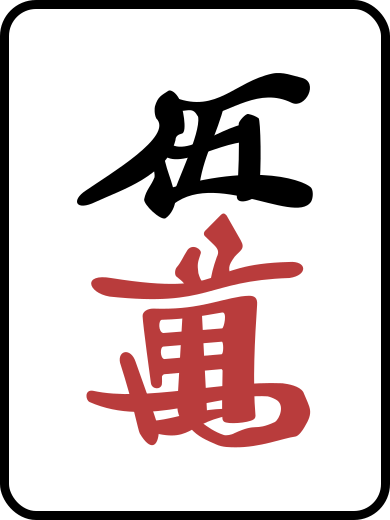
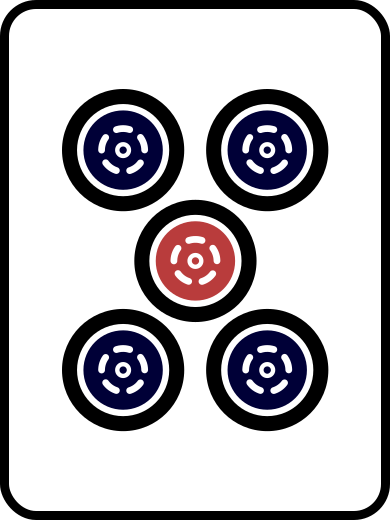

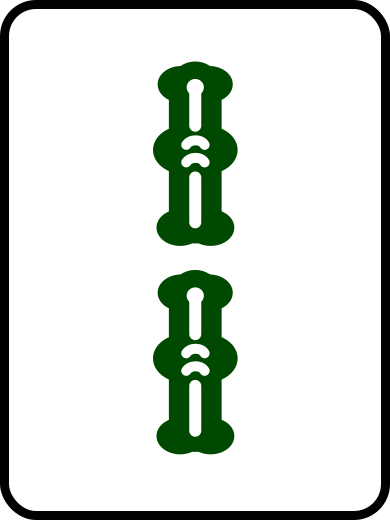
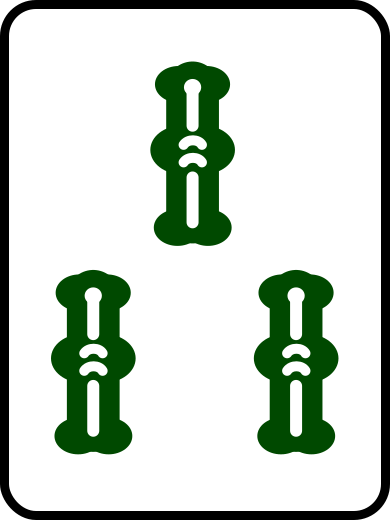
The 67s waits on the 5s or the 8s, and only the 5s makes sanshoku. Swap it for a and the hand waits on the 6s alone, with sanshoku on every win. With riichi, the 67s pays 7,700 on a 5s and 2,000 on an 8s: 8 tiles that average 4,850. The 57s is a (middle wait), which costs pinfu, so it pays 5,200 at 40 fu, on 4 tiles. Multiply price by tiles, the way Speed or value does: 38,800 against 20,800. The two-sided shape wins because it serves speed and the yaku at once. Against a two-sided wait with no sanshoku, 8 tiles at 2,000, the kanchan would win: 20,800 to 16,000.
Keep it when it costs two tiles or fewer
Speed or value spends up to a quarter of your tiles on a han that every win collects. An unfinished sanshoku pays only when the right tile arrives, so it gets less. My rule of thumb: count what keeping the third piece costs. Two tiles or fewer, with your good-shape draws intact, keep it. More than that, it has to earn it. A few more tiles can pay in a hand with no dora and no other yaku, but never break a two-sided shape to keep a single tile, or pay extra for one that can only grow into one-sided shapes.
The cheapest place for the third piece is a spare tile. At a 1-shanten with two sets, two partial sets, and a pair, your 13th tile adds nothing to your count. With two ryanmen, a sanshoku tile there costs only safety: the spare could have been a safe tile. With a weak partial set, count first: the spare may be the tile that fixes it.
A floating tile costs a little more. In a kuttsuki 1-shanten you hold three sets, a pair, and floating tiles, and one floating tile becomes your last partial set. You draw a 3s.
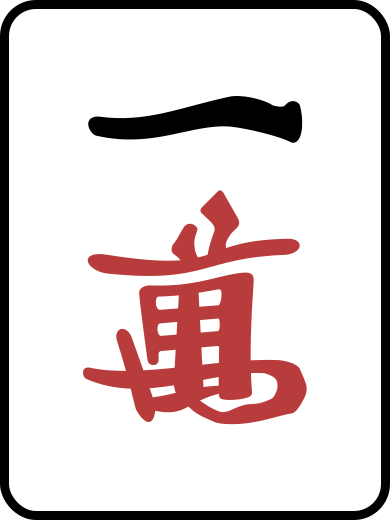
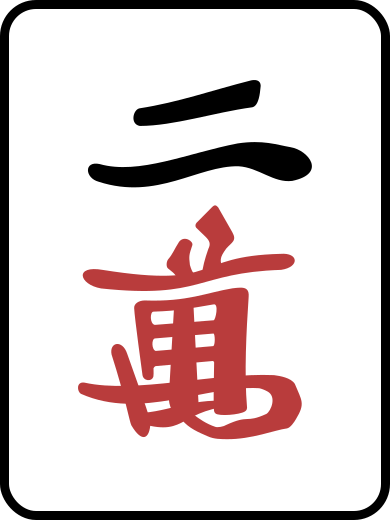
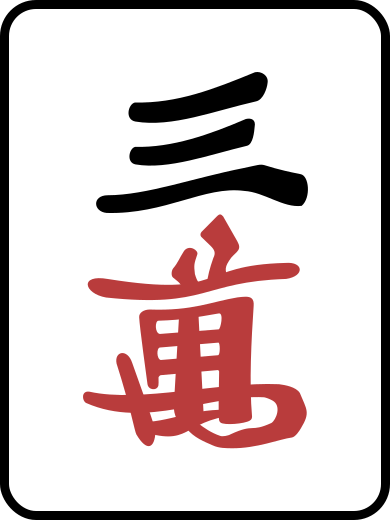
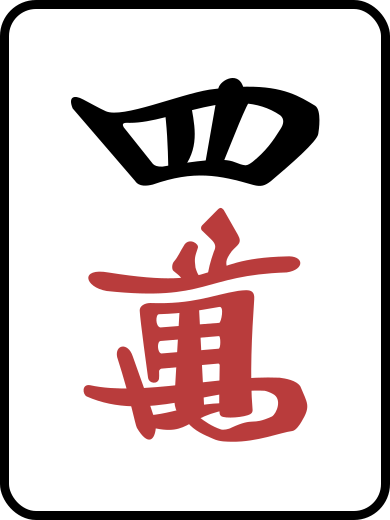

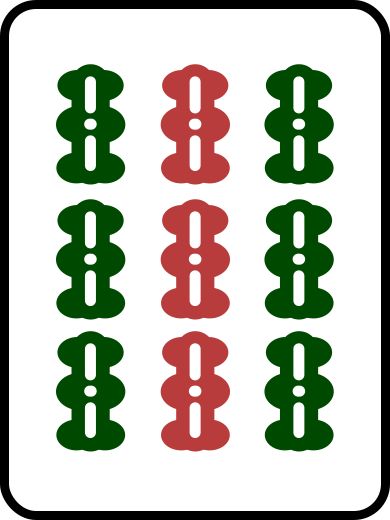
The 123m and 123p want a 123s, and the 3s starts it. It looks like your weakest floating tile, since the 4m touches the 123m and the 6789s has a spare end. Throwing the 3s back keeps 42 tiles. Cutting the 9s or the 6s keeps 41, but 17 of those are good-shape draws, the ones that end on a wait of two or more kinds with five or more tiles left (a ryanmen, a , or wider), against 16. One tile is cheap: cut the 9s and keep the 3s. Now a 2s gives a two-sided wait with sanshoku on the 1s, and a 1s a kanchan with sanshoku on every win.
Change the hand and the same idea costs far more. You draw a 9s.
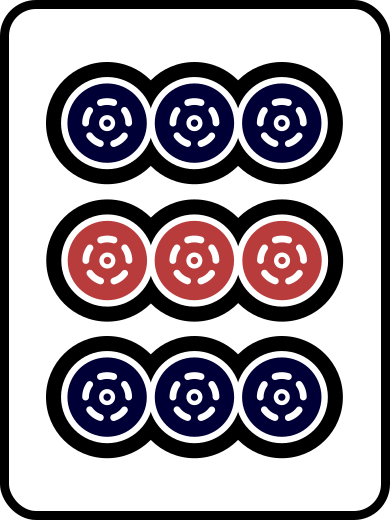
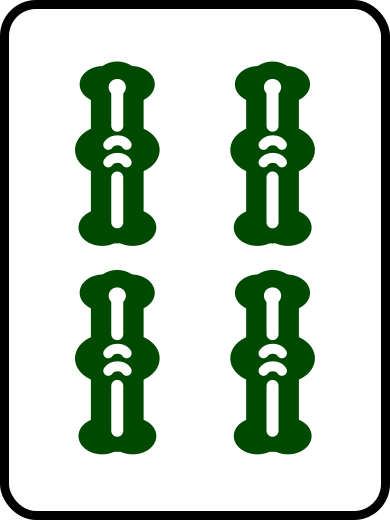
The 789m and 789p want a 789s. But a 9 grows only into a (edge shape), a , or a pair, never a two-sided wait. Throwing it back keeps 48 tiles, 24 of them good-shape. Keeping it means cutting the 5m: 33 tiles, 16 good-shape. Fifteen tiles is far past two. Throw the 9s back. A 1s in place of the 3s above would cost 9 tiles.
Ittsu: split one suit into thirds
Cut one suit into thirds: 1-2-3, 4-5-6, and 7-8-9. Ittsu is one run in each. Think of it when two of the thirds hold a run and the last third holds any tile. It always holds a 1 and a 9, so it never comes with .
The tile in the empty third sets the price:
- A 5 between a 123 and a 789 is the best case. A 4 or a 6 beside it makes a two-sided shape with ittsu on one side.
- Any other tile but a 1 or a 9 comes next. One draw makes a two-sided shape with ittsu on one side, another a one-sided shape that makes ittsu certain: an 8 beside 123456 becomes 78 or 89, and a 4 between 123 and 789 becomes 45 or 46.
- A 1 or a 9 grows only into one-sided shapes or a pair, the same trap as the 9s above.
When the ittsu is still two or more draws away and keeping it costs a two-sided shape, or the draw that would make one, play the shape and take pinfu. That's the call in this site's Tenhou game review, where the ittsu needed four exact draws.
Chanta and junchan: a terminal or honor in every block
Chanta () asks every set and the pair to hold a 1, a 9, or an honor, with at least one run: 2 han closed, 1 han open. With no honors at all it becomes junchan (): 3 han closed, 2 open, in place of chanta rather than on top of it.
The only runs that qualify are 123 and 789, so the partial sets that lead to them are 12, 89, 13, and 79, all one-sided, plus 23 and 78, which make chanta on one side only. Building one on purpose in a closed hand costs speed every turn. Notice it at the end instead.
The 78m waits on the 6m or the 9m. A 6m is riichi and pinfu, 2,000. A 9m makes 789m, so every block holds a 1 or a 9 and there's no honor: riichi, pinfu, and junchan make 5 han, a of 8,000.
Steer for chanta in two cases only. One: it's the only yaku a slow hand can get, so it lets you call and . Open chanta usually pays 1,000 by ron for a : a way to finish a stuck hand, not to score. Two: it lifts the hand to mangan, the way junchan and sanshoku together are 5 han closed. A dragon pair already offers a faster yaku: pon the third copy. Don't bend that hand for chanta.
Practice
You're not the dealer, nobody has declared riichi, and riichi is the plan for each hand.
East 1, turn 6. No dora in your hand.
What do you discard?
Tap the tile you would cut.
Show the answerHide the answer
Cut
Cut the 3p. The 9m you drew touches the 678m, the 6s sits two above the 234s, and the 3p is loose (isolated). Cutting the 3p keeps 44 tiles, the most of any cut, and the 6s stays as the third piece of a 678 sanshoku. The 6s takes more than it looks: a 1s or a 4s also turns 2346s into a run plus a kanchan. Throwing the 9m back keeps 43, and cutting the 6s keeps 41 and ends the sanshoku. Here the widest cut and the yaku agree.
East 2, turn 5. No dora in your hand.
What do you do?
Tap the tile you would choose.
Show the answerHide the answer
Cut the 8m
Cut the 8m and keep the 8s. The two 8s do the same job: each sits beside a 456 and takes the matching draws in its own suit. Only the 8s can grow into ittsu, after a 7s or a 9s. Throwing the 8s back is the widest cut, 39 tiles. Cutting the 8m keeps 38, and both give 12 good-shape draws. The one tile between them is a 3: you hold a 3s, so three are left against four 3m. One tile for a 2-han chance is well inside the line. Cutting the 7p keeps 37, with only 8 good-shape.
East 2, turn 5. No dora in your hand.
What do you discard?
Tap the tile you would cut.
Show the answerHide the answer
Cut
Throw the 8s back. It's the same as the last problem, but here the 8s competes with two two-sided shapes, the 34m and the 78p inside 56778p, in a headless 1-shanten. Throwing it back keeps 33 tiles, 26 of them good-shape. Keeping it means breaking the 78p and dropping to 17. Sixteen tiles is far past two, it costs a two-sided shape, and the 8s still needs a 7s or a 9s before it's an ittsu shape.
Price the yaku in tiles
Paste a hand with two pieces of sanshoku or ittsu into the hand analyzer. Compare the widest discard with the best cut that keeps the third piece. If they're two tiles or fewer apart and the good-shape count holds, keep the piece.
Open the hand analyzer