
The same two-sided 3,900 can be a in South 1 and a dama (silent ) in South 3. A live tile can be a push from 4th and a fold from 1st. The scoreboard changes correct play long before , and two numbers decide how: the gap above you and the gap below.
Ranked play pays for places
How a game works showed the two ladders this course aims at. Tenhou counts your place and nothing else. Mahjong Soul counts your place, then adds or takes 1 rank point for every 1,000 points you finish above or below 25,000. Its place points add a room bonus for 1st and 2nd, an (placement bonus) of +15, +5, −5, and −15, and a 4th-place penalty that grows with your rank.
| Step | Tenhou, 4 , | Mahjong Soul, Expert 1, Gold |
|---|---|---|
| 4th to 3rd | 90 | 90 |
| 3rd to 2nd | 30 | 50 |
| 2nd to 1st | 45 | 50 |
Getting out of 4th is the biggest step on both ladders. On Tenhou, turning one 4th into a 3rd (90) is worth more than turning a 3rd into a 1st (75). On Mahjong Soul the two are close, 90 against 100. Points count a little on Mahjong Soul: even a 32,000 adds only 32 rank points, about a third of the step out of 4th.
The Tenhou rank calculator and the Mahjong Soul rank calculator run your own placement rates through each ladder. Leagues and tournaments that pay mostly for 1st change the right play, as Winning riichi mahjong shows.
Count the gap, not your score
Points move between players, so one hand moves several gaps at once. Pick the rival that matters, usually the player right above or below you, and count how far the gap between you moves. Here it is for two common hands, with you and the rival both non-dealers unless the row says otherwise.
| How you win | The gap moves by | 3 30 fu | |
|---|---|---|---|
| off another player | The hand | 3,900 | 8,000 |
| Tsumo | The hand plus the rival's share | 5,000 | 10,000 |
| Tsumo, and the rival deals | The hand plus the dealer's share | 6,000 | 12,000 |
| Ron off the rival | Twice the hand | 7,800 | 16,000 |
A ron off the rival is a direct hit (chokugeki). They lose what you gain, so the gap moves twice. A tsumo adds the rival's share to what you collect: a quarter of the total from a , half from the dealer. Every riichi stick on the table goes to the winner, 1,000 each. And someone else's tsumo moves your gap only when one of you deals: another player's mangan tsumo costs the dealer 4,000 and you 2,000.
Every row runs the other way too: when your rival wins, the gap moves against you by the same amounts.
The later the hand, the more the score decides
A lead is worth little early, with so much scoring still to come. The All Last post measures how far a typical score still moves from each hand to the end of the game, in Tenhou's top room ().
| Hand | Score still moves by | A 5,000 lead is |
|---|---|---|
| East 1 | 14,650 | 34% of that |
| South 1 | 10,123 | 49% |
| South 3 | 7,078 | 71% |
| South 4 | 4,831 | 103% |
In East 1 a 5,000 lead is a third of what's still to move, near noise. In South 3 it's most of it. So play the East round for points: there the best play for points is almost always the best play for your place. The exception is a player near zero: one can end the game, so any hand can be the last. From South 1, let the score tip tight decisions. By South 3 it decides most of them, and it can overturn a play that would be clear earlier. Here's one kind of hand under two scoreboards.
South 1, turn 7. You're 1st with 30,000, 5,000 ahead of 2nd. You're not the dealer, and nobody has declared. Tanyao, pinfu, and the dora: 3,900 without riichi.Dora 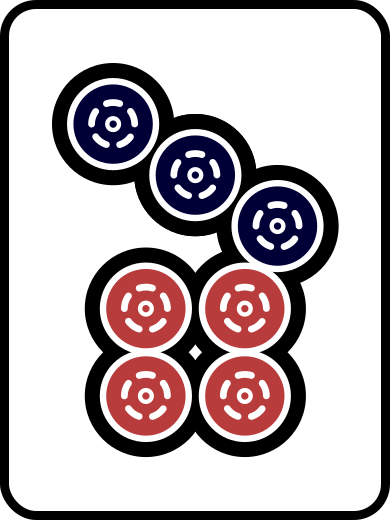
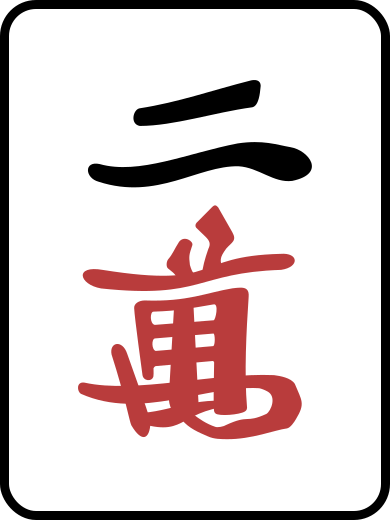
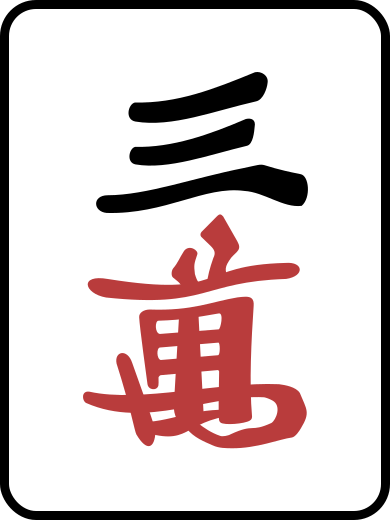
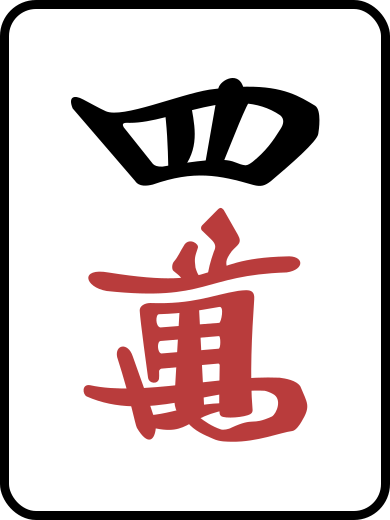
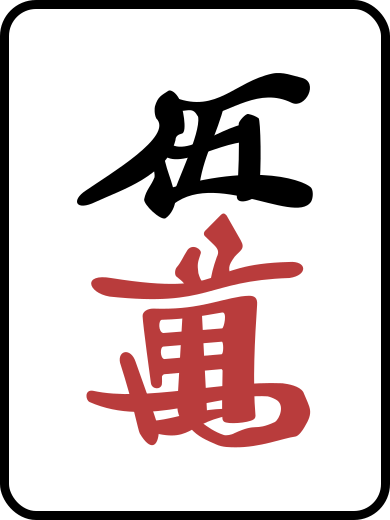
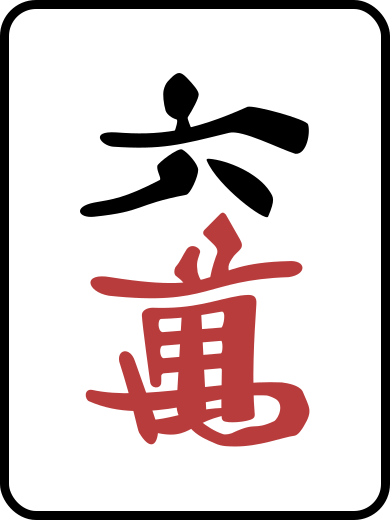
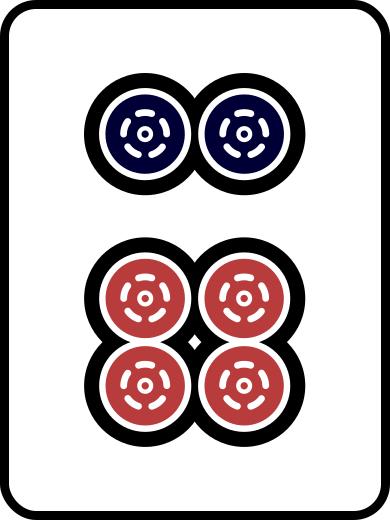
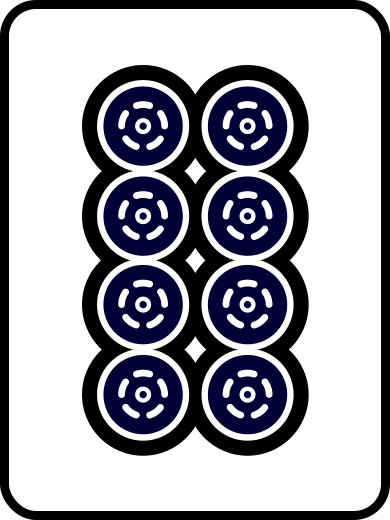
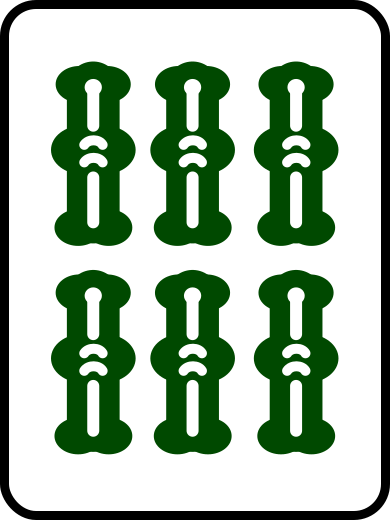
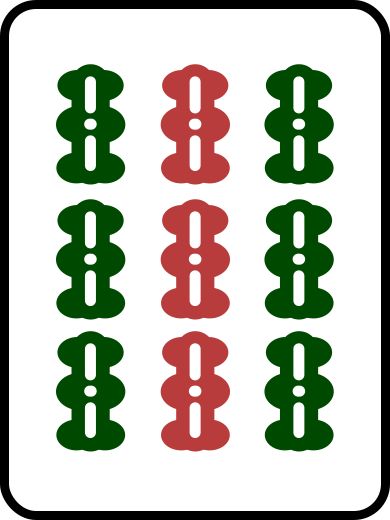
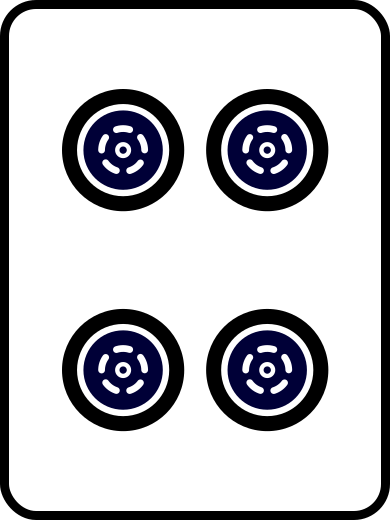
You draw the 4p and cut the 9s for tenpai on 2p and 5p. Riichi or stay dama?
Show the answerHide the answer
Riichi
Riichi. A two-sided 3,900 is a riichi at any turn before the last few, and the declaration lifts it to 7,700 before ura . Your lead is half of what a typical score still moves from South 1: real, but nothing to protect yet. Dama would win a little more often for about half the points. Play this one for points.
South 3, turn 8. You're 1st with 42,000. 2nd, the dealer, has 25,000, 3rd 18,000, and 4th 15,000. You deal All Last. Nobody has declared. Tanyao, pinfu, and the dora: 3,900 without riichi.Dora 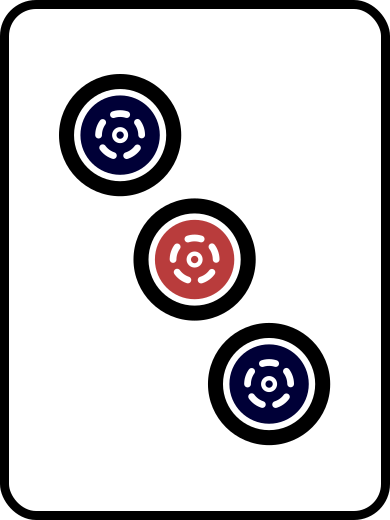
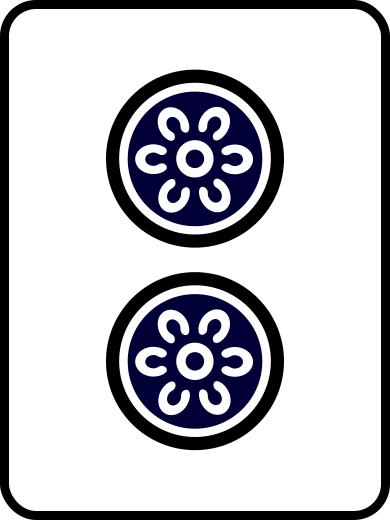
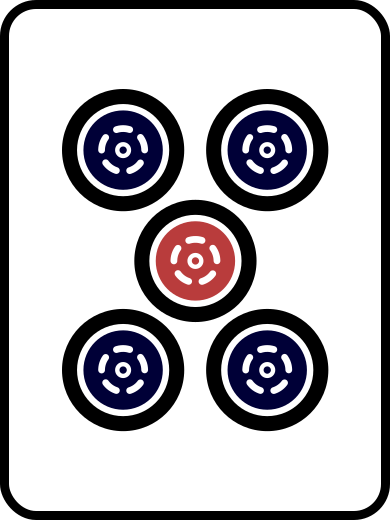
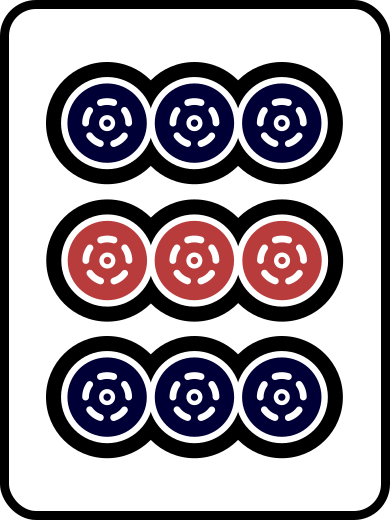
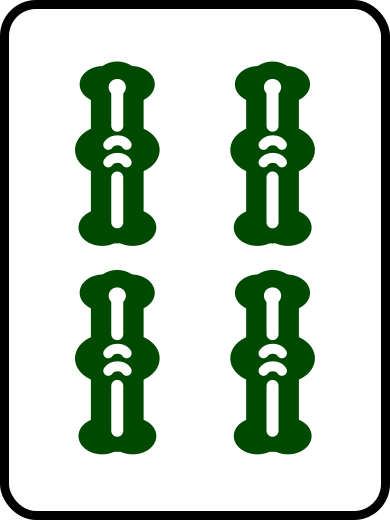
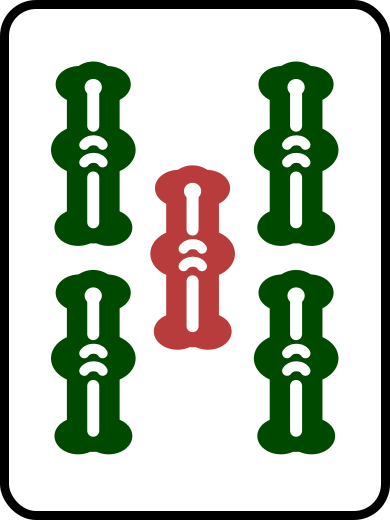
You draw the 7m and cut the 9p for tenpai on 5m and 8m. Riichi or stay dama?
Show the answerHide the answer
Stay dama
Stay dama. Win this hand any way and you start All Last at least 20,900 ahead of 2nd. 2nd's smallest ways past you are then a (12,000) off you and a (16,000) tsumo, which bills you 8,000 as the dealer. Riichi would make the ron 7,700, points your place doesn't need. It would cost what dama keeps: about 10 percentage points of win rate at turn 8 in the site's rough comparison (Houou logs, turns counted from zero), your stick, and the option to fold if 2nd declares. It's the placement exception from When to riichi.
Let your place set the hand
Ahead: end hands and guard the gap behind you
Every hand that ends without a big swing is one hand fewer for anyone to catch you. A cheap, fast win is a good result, so the faster option wins the close calls: the call that gives you a yaku and tenpai now, or the dama that already does the job. When the player chasing you deals, ending their deal is worth more than its points, because each of their wins pays 1.5 times as much and gives them another hand.
Your defense tightens around the one player who can pass you. A deal-in to them is a direct hit and moves the gap twice. A deal-in to anyone else moves it once.
The mangan column of the gap table gives a lead to aim for. A tsumo is the biggest swing folding can't stop: fold, and 2nd can't hit you directly, and their ron off anyone else moves the gap only by the hand. So start All Last more than one mangan tsumo clear of 2nd: over 10,000 between two non-dealers, over 12,000 if you deal it, and over 16,000 if 2nd deals it, since a dealer's mangan tsumo is 4,000 all.
South 3, turn 9. You're 1st with 36,000. 2nd had 25,000 when they declared riichi at turn 8. Neither of you is the dealer. Their river includes a 2m, and nothing that makes the 8p safer.Dora 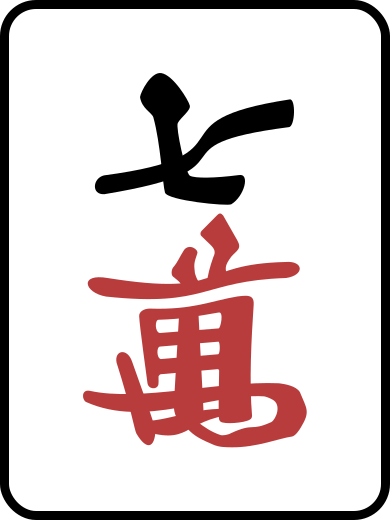

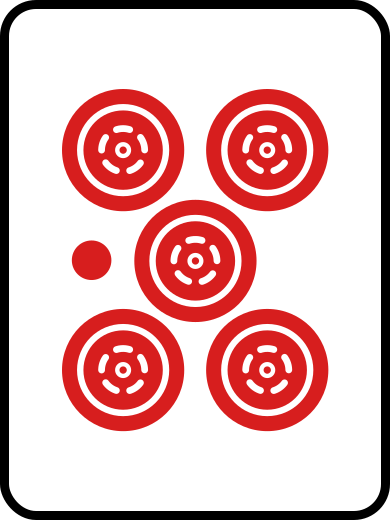
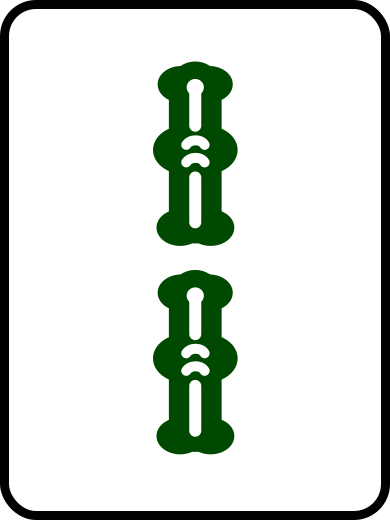
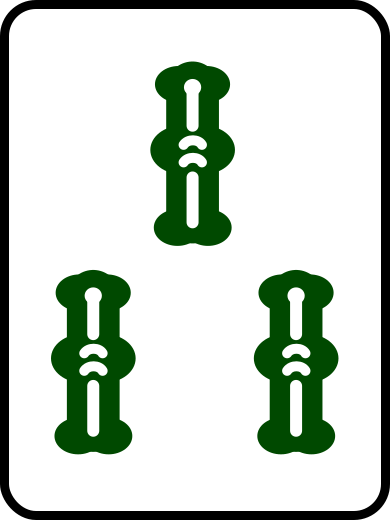
You draw the 8p. Push it and stay 1-shanten, or fold?
Show the answerHide the answer
Fold
Fold, starting with the 2m pair. On shape alone this pushes one tile, as 1-shanten against a riichi taught: 22 tiles make tenpai once you count their 2m, about 18% a draw, and most tenpais pay a mangan with riichi. The lead changes the price. Deal in to 2nd for 6,400 or more and your 11,000 gap moves twice that: you're 2nd. Folding isn't free: a mangan from 2nd still leaves you only 1,000 to 3,000 ahead for All Last. But only a haneman passes you, and the push risks 1st for one 18% draw.
Far behind: build hands that close the gap
A 1,000-point win from 15,000 back closes a fifteenth of the gap and spends one of the hands you have left. Behind, value takes the close calls. Keep the hand closed for riichi, keep the dora and red fives, and skip cheap calls. Value here means the routes from Speed or value and Playing the dora: a riichi with two dora gets there more often than a long-shot yaku.
You don't need the whole gap in one hand. Start All Last within one mangan tsumo of the place above: under 10,000 behind a non-dealer, 12,000 if that player deals, and 16,000 if you deal. A cheap win that brings the gap under that line is worth taking. A ragged hand still folds to a riichi.
Close to a place: weigh each result in places
When the next place up or down is a few thousand away, ask what each outcome does to your place. A win that lifts you a place, or protects one, is worth more than its points, and a deal-in that drops you one costs more. When no place is at stake, play it as you would in the East round.
South 3, turn 10. You're 4th, 1,500 behind 3rd. 2nd is the dealer, and 1st deals All Last. 1st declared riichi at turn 8. Their river includes a 2s, and no 5s.

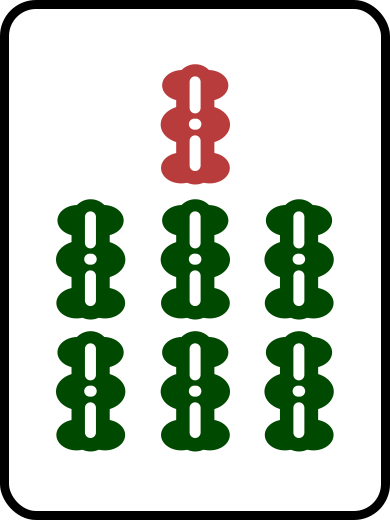
You draw the 8s. Push it and stay tenpai on the 5m, or fold?
Show the answerHide the answer
Push
Push. On shape alone this folds: a one-sided 1,000 is half the 2,000 a narrow tenpai needs against a non-dealer's riichi, as Push or fold set out. The scoreboard flips it. Any win passes 3rd: a ron brings 1,000 plus the riichi stick, 2,000 against a 1,500 gap. At a draw, your tenpai payment passes a 3rd. A deal-in can't drop you a place, but it costs: deal in for 5,200 and you start All Last 6,700 back, where 4th climbs out 17.4% of the time, against 38.6% from 1,500 back (All Last post). Folding most likely keeps the 38.6%, but gives up passing 3rd now. The shuhari post has players below Mahjong Soul's Master rank fold every riichi and saves narrow pushes like this one for Saint. Below Master, treat this Push as the play you're growing into.
Write your target before South 4
All Last gets two lessons of its own, but the work starts before it's dealt. Write one line: the player you're racing, the gap, and the smallest hand that closes it by ron and by tsumo. All Last: know your number shows the method, and the All Last calculator does the arithmetic. The prospect theory post explains why a target set before the hand beats one felt out during it.
Find your All Last number
Type the four scores and your seat. The All Last calculator names the smallest ron, tsumo, and direct hit that changes your place.
Open the All Last calculator