
is the one hand where the scoreboard tells you exactly which wins change your place. Leave the arithmetic until and you find out too late that your hand passes nobody. Do it before your first discard, one player at a time: the same hand can pass the dealer by tsumo and fall short when the dealer deals in.
Three numbers for every player you can pass
Start with the gaps: how far you sit behind each player above you and ahead of each player below. Then, for each player above, price the three ways a win moves that gap, as Play for placement laid them out.
- A off someone else. Your rival's score doesn't move, so the win has to cover the whole gap.
- A ron off that player. This is a direct hit (chokugeki). You gain what they lose, so the win only has to cover half the gap.
- A tsumo. Your rival pays a share of it, so the gap closes by everything you collect plus that share. A non-dealer's tsumo takes a quarter from each and half from the dealer, as What a hand pays showed.
Here's a board. All Last, no (repeat counters), no sticks. East, the dealer, has 34,000. West has 29,600, you (North) have 26,400, and South has 10,000.
| To pass | Gap | Ron off another player | Ron off them | Tsumo |
|---|---|---|---|---|
| East (1st, dealer) | 7,600 | 7,700 | 3,900 | 1,300/2,600 |
| West (2nd) | 3,200 | 3,900 | 2,000 | 700/1,300 |
Read the West row. A 3,900 ron off East or South covers the 3,200. A 3,200 hand would only tie, and West wins ties against you (more below). A 2,000 ron off West lifts you 2,000 and drops West 2,000, a 4,000 swing. A 700/1,300 tsumo collects 2,700, and 700 of it comes from West: 3,400. The East row works the same way, except that East pays 2,600 of its 1,300/2,600 tsumo, so it closes 7,800.
Then look down. South is 16,400 behind and needs a off you or a tsumo to pass you. This board is about climbing.
Add one line for the draw. When the wall runs out, a tenpai player gains 4,000 on a one if one or three players are tenpai, and 3,000 if two are (the draw payments). Here, a draw with you tenpai and West noten passes West, unless exactly one other player is tenpai too.
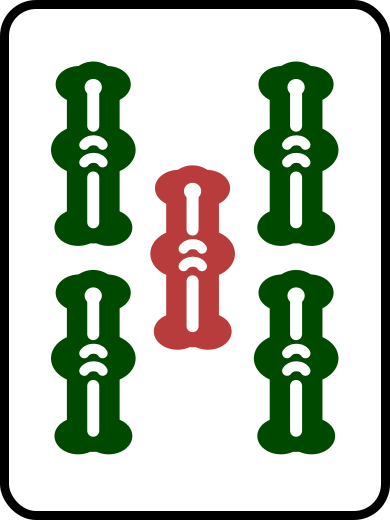
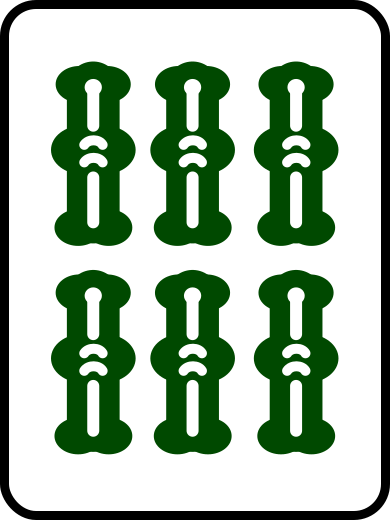
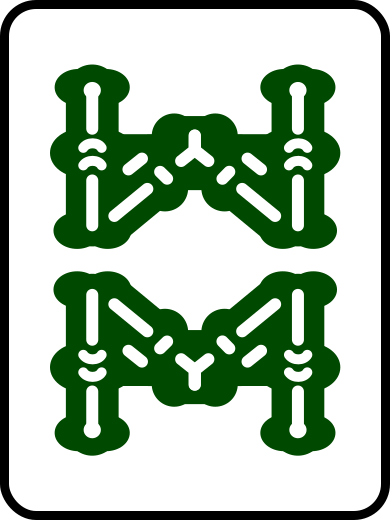
All Last, 0 honba, no riichi sticks. South 34,100, East (the dealer) 28,400, West 19,800, and you, North, 17,700. Your dama (no riichi) tanyao pays 1,300 by ron and 500/1,000 by tsumo.Dora 
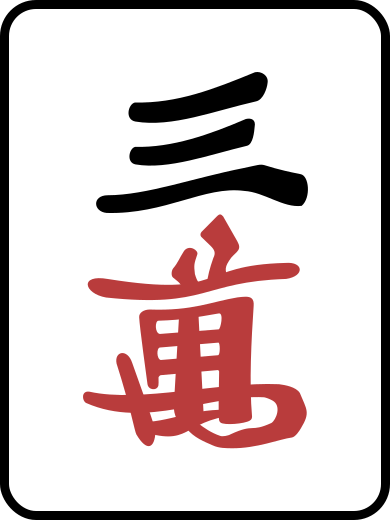
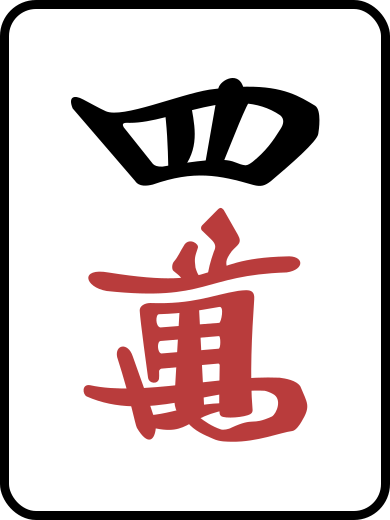
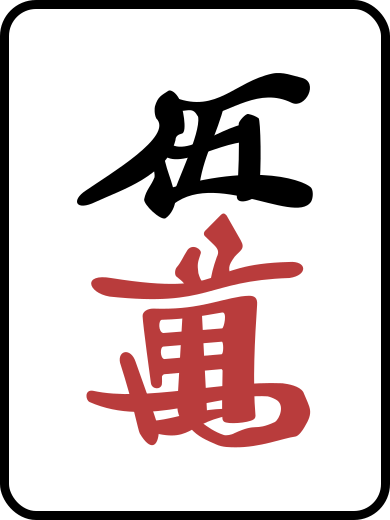
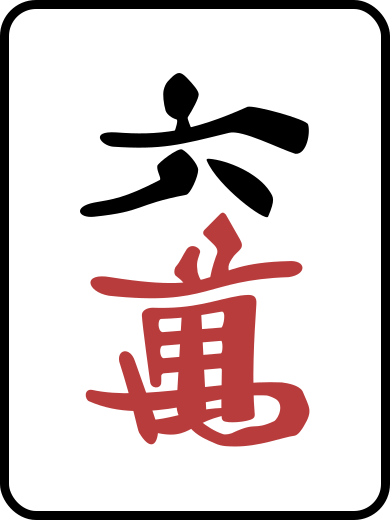
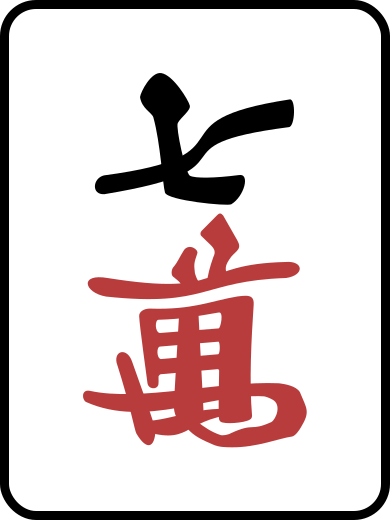
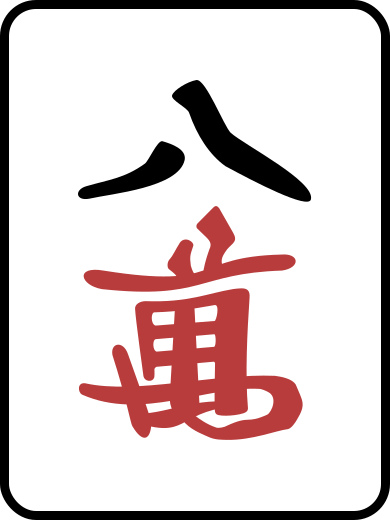
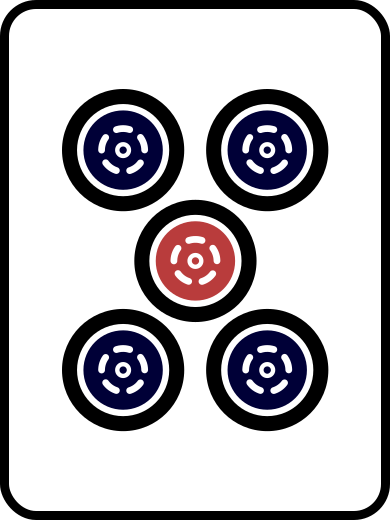
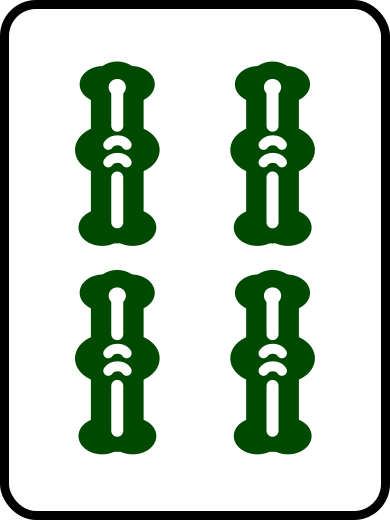
Which of your wins gets you out of 4th?
Show the answerHide the answer
A tsumo or a ron off West
A tsumo or a ron off West. You're 2,100 behind West. A ron off South or East adds 1,300 to your score and nothing else, 800 short. A ron off West is a direct hit: you gain 1,300 and West loses 1,300, a 2,600 swing. The tsumo collects 2,000 and takes 500 from West, which closes 2,500.
The tsumo numbers to know by heart
A ron is quick to check: the whole gap, or half of it off your rival. A tsumo takes a second step: what you collect plus your rival's share. Work out the common ones once and keep them as a lookup from your gap.
| Behind a non-dealer by less than | Behind the dealer by less than | This tsumo passes them |
|---|---|---|
| 3,400 | 4,000 | 700/1,300 |
| 5,000 | 6,000 | 1,000/2,000 |
| 6,500 | 7,800 | 1,300/2,600 |
| 10,000 | 12,000 | 2,000/4,000 () |
An exact match ends level, and the tie rule below decides it.
Learn three rows cold: 1,000/2,000 closes 5,000 (6,000 on the dealer), 1,300/2,600 closes 6,500 (7,800), and a mangan tsumo closes 10,000 (12,000). All Last math leans on the same three.
All Last, 0 honba, no riichi sticks. South 36,900, West 28,900, East (the dealer) 22,600, and you, North, 11,600. Your dama red dragon hand with two dora pays 5,200 by ron and a 2,000/4,000 mangan by tsumo.Dora 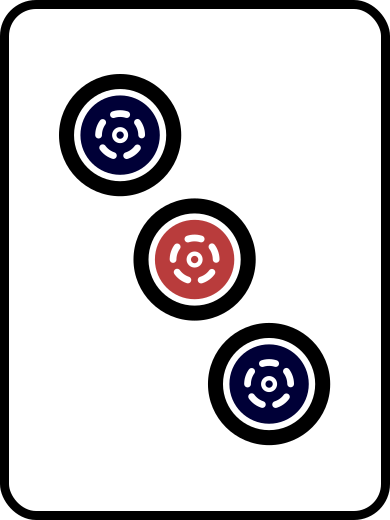
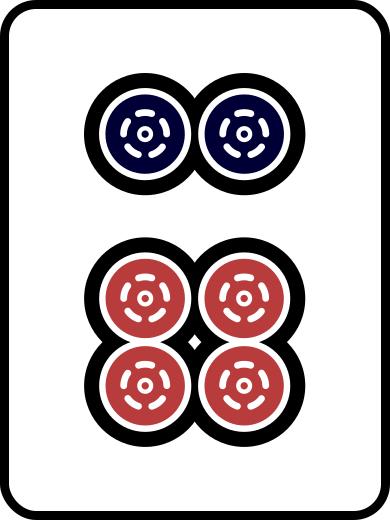
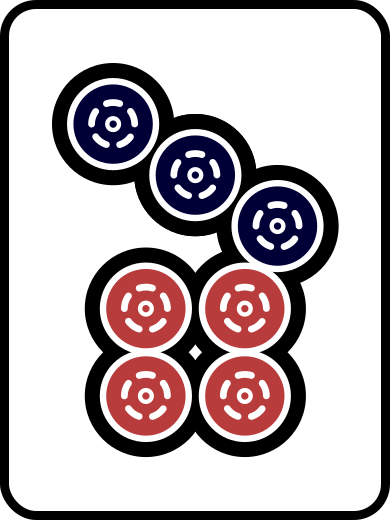
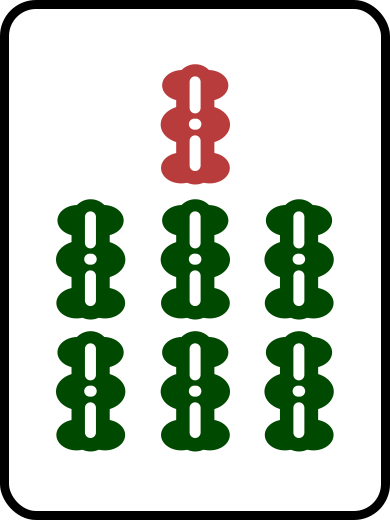
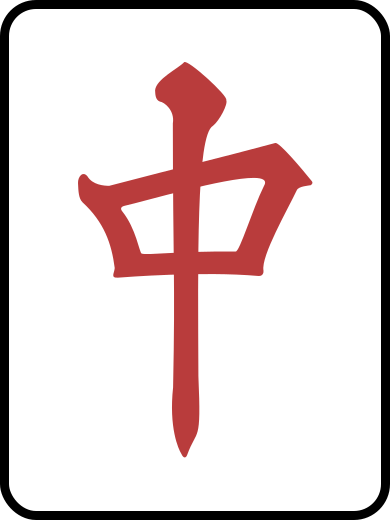
Which of your wins gets you out of 4th?
Show the answerHide the answer
Only a tsumo
Only a tsumo. East is 11,000 ahead and, as the dealer, pays half of every tsumo. Your mangan collects 8,000, takes 4,000 from East, and closes 12,000. A direct hit moves the gap by twice 5,200, which is 10,400, and falls 600 short. A ron off South or West closes only 5,200. Against a non-dealer in 3rd, the same tsumo would close 10,000 and fall short too.
Honba, sticks, and ties move the line
Sticks on the table make every win bigger. How a game works introduced both kinds, and the scoring guide works the payments.
- Each riichi stick goes to the winner: 1,000 more on any win, ron or tsumo.
- Each honba adds 300 to a ron, so 600 to a direct hit, where your rival pays it. On a tsumo each player pays 100 more: you collect 300 more, and the gap to your rival closes 400 more.
- Your own riichi costs 1,000 and comes back when you win, so your win numbers stay the same. At a draw the stick stays on the table. On the first board, that turns a tenpai draw that passes West into a 200-point miss. Your riichi also hands 1,000 to anyone else who wins, which matters in All Last decisions.
Now put one honba and one riichi stick on the first board. The stick is South's, so South sits on 9,000. West's row drops from 3,900, 2,000, and 700/1,300 to 2,000, any win, and 400/700. A 2,000 ron collects 3,300. A 1,000 ron off West collects 2,300 and costs West 1,300, a 3,600 swing. A 400/700 tsumo pays 500/800 with the honba, collects 2,800 with the stick, and costs West 500: 3,300.
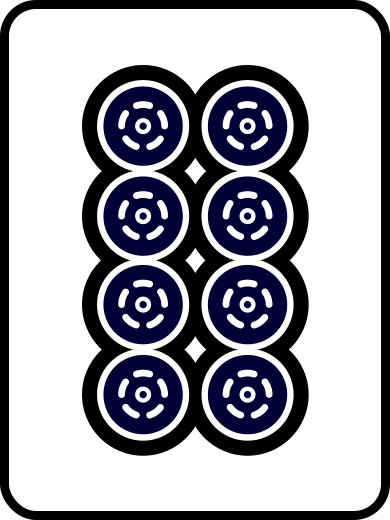
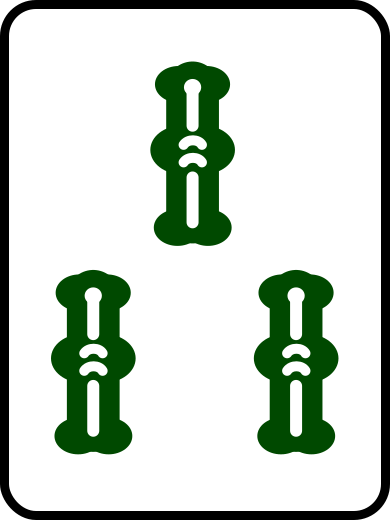
South 4, 1 honba. Two riichi sticks are left on the table from South 3's draw. South 35,000, West 26,500, you (North) 22,500, and East (the dealer) 14,000. Your open white dragon hand pays 1,000.Dora

What's the smallest ron off South or East that passes West?
Show the answerHide the answer
2,000
2,000. Every ron here carries 300 for the honba and 2,000 in sticks. A 2,000 ron collects 4,300 against a 4,000 gap. A 1,300 ron collects 3,600, and even a 1,600 ron collects 3,900, still 100 short. Your own 1,000 hand does pass West if West deals in: 1,300 from West plus the sticks is a 4,600 swing. Without the honba and sticks, even 3,900 off South wouldn't do it.
Ties go by seat order
On Tenhou and Mahjong Soul, a tie goes to the player who sat closer to East 1's dealer (How a game works). In All Last that order reads off the seat winds: South, West, North, then the dealer, who loses every tie.
On the first board, West comes before you, which is why a 3,200 ron off East or South, such as riichi (3 25 fu), leaves you 3rd.
All Last, 0 honba, no riichi sticks. South 33,600, East (the dealer) 29,400, North 21,000, and you, West, 16,000. Your closed red dragon hand pays 1,000/2,000 by tsumo.Dora 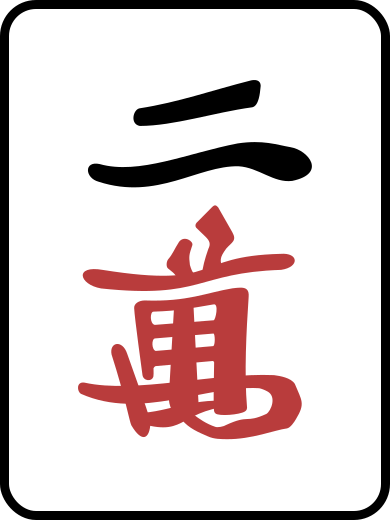
Does the tsumo get you out of 4th?
Show the answerHide the answer
Yes
Yes. The tsumo collects 4,000 and takes 1,000 from North, so the 5,000 gap closes exactly: 20,000 each. In All Last ties go South, West, North, then the dealer, and West beats North, so you finish 3rd. Sit in North's seat 5,000 behind West instead, and the same tsumo ties and loses. From there you'd need more than 1,000/2,000.
When the dealer is in the hand
On Tenhou and Mahjong Soul, an All Last dealer who wins, or is tenpai when the wall runs out, deals again: South 4, 1 honba. That's (a dealer repeat). The exception is a dealer who comes out of the hand in 1st with 30,000 or more. That ends the game: agari-yame after a win, tenpai-yame after a draw.
- You're the dealer. You don't have to pass anyone in one hand. Any win, or tenpai at the draw, buys another hand, and you redo the numbers with one more honba. Your tsumo takes the same from all three players, so it closes a gap by a third more than it collects: 1,000 all closes 4,000, 2,000 all closes 8,000, and a 4,000 all mangan closes 16,000.
- The dealer is below you. Their one-hand number may be a mangan, but a cheap dealer win or a dealer tenpai at the draw buys them another try.
- The dealer leads with 30,000 or more. A dealer win or dealer tenpai ends the game, so don't count on another hand. On the first board, East has 34,000: plan on this hand being the last.
One more check when the scores are low. If a hand would end the game with nobody at 30,000, Tenhou and Mahjong Soul play on into a West round, so the win that passes your rival isn't always the end.
All Last, 0 honba, no riichi sticks. West 34,000, North 28,000, South 21,000, and you, East, the dealer, 17,000. Your dama tanyao pays 1,000 all by tsumo.Dora 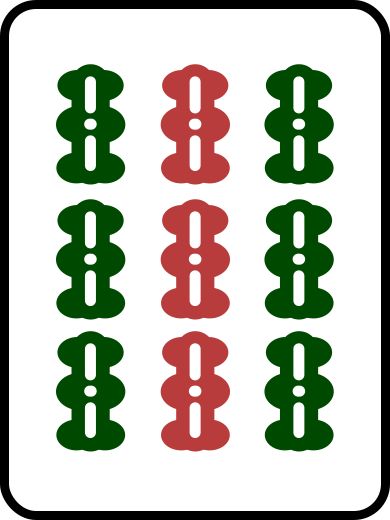
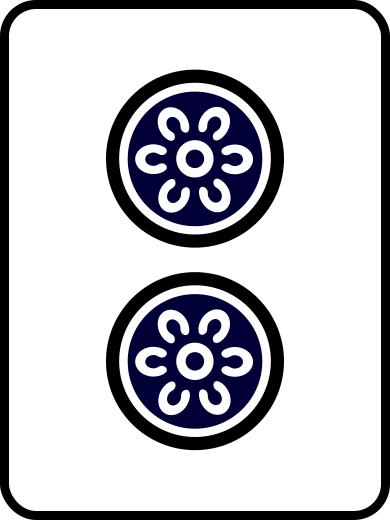
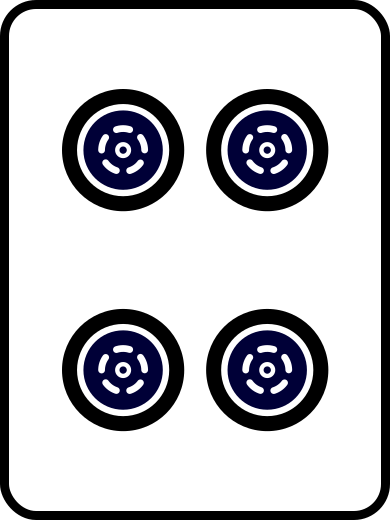
You win by tsumo. Where does that leave you?
Show the answerHide the answer
Tied with South in 4th, and you deal again
Tied with South in 4th, and you deal again. 1,000 all collects 3,000 and takes 1,000 from South, which closes your 4,000 gap exactly. The dealer loses every tie in All Last, so South keeps 3rd. Your win would end the game only if it left you 1st with 30,000 or more, so you play South 4, 1 honba.
Let the calculator check your number
The All Last calculator runs this arithmetic for any board. Type the four scores by seat, in tie order: seat 1 dealt East 1 and sits South in All Last, and seat 4 is the dealer. Add the honba and sticks, pick your seat, and it prints the smallest ron off each player and the smallest tsumo for each place, plus what a draw does. Here's the first board.
Sometimes it names a rare hand that pays between the common prices. On the one-honba board, its tsumo for 1st reads 1,200/2,300 (2 han 70 fu). The everyday hand to plan for is the next one up, 1,300/2,600. Use the tool to check your number, not to replace it.
For how often 3rd falls to 4th and how often 4th climbs out, by seat and gap, see the All Last 4th-place odds from Tenhou's top room (). All Last decisions puts your number to work: riichi or dama, push or fold, by place.
Check your number on any board
Type the four All Last scores, the honba, and the sticks. The calculator prints the smallest ron off each player and the smallest tsumo for 1st, 2nd, and out of 4th, plus what a draw does.
Open the All Last calculator