
A lands, and the urge is to stare at the river until it gives up the wait. It won't. What it gives you is proof: the tiles the riichi player can't , and the waits the tiles in view rule out.
How to fold covered , the tiles that can't deal in. When genbutsu runs out added and (wall), and the safety ladder ranked every tile by the waits that can still win on it.
Count first: what the river proves
Two rules turn a river into proof. : a riichi player can't ron if any of their winning tiles is in their own river or has passed them since the riichi. Four copies: once you can see all four of a tile, no wait that needs one in the riichi hand can exist. Genbutsu, suji, and kabe all come from those two rules. None of them is a guess.
A read is a guess. It asks why a player cut a tile, and they may have had another reason. So count every turn, before you read anything.
Count the live suji
When genbutsu runs out grouped each suit into three suji lines: 1-4-7, 2-5-8, and 3-6-9. Each line holds two suji, the two tiles a (two-sided wait) waits on: 1-4 and 4-7, 2-5 and 5-8, 3-6 and 6-9. That's six suji a suit, 18 in all. A suji is dead once either of its tiles is genbutsu, since the ryanmen behind it would be furiten. A discarded 1, 2, 3, 7, 8, or 9 kills one suji, and a 4, 5, or 6 kills two. A discard reaches only its own suji: an 8 kills 5-8, never 2-5, though both sit on the 2-5-8 line.
Take the river North, 1p, 8m, East, 2s, 6s. The 1p kills 1-4p, the 8m kills 5-8m, the 2s kills 2-5s, and the 6s kills 3-6s and 6-9s. Five suji are dead and 13 are live. If this hand waits two-sided, the wait is on one of those 13. Every tile that passes after the riichi kills suji too, so late in a long riichi the count might leave five. If every live suji were equally likely, each would carry a fifth of the two-sided danger instead of a thirteenth. Real hands favor some suji, so take it as a trend: a tile with no read gets more dangerous the longer the riichi stays up.
Two-sided waits are most of the danger. In logs (Tenhou's top room), 59% of riichi hands waited on a ryanmen or a , a three-sided wait (the suji guide). Houou players defend harder than most tables and play differently, so treat the figure as a guide to yours (why the source matters).
East 2, turn 6. The player on your right declared riichi with the 6s. Their river: North, 1p, 8m, East, 2s, 6s. The other two 8p sit in the other players' rivers. Nobody has discarded a red dragon.
You draw the 1s and you're folding. Which tile do you throw?
Tap the tile you would choose.
Show the answerHide the answer
Fold with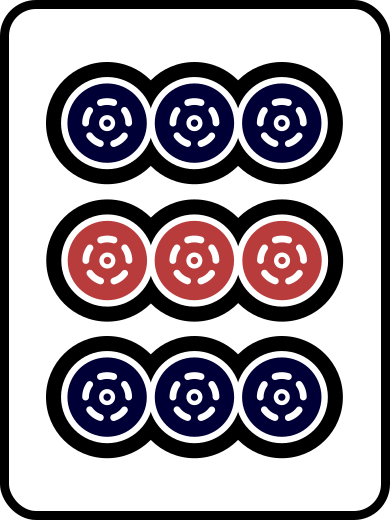
The 9p. You hold two 8p and the other two are in view, so nobody holds a 78p, and only a (single wait) or a (pair wait) can take the 9p. The 2m is the bait. Their 8m kills 5-8m and nothing else, so your 2m still sits on the live 2-5m suji, and a 13m (middle wait) can take it too. The fresh loses to the same two waits as the 9p, but riichi players pick honor waits on purpose, so it sits on rung 6 with the half-suji 5s and the 1s.
Tedashi or tsumogiri: which tiles carry a clue
Every discard leaves one of two ways. (手出し) is a tile cut from the hand: the hand changed, and the tile says something about its shape. (ツモ切り) is the drawn tile thrown straight back: the hand stayed the same, and the tile only says the draw didn't fit. The open-hand tells use the same split. Watch each discard land: the river alone won't always show which was which.
- After the riichi, every discard is tsumogiri. From the declaration on, their river adds genbutsu and nothing else.
- The riichi tile is a clue only if it came from the hand. Drawn and thrown, it never sat in the shape. The hand was before that draw, so read the last tile they cut from the hand instead.
- A run of genbutsu from the hand usually means a fold. One means little: a pushing player cuts genbutsu too when it's the tile they don't need. When someone who hasn't declared keeps cutting the riichi player's discards from the hand, take them for folding and worry less about them until they cut a dangerous tile.
The riichi tile and the tiles around it
A riichi tile cut from the hand is the last tile the shape let go. That makes it the favorite place for a trap.
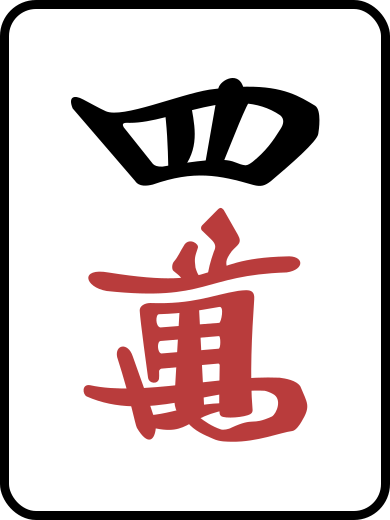
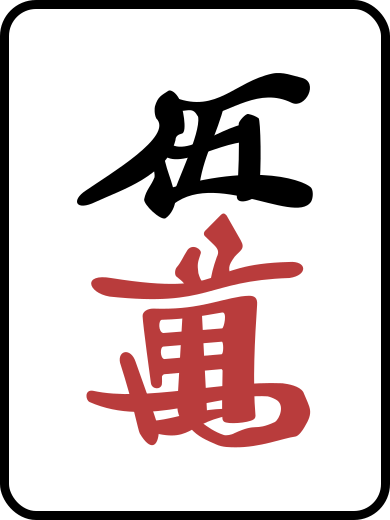
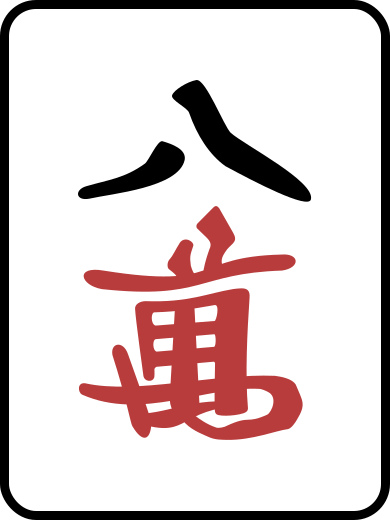
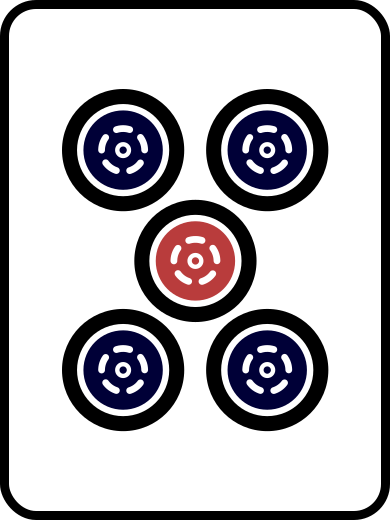
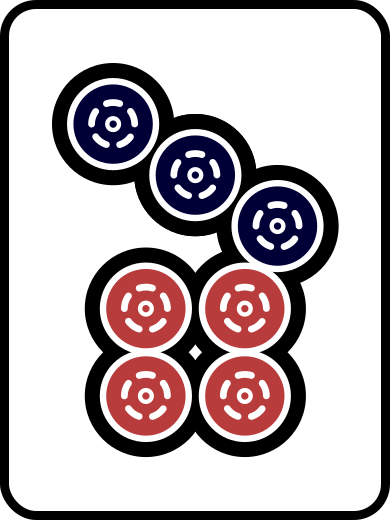
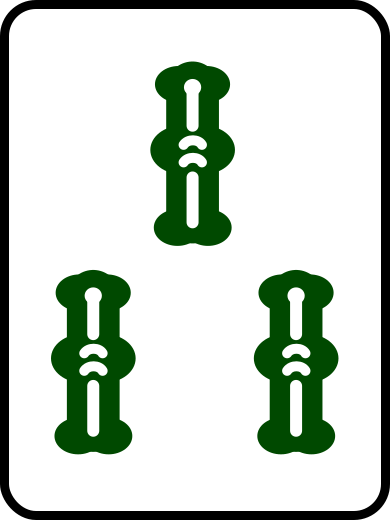
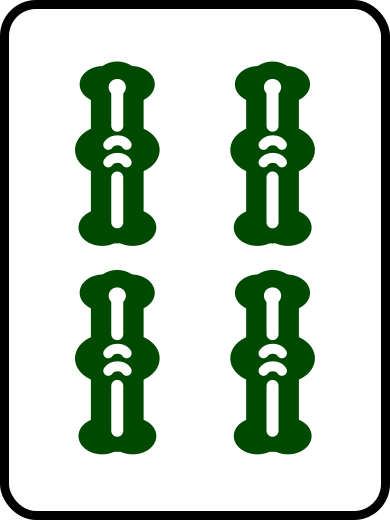
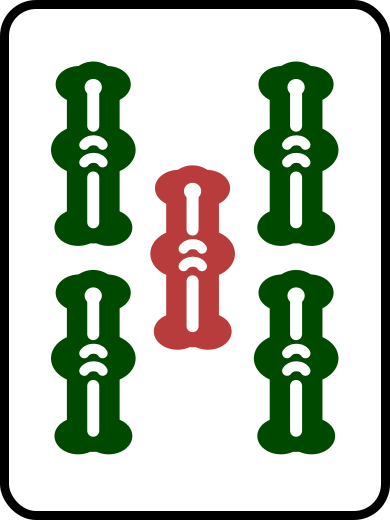
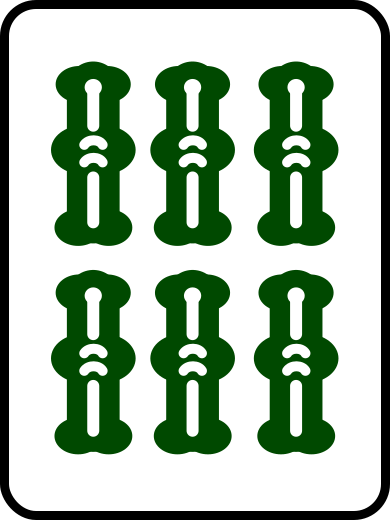
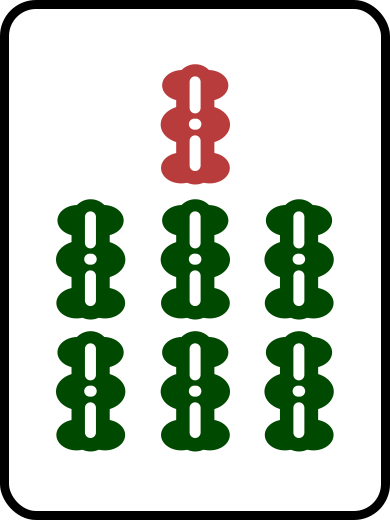
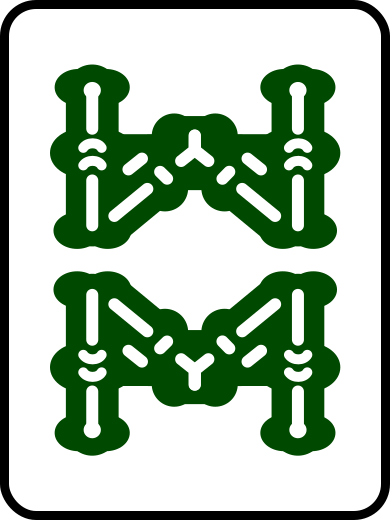
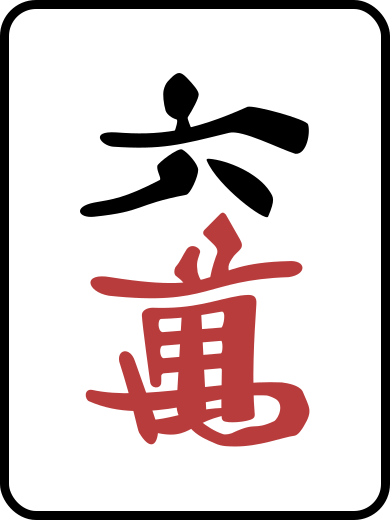
This hand draws the 6m, finishes 456m, and picks a wait. Cut the 9p and it waits on the 6p with 57p. Cut the 5p and it waits on the 8p with 79p. Both are kanchan, four tiles each. Only the second puts a 5p in the river, and an 8 needs only the 5 to look like suji. That's the suji trap () from When genbutsu runs out, and here it costs nothing. So trust the riichi tile's suji less than a suji from an early discard, though the 8p still can't lose to a two-sided wait.
The riichi tile carries a second old warning. The matagi-suji (跨ぎ筋, straddling suji) of a tile are the waits of the two-sided blocks that contain it. For a 5, that's 45 on 3-6 and 56 on 4-7. Swap the 579p above for , and cutting a 5p leaves waiting on the 3p and 6p.
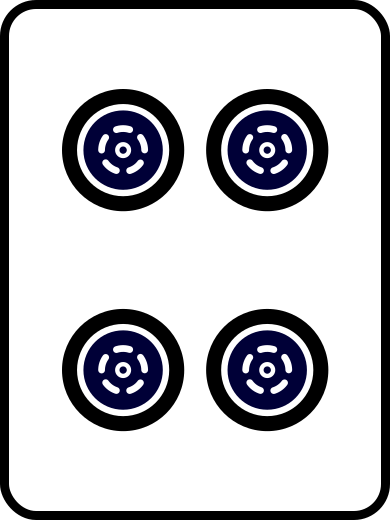
That needs a second 5, and often there wasn't one. A loose (isolated) middle tile makes a good floating tile (Headless and floating-tile 1-shanten), so a hand often keeps a loose 5 until tenpai. When the draw sticks to its other floating tile, the 5 goes out as the riichi tile with nothing behind it. My rule of thumb: matagi-suji, like the old saying that the riichi tile's neighbors are dangerous, move a tile inside its rung and no further.
South 1, turn 7. The player across declared riichi with the 5p, cut from the hand. Their river: West, 9m, 1s, white dragon, 2m, 8s, 5p. You're 2-shanten and hold none of their discards.
You draw the 8m and you're folding. Which tile do you throw?
Tap the tile you would choose.
Show the answerHide the answer
Fold with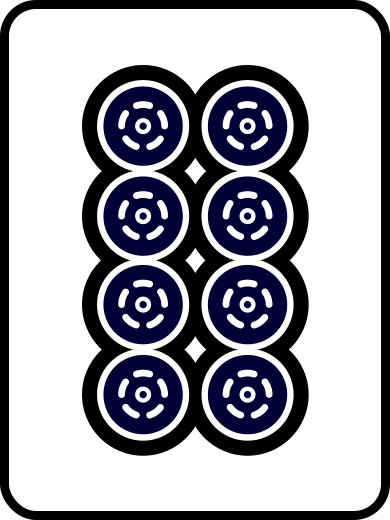
The 8p. The 5p came from the hand, so a 79p trap like the one above could sit behind it. But the 8p still can't lose to a two-sided wait. Twelve suji are live in this river, and every other tile you hold sits on at least one: the 8m you drew on 5-8m (their 2m doesn't reach it), the 2s on 2-5s, and the 4p on two. A suji you distrust still beats a 2 through 8 with no read.
Early tiles, dropped blocks, and the old proverbs
Early outside tiles: a weak clue
The safety ladder used the early outside tile (sotogawa, 外側) as its last tiebreaker: after an early 3, a wait on the 1 or 2 of that suit had to grow later. Hands change too much before a riichi for it to lift a tile a rung.
A dropped block
Sometimes a player cuts a 4p and soon after a 5p, both from the hand. A drawn 5p thrown straight back doesn't count.
The two discards make the 1p, 2p, 7p, and 8p suji and do nothing for the 3p or the 6p. That gap is where the read points. A hand that held can shed a 4p and a 5p and still keep waiting on the 3p and 6p, and a doubled block is easy to trim. Away from that suji, expect a two-sided wait, because players rarely give up a whole ryanmen unless what they kept is at least as good. So trust suji and honors more than usual, but not the 3p and 6p.
Proverbs, sized honestly
- Ura-suji (, reverse suji). The ura-suji of a discard are the waits of a two-sided block one gap away from it. Cut the 3m from and waits on the 4m and 7m. The old read calls those tiles dangerous after an early discard. Most early discards are loose tiles, with no block one gap away (What to discard first), so treat it as a nudge inside a rung.
- Aida yonken (, the four-gap read). An 8 shares the 3's ura-suji: cut it from and 56m is left on 4-7m again. So with a 3 and an 8 of one suit in the river, the proverb fears the 4 and 7 between them. Plenty of other hands cut a 3 and an 8, so it's a tiebreak at most.
Let reads break ties, never rank tiles
Fold in two passes.
- Count. Rank every tile on the ladder: genbutsu, honors by copies in view, suji and kabe, then tiles with no read. Check how many suji are live: the fewer there are, the further a tile with no read falls behind your suji.
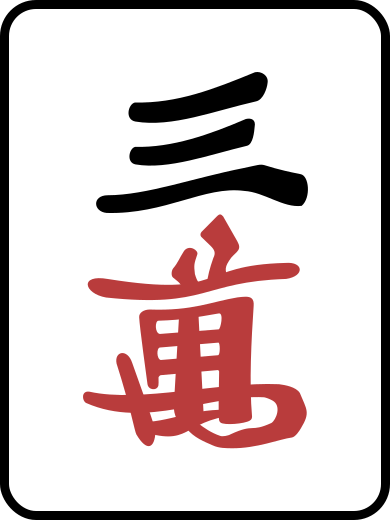
- Read, only inside a rung. Cut a suji from an early discard before the riichi tile's suji, and a tile outside an early discard before one inside. Hold back the 3 and 6 behind a dropped 45, and the tiles that ura-suji, matagi-suji, or an aida yonken pair point at.
Never let a read carry a tile across a rung. Each effect is small, and each assumes the riichi player built the hand the usual way. Against someone who didn't, a read can point the wrong way. The count can't.
East 3, turn 7. The player across declared riichi with the 5m, cut from the hand. Their river: 5s, North, 1m, 9p, West, 2p, 5m. The 5s was their first discard. You're 2-shanten and hold none of their discards.
You draw the 1p and you're folding. Which tile do you throw?
Tap the tile you would choose.
Show the answerHide the answer
Fold with
The 8s. Your 8s and 8m are both suji of a 5 in their river, so each loses only to a kanchan, a tanki, or a shanpon, and the count can't split them. The timing can. The 5m came out of the hand at the riichi, where a 579m shape turns into a 79m trap. The 5s left first, long before the hand had a wait to hide. It's a small edge, which is all a tie needs. The half-suji 4m and the 1p with no read sit a rung lower.
Check the tile class
The push or fold calculator sorts the tile you'd cut into five classes, from genbutsu to non-suji 4, 5, and 6. A read moves a tile inside its class, never into another one.
Open the push or fold calculator