
You reach a turn after the declares , and the tile you have to cut is a middle tile with no read. With a (ryanmen), folding on reflex gives up about 3,300 points on average. With a cheap one-sided wait, pushing on reflex pays for deal-ins its wins can't cover.
Two things you can see before you discard tell those hands apart: the shape of your wait and what the hand is worth. Push or fold gave you the baseline. Pushing means playing on for the win and cutting whatever the hand needs, safe or not. Folding is the procedure from How to fold. Here is where the lines come from, and how to play the hand once you push.
What a chase wins, and what it risks
Declare riichi after someone else has and you're chasing them: an riichi (追いかけリーチ). The fold price post follows thousands of chases from Tenhou's top room () and sorts them by how many tiles the wait has left.
| Your wait | Wins | Deals in |
|---|---|---|
| 9 or more tiles (three-sided and wider) | 60% | 10% |
| 5 to 8 tiles (two-sided) | 48% | 16% |
| 4 or fewer tiles (one-sided and pair waits) | 32% | 21% |
| Any honor in the wait | 43% | 22% |
Set the wins against the deal-ins. A two-sided chase wins three times as often as it deals in. A narrow chase, on a one-sided wait (a , the middle wait; a , the edge wait; or a , the single wait) or a (shanpon), wins about one and a half times as often, and deals in about one time in five.
Going second costs you too. A first riichi on a two-sided wait wins 56% and deals in 10% at the same turn, so the chaser gives up 8 points of win rate and adds 6 of rate. The wait win rate tool looks up how often your exact wait wins. It has no chase setting, so expect a chase to win 8 to 10 points less.
Push when the win outweighs the fold
Folding has a price of its own. You still pay your share when someone wins by tsumo, and payments if the wall runs out. A clean fold against a non-dealer's riichi costs a about 1,120 points at turn 8, counted from zero (your ninth discard), in the fold price post. A deal-in into that riichi costs about 5,900 on average.
Call your average win W, their average deal-in L, and the fold price F. Pushing beats folding when:
win rate × (W + F) is bigger than deal-in rate × (L − F)
A win earns W and saves the F you'd have paid folding. A deal-in costs L, but F of it was gone anyway. Here are the post's averages for a non-dealer chasing a non-dealer: W 7,300, L 5,870, F 1,120.
- Two-sided: 0.48 × 8,420 = 4,040 against 0.16 × 4,750 = 760. Pushing comes out about 3,300 ahead.
- One-sided or pair wait: 0.32 × 8,420 = 2,690 against 0.21 × 4,750 = 1,000. Ahead too, on an average-sized hand.
Now solve for the hand value where the two sides match. A two-sided chase breaks even on a hand worth under 500 points, less than the cheapest win in the game. Its value barely matters: push. For a narrow chase, 0.32 × (W + 1,120) = 1,000 gives W of about 2,000. Below that, fold.
These lines assume a tile of average danger. A middle tile with no read asks more and a terminal less, so the calculator splits it by tile. The rough math shows each step.
Here's a narrow tenpai on both sides of that line, against a non-dealer's riichi.

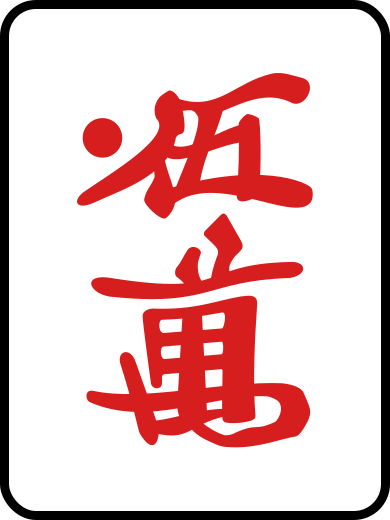

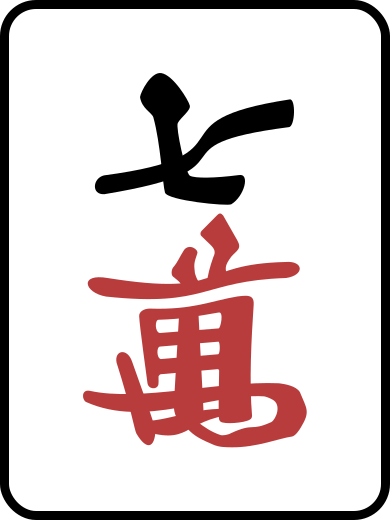
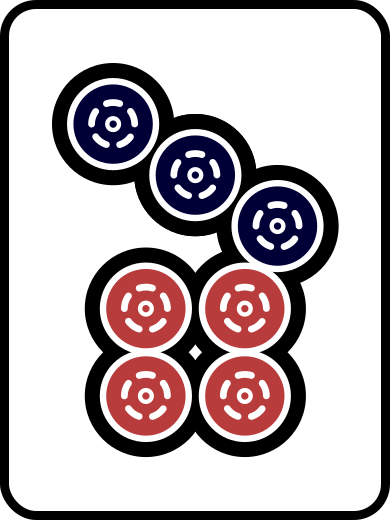
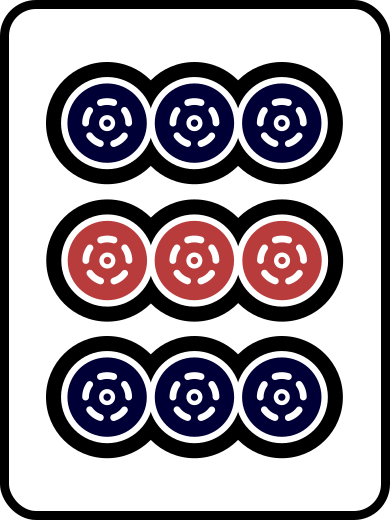

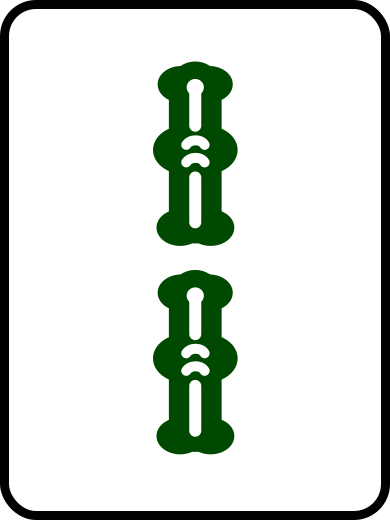
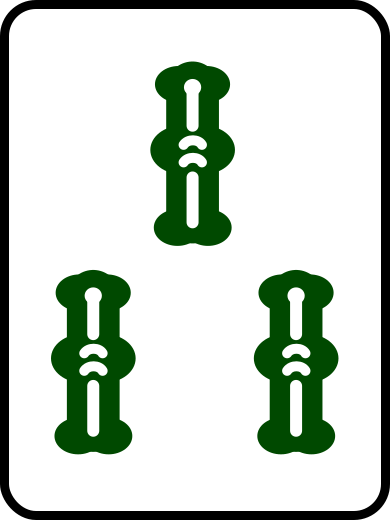
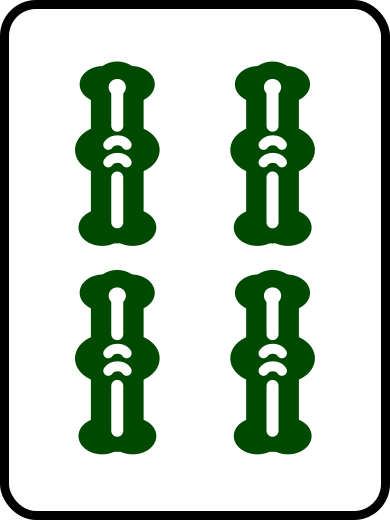
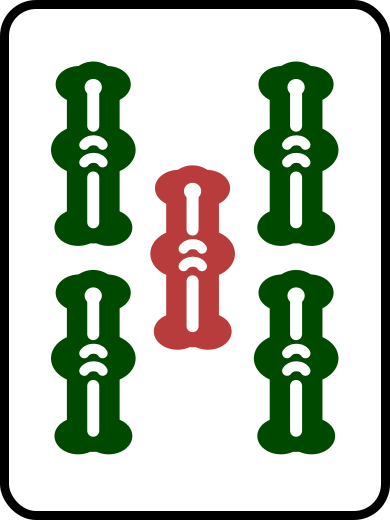
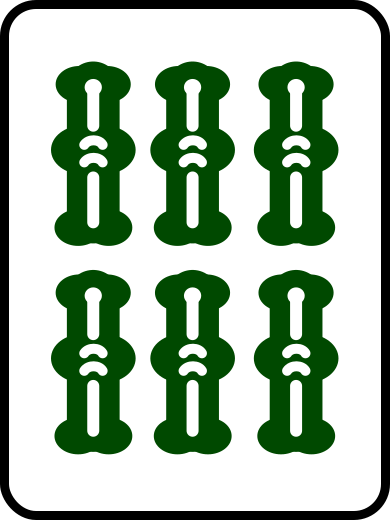
Riichi is this hand's only yaku. The 1s rules out , and the kanchan on 8p rules out . Riichi alone is 1 40 fu, a 1,300 : under the line. The red five makes it 2 han 40 fu, 2,600, and now the chase pays.
The shuhari post, as Push or fold noted, starts the two-sided push at Mahjong Soul's Master and saves narrow pushes like this 2,600 for Saint, where you can read the tile. Below Master it has you fold every riichi, so treat the Push answers here as the play you're growing into.
South 1, turn 12. The player across, not the dealer, declared riichi at turn 7. Nothing in their river makes the 4p safer, and your 99p pair is genbutsu, a tile the riichi player can't ron. No dora in your hand.

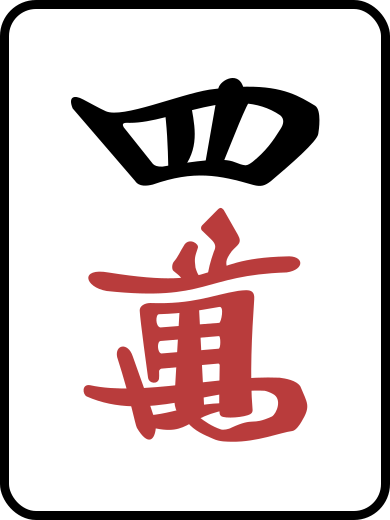
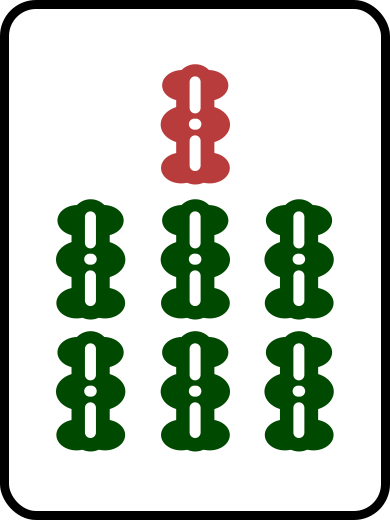
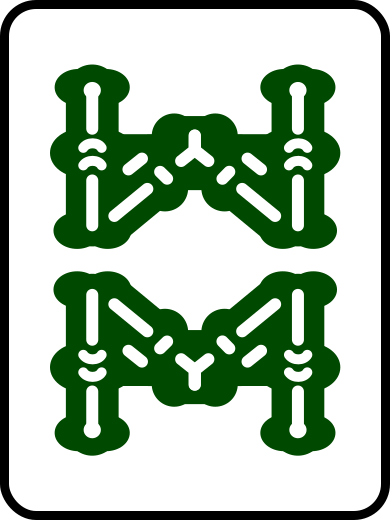
You draw the 8s. Cutting the 4p leaves you tenpai on 2m and 5m. Push or fold?
Show the answerHide the answer
Push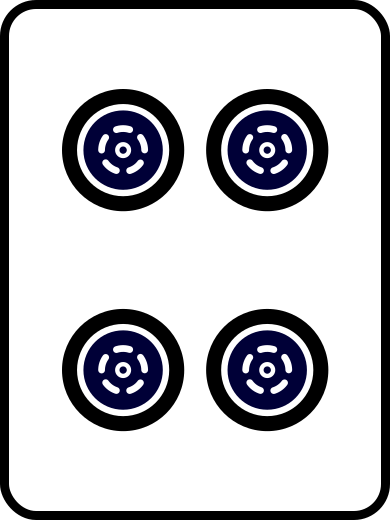
Push the 4p and declare. Riichi and pinfu make only 2,000, and a two-sided chase pays even at that price: it wins about three times as often as it deals in. Turn 12 doesn't change that. Folding with the 9p pair throws away a live two-sided wait, and the fold still costs about 1,200 at this stage. The 4p will sometimes deal in, and the wins cover that with room to spare.
East 3, turn 9. The player on your right, not the dealer, declared riichi at turn 7. Nothing in their river makes the 5s safer. The 9s and the 1m are genbutsu. No dora in your hand.

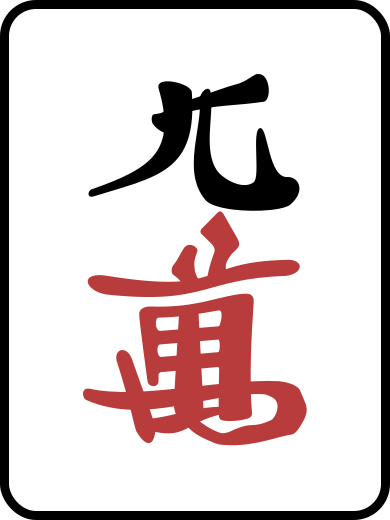
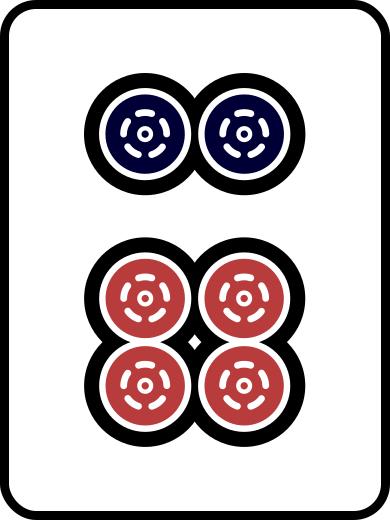
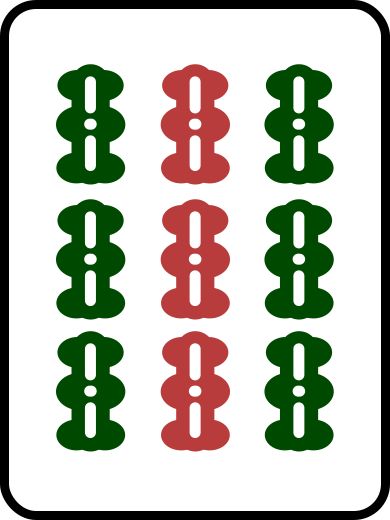
You draw the 3s. Cutting the 5s leaves you tenpai on a 5p kanchan. Push or fold?
Show the answerHide the answer
Fold
Fold, with your three : the two 9s and the 1m, enough to carry the fold to the draw. Riichi is the only yaku, so a ron pays 1,300, short of the 2,000 a narrow chase needs. The kanchan has 4 tiles at most, and the push or fold calculator calls this spot a lean fold. One in the hand would make it a push for a player who can read the 5s.
The dealer moves the line
When you're the dealer
As the dealer, push more. Your fold costs about 1,890 at turn 8, the most of any seat, and it gives up the dealership on top. Your win pays 1.5 times and keeps the deal.
That's why Push or fold has the dealer push a two-sided tenpai against a non-dealer riichi every time, unless the tile is plainly their wait or the score can't afford the deal-in. A one-sided wait pushes early in the hand. From the middle turns on it wants 3,900 or more behind it, which riichi and one dora on a kanchan pay the dealer.
When the dealer declares
Against the dealer's riichi, everything you risk costs more. Folding costs about 1,750, and a deal-in averages about 8,200 instead of 5,900. Through the middle turns, a two-sided wait still pushes. By the post's math at turn 8, even a 2,000 hand only has to win 1.7 times as often as it deals in, and a two-sided chase wins three times as often. Late in the hand, a cheap one cutting a live 4, 5, or 6 becomes a close call.
From the middle turns, a one-sided wait wants about a . The deal-in pays the dealer 1.5 times, and a narrow wait doesn't win often enough to cover it. For a 3,900 or a 5,200, the calculator sorts it by tile and turn.
East 3, turn 10. You're the dealer. The player on your left declared riichi at turn 7. Nothing in their river makes the 2m safer, and your 99m pair is genbutsu.Dora
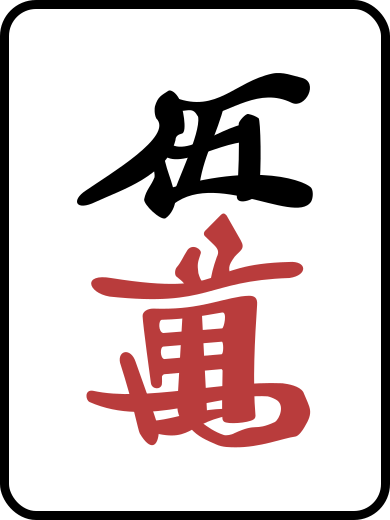
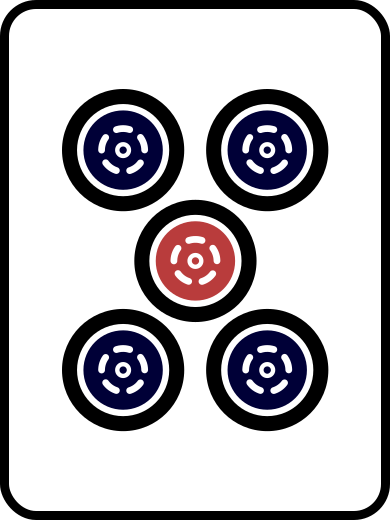
You draw the 7s. Cutting the 2m leaves you tenpai on a 6p kanchan. Push or fold?
Show the answerHide the answer
Push
Push the 2m and declare. From the middle turns, a dealer's one-sided wait wants 3,900 behind it, and riichi plus the dora pays you exactly that: 2 han 40 fu. The shuhari post wants a read for a non-dealer's 2,000 hand. As dealer, the calculator rates this a push with no read on the 2m. Folding would cost about 1,850 here and hand the deal away.
East 4, turn 13. The dealer, on your right, declared riichi at turn 9. Nothing in their river makes the 4m safer. Your 9m and 1s are genbutsu.Dora 
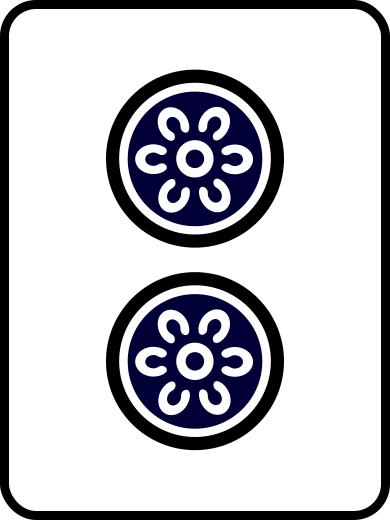
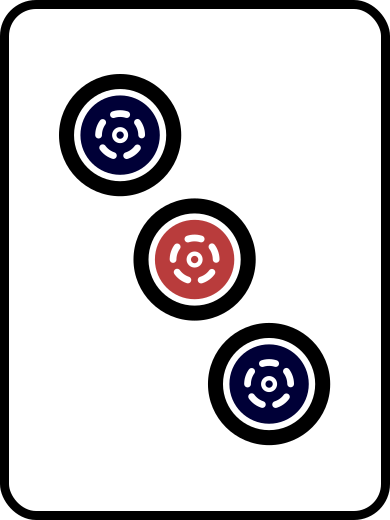
You draw the 7s. Cutting the 4m leaves you tenpai on a 2s kanchan. Push or fold?
Show the answerHide the answer
Fold
Fold, with the 9m and the 1s. Riichi and the dora make 2,600, enough against a non-dealer's riichi. Against the dealer it falls short: a deal-in averages about 8,200, and from the middle turns a one-sided wait wants about a mangan. This late, the kanchan has few draws left to win with, and the calculator leans fold here too.
Once you push, declare
A chase is a race, and riichi is how you run it. Most of the costs in When to riichi shrink here. Riichi takes away your fold, and a tenpai you've decided to push to the end has no use for it. Players far from tenpai are already folding against the first riichi, so yours tells them little. What's left is the 1,000-point stick and some win rate, since dama (quiet, no riichi) wins more often. In return, each win pays about double below mangan, with ura dora and on top, and a with can win off a discard at all.
Declare on the turn you push. A two-sided riichi declared one turn later wins 3 to 4 points less, as the tenuki post shows. Cutting a safe tile to see one more draw costs you the same way.
The dama list from When to riichi still holds. A two-sided mangan from turn 12, for one, stays quiet.
East 1, turn 7. The player across declared riichi last turn. You draw the 8p and cut the 7m, a tile with no read, for tenpai on 3m and 6m. Tanyao and pinfu: 2,000 without riichi.
You've decided to push. Riichi or stay dama?
Show the answerHide the answer
Riichi
Riichi. You've already chosen to push, so the fold that dama keeps is one you won't use: with a two-sided wait you'd push the next live tile anyway. Dama would win more often, but a two-sided 2,000 isn't on the When to riichi list. The extra han takes a ron from 2,000 to 3,900 before ura dora or ippatsu.
Two riichi: raise every bar
A second riichi changes both sides of the sum. Folding gets cheaper: a non-dealer facing two non-dealer riichi pays about 930 at turn 8 instead of 1,120, because the two of them often settle it between themselves (a second riichi makes folding cheaper). Pushing gets dearer. Each tile you cut has to pass two hands, and both players were ready before you.
The rule of thumb goes by the tile. Genbutsu against one of them: a two-sided wait pushes, and a narrow wait needs real value. Live against both: a two-sided wait needs real value, and a narrow wait a big hand. The calculator charts one riichi, so against two the call is yours.
Check your hand on the chart
Pick your wait, hand value, seat, turn, and the tile you'd cut. The push-or-fold calculator gives a five-level verdict against one riichi, from push to fold.
Open the push-or-fold calculator