Riichi Book 1, the free riichi mahjong guide
Riichi Book 1 is the free riichi mahjong strategy guide. Here's the PDF, the rules book before it, and the pro books after it.



Follows your device setting.
Posts and lessons in one serif column, like a printed page.
White face, black outline.
Plain faces, no corner index.
Follows your device setting.
Posts and lessons in one serif column, like a printed page.
White face, black outline.
Plain faces, no corner index.
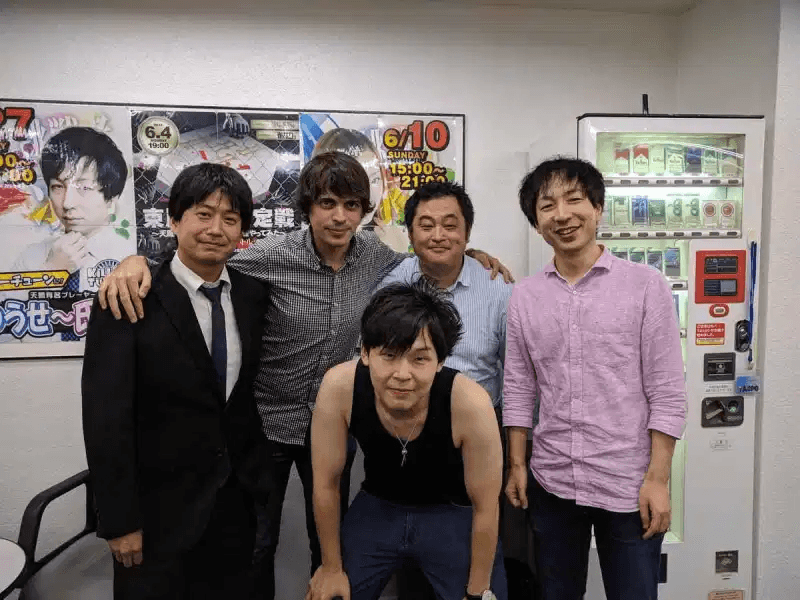
Deep dives into advanced tactics, tournament strategies, and pro-level insights from Japan's competitive mahjong scene.
Riichi Book 1 is the free riichi mahjong strategy guide. Here's the PDF, the rules book before it, and the pro books after it.
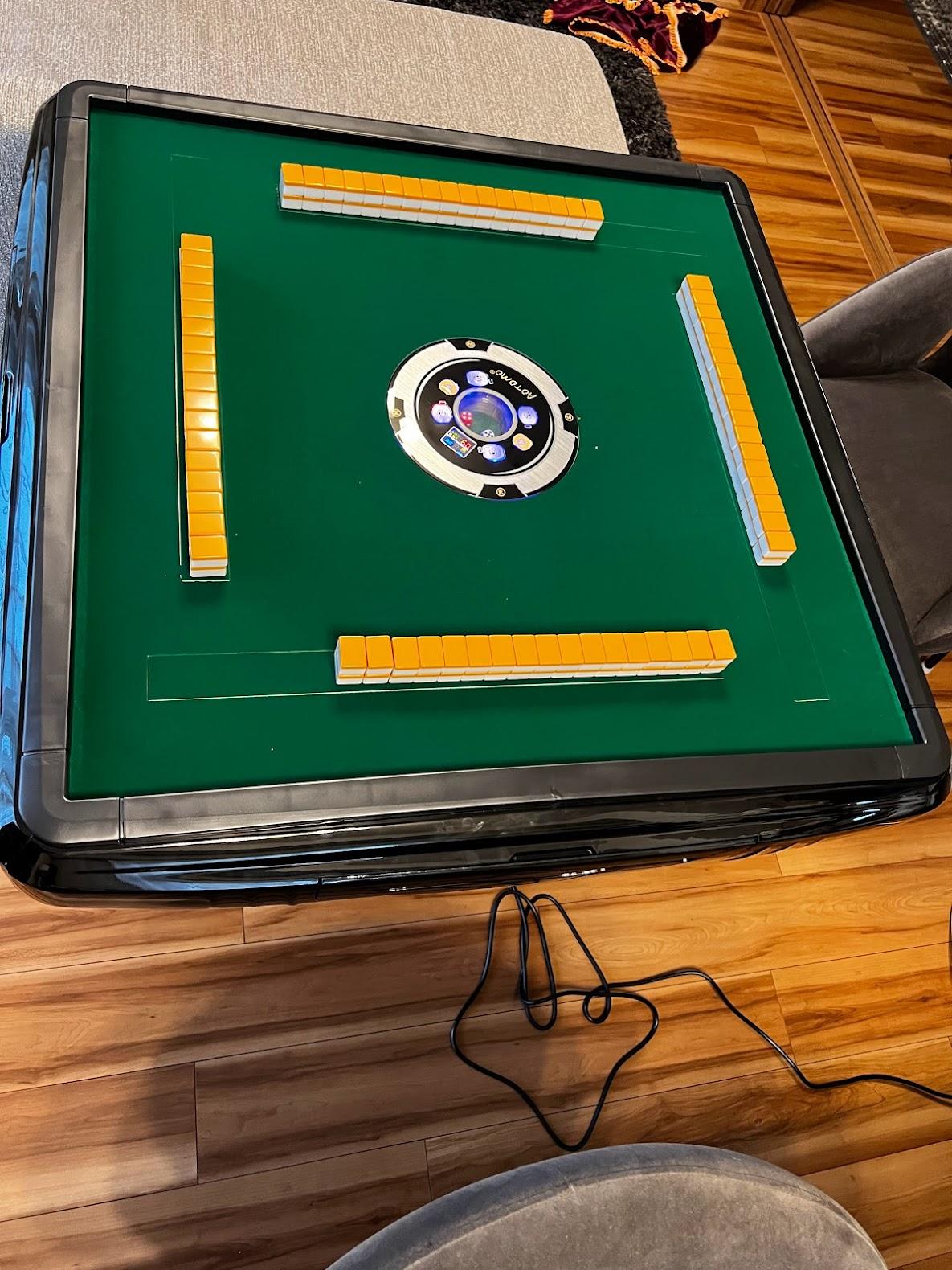
AMOS, Alban, Aotomo, and the Amazon importers: what each automatic mahjong table costs, how big and heavy it is, which tiles it takes, and what happens to the voltage and warranty when you ship one abroad.

I worked the floor of an Osaka mahjong parlor as a member. Here's what the job looks like from behind the counter, how a jansou makes money on every game, and why the smart way to play is no-rate.
Below the top rooms, placement is decided by the tiles you throw, not the hands you build. Charles Ellis called that a loser's game. Here's what it costs in points, where it ends, and the ten-hanchan log that shows your own unforced errors.

A two-sided wait declared on turn 8 wins 52% to 57% of the time at Tenhou's top level. A wait on a 5 wins 33%, or 46% behind a suji trap. Here's how often every common wait wins, turn by turn, and when dama beats riichi.
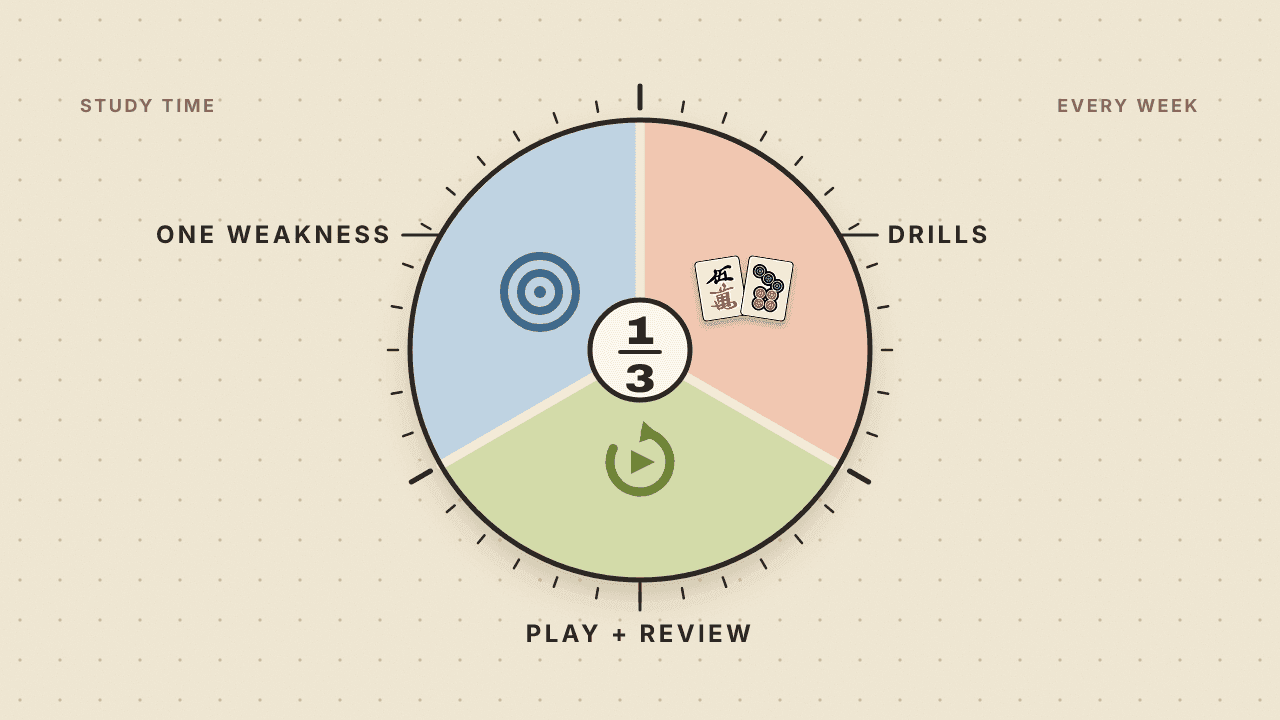
Split your mahjong study time in three. Drills, play plus a review of every log, and one weak area for the month. A chess grandmaster's rule, translated to riichi, with a 3-hour and a 6-hour weekly plan.
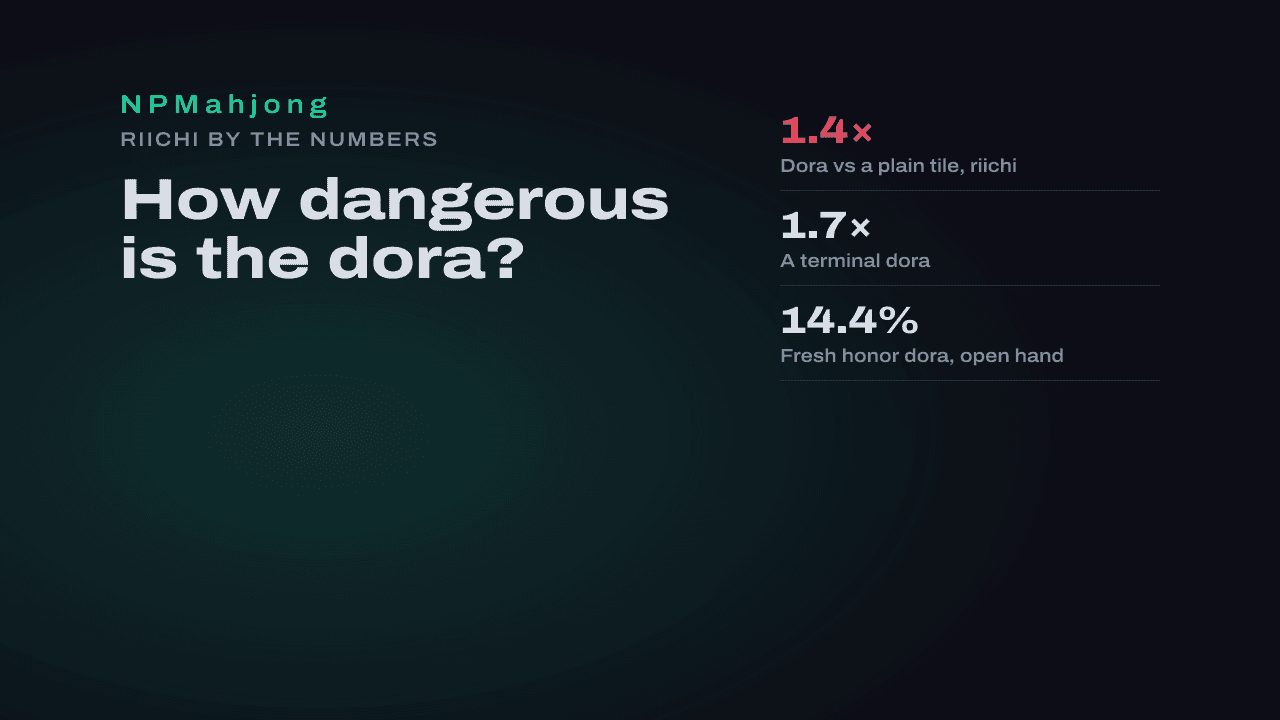
When the dora is a 5, 11.5% of riichi hands at Tenhou's top level are waiting on it. An ordinary 5 sits in 8.0% of riichi waits. Here's the dora's real danger by tile, by wait shape, and against open hands.
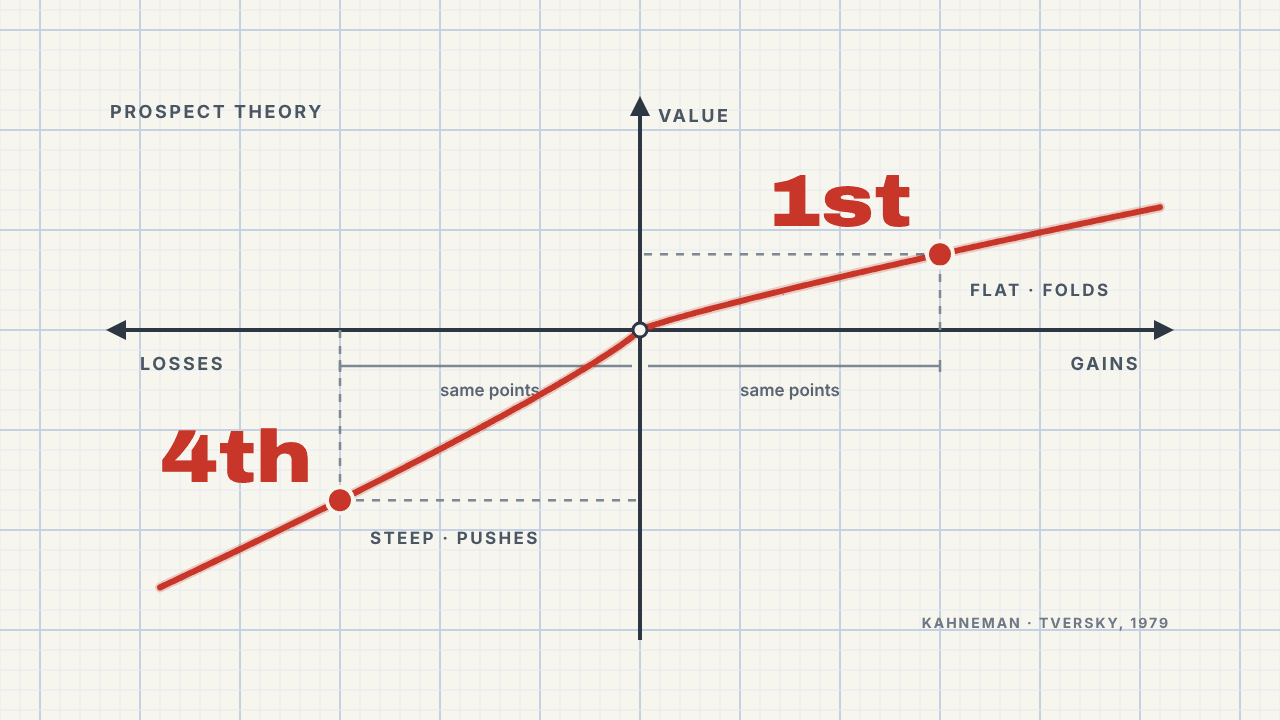
From 4th you chase the mangan. From 1st you fold hands that can't hurt you. Kahneman and Tversky described both reflexes in 1979, and Tenhou's All Last numbers show where each one is right and where it costs you the game.
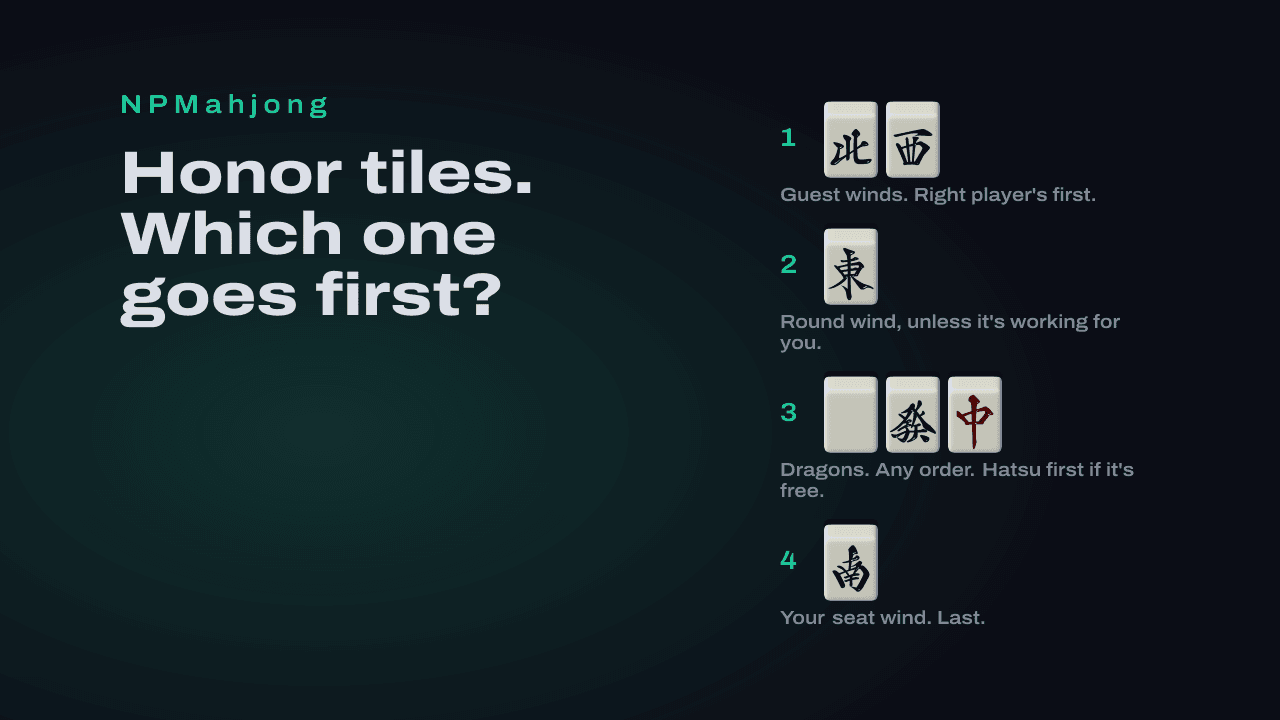
Guest winds go first and your own wind goes last. The round wind, the dragons and the isolated terminals sit in between, and each has a reason. Here's the full order for every seat, and the hands that break it.
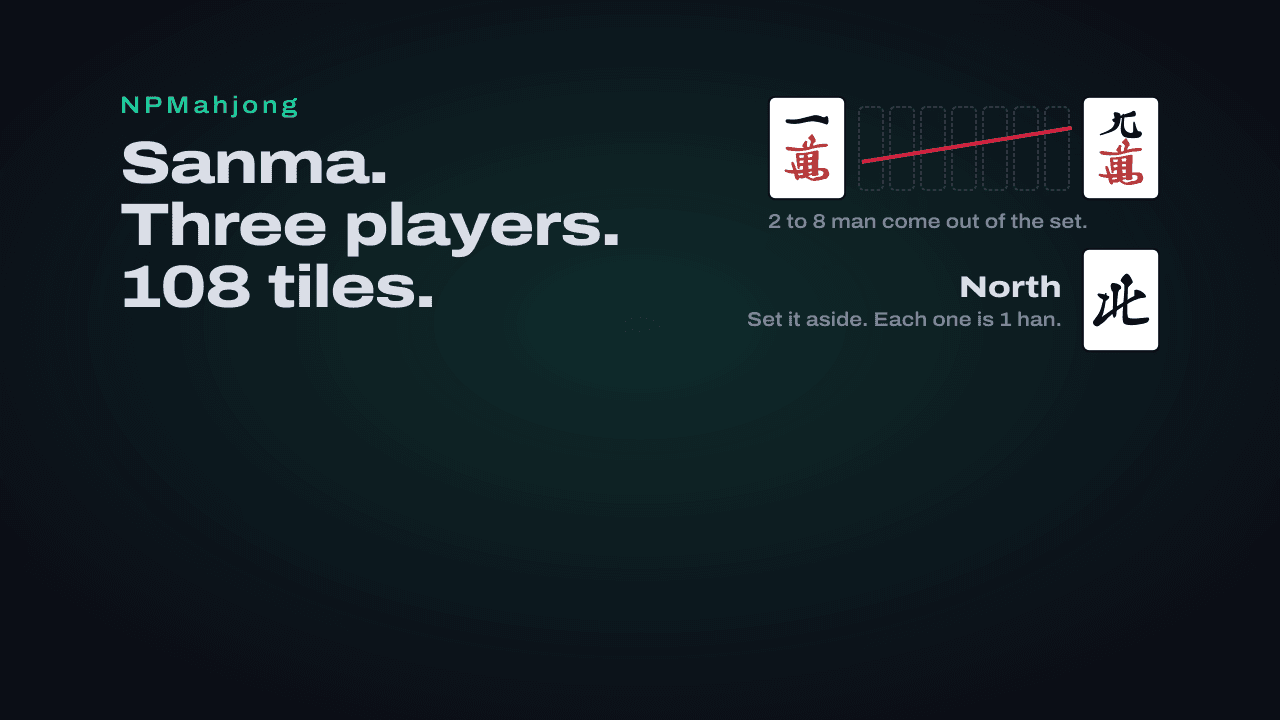
Three players, 108 tiles, and no chii. On Tenhou and Mahjong Soul, North is a dora you set aside and a tsumo pays less than a ron. The two pay honba differently.
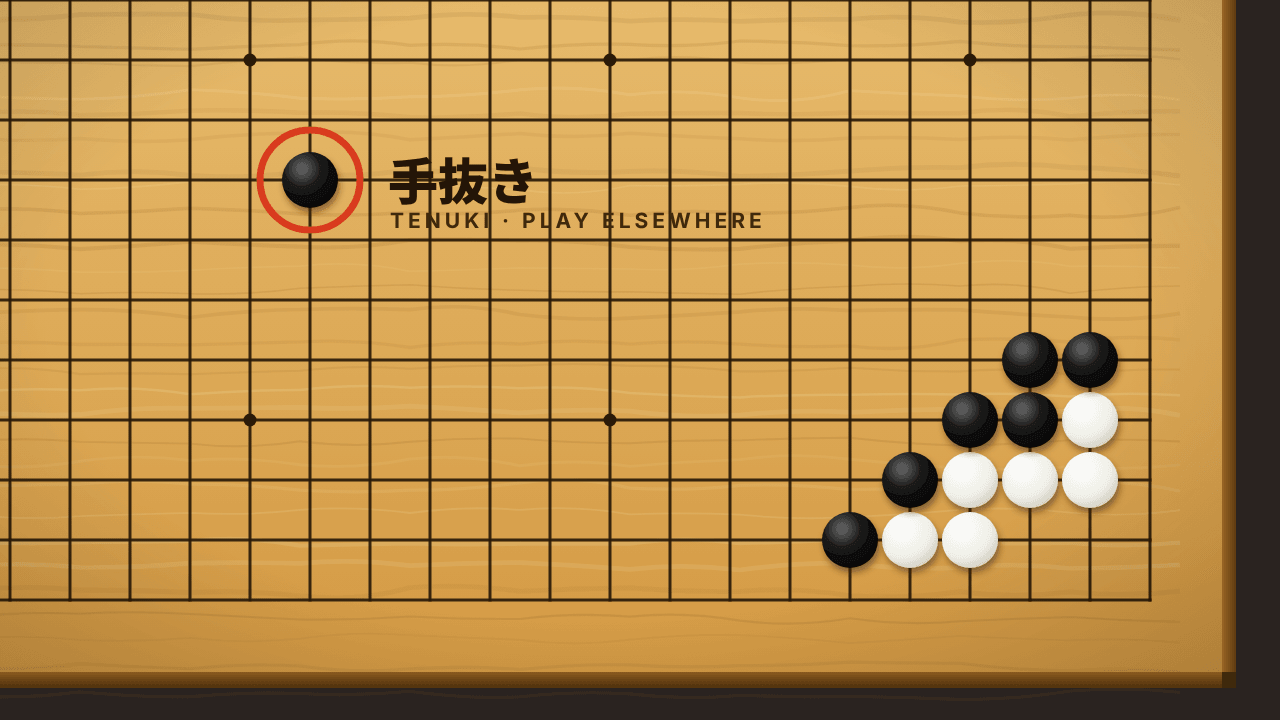
Go players have a word for not answering a threat because your own move is bigger. Riichi mahjong needs it. Here's when a riichi is a threat you ignore, when it's one you answer, and the Tenhou numbers that draw the line.

A suji tile can't deal into a two-sided wait. A kanchan, penchan, tanki, or shanpon still can. How to read suji, kabe, and genbutsu, and where the traps sit.
A free nanikiru deck from a Japanese professional mahjong player (JPMA) in Osaka. It starts with loose tiles and ends with a riichi on the table. Every answer shows the tile count behind it.
I'll email you a link to confirm, then the deck. After that, a few short emails on how to use it, then new problems and guides about once a week. One click unsubscribes. Privacy policy