
Tenpai and noten
A hand ends one of two ways: someone wins, or nobody does. When nobody wins, what matters is how close each player was.
- Tenpai (聴牌, "listening for tiles"): your hand is one tile from complete.
- Noten (ノーテン, "not tenpai"): it's more than one tile away.
A complete hand is four sets and a pair. There are two exceptions: chiitoitsu (seven pairs) and kokushi musou (thirteen orphans: one of each terminal and honor, plus a pair). You'll meet them in the yaku and yakuman chapters.
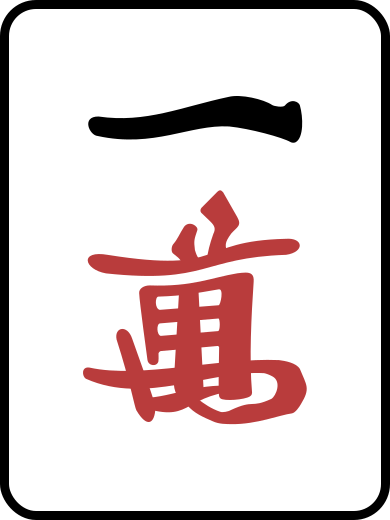
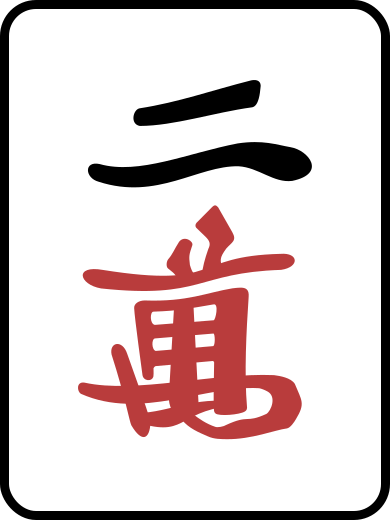
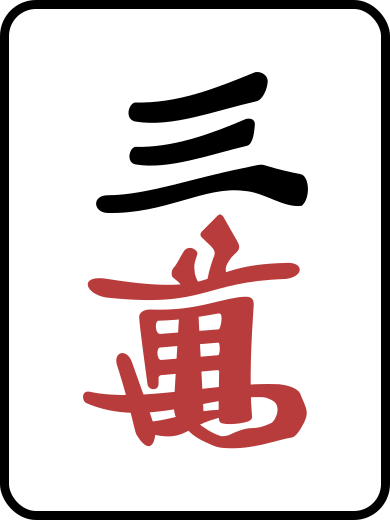
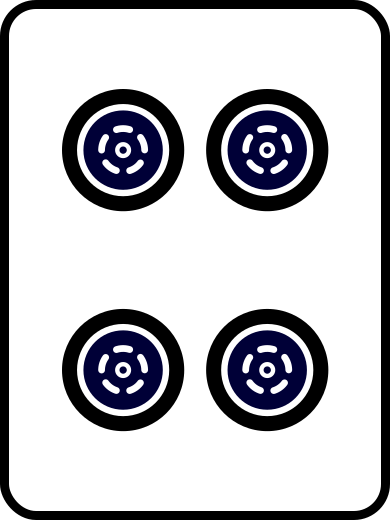
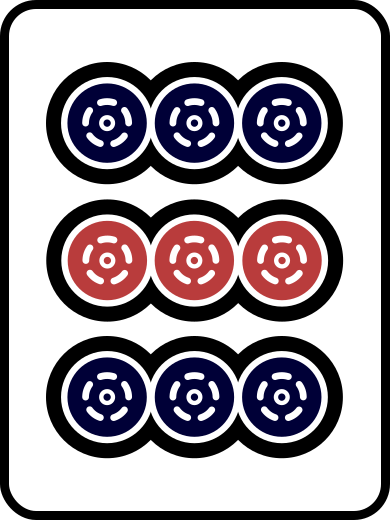
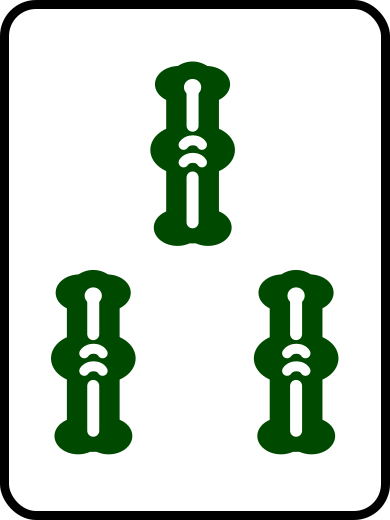
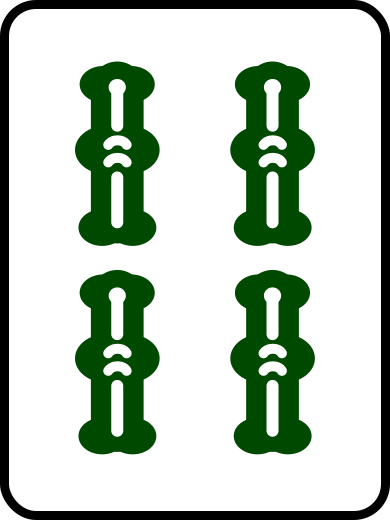
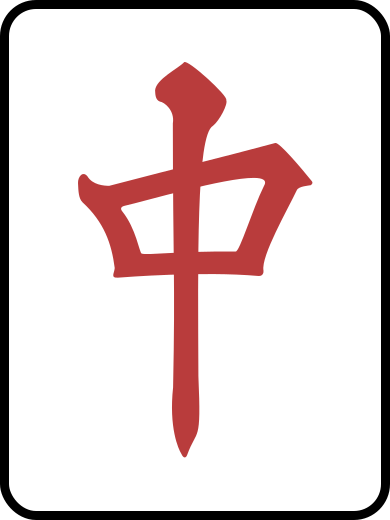
The site's tenpai guide counts the common waits tile by tile.
Exhaustive draw
If the live wall runs out and nobody has won, the hand ends in an exhaustive draw. In Japanese, any hand with no winner is a 流局 (ryuukyoku). The exhaustive draw in particular is also 荒牌平局 (kouhai heikyoku).
One player draws the last tile of the live wall and then makes the last discard of the hand. If nobody wins on that discard, the hand is over. The tenpai players show their hands. The noten players turn theirs face down.
Noten payments
At the draw, the noten players pay the tenpai players. That's the noten payment (ノーテン罰符 noten bappu). It moves 3,000 points in all: each tenpai player collects 3,000 divided by the number of tenpai players, and each noten player pays 3,000 divided by the number of noten players.
If only one player is tenpai, they collect 3,000: 1,000 from each noten player. If it's two and two, each noten player pays 1,500 and each tenpai player collects 1,500. If all four are tenpai, or none, nobody pays.
Simulator
Payments at an exhaustive draw
The wall has run out. Tap each seat to mark it tenpai or noten.
2 players tenpai: each gets 1,500 and each noten player pays 1,500.
East +1,500, South −1,500, West +1,500, North −1,500
The dealer is tenpai: they stay dealer (renchan).
Either way, a honba is added for the next hand.
There's one special case. A player who reaches the draw having discarded only terminals and honors, with none of them called, collects a mangan on Tenhou and Mahjong Soul. That's nagashi mangan (流し満貫). You'll see it in the yaku chapter.
Who deals next?
The dealer keeps the deal (renchan, 連荘) if they:
- win the hand, or
- are tenpai at an exhaustive draw.
In every other case, the deal passes to the player on the dealer's right, and the winds rotate. That happens when another player wins, or when the dealer is noten at the draw. If all four are noten, the deal passes too.
This rule is tenpai renchan (聴牌連荘). Tenhou, Mahjong Soul, the M-League, and the WRC and EMA rules all play it.
Honba
Every time the dealer keeps the deal, and every time a hand ends with no winner, you add one honba (本場). After a draw it goes up even if the deal passes.
The dealer puts a 100-point stick on their right, in plain view, for each honba. That stick is the 積み棒 (tsumibou). Automatic tables also show the count on their display.
Each honba adds 300 points to the next win:
- By ron, the discarder pays 300 more for each honba.
- By tsumo, each paying player adds 100 for each honba: 300 in all.
The honba go back to zero only when a non-dealer wins. For example:
- In East 1 the dealer wins. They keep the deal: next is East 1 with 1 honba (東一局一本場 ton ikkyoku ippon-ba).
- That hand ends in a draw with the dealer noten. The deal passes: next is East 2 with 2 honba.
- In East 2 a non-dealer wins. They collect the 2 honba, and East 3 starts with none.
The scoring chapter has a full example with honba and riichi sticks.
Riichi sticks
When you declare riichi, you put a 1,000-point stick in the middle of the table. That deposit is the 供託 (kyoutaku). Don't mix it up with the honba's tsumibou.
If someone wins by ron on the discard you declare riichi with, your riichi never takes effect and you don't pay the stick.
The stick stays on the table until someone wins. The winner takes every riichi stick there, their own included. If the hand ends with no winner, the sticks stay put and wait for the winner of the next hand. Any sticks left with no owner at the end of the game go to the player in first.
Abortive draws
Sometimes a hand is called off before the wall runs out. That's an abortive draw (途中流局 tochuu ryuukyoku). An abortive draw has no noten payments. On Tenhou and Mahjong Soul, the dealer keeps the deal, a honba goes on, and the riichi sticks stay on the table.
There are five cases.
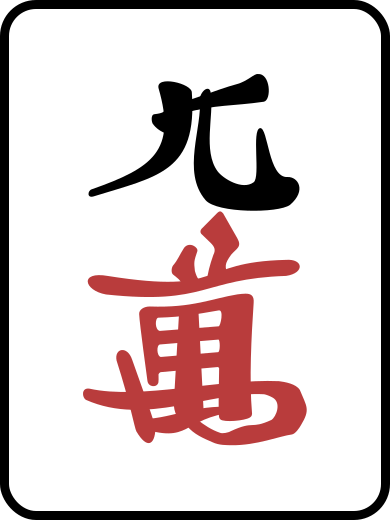
Nine terminals and honors
Nine kinds (九種九牌 kyuushu kyuuhai). On your first turn, before you discard and with no calls made by anyone (not even a closed kan), you hold 9 or more different terminals and honors. You can show your hand and call it off.
It's optional. You can also play on, for example to go for kokushi musou.

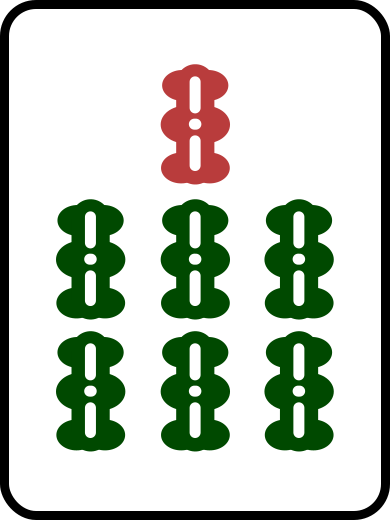
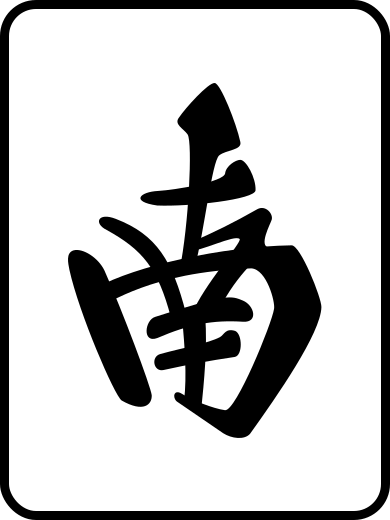
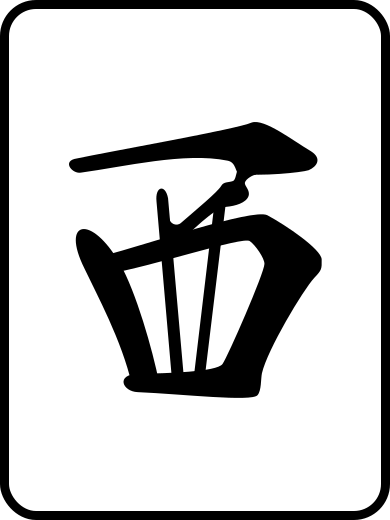
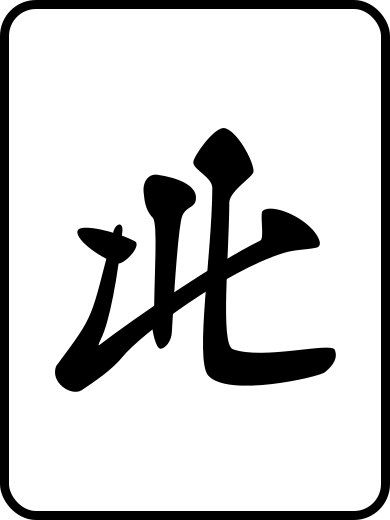
Four of the same wind
Four winds (四風連打 suufon renda). On the first go-around of the hand, with no calls, all four players discard the same wind. For example, all four throw North.
Four riichi
Four riichi (四家立直 suucha riichi). All four players declare riichi, and nobody wins by ron on the fourth player's discard. The four 1,000-point sticks stay on the table for the next winner.
Four kans
Four kans (四開槓 suukaikan, also 四槓散了 suukan sanra). Four kans are declared between two or more players, and nobody wins on the discard after the fourth kan.
If one player made all four kans, there's no draw: that player is going for suukantsu, a yakuman. Nobody can declare a fifth kan.
Triple ron
Triple ron (三家和 sanchahou). Three players ron the same discard. On Tenhou, the hand is called off.
What about chonbo?
A chonbo (チョンボ, also 錯和 or 冲和) is a serious foul, like declaring a win that isn't there. It isn't a draw, but it also ends the hand with no winner.
The player who commits it pays a penalty, which you'll see in rules and penalties. After that, the standard is to replay the same hand (yarinaoshi): the dealer doesn't change, no honba goes on, and any riichi sticks from that hand go back to their owners.
Tenhou and Mahjong Soul have no chonbo: the software won't let you declare a false win.
The end of the game
A hanchan ends when South 4, the last hand, is over and the dealer doesn't keep the deal. A tonpuusen ends the same way after East 4. Three situations change that.
Someone goes below zero. On Tenhou and Mahjong Soul the game ends as soon as a player drops below 0 points. That's tobi (飛び), also dobon. At exactly 0 you play on.
The dealer of the last hand is in first. On Tenhou and Mahjong Soul, if the dealer of the last hand wins or is tenpai at a draw, and is in first with 30,000 points or more, the game ends there. They don't have to keep dealing. That's agari-yame or tenpai-yame, covered in rules and penalties.
Nobody reached 30,000. On Tenhou and Mahjong Soul, if nobody has 30,000 points when South 4 ends, the game goes on into the West round (shaanyuu). It ends as soon as someone has 30,000 or more at the end of a hand.
When the game ends, you count the points. The 30,000 return, the oka, and the uma turn them into each player's final result. That's in the scoring chapter. Some house rules add penalties, like yakitori for a player who didn't win a single hand; they're in rules and penalties.
At a club or a parlor you almost never play a single game. You play several in a row.
A game, step by step
You've now seen everything that happens in a game. Here it is in order:
- Draw for winds and take your seats.
- Each player gets their points: 25,000.
- Mix the tiles and build the walls.
- The dealer rolls the dice, the wall breaks, and the dora indicator turns face up.
- Deal the tiles: 14 for the dealer, 13 for everyone else.
- The dealer makes the first discard.
- The others can take that discard: to win by ron, or with a call of pon, kan, or chi.
- If nobody takes it, the next player draws from the wall. If that tile completes their hand, they win by tsumo. If not, they discard.
- Play goes on until someone wins or the hand ends in a draw. The dealer keeps the deal or passes it, and the honba go up or back to zero. Back to step 3.
- When the four hands of the East round and the four of the South round are done, the game is over. It can end sooner if someone goes below zero, or carry on into the West round.
- Count the points, apply the return, the oka, and the uma, and see who won.
One important rule is left before you say "ron" for the first time: furiten. Turn to the next chapter, rules and penalties.