
What a yaku is
You know how the table works. What's left is the part that decides whether your hand can win and what it pays: the yaku (役), the heart of Japanese mahjong. A yaku isn't a "hand" in the poker sense. Poker fixes its combinations in advance. In mahjong you build your hand freely, then check which conditions it meets. Each condition met is a yaku, and the more you stack, the more the hand is worth. That's why "condition" translates the word better than "hand".
You need at least one yaku to win. Dora, red fives included, add han but aren't yaku: a hand with three dora and no yaku can't win. Under standard rules you can complete your yaku with the winning tile (atozuke), and almost every yaku also counts on an open hand.
A basic strategy is to combine as many easy yaku as you can. Some come quickly. Others take patience and luck.
Han, the value of each yaku
A yaku's value is counted in han (飜). Han aren't points. Each han doubles the hand's base value, up to the mangan limit. The full calculation is in Scoring. For now, all you need is how many han each yaku gives: more han, more points.
Don't mix up the two words. "A hand with 2 yaku" isn't the same as "a 2 han yaku". Japanese says 一飜役, a "1 han yaku". So does this book.
Past the yaku come the yakuman, hands so hard they pay the maximum outright. They get their own chapter: Yakuman.
Three kinds of yaku
Yaku split by how they behave when you call tiles:
- Closed only (menzen). They count only if you haven't called chi, pon, or an open kan. A closed kan doesn't open your hand.
- Kuisagari (食い下がり, "drops when you eat"). They count open or closed, but lose 1 han when open.
- Same value. They're worth the same open or closed.
Then there are the situational yaku, which depend on when or how you win, not on the shape of the hand. They come first. Every yaku in this chapter opens with a line that gives its value closed and open.
How to read a winning hand
Two rules decide which yaku you count:
- Each tile does one job. In any reading of the hand, a tile belongs to a pair, a triplet, or a sequence, never to two of them at once.
- You count the reading that pays most. If a hand breaks down two ways, you take the one worth more points (高点法, koutenhou). You'll see it in action with ryanpeikou.
Situational yaku
These yaku depend on the moment or the way you win: riichi, ippatsu, the last tile of the wall, a kan. Several of them add to any hand, even one with no other yaku.
Riichi


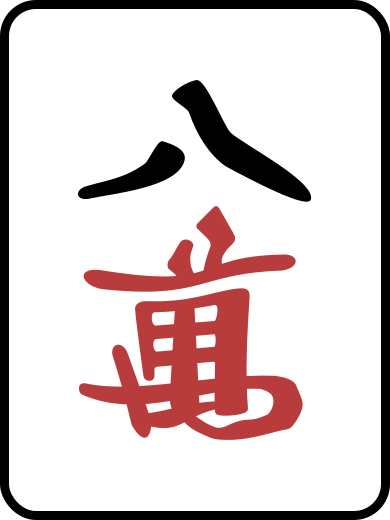
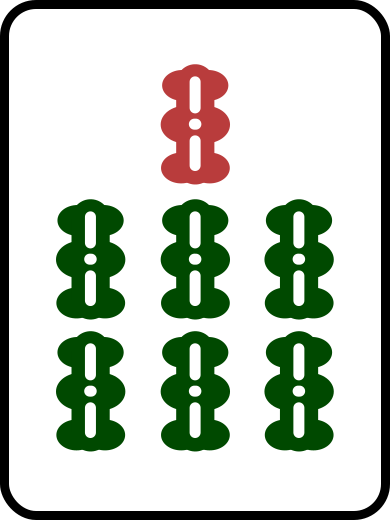
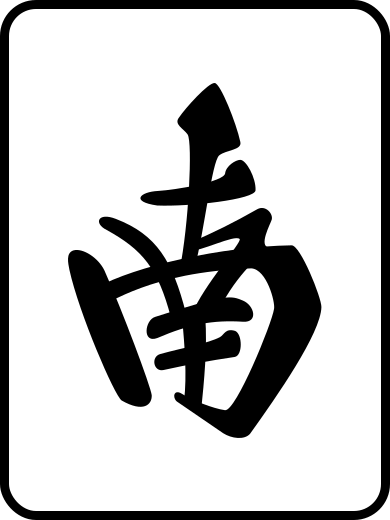
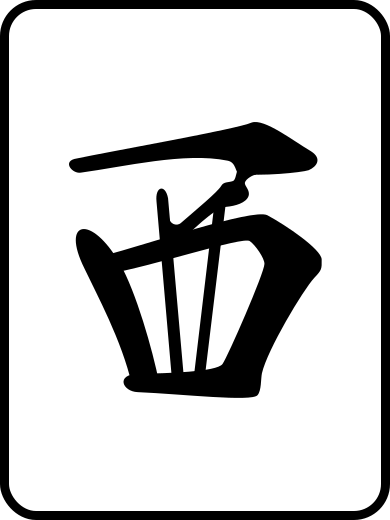
Riichi is the cornerstone yaku of Japanese mahjong. People often tie it to the English word reach, but the name most likely comes from the Chinese reading of 立直 (lìzhí). It's only 1 han, and it brings a lot with it: it lets you win with no other yaku in the hand, it gives you a shot at ura dora, and it pushes everyone else onto defense.
It's the most common and most flexible yaku in the game. Finishing a game with a good score without a single riichi is hard.
How to declare
You can declare riichi when all of this holds:
- Your hand is closed. A closed kan is allowed.
- You're in tenpai.
- At least 4 tiles are left in the live wall, so you have at least one more draw.
- You have at least 1,000 points, because you're about to put them on the table.
On your turn, say "riichi" and turn your discard sideways. If nobody wins on that tile, put a 1,000-point stick in front of your discards and play goes on. If someone calls that tile, turn your next discard sideways instead, so everyone can see when your riichi started. If someone wins on your declaration tile, the riichi doesn't count and you keep your 1,000.
From the moment you declare, your hand is locked. You draw, and if the tile doesn't win, you discard it. You can't call chi or pon either.
Kan after riichi
The one exception is a closed kan. If you hold three identical tiles used as a triplet and draw the fourth, you can declare a closed kan, as long as the kan changes neither your wait nor the structure of your hand. It's off if those three tiles do another job, such as two as the pair and one inside a sequence. And the kan has to use the tile you just drew: you can't keep it and declare later.
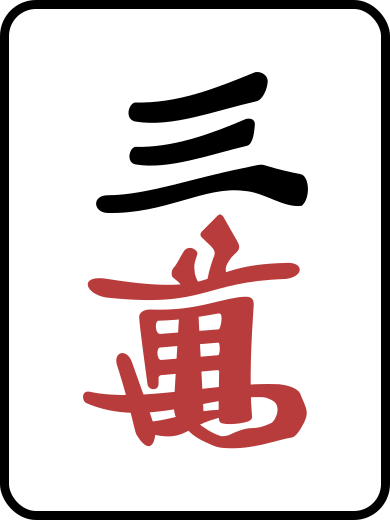
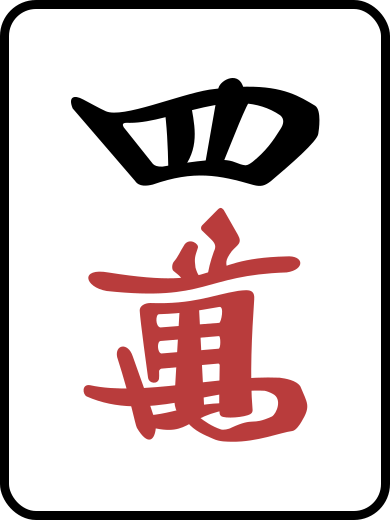
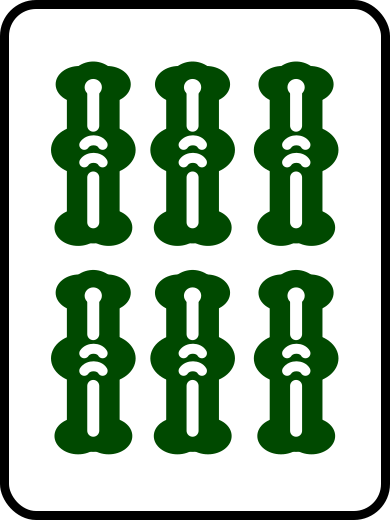
These hands can declare a kan in riichi, because the kan leaves the wait alone:
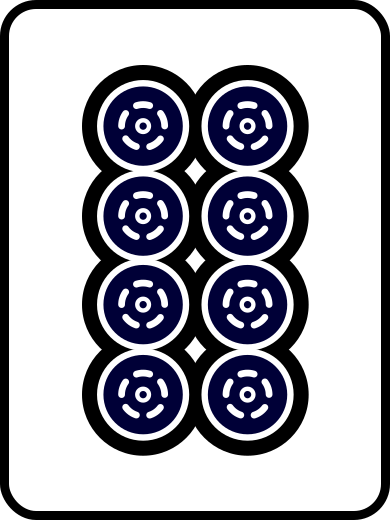
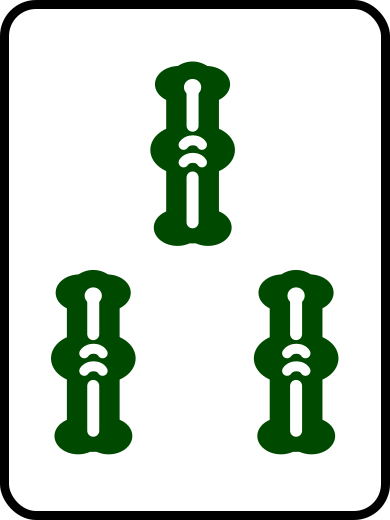
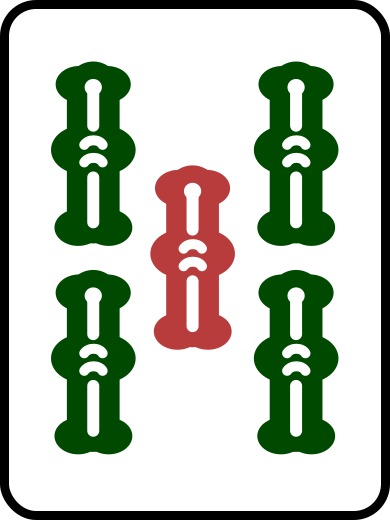
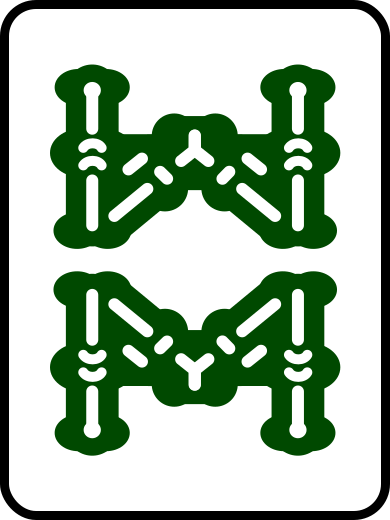
These can't, because the kan changes the wait:
Several riichi and the sticks
More than one player can be in riichi in the same hand. If all four declare and nobody wins on the fourth declaration tile, Tenhou and Mahjong Soul end the hand in an abortive draw.
Whoever wins the hand takes every riichi stick on the table, including sticks left over from earlier hands. What happens to them after a draw or at the end of the game is in riichi sticks.
If you win in riichi, flip the ura dora indicators: the tiles under each dora indicator. Each one points to one more dora, for you alone.
Riichi without tenpai, and furiten riichi
Declaring riichi when you aren't in tenpai is noten riichi (ノーテンリーチ). After a riichi you only show your hand in two cases: an exhaustive draw and the four-riichi abortive draw. At an exhaustive draw, a player in riichi has to show tenpai. A noten hand is chonbo, the heavy penalty covered in rules and penalties. On Tenhou and Mahjong Soul the software won't let you declare riichi without tenpai.
Another unorthodox play is furiten riichi (フリテン立直): declaring riichi while you're furiten. And if you let a winning tile go by after you declare, you're furiten until the end of the hand. With a wait on three or more kinds of tile, a furiten riichi can still be a good idea: you can only win by tsumo, but you have plenty of tiles to do it with.
Dama and chasing riichi
Riichi isn't always right, especially with big hands that already have a yaku. Sitting in closed tenpai without declaring is damaten (黙聴, ダマ) or yamiten (闇聴): silent tenpai.
Declaring riichi after someone else already has is okkake riichi (追っかけリーチ, chasing riichi). It's an aggressive play, and a dangerous one.
Full guide: riichi.
Ippatsu
Win within one go-around of your riichi, up to and including your next draw, and you add 1 han for ippatsu. Ron and tsumo both count. The condition: nobody calls chi, pon, or kan in that window. Closed kans count too, your own included. A kan robbed with chankan doesn't cancel ippatsu.
Ippatsu only exists on top of riichi, so a hand with riichi and ippatsu is at least 2 han.
Full guide: ippatsu.
Daburu riichi
If your starting hand is already in tenpai and you declare riichi with your first discard, the riichi is worth 2 han instead of 1. It's also written Wリーチ or 両立直. Nobody can have called chi, pon, or kan before it, not even a closed kan. It doesn't add to riichi. It replaces it.
It's rare, but it happens. Win in that same go-around and you add ippatsu: 3 han in all.
Full guide: double riichi.
Open riichi, a local rule
Menzen tsumo
Win by tsumo with a closed hand and you add 1 han for menzen tsumo. The full name is menzenchin tsumohou. An open hand doesn't get it. A closed hand in tenpai always has a yaku on a tsumo, even with nothing else.
Two other yaku tied to drawing your winning tile do count on an open hand: haitei and rinshan kaihou.
Full guide: menzen tsumo.
Haitei
Win by tsumo on the last tile of the live wall and you add 1 han for haitei. The full name is haitei raoyue, also written 海底撈月: "fishing the moon from the bottom of the sea". It's enough to win even with no other yaku. A closed hand that wins this way scores menzen tsumo and haitei, 2 han. An open hand scores only haitei, 1 han.
Houtei
Nobody can call the last discard of the hand except to win on it (you saw this in The turn). Win by ron on that discard and you add 1 han for houtei. The full name, houtei raoyui, means "fishing a fish from the bottom of the river". The river is also the name for the discard area. It's worth the same open or closed, and it's enough to win with no other yaku. Haitei and houtei never land in the same hand: one is a tsumo, the other a ron.
Full guide: haitei and houtei.
Rinshan kaihou
When you declare a kan, you draw a replacement tile from the dead wall. If that tile completes your hand, you add 1 han for rinshan kaihou, "a flower blooming on the mountain". It counts on an open hand and with no other yaku.
It counts as a tsumo, so a closed hand adds menzen tsumo too. It doesn't combine with ippatsu, because your own kan cancels it, or with haitei. It's hard to get: you need to be in tenpai, have a kan to declare, and draw exactly your tile as the replacement.
Haitei, houtei, and rinshan kaihou come down to luck. Nobody can know what the last tile, the last discard, or the replacement tile will be.
Full guide: rinshan kaihou.
Chankan
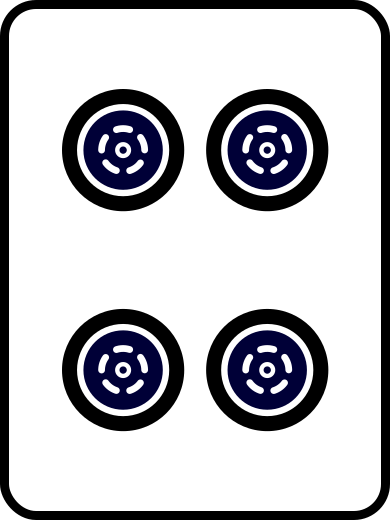
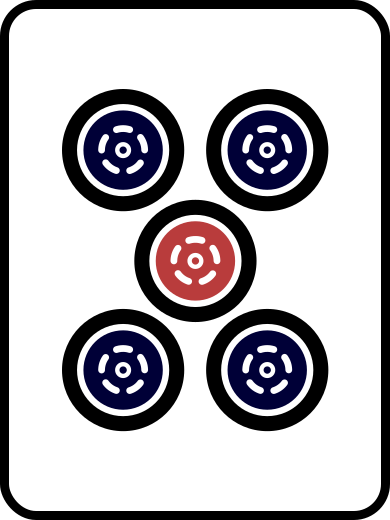
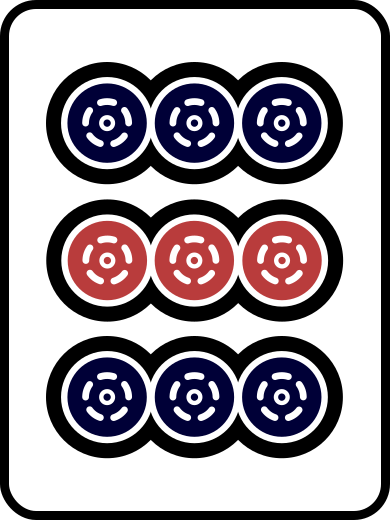
Chankan, also written 搶槓, means robbing a kan to win. Say an opponent has a pon on the table, draws the fourth tile, and adds it to the pon (an added kan, shouminkan or kakan). If that tile completes your hand, you call ron on it and add 1 han for chankan. It's a ron, so the player who added the kan pays.
You can only rob an added kan. An open kan called on a discard (daiminkan) can't be robbed. Neither can a closed kan, except under some rules for kokushi musou.
Any kan you declare while an opponent is in tenpai has a cost: you give them one more dora, and one more ura dora if they're in riichi. An added kan also risks chankan.
Full guide: chankan.
Basic yaku
Two yaku you'll use in almost every game. They're worth the same open or closed.
Tanyao
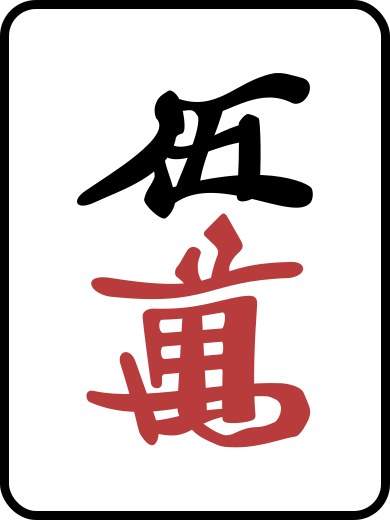
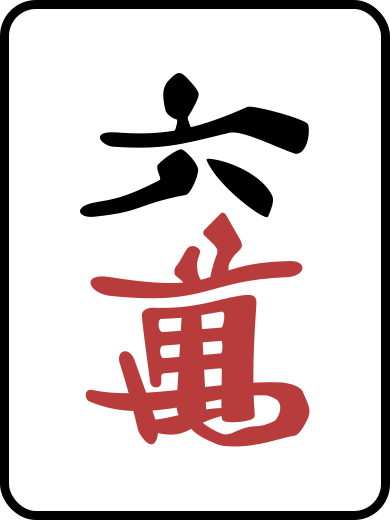
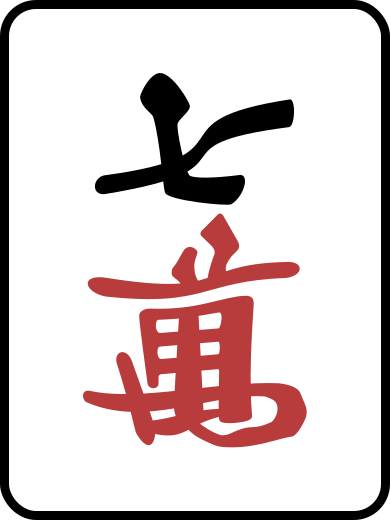
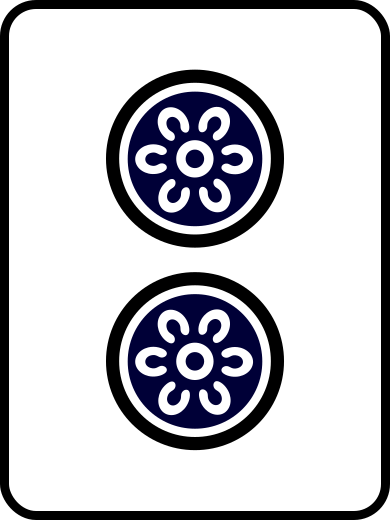
The full name is tanyaochuu, "no ones or nines". In English it's "all simples": the hand holds only number tiles from 2 to 8, with no terminals or honors. That's the only restriction. It can have triplets, kans, or sequences.
Open tanyao is called kuitan (喰い断, "eating tanyao"), or nakitan. The rule that allows it is kuitan ari. The rule that doesn't is kuitan nashi. Kuitan ari is the standard today: Mahjong Soul, Tenhou in its main rooms, M-League, WRC, and EMA all play it.
Tanyao is one of the first yaku to learn: it's basic, flexible, and combines with lots of others. The classic combination is mentanpin: riichi, tanyao, and pinfu.
It's a fast hand for when you hold several dora, when a lot of riichi sticks and honba sit on the table, when you're the dealer and want to keep the deal, or when an opponent's hand looks dangerous and you want to end the hand early. Its weak spot: opponents read it easily and defend by discarding terminals and honors, which are no use to you.
Full guide: tanyao.
Yakuhai
Yakuhai means "yaku tiles". It's also called yakupai or fanpai (飜牌). A triplet or a kan of these tiles adds 1 han on the spot:
- Any of the three dragons: white, green, or red.
- The round wind: East or South. If the game runs into a West round, West.
- Your seat wind.
Each triplet counts separately: two dragon triplets are 2 han. A yakuhai pair isn't a yaku. It only adds fu.
It's the simplest yaku there is, and it fits any hand. An early dragon pon locks in your yaku and lets you play open.
If your seat wind matches the round wind, as the dealer's does in the East round, that triplet counts twice: 1 han as seat wind and 1 as round wind. That's "double East" (ダブ東), 2 han.
Full guide: yakuhai.
Closed-hand yaku
The following yaku count only on a closed hand (menzen): no chi, no pon, no open kan.
Chiitoitsu
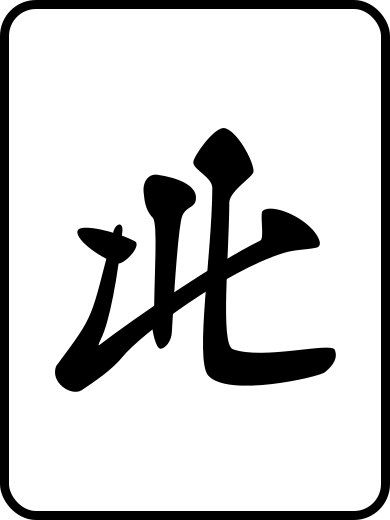
Chiitoitsu, chiitoi at the table, is seven pairs. It breaks the normal hand shape: instead of four sets and a pair, it has seven different pairs. The wait is always a single tile, the one that completes the last pair. It has its own fu count (always 25 fu), which you'll see in Scoring.
Its shape means it can't be open. Four identical tiles don't count as two pairs: all seven have to be different. It combines with tanyao, honitsu, chinitsu, honroutou, riichi, and dora.
Full guide: chiitoitsu.
Pinfu
Pinfu means "peace". It's the hand that scores no fu for its shape. Scoring makes that idea clear. For now, these are the conditions:
- Four sequences.
- A pair that isn't yakuhai: no dragon, no seat wind, no round wind.
- A ryanmen wait, two-sided: in tenpai you hold three complete sequences and two consecutive tiles that wait on two different tiles.
- A closed hand.
The example has its three sequences. You're the dealer, so North is neither your wind nor the round wind, and it works as the pair. The 7-8 man waits on 6 or 9: two kinds of tile, up to eight tiles in all if none has shown up yet.
Pinfu turns up all the time. It often comes with menzen tsumo, riichi, tanyao, iipeikou, or dora. On a ron, a pinfu hand is always 30 fu. On a tsumo it's 20 fu, because it doesn't take the 2 fu for tsumo, and it scores menzen tsumo as well.
Full guide: pinfu.
Iipeikou
Iipeikou is two identical sequences: same numbers, same suit, such as 2-3-4 man twice. The "ii" is the Chinese numeral for "one" (yī). It's a simple yaku that adds value to a tanyao or pinfu hand. Since it's closed only, you lose it the moment you build an open tanyao.
The example meets the pinfu conditions: it waits on 5 or 8 man. If the 8 comes, the hand has two identical 6-7-8 sequences and adds iipeikou. With the 5, it's pinfu alone. Careful, though: if you've declared riichi, the 5 comes, and you let it go to wait for the 8, you're furiten until the end of the hand. Pinfu with iipeikou is a flexible combination.
Full guide: iipeikou.
Ryanpeikou
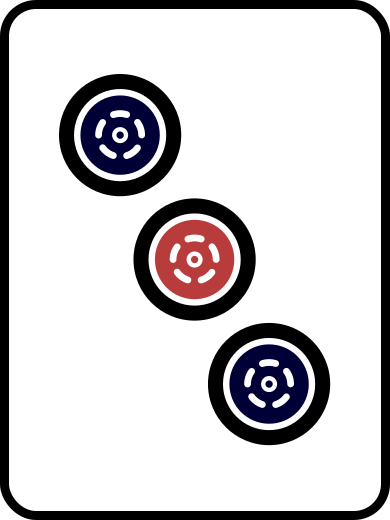
Ryanpeikou is two iipeikou in one hand. "Ryan" is the Chinese numeral for "two". The two pairs of sequences don't need to be related. It can combine with pinfu, as in the example, and it's closed only. It's worth 3 han, and you don't add iipeikou on top.
Look at the complete hand in the example: 11, 22, and 33 pin, 33, 44, and 55 sou, and 99 man. That's seven different pairs, the same as chiitoitsu. Here both reading rules kick in: each tile does one job, and you count the reading that pays most. Ryanpeikou (3 han) always beats chiitoitsu (2 han, 25 fu), so this hand always counts as ryanpeikou.
Full guide: ryanpeikou.
Yaku that lose 1 han when open
These yaku count open or closed, but lose 1 han when open (kuisagari).
Ittsu
The full name is ikkitsuukan, "straight through in one go". Chinese calls the pattern 一條龍, "one dragon". In English it's a pure straight. It's three specific sequences in one suit: 1-2-3, 4-5-6, and 7-8-9. Together they run from 1 to 9.
You can hold 1 through 9 of a suit without ittsu. What counts is those exact three sequences. In the example, the 6 makes the hand 1-2-3, 4-5-6, and 6-7-8. The 3 makes it 1-2-3, 3-4-5, and 6-7-8. Either one wins, but with no straight.
Full guide: ittsu.
Sanshoku
The full name is sanshoku doujun, "three colors, same sequence". Shoku (色, color) is the Japanese word for the suits. It's the same sequence in all three suits, such as 5-6-7 in man, pin, and sou.
It looks like sanshoku doukou, and people mix up the names all the time: that one uses triplets. Sanshoku combines with pinfu, though getting it closed takes some luck. When it lands, it pays well.
Full guide: sanshoku.
Chanta
Chanta is short for honchantaiyaochuu. Every meld and the pair contain a terminal or an honor. Sequences can hold a 2, 3, 7, or 8, as long as they include the 1 or the 9: 1-2-3 or 7-8-9. The honors can be any wind or dragon.
The hand needs at least one sequence and at least one honor. With no sequences it would be honroutou. With no honors it would be junchan, which is worth more. In the example the pair is South: if South is your seat wind or the round wind, that pair adds fu but not han.
Full guide: chanta.
Junchan
"Jun" means pure: junchan is chanta without honors. Every meld and the pair contain a terminal, and there are no winds or dragons. It's worth 1 han more than chanta.
It always has at least one 1-2-3 or 7-8-9 sequence. If it were only triplets of ones and nines, it would be chinroutou, a yakuman (see Yakuman).
Full guide: junchan.
Honitsu
Honitsu is short for hon'iisou. "Hon" means mixed, for the honors, and "iisou" means one color. The hand holds tiles of one suit plus honors. In English it's the half flush.
It's easy to build, and it combines with yakuhai, toitoi, chanta, or chiitoitsu. Make sure it always carries another yaku. In Japan, a hand worth only honitsu is a baka-hon ("baka" means fool): the classic beginner's hand. With no honors it would be chinitsu, worth twice as much.
Full guide: honitsu.
Chinitsu
Chinitsu is short for chin'iisou, the full flush: the whole hand is one suit, with no honors. For what it pays, it's an easy hand to build. The hard part at first is reading its waits.
One warning: the shape 1-1-1-2-3-4-5-6-7-8-9-9-9 in one suit, plus any other tile of that suit, isn't chinitsu anymore. It's chuuren poutou, a yakuman (see Yakuman).
Full guide: chinitsu.
Reading the waits of a one-suit hand takes practice:
Drill
Which tiles complete this hand?
Hand 1 of 12
This hand is tenpai. Mark every tile that completes it, then check.
Man
Pin
Sou
Honors
Mark one or more tiles.
The wait quiz on this site has more of these.
Yaku worth the same open
These yaku are worth the same open or closed.
Toitoi
The full name is toitoihou, "a win of pairs". The hand has four triplets or kans and a pair, with no sequences. There's no other condition.
You usually build it open, with pons. If the hand is fully closed, with all four triplets concealed, it isn't toitoi anymore but suuankou, a yakuman (see Yakuman). It combines with sanshoku doukou, yakuhai, honitsu, chinitsu, tanyao, sanankou, sankantsu, and honroutou.
Full guide: toitoi.
Sanshoku doukou
Sanshoku doukou means "three colors, same triplet": three triplets of the same number, one in each suit. It pairs easily with tanyao or toitoi.
If none of the three triplets was formed with another player's tile, by pon or by ron, the hand adds sanankou too. In the example the sou triplet is a pon, so there's no sanankou.
Full guide: sanshoku doukou.
Sanankou
Sanankou is three triplets formed without your opponents' tiles: none from a call, none by ron. If your wait completes the last triplet, you have to win by tsumo to score it, because a triplet completed by ron doesn't count as concealed. The rest of the hand is free: it can be open and hold other sequences or called triplets.
Full guide: sanankou.
Sankantsu
Sankantsu is three kans of any kind: open, closed, or added. The rest of the hand is free. It goes well with toitoi and sanankou, but a kan counts as a concealed triplet for sanankou only if it's a closed kan.
It has its risks. Every kan gives one more dora to an opponent who may be close to winning. And if another player declares a fourth kan, Tenhou and Mahjong Soul abort the hand: it's the four-kan draw. On the bright side, it's a good start toward the suukantsu yakuman.
Full guide: sankantsu.
Toitoi, sanshoku doukou, sanankou, and sankantsu all revolve around threes, and each one is worth 2 han. They combine well with each other and they're easy to remember. Two more to go.
Honroutou
Honroutou is a hand made only of terminals and honors, the opposite of tanyao. Every sequence holds a simple tile, so there are only two ways to build it: as toitoi or as chiitoitsu. That's why players also call it honrou toitoi or honrou chiitoi.
It's worth 2 han, and it always comes with toitoi or chiitoitsu, which are 2 han each. In practice it's never worth less than 4 han. On Tenhou and Mahjong Soul the result screen shows it that way: "honroutou 2, toitoi 2".
With no honors, the hand would be chinroutou. With no terminals, tsuuiisou. Both are yakuman (see Yakuman).
Full guide: honroutou.
Shousangen
Shousangen means "little three elements", or little three dragons: two dragon triplets and a pair of the remaining dragon. The rest of the hand is free.
It's worth 2 han, plus 1 han of yakuhai for each of the two dragon triplets: 4 han at least. It's often one tile away from daisangen, the yakuman of three dragon triplets (see Yakuman).
Full guide: shousangen.
That completes the standard yaku.
Nagashi mangan
Nagashi mangan (流し満貫) is more a prize than a yaku: it gives no han and pays as a mangan. If the hand ends in an exhaustive draw, every one of your discards is a terminal or an honor, and nobody called any of them, you collect as if you'd won a mangan by tsumo. Your hand doesn't matter. You don't even need to be in tenpai.
On Tenhou and Mahjong Soul it's still a draw, not a win. The nagashi payment replaces the tenpai payments, and the dealer keeps the deal only if in tenpai. On Tenhou your own calls don't cancel it. What matters is that nobody calls your discards.
Full guide: nagashi mangan.
Practice
Look at each hand and name its yaku:
Drill
Which yaku does this hand have?
Hand 1 of 12
Tick every yaku in the hand, then check. No dora and no timing yaku (ippatsu, haitei…).
- Tsumo
- Closed hand
- Riichi
- Round wind: East
- Seat wind: South
Tick one or more yaku.