
You fold against the dealer's , the dealer tsumos a anyway, and you pay 4,000. Next game you push a cheap into a riichi and win. Learn from those two results and you'll fold less and push more, and both lessons are wrong. Mahjong pays for skill through a thick layer of luck, so you need a way to grade a decision without its result, and a sense of how many games your numbers need before they mean anything.
Skill shows only over hundreds of games
Skilled pros take 1st about 30% of the time and still finish 4th about 20% of the time, as Winning riichi mahjong puts it. A player with no edge takes each place 25% of the time. So the best player at the table misses 1st in seven games out of ten. Over one evening, luck decides far more than skill. Over hundreds, the edge shows through. Luck shrinks as the sample grows, but it never drops to zero.
Here's a choice where the right answer can lose.
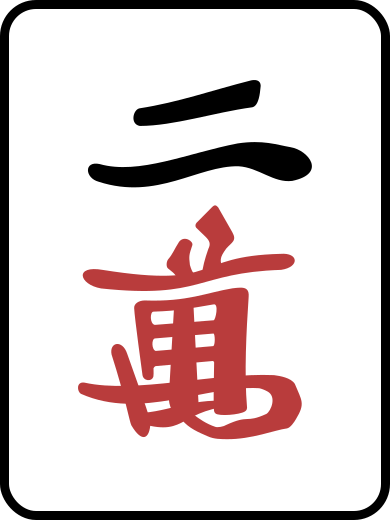
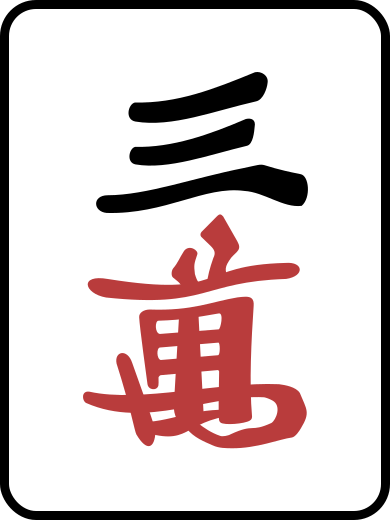
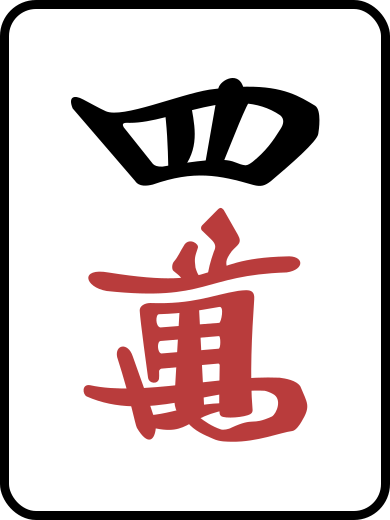
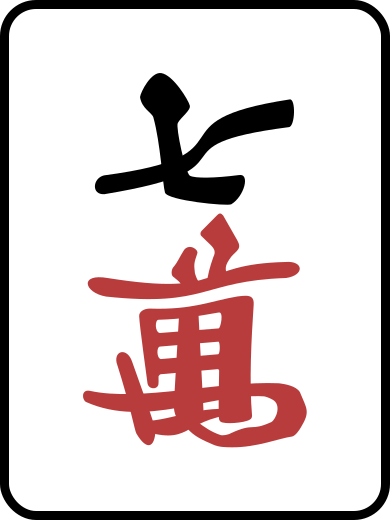
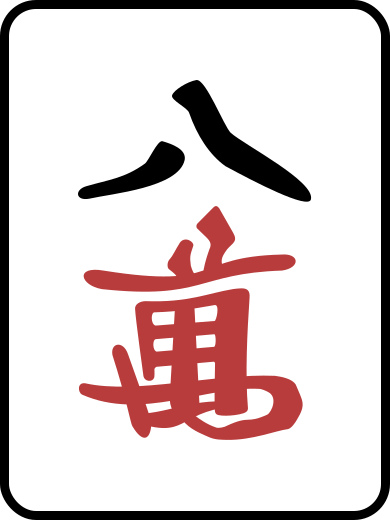

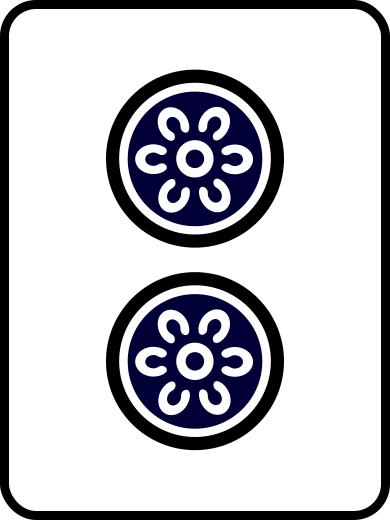
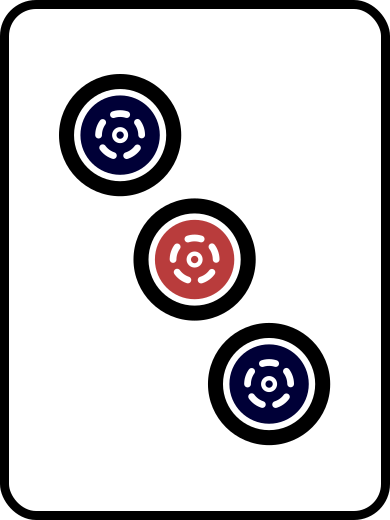
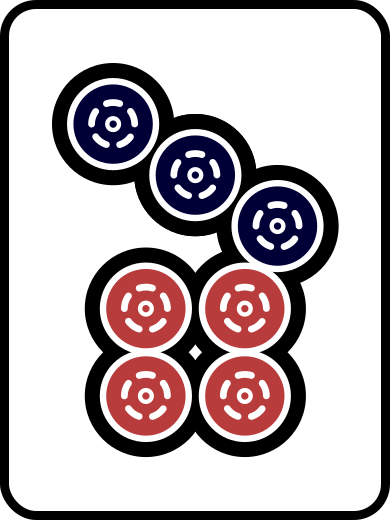
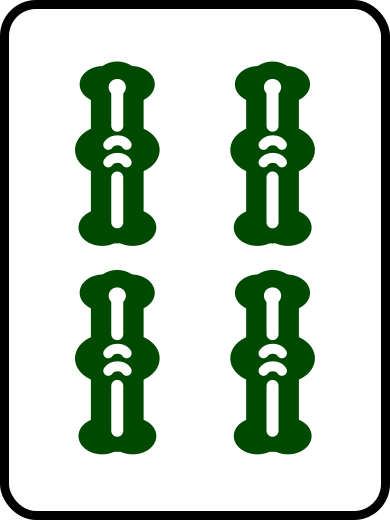
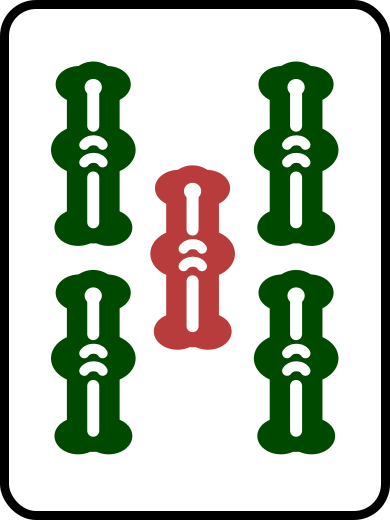
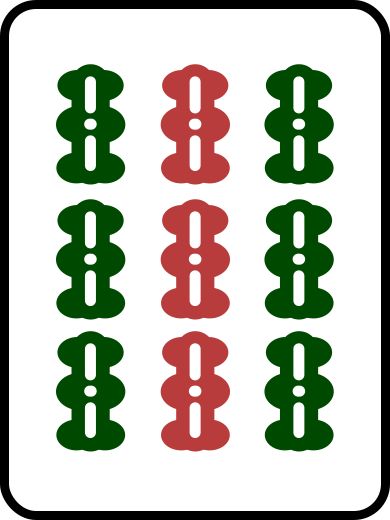
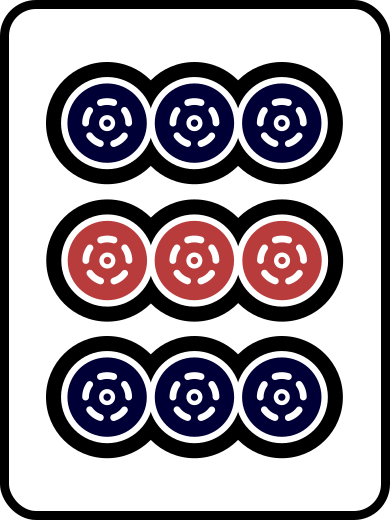
You're 1-shanten, and the 9p makes a sixth block, one more than a hand can use. Cut it and you keep the 78m and 45s (two-sided shapes): 16 tiles make , and every tenpai is a two-sided wait. Keep the 79p kanchan (middle shape) by breaking a ryanmen and only 12 do. Cut the 9p.
Now say your next draw is the 8p. The kanchan would have filled, and you'd be tenpai. That doesn't make the cut wrong. You chose the cut. You didn't choose the 8p, and skill only reaches the first of those. Face this choice a hundred times and the 16-tile hand reaches tenpai more often. One deal shows you which tile came next. It can't show you which choice was better, because you never see the other ninety-nine deals.
The tiles have no memory
Japanese players have a word for the feeling that luck runs in currents: (flow). In that story, the player who won three hands running is riding it, and you, after two deal-ins, should sit back until it turns. It's the hot hand fallacy with tiles, and the nagare post takes it apart.
The wall has nothing to remember. Tenhou builds each wall from a seeded random number generator and has published the algorithm, so anyone can rebuild every wall of a game from its seed. The tile that dealt you in last hand goes back into the next shuffle as one of four identical copies. The shuffle that dealt you two bad hands deals the next one with no idea how they went. Your discard comes from your tiles, the rivers, and the scores.
What does run in streaks is you. Two deal-ins and a flash of anger, and your next few discards get less thought than usual. Players call that tilt, and it lives in your concentration, not in the wall. So read "the flow is against me" as a gauge of your focus. It earns you a short break. It never earns a change in your push and fold lines. After two deal-ins the scoreboard can move a line. Your mood can't.
Grade the decision, not the result
Every hand you play lands in one of four boxes.
| Decision | It worked | It didn't work |
|---|---|---|
| Right | Keep it | Keep it. The odds went against you this time |
| Wrong | Fix it. Luck covered for you | Fix it |
Two boxes are easy. The other two teach the wrong lesson. A right fold that gets tsumo'd on feels like a mistake, and a reckless push that wins feels like courage. The push was still reckless. Let the result grade it and you'll repeat it until the comes.
Grade a decision with what you knew when you made it: your tiles, the rivers, the wait, the hand's value, and the score. The lines in Push or fold and Tenpai against a riichi rest on logs from Tenhou's top room (), sorted by things a player can see at the table: the wait, the turn, and the seat. The tile that came next isn't on either list. Grade these three.
East 2, turn 9. The dealer declared riichi at turn 7. Your 99s pair is genbutsu. Nothing in their river makes the 3s or the 8p safer. No dora in your hand.
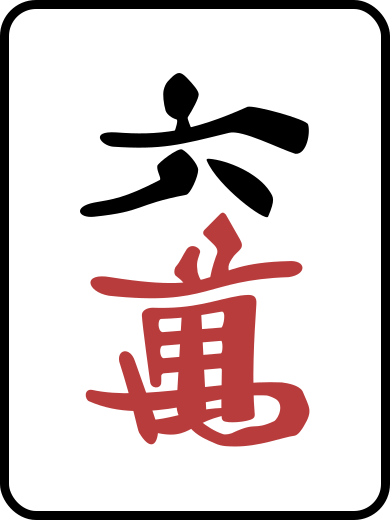
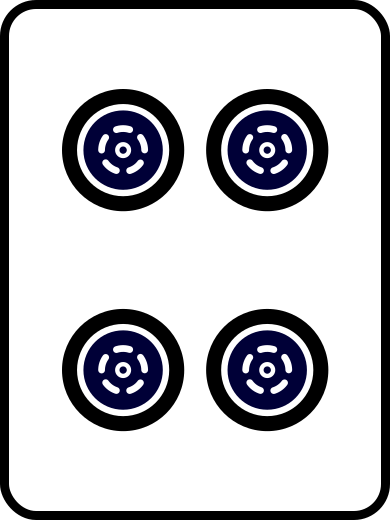
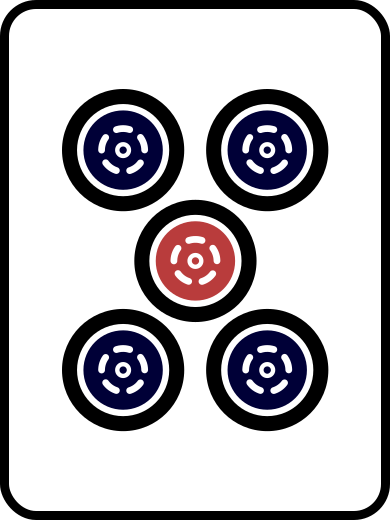
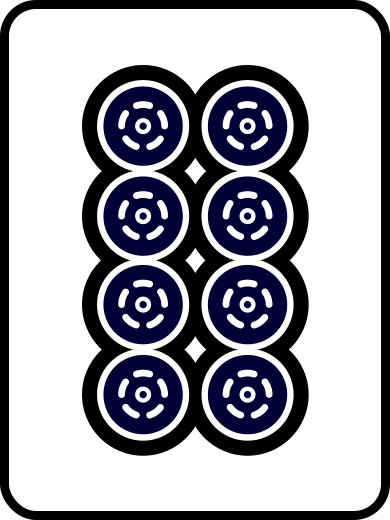
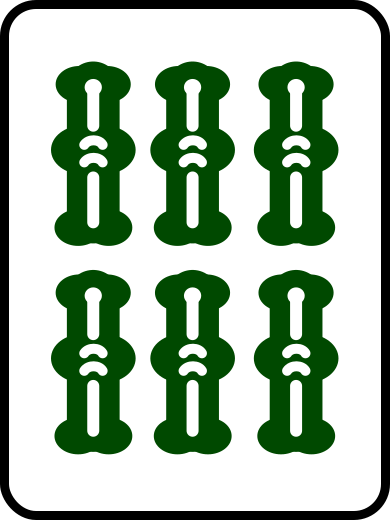
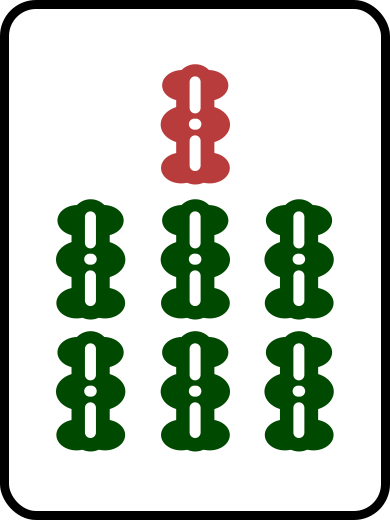
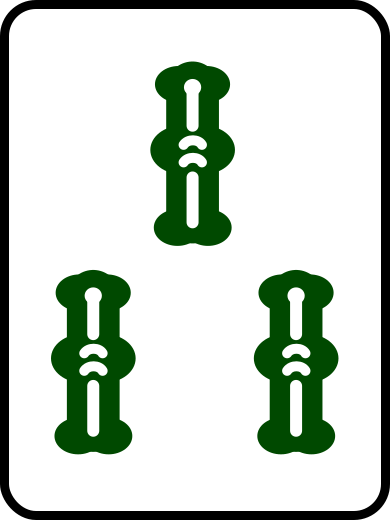
You folded with the two 9s, then other safe tiles. At turn 13 the dealer won by tsumo, a mangan, and you paid 4,000. Was the fold right?
Show the answerHide the answer
Right fold
Right fold. You're 1-shanten with at most 16 tiles that make tenpai, about 13% a draw, and a win pays riichi and , 2,000 by . Keeping it means cutting two live tiles into a dealer's riichi, the 3s now and the 8p later. 1-shanten against a riichi folds a hand this narrow and this cheap even against a , and the dealer moves every line up. Your fold didn't cause the 4,000. The dealer drew it, and pushing could have stopped it only by winning a race you started a step behind. A deal-in to the same mangan costs 12,000.
East 3, turn 10. The dealer declared riichi at turn 7. Your 99s pair is genbutsu. Nothing in their river makes the 3m safer. No dora in your hand.
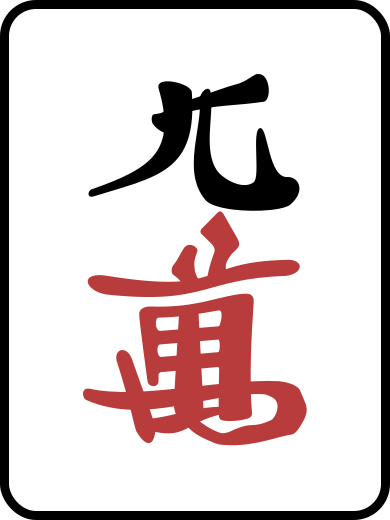
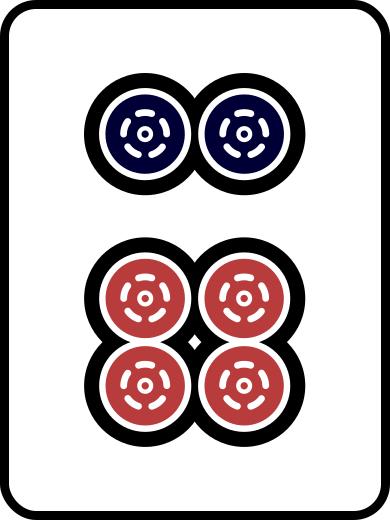
You pushed the live 3m and declared riichi on a 5s kanchan. Two turns later another non-dealer cut the 5s: you won 1,300 and both riichi sticks. Was the push right?
Show the answerHide the answer
Wrong push
Wrong push, and the win doesn't change that. When you cut the 3m you held a one-sided wait worth 1,300, riichi alone. A narrow chase wins about 32% and deals in about 21%, too seldom to cover a deal-in to the dealer, so Tenpai against a riichi wants about a mangan behind it here. The 99s pair was a clean fold. Make this push often enough and the 3m will be the dealer's wait. A deal-in to a dealer's riichi averages about 8,200.
South 1, turn 8. The player across, not the dealer, declared riichi at turn 6. You're not the dealer. Nothing in their river makes the 8p safer. No dora in your hand.
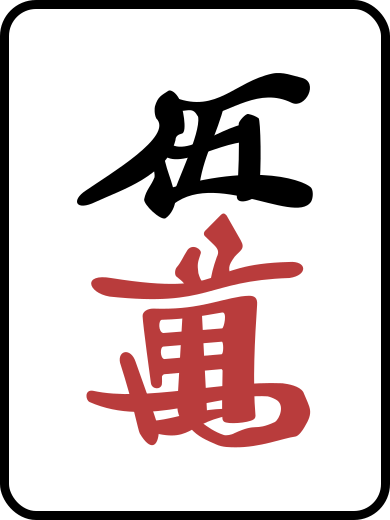
You pushed the live 8p and declared riichi on 2s and 5s. Two turns later the riichi player cut a 5s: you won 3,900 and both riichi sticks. Was the push right?
Show the answerHide the answer
Right push
Right push, and the win isn't why. You held a two-sided wait with and pinfu, 2,000 before riichi and 3,900 with it. In Houou, a two-sided chase riichi wins about 48% of the time and deals in about 16%, and the rough math puts it about 3,300 points ahead of folding on an average hand. Had your next cut hit their mangan instead, the push would still be right. That 8,000 is the 16% showing up, and folding every time gives up the 48% to dodge it. Below Mahjong Soul's Master rank, Tenpai against a riichi still has you fold it at the table while you learn to fold cleanly. It's the first push you earn.
How many games your numbers need
A small sample can sit far from your real rate by luck alone. The Goodhart's law post works out how far, using Houou numbers: a 12.6% deal-in rate, a 21.1% win rate, and about 10.7 hands a .
| Hanchan | Hands | Deal-in rate | Win rate | Average placement |
|---|---|---|---|---|
| 30 | 321 | ±3.6 points | ±4.5 points | ±0.40 |
| 100 | 1,070 | ±2.0 points | ±2.4 points | ±0.22 |
| 300 | 3,210 | ±1.1 points | ±1.4 points | ±0.13 |
| 1,000 | 10,700 | ±0.6 points | ±0.8 points | ±0.07 |
A ±2.0 margin means that 95 times in 100, your measured rate lands within 2 points of your true one. A player whose true average placement is 2.50 can show anything from 2.10 to 2.90 over 30 games, from the same quality of play. After 100 games, a deal-in rate that moved by one point still sits inside its own margin.
The 4th rate settles slowly too, because like average placement it counts games, not hands. The Mahjong Soul rank-up guide takes a player whose true 4th rate is 22%. Over 100 games the record shows anything from about 14% to 30%. Over 300, about 17% to 27%.
So judge your results on 300 games or more. Below that, judge decisions.
The three numbers worth reading
Once you have the games, read three numbers side by side, once a month at most.
Win rate minus deal-in rate. Each rate alone is easy to fake. Fold every hand and both drop. Call everything and both climb. The gap grows mainly when you push the hands that should push and fold the ones that should fold. In Houou the middle half of regulars sits between 7.8 and 9.2 points, per the Goodhart's law post.
Average placement. It tracks what both ladders pay for, on Tenhou and on Mahjong Soul. Like the 4th rate, it counts games, so it needs the full 300.
4th rate. Two players with the same average can still earn different rank points, because getting out of 4th is the biggest step on both ladders, as Play for placement showed. Strong players still finish 4th about one game in five, so read yours against that, not against zero.
The Tenhou log stats tool reads up to five of your Tenhou replays and draws a 95% bar on each rate. Five games is about 54 hands, so the bars come out wide.
Losing streaks are arithmetic
A bad run feels like proof that something's broken. Usually it's multiplication. These figures assume your skill holds steady, the wall is fair, and each game is independent of the last.
- At a 30% 1st rate, a five-game run without a 1st comes about one time in six: 0.7 to the fifth power is 0.168. The losing streaks post sets that next to a 6% tsumo on a two-sided wait.
- Ten without a 1st is 0.7 to the tenth power, under 3% for any given ten games. But 300 games hold 291 ten-game stretches. By my count, the chance that at least one has no 1st is about 94%.
- At a 20% 4th rate, three 4ths in a row is 0.2 × 0.2 × 0.2, under 1% for any given three. Over 300 games, the chance it happens at least once is about 86%.
The drought and the three 4ths say nothing about your play. What you do during them says plenty: the losing streaks post shows how a run turns into tilt, and tilt is the part you control.
Put a range on your last five games
Paste up to five Tenhou replay links. You get your average place, plus your win, deal-in, and riichi rates, each rate with its 95% range. Look at how wide the bars are before you read the dots.
Open the log stats tool